Get the latest garden guides in your inbox →
Gardening Latest
  • General Gardening
  • Lawn Care
  • Plant Care
  • Composting
  • Soil Health
  • Backyard
  • Garden Muse Magazine
  • General Gardening
  • Lawn Care
  • Plant Care
  • Composting
  • Soil Health
  • Backyard
  • Garden Muse Magazine
  • News
  • Gardening Calendar
  • Garden Structures
  • Vegetable Garden
  • Vertical Garden
  • Raised Beds
  • Hydroponics
  • General Equipment
  • Community Gardens
Garden Themes
  • Spiritual Garden
  • Hydroseeding
  • Seeding and Laying Sod
  • Artificial Grass
  • Lawn Care Equipment
  • Plants
  • Trees
  • Planting Tools
  • Composting Basics
  • Fertilizer
  • Alternative Growing Mediums
  • Front Yard
  • Backyard Activities
  • Landscaping
Gardening Latest

Explore by state

Which state is your garden in?

Currently viewing Pennsylvania

All states

Northeast

  • Connecticut —
  • Delaware 45
  • Maine —
  • Maryland 31
  • Massachusetts 47
  • New Hampshire —
  • New Jersey 31
  • New York 40
  • Pennsylvania 40
  • Rhode Island —
  • Vermont —

Southeast

  • Alabama 31
  • Arkansas —
  • Florida 31
  • Georgia 31
  • Kentucky 45
  • Louisiana 30
  • Mississippi —
  • North Carolina 29
  • South Carolina 44
  • Tennessee 27
  • Virginia 30
  • West Virginia —

Midwest

  • Illinois 30
  • Indiana 32
  • Iowa 44
  • Kansas —
  • Michigan 31
  • Minnesota 30
  • Missouri 29
  • Nebraska —
  • North Dakota —
  • Ohio 31
  • South Dakota —
  • Wisconsin 45

Southwest

  • Arizona 30
  • Colorado —
  • Nevada —
  • New Mexico —
  • Oklahoma —
  • Texas 29
  • Utah —

West

  • Alaska —
  • California 30
  • Hawaii —
  • Idaho —
  • Montana —
  • Oregon —
  • Washington —
  • Wyoming —

No state matches that search.

Site menu

Gardening Latest
  • General Gardening
    • News
    • Gardening Calendar
    • Garden Structures
    • Vegetable Garden
    • Vertical Garden
    • Raised Beds
    • Hydroponics
    • General Equipment
    • Community Gardens
    Garden Themes
    • Spiritual Garden
  • Lawn Care
    • Hydroseeding
    • Seeding and Laying Sod
    • Artificial Grass
    • Lawn Care Equipment
  • Plant Care
    • Plants
    • Trees
    • Planting Tools
  • Composting
    • Composting Basics
  • Soil Health
    • Fertilizer
    • Alternative Growing Mediums
  • Backyard
    • Front Yard
    • Backyard Activities
    • Landscaping
  • Garden Muse Magazine

Explore

  • About GardeningLatest.com
  • Contact Us

Get the latest from the garden

New guides on lawn care, plants and backyard projects, sent when they go up.

Subscribe →

Follow

  • Facebook
  • X
  • Pinterest
  • YouTube
Pennsylvania Gardening

That Deep Hooting Outside Your Pennsylvania Home After Dark Is a Great Horned Owl Sending a Message

A deep, steady hooting after dark in Pennsylvania most likely comes from a Great Horned Owl, and yes, it is a message…

MY

By Martha Yoder

November 29, 2026 · 6 min read

That Deep Hooting Outside Your Pennsylvania Home After Dark Is a Great Horned Owl Sending a Message

A deep, steady hooting after dark in Pennsylvania most likely comes from a Great Horned Owl, and yes, it is a message. It just isn’t meant for you.

The bird is talking to other owls about territory and partners. Here is how to size up the sound, what it can tell you, and how to enjoy it safely.

At a glance

Where
Pennsylvania Gardening
Hardiness zone
6 −10 to 0°F
Read
6 minutes
Published
November 29, 2026

A deep, rhythmic call fits the Great Horned Owl
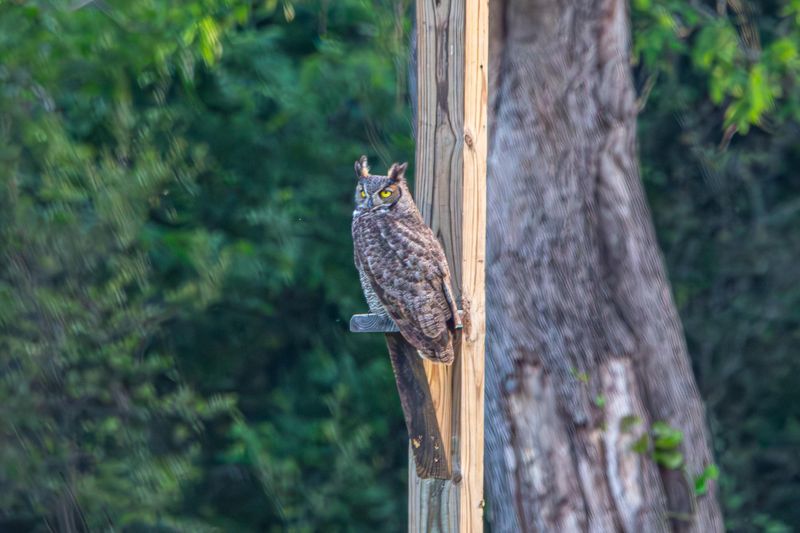
A deep, rhythmic call fits the Great Horned Owl
© Reddit

Step outside on a quiet evening and you may hear a series of low, booming hoots with a steady beat. That pattern is consistent with a Great Horned Owl.

The Pennsylvania Game Commission describes the usual call as three to eight deep hoots, often five, and says the sound carries a long way.

That carrying power is why you can hear a bird that is nowhere near your yard. The call can drift across fields, ridges, and neighborhoods on a calm night.

A hoot that seems close may actually come from several hundred yards off.

This owl is widespread across Pennsylvania. It lives in big forests, but it also turns up in urban parks and other green spaces.

So hearing one near a house, even in a town, is entirely plausible.

Still, a sound is a clue, not a signed confession. Deep, rhythmic hooting points toward this species, and that is a fair first guess.

Without seeing the bird, you cannot be certain, and that honest uncertainty is part of the fun of listening.

Try noting the rhythm, the number of hoots, and the time of night. Jot those details in a phone note.

Those small observations make it much easier to compare what you heard with recordings later.

Could another owl be calling?
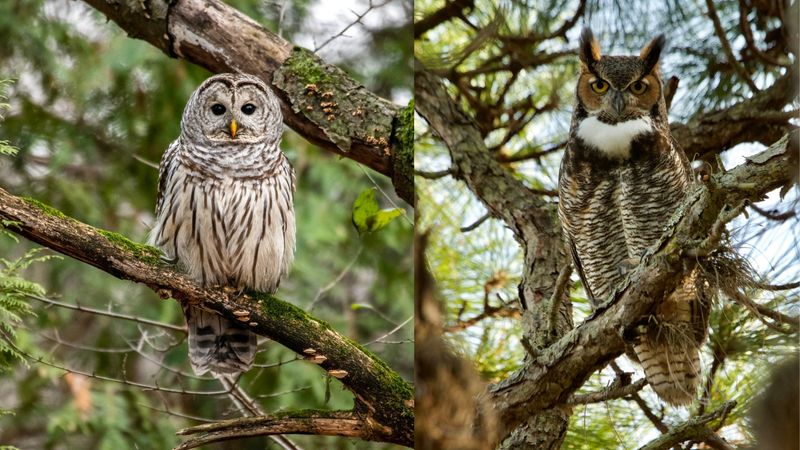
Could another owl be calling?
© Owl Brand Discovery Kits

Pennsylvania is home to more than one owl, and calls can vary from bird to bird. So before settling on a name, it helps to compare.

A good first step is listening to recordings of the Great Horned Owl’s sounds from the Cornell Lab of Ornithology.

The Game Commission says courtship runs from fall into early winter, when pairs may duet.

A handy contrast is the Barred Owl. Its call is often described as a longer, more flowing “Who cooks for you?” You can hear it on the Barred Owl sounds page.

If your night visitor sounds like a question with a rolling ending, it may not be a Great Horned Owl at all.

The Game Commission’s owl page also notes that different owl species make different calls. That is a reminder to keep an open mind.

Play a recording through your phone indoors, then listen again outside the next night. Ask yourself whether the beat, spacing, and tone feel similar.

A close match is encouraging.

Even so, a recording match or a written description cannot guarantee the answer. Wind, distance, and echoes change how a call sounds.

Treat your match as a good working guess, and a clear look at the bird as the only real proof.

The hoots communicate with other owls
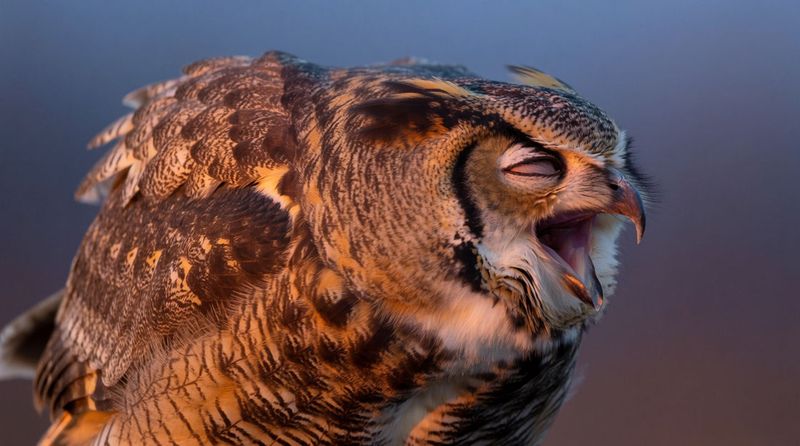
The hoots communicate with other owls
© Morphic

Owl hooting is real communication, just not aimed at people. According to the Pennsylvania Game Commission, Great Horned Owls hoot to stake out territory and as part of mating activity.

A pair may even duet, trading hoots back and forth.

So the hoots are not only about finding a mate, and they are not only about boundaries. Both jobs happen, sometimes close together.

The same call can mean different things depending on who is listening.

A study of Great Horned Owl vocalizations documents these call types and the situations in which they happen. It describes territorial hoots from both sexes, given by a single bird, by a duetting pair, or in exchanges with neighboring owls.

There is a catch worth knowing. The study combined observations of a human-imprinted captive female with recordings and observations of wild owls in Minnesota.

It is useful for showing what calls exist and when they are used, but it is not a survey of Pennsylvania.

What none of this shows is a hoot meant for the person on the porch, or a hoot that predicts luck, danger, or any event. Think of it as a neighborhood conversation between owls that you happen to overhear.

A nighttime hoot does not confirm a nearby nest
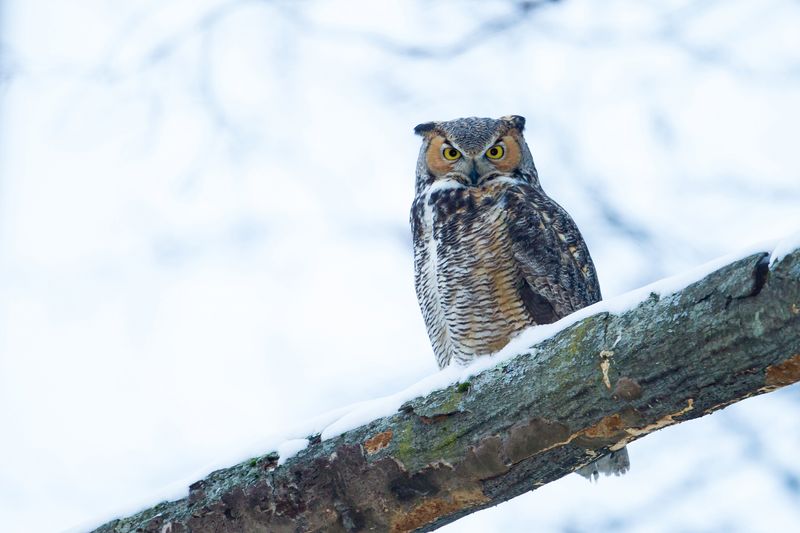
A nighttime hoot does not confirm a nearby nest
© Mass Audubon

Season can help you read the situation. The Game Commission says courtship runs from fall into early winter, when pairs may duet.

That makes autumn and early winter nights a time when hooting can be especially easy to notice.

Yet the research paper reports territorial hooting throughout the year, with fall and winter the most common times. A hoot in July is therefore not strange, and a hoot in November is not a promise of anything in particular.

Here is the key point. One call, or even many, does not show that a pair is nesting close to your home.

An owl can hoot from a favorite perch while its nest sits far away, or while no nest exists at all.

Listeners often wonder whether they can tell a male from a female. A casual listen is a poor tool for that.

The Game Commission mentions that the larger female’s hoot is higher pitched, but the research notes that familiar claims about note counts have been inaccurate. Pitch and the number of hoots are not reliable shortcuts.

A better habit is to keep a simple log of dates and times. Patterns across weeks tell you far more than any single night, and they keep your conclusions honest.

Listen from a distance and leave the owl undisturbed
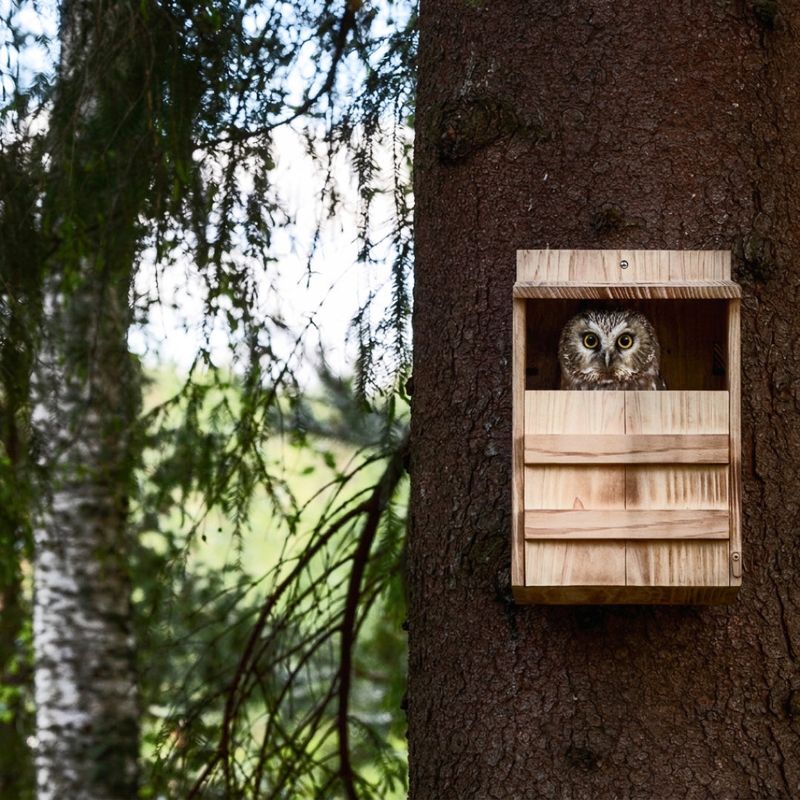
Listen from a distance and leave the owl undisturbed
© Big Bat Box

The easiest way to enjoy owl music is from indoors. Crack a window, sit on a porch, or stand well back from the trees.

If you do spot the bird, watch from a distance and keep any light off it.

Do not walk toward a suspected nest, try to flush the owl, play recordings to call it in, or poke around to investigate. The Game Commission warns that Great Horned Owls may defend nests and young, and that they can attack people who get too close.

Staying back protects you and the owl.

Pets deserve a little planning too. The state wildlife agency in Florida notes that Great Horned Owls may take small unattended pets when the chance arises.

That does not mean an attack is likely, only that supervising small pets outdoors at night is a sensible habit.

Finding an owl that seems hurt, such as one on the ground that cannot fly, calls for care. Do not pick it up or try to treat it.

Use the Game Commission’s wildlife help page or contact a licensed wildlife rehabilitator.

Owls are also federally protected, and the rules about nests and disturbance depend on the situation. Leave nests, eggs, and chicks alone, and let the professionals decide what comes next.

Treat the call as a clue, not a message to you
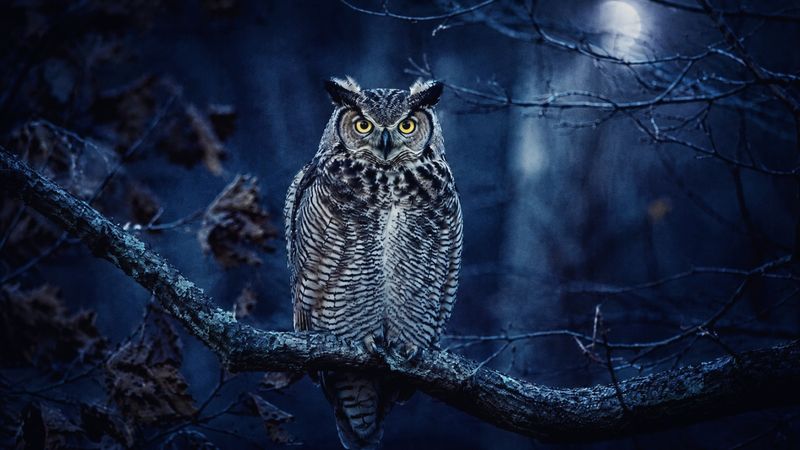
Treat the call as a clue, not a message to you
© The NW Local Paper

Deep hoots after dark may well come from a Great Horned Owl, and the calls can serve owl-to-owl purposes like claiming territory and keeping in touch with a mate, according to the Game Commission. Sound alone cannot confirm the species, prove a nest is close, or show that anything was meant for you.

The safest response is also the simplest: listen from a distance and let the bird be. The owl is not talking to you, but you are lucky to overhear.

Share this story
MY

Written by

Martha Yoder

More from Martha Yoder →

About Gardening Latest

Gardening Latest provides in-depth guides to maintaining and enhancing your garden and backyard. Learn how to make the most of the space you have and create a beautiful garden.

More about us →

Latest stories

  • Alabama GardeningThat Burning Saddleback Caterpillar Sting in Your Alabama Garden Calls for These Steps Right Away

    That Burning Saddleback Caterpillar Sting in Your Alabama Garden Calls for These Steps Right Away

    3 min ago
  • Minnesota GardeningBefore You Pick Up That Big Black Caterpillar With White Spots In Minnesota, Read This

    Before You Pick Up That Big Black Caterpillar With White Spots In Minnesota, Read This

    9 min ago
  • Illinois GardeningDeer Are Rubbing Their Antlers on Your Illinois Saplings Right Now, and Here’s How to Save Them

    Deer Are Rubbing Their Antlers on Your Illinois Saplings Right Now, and Here’s How to Save Them

    15 min ago
  • Louisiana GardeningLouisiana’s Venomous Critters Are Hiding In Your Yard, And Fall Is When They Come Out

    Louisiana’s Venomous Critters Are Hiding In Your Yard, And Fall Is When They Come Out

    21 min ago
  • Delaware GardeningDelaware Bucks Are Shedding Their Antlers Soon, and Picking One Up in the Woods Is Perfectly Legal

    Delaware Bucks Are Shedding Their Antlers Soon, and Picking One Up in the Woods Is Perfectly Legal

    27 min ago

Gardening by state

Stories for your state, and the hardiness zone most of it gardens in.

Keep exploring

Read next

All Pennsylvania Gardening →
Pennsylvania GardeningThese 7 Pennsylvania Backyard Critters Look Venomous, but They Won’t Hurt You or Your Garden
Pennsylvania Gardening

These 7 Pennsylvania Backyard Critters Look Venomous, but They Won’t Hurt You or Your Garden

4 hr ago
Pennsylvania GardeningDiscovered A Yellow Jacket Nest By Your Pennsylvania House? This Is What You Should Do
Pennsylvania Gardening

Discovered A Yellow Jacket Nest By Your Pennsylvania House? This Is What You Should Do

7 hr ago
Pennsylvania GardeningYour Pennsylvania Neighbor’s Tree Hangs Over Your Yard, and Here’s What the Law Actually Lets You Do
Pennsylvania Gardening

Your Pennsylvania Neighbor’s Tree Hangs Over Your Yard, and Here’s What the Law Actually Lets You Do

10 hr ago

More from Pennsylvania Gardening

  • That Red Fox Trotting Across Your Pennsylvania Yard This Winter Has a Reason to Be There

    Nov 27
  • Here’s What Actually Helps When a Saddleback Caterpillar Stings You During Pennsylvania Fall Cleanup

    Nov 26
Back to top

Leave a response Cancel

Your email address stays private. Required fields are marked with an asterisk.

Gardening Latest

In-depth guides to maintaining and enhancing your garden and backyard: how to make the most of the space you have, and how to make it beautiful.

  • Facebook
  • X
  • Pinterest
  • YouTube

We may earn a portion of sales from products or services that are purchased through our site as part of our affiliate partnerships with retailers.

Explore

  • About GardeningLatest.com
  • Contact Us
  • Terms and Conditions
  • Privacy
  • Editorial Note:
  • FTC Disclosure

Newsletter

New garden guides and seasonal tips, straight to your inbox.

We’ll email you a link to confirm. Unsubscribe any time.

Almost there! Check your inbox and tap the link to confirm.

© 2026 Gardening Latest. All rights reserved.

Back to top