Florida backyards are full of life, and a few of those neighbors pack a painful or even dangerous bite. Snakes hide under shrubs, spiders tuck into woodpiles, and some fuzzy caterpillars sting harder than a bee.
Knowing what each one looks like can keep you, your kids, and your pets safe while you garden, play, or take out the trash. Here are ten venomous creatures worth learning to spot before they surprise you.
1. Pygmy Rattlesnake
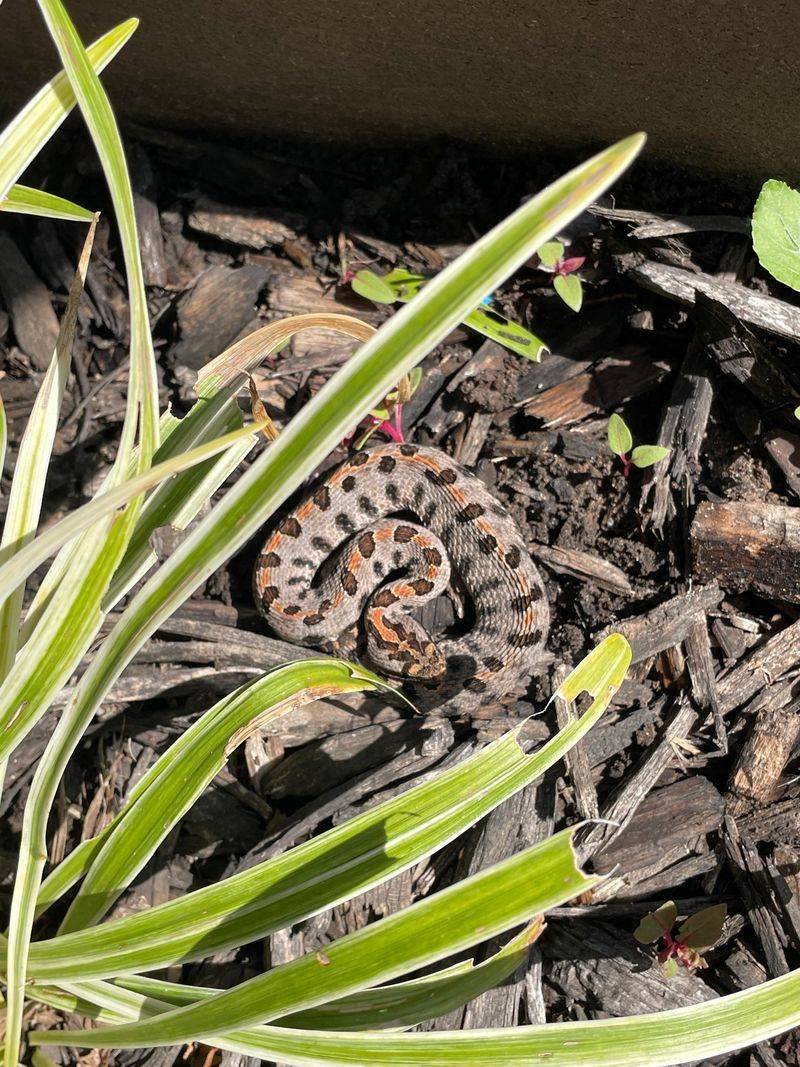
Picture a snake small enough to coil on a coffee saucer, with a rattle that sounds more like a buzzing insect than a warning. That tiny noise is why so many Floridians get bitten by the dusky pygmy rattlesnake.
Most people never even hear it coming.
Look for a gray or grayish-brown body, usually under two feet long, covered in dark round blotches. Many have a rusty orange stripe running down the middle of the back.
The head is wide and triangular, and the tail ends in a rattle about the size of a grain of rice.
Pygmies love leaf litter, pine straw, and the damp edges of ponds and retention areas. Their bites are rarely deadly to adults, but they hurt badly and can cause serious swelling.
Wear gloves and shoes when you pull weeds, and rake slowly through mulch beds.
2. Eastern Diamondback Rattlesnake
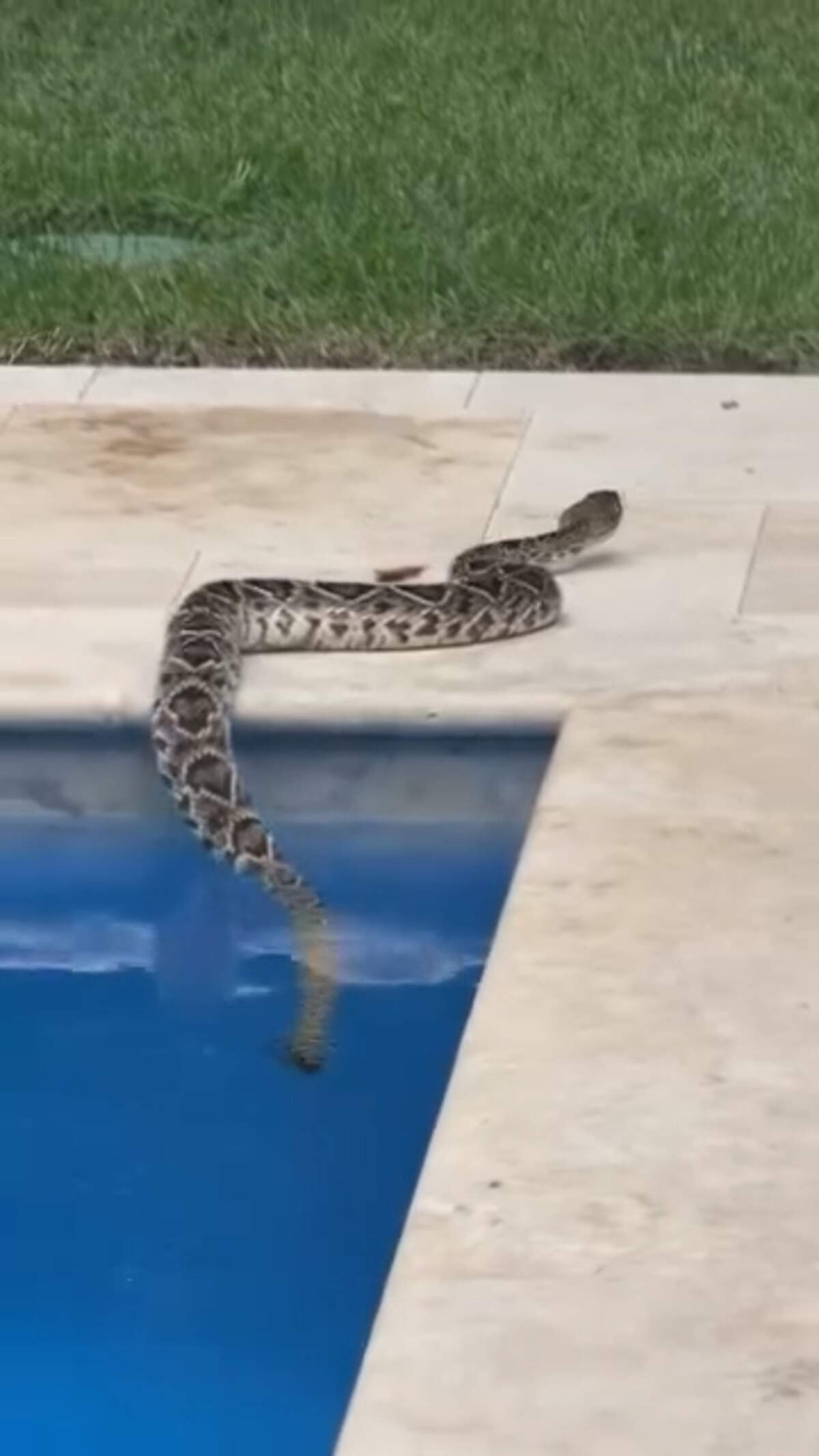
North America’s heaviest venomous snake can stretch past six feet and weigh as much as a small dog. When an eastern diamondback shows up near a Florida home, nobody mistakes it for a garden snake.
The pattern is the giveaway: dark brown diamonds edged in cream or yellow running the full length of its back. Two light stripes cross its face, and the rattle is loud and steady.
Palmetto thickets, pine flatwoods, and gopher tortoise burrows are favorite hideouts, so homes near undeveloped land see them most.
Fun fact: diamondbacks would much rather hide than fight, and they often freeze to avoid notice. Give them plenty of space, at least the length of the snake and then some.
If one sets up shop near your porch, call a licensed wildlife removal pro instead of grabbing a shovel.
3. Eastern Coral Snake
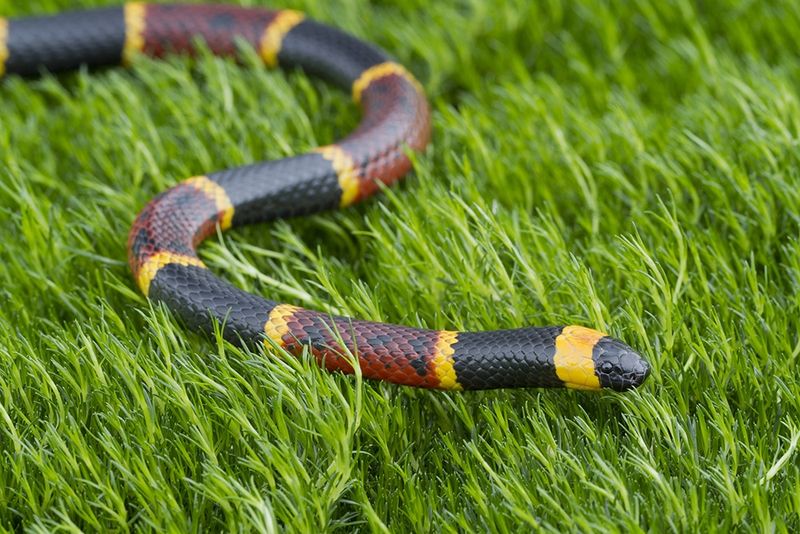
“Red touches yellow, kills a fellow.” Generations of Florida kids learned that rhyme to tell the coral snake apart from harmless look-alikes such as the scarlet kingsnake.
Coral snakes are slim and glossy, with wide red and black rings separated by narrow yellow bands. The snout is always black, which is a quick clue many people miss.
Most are under three feet long and spend a lot of time buried in leaf piles or loose soil.
Their venom attacks the nervous system, and symptoms may not appear for hours. That delay fools people into skipping the hospital, which is a big mistake.
Any coral snake bite needs emergency care right away, even if you feel totally fine.
Luckily, these snakes are shy and rarely bite unless someone picks them up. The best rule is simple: admire the colors from a distance.
4. Cottonmouth
Live near a canal, lake, or drainage ditch? Then the cottonmouth is the snake you most need to know.
Also called the water moccasin, it earned its name from the bright white lining of its mouth, which it flashes when threatened.
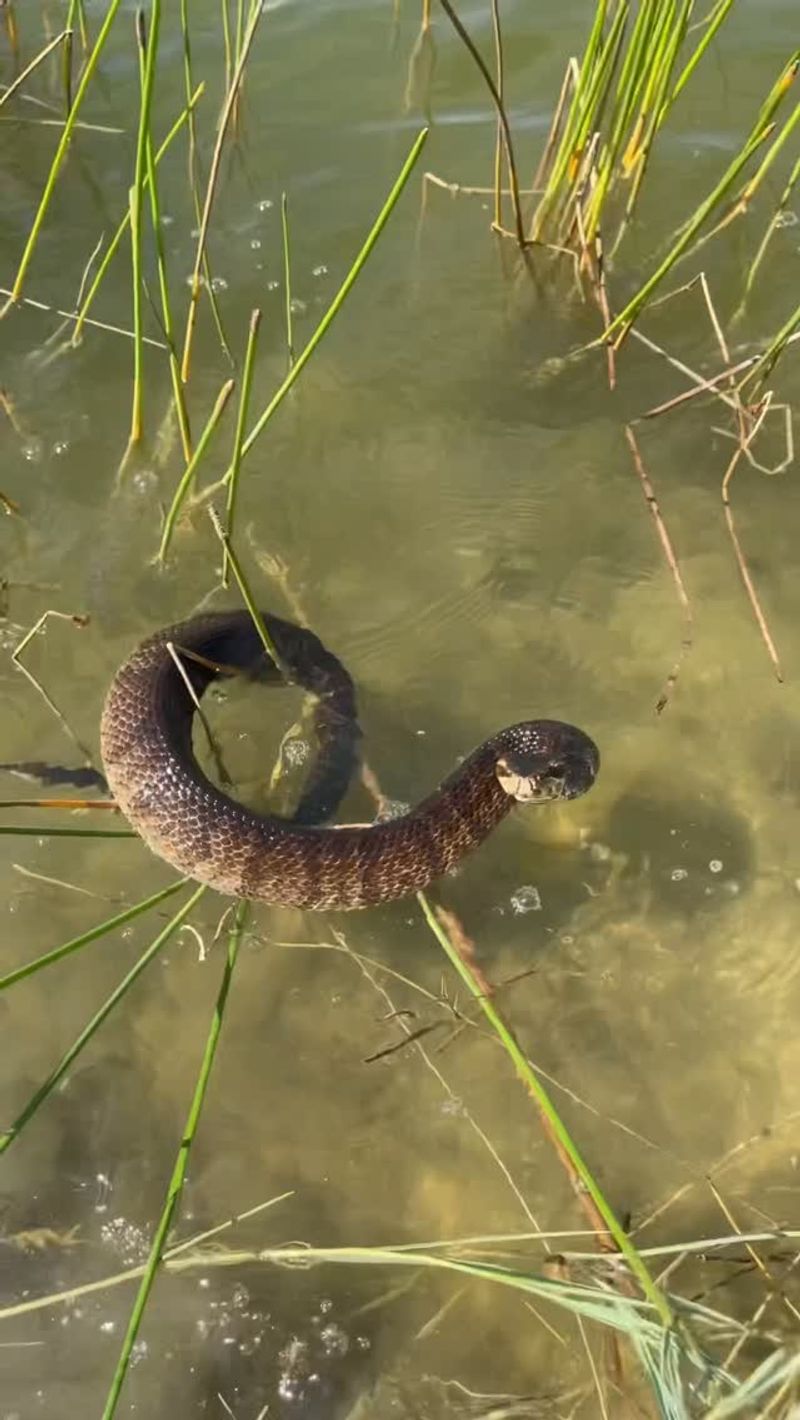
Adults are thick and heavy for their length, usually dark olive, brown, or nearly black. Younger ones show bold crossbands and a yellow tail tip they wiggle like a worm to lure frogs.
Swimming cottonmouths float high on the water with much of the body showing, while harmless water snakes tend to swim lower.
Plenty of nonvenomous banded water snakes get killed by mistake, so look for that blocky head and dark stripe through the eye. Cottonmouths often stand their ground rather than flee.
Back away slowly and keep kids and dogs off the water’s edge.
5. Southern Black Widow
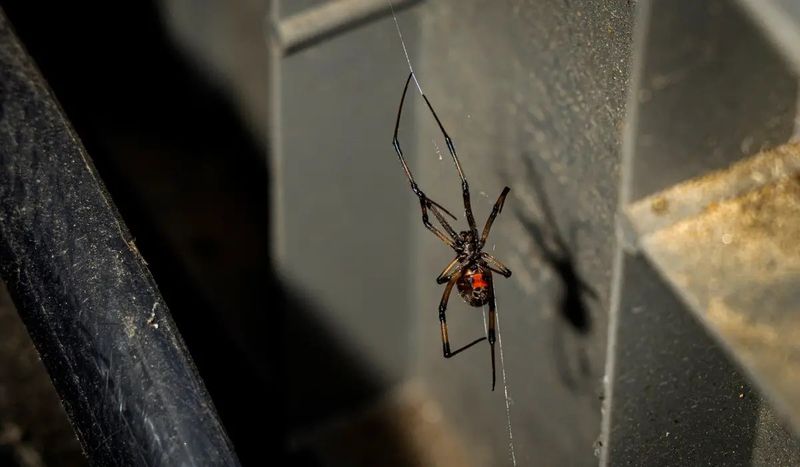
Shiny, round, and dressed in black like a tiny villain, the southern black widow is probably the most famous spider in America. Females carry a red hourglass on the underside of the belly, often seen as they hang upside down in their webs.
Widows build messy, tangled webs in dark, quiet spots. Think water meter boxes, stacked flower pots, under patio furniture, and the corners of garages.
The silk feels unusually strong when you brush against it.
A bite can cause muscle cramps, stomach pain, and sweating. Deaths are extremely rare, but kids and older adults should see a doctor quickly.
Shake out gloves and boots stored outside, and use a flashlight before reaching into shadowy spaces.
6. Brown Widow
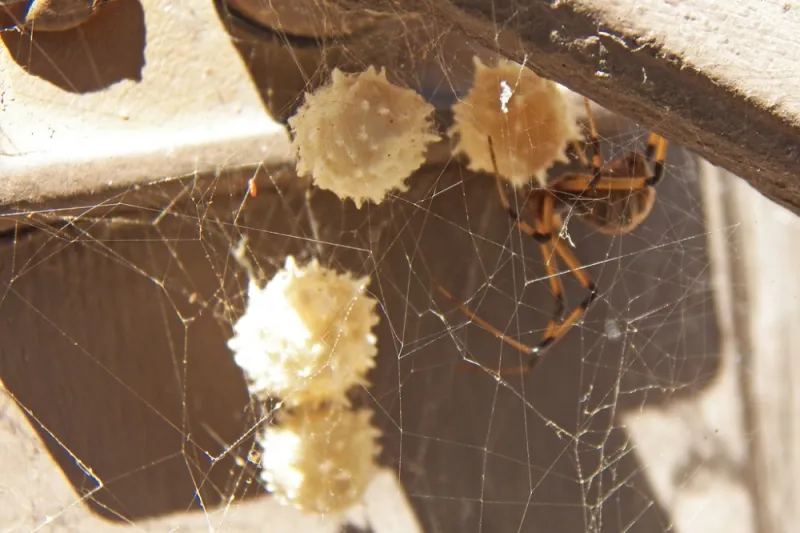
Here is a spider that has quietly taken over Florida porches. The brown widow likely arrived from overseas decades ago and now outnumbers its black cousin in many neighborhoods.
Its body is tan to brown with a mottled pattern and an orange hourglass underneath. The easiest clue is the egg sac, which looks like a tiny cream-colored ball covered in spikes, almost like a burr.
Find those spiky balls under railings or mailbox lids, and a brown widow is nearby.
Good news: its venom is strong, but it injects much less than a black widow, so bites are usually milder. They are timid and prefer to drop away than bite.
Knock down webs and egg sacs with a broom to keep numbers in check.
7. Southern Flannel Moth Caterpillar
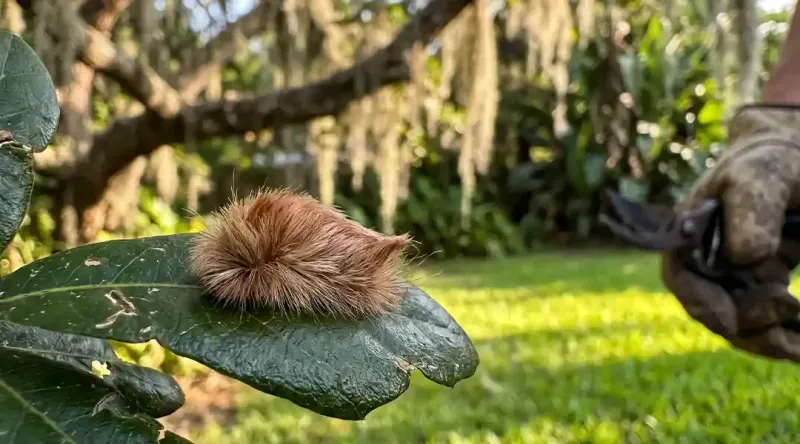
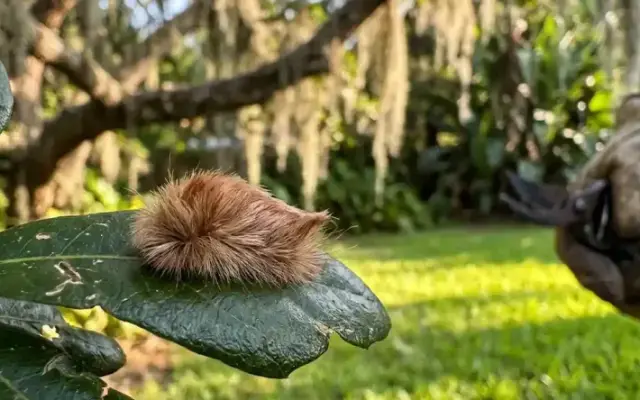
It looks like a doll’s toupee or a tuft of cat fur someone dropped on a leaf. Do not pet it.
The puss caterpillar, young form of the southern flannel moth, hides venomous spines under all that soft fluff.
These caterpillars are about an inch long, teardrop shaped, and range from cream to golden orange to gray. They show up on oaks, citrus, and ornamental shrubs, often in late spring and fall.
Kids are the most common victims because the fuzz looks so touchable.
A sting brings sharp, throbbing pain that some people compare to a broken bone. Pressing a piece of tape on the spot to pull out spines can help.
Seek medical care if the pain spreads or breathing feels tight.
8. Saddleback Caterpillar
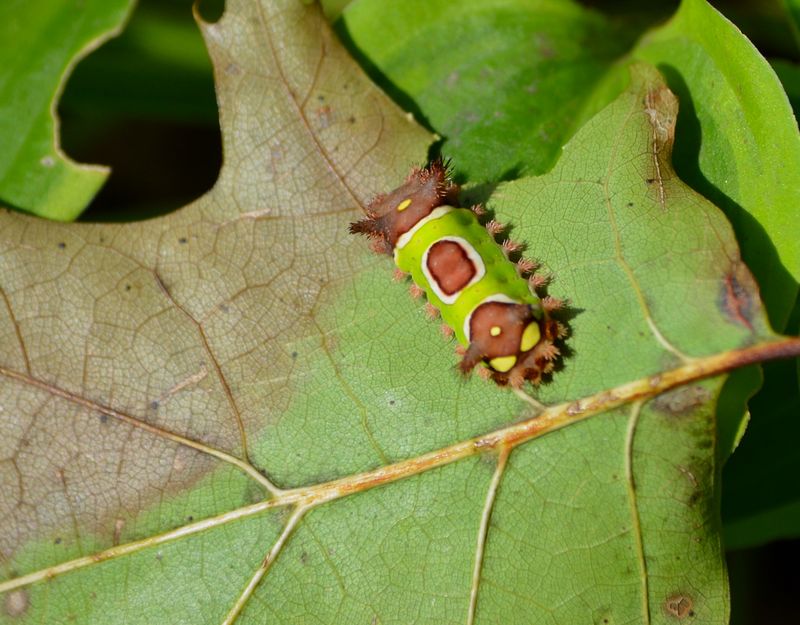
Nature has a sense of style, and the saddleback caterpillar proves it. A bright green blanket wraps its middle, topped with a brown oval spot that looks just like a tiny horse saddle.
Both ends sprout fleshy horns covered in stinging hairs. Brush against one while trimming hedges, and you will feel a burn similar to a bad wasp sting, followed by redness and itching.
Some folks get nausea or a headache too.
They munch on many plants, including palms, corn, and fruit trees. Long sleeves and gloves are smart when you prune in late summer.
Wash any sting gently with soap and water, then apply ice to calm the burn.
9. Red Imported Fire Ant
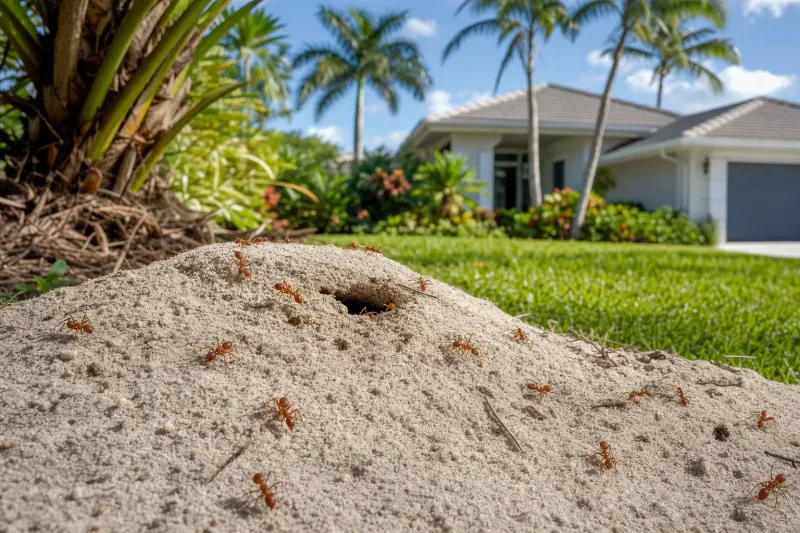
Step on the wrong mound, and within seconds hundreds of angry ants are climbing your leg. Fire ants may be small, but they cause more stings in Florida than any other creature on this list.
Workers are reddish-brown and vary in size inside the same colony. Their mounds are fluffy piles of soil with no opening on top, often popping up after rain in sunny lawns, along sidewalks, and around play sets.
Each ant grabs on with its jaws and stings several times.
Stings swell into itchy white pustules a day later. Don’t pop them, since that can lead to infection.
People allergic to the venom can have a serious reaction, so watch for hives or trouble breathing. Treat mounds early with bait products, especially near where kids play.
10. Florida Bark Scorpion
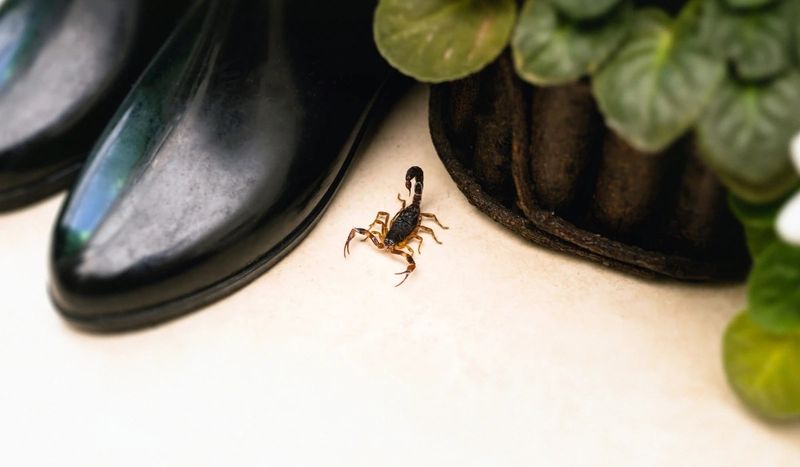
Yes, Florida has scorpions, and the bark scorpion is the most common one sneaking around homes. It is a slender, light brown hunter with skinny pincers and a long curled tail.
As night creatures, they hide by day under loose bark, boards, landscape rocks, and stacked firewood. Sometimes they wander indoors and end up in shoes or towels.
Shine a black light outside after dark, and they glow an eerie blue-green, a trick that makes yard checks oddly fun.
A sting feels like a hot needle, with numbness and tingling that can last a day or so. Healthy adults usually recover with ice and pain relievers.
Clear debris away from your house and shake out shoes left on porches.
Share this story