Get the latest garden guides in your inbox →
Gardening Latest
  • General Gardening
  • Lawn Care
  • Plant Care
  • Composting
  • Soil Health
  • Backyard
  • Garden Muse Magazine
  • General Gardening
  • Lawn Care
  • Plant Care
  • Composting
  • Soil Health
  • Backyard
  • Garden Muse Magazine
  • News
  • Gardening Calendar
  • Garden Structures
  • Vegetable Garden
  • Vertical Garden
  • Raised Beds
  • Hydroponics
  • General Equipment
  • Community Gardens
Garden Themes
  • Spiritual Garden
  • Hydroseeding
  • Seeding and Laying Sod
  • Artificial Grass
  • Lawn Care Equipment
  • Plants
  • Trees
  • Planting Tools
  • Composting Basics
  • Fertilizer
  • Alternative Growing Mediums
  • Front Yard
  • Backyard Activities
  • Landscaping
Gardening Latest

Explore by state

Which state is your garden in?

Currently viewing Florida

All states

Northeast

  • Connecticut —
  • Delaware 45
  • Maine —
  • Maryland 31
  • Massachusetts 47
  • New Hampshire —
  • New Jersey 31
  • New York 40
  • Pennsylvania 40
  • Rhode Island —
  • Vermont —

Southeast

  • Alabama 31
  • Arkansas —
  • Florida 31
  • Georgia 31
  • Kentucky 45
  • Louisiana 30
  • Mississippi —
  • North Carolina 29
  • South Carolina 44
  • Tennessee 28
  • Virginia 30
  • West Virginia —

Midwest

  • Illinois 30
  • Indiana 32
  • Iowa 44
  • Kansas —
  • Michigan 31
  • Minnesota 30
  • Missouri 30
  • Nebraska —
  • North Dakota —
  • Ohio 31
  • South Dakota —
  • Wisconsin 45

Southwest

  • Arizona 30
  • Colorado —
  • Nevada —
  • New Mexico —
  • Oklahoma —
  • Texas 29
  • Utah —

West

  • Alaska —
  • California 30
  • Hawaii —
  • Idaho —
  • Montana —
  • Oregon —
  • Washington —
  • Wyoming —

No state matches that search.

Site menu

Gardening Latest
  • General Gardening
    • News
    • Gardening Calendar
    • Garden Structures
    • Vegetable Garden
    • Vertical Garden
    • Raised Beds
    • Hydroponics
    • General Equipment
    • Community Gardens
    Garden Themes
    • Spiritual Garden
  • Lawn Care
    • Hydroseeding
    • Seeding and Laying Sod
    • Artificial Grass
    • Lawn Care Equipment
  • Plant Care
    • Plants
    • Trees
    • Planting Tools
  • Composting
    • Composting Basics
  • Soil Health
    • Fertilizer
    • Alternative Growing Mediums
  • Backyard
    • Front Yard
    • Backyard Activities
    • Landscaping
  • Garden Muse Magazine

Explore

  • About GardeningLatest.com
  • Contact Us

Get the latest from the garden

New guides on lawn care, plants and backyard projects, sent when they go up.

Subscribe →

Follow

  • Facebook
  • X
  • Pinterest
  • YouTube
Florida Gardening

Your Oak Leaf Litter Is Home to Florida’s Venomous Southern Short-Tailed Shrew

Under the oak leaves in some Florida landscapes, a tiny mammal with a venom-linked reputation may find cover.

MV

By Marisol Vega

November 28, 2026 · 6 min read

Your Oak Leaf Litter Is Home to Florida’s Venomous Southern Short-Tailed Shrew
Your Oak Leaf Litter Is Home to Florida's Venomous Southern Short-Tailed Shrew

Under the oak leaves in some Florida landscapes, a tiny mammal with a venom-linked reputation may find cover. The southern short-tailed shrew is a small, mouse-sized hunter that spends most of its life out of sight.

Florida has more than one short-tailed shrew story, and the details change depending on which animal and which source you mean. Here is what the research says about leaves, venom, and living alongside wildlife you rarely see.

At a glance

Where
Florida Gardening
Hardiness zone
9 20 to 30°F
Read
6 minutes
Published
November 28, 2026

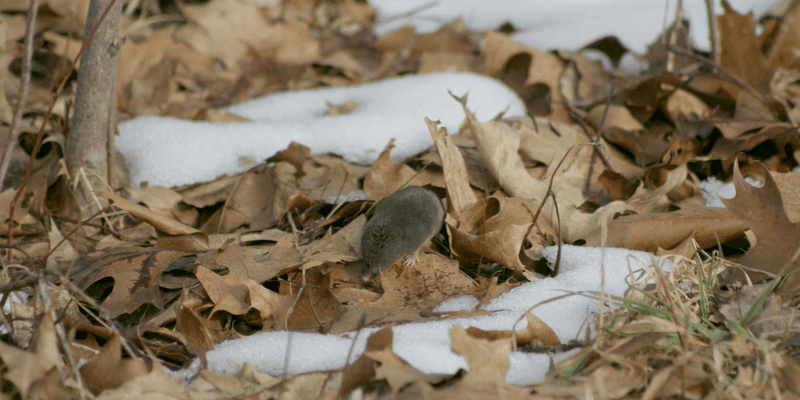
Leaves can furnish nest material without proving a shrew lives there
Leaves can furnish nest material without proving a shrew lives there
© Commonwealth of Pennsylvania

Sources do describe dry leaves as one of the materials the southern short-tailed shrew, Blarina carolinensis, uses to build nests. According to the University of Michigan Animal Diversity Web account, nests are made from shredded grass, roots, dry leaves, and other plant material.

The same account says these nests may sit underground or beneath decomposing logs and stumps. So leaves are part of a bigger picture of covered, sheltered ground.

A shrew is more likely to care about cover, food, and moisture than about the tree the leaves fell from.

That is why the oak part of the headline needs care. Nothing in the sources singles out oak leaves, and a leaf pile does not tell you a shrew is there.

Think of leaf litter as one possible ingredient in habitat, not a sign of occupancy.

A peer-reviewed species account shows this animal turns up in many kinds of places, which makes a single leafy corner a weak clue. A typical yard may have no shrews at all.

Real evidence of presence would come from a confirmed sighting or a survey by someone who knows how to identify the species.

Florida has more than one short-tailed shrew story

Florida has more than one short-tailed shrew story
© Naples Daily News

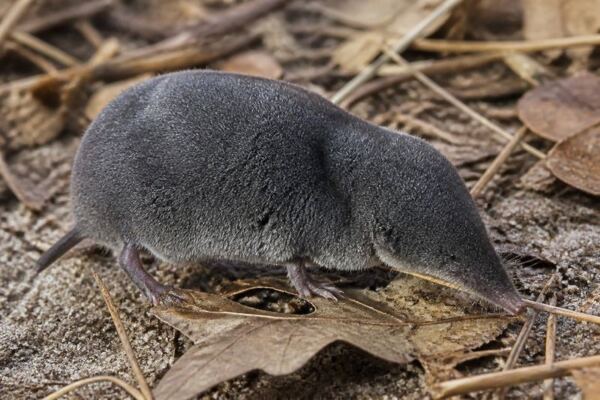
Calling an animal “Florida’s southern short-tailed shrew” sounds precise, but it can point to different animals depending on the source. Blarina carolinensis is the southern short-tailed shrew, a species with a wide range across the Southeast.

Sherman’s short-tailed shrew is a separate Florida story with a much smaller footprint.

The clearest proof of shrew venom comes from the northern short-tailed shrew, Blarina brevicauda.

According to the Florida Fish and Wildlife Conservation Commission, Sherman’s short-tailed shrew is state-threatened and has a limited range in southwest Florida, in Collier and Lee counties. FWC also reports a state rank of possibly extinct or possibly extirpated.

That is a very different picture from a common backyard animal.

Classification adds another wrinkle. The Mammal Diversity Database recognizes Blarina shermani as its own species.

Older federal usage, such as this U.S. Fish and Wildlife Service entry, lists it as a subspecies of B. carolinensis.

This article follows the database and FWC naming, treating Sherman’s as distinct. Either way, not every Florida short-tailed shrew is the same animal, and none of them live statewide.

When you read a claim about shrews, check which name the source uses and where it says the animal lives.

Short-tailed shrews use more than leaf-covered ground
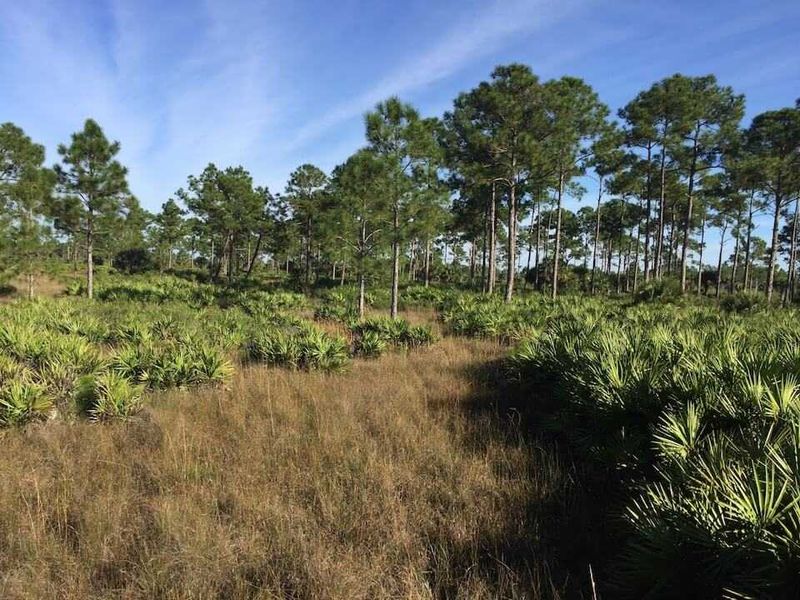
Short-tailed shrews use more than leaf-covered ground
© Climate Adaptation Explorer

Leaf litter is only one piece of the habitat story. A peer-reviewed species account reports Blarina carolinensis from pine forests, hardwood forests, brushy areas, fields, and other disturbed sites.

That is a lot of variety.

Moisture is less settled. Some studies found the species more often in moist habitats, but others did not.

So it is a mistake to say these shrews need damp ground, or that they never use drier places.

Sherman’s short-tailed shrew is described differently. FWC’s profile points to dense herbaceous habitats and moist forests, including mixed wetland forest, mixed hardwood-pine forest, ditches, and transitional areas.

FWC also names habitat loss and drying as concerns for this animal. For a shrew with such a small range, changes in water and cover matter a great deal.

A homeowner can take a practical lesson from this. Ground cover of many kinds, from grass tufts to brush to fallen logs, may provide shelter.

A pile of leaves is just one option among them, and it will not be useful or relevant everywhere.

Venom evidence depends on which shrew you mean
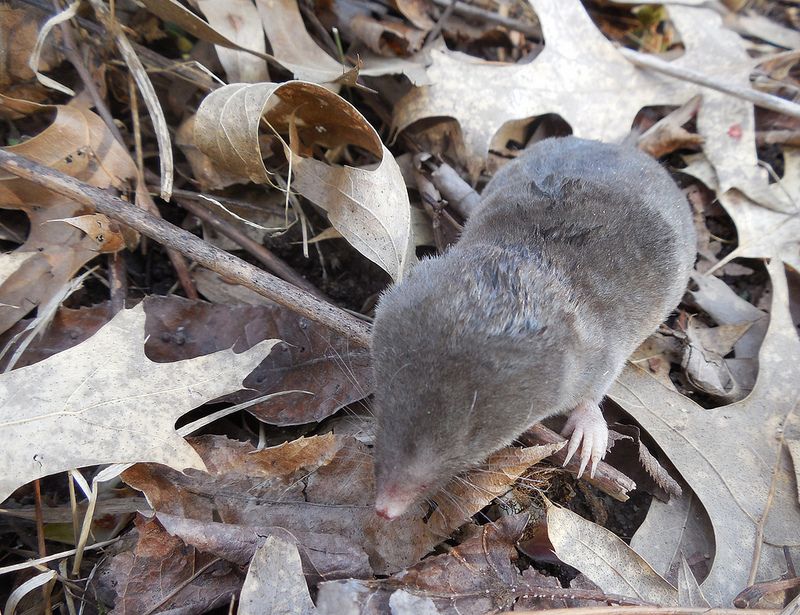
Venom evidence depends on which shrew you mean
© Maryland Biodiversity Project

The clearest proof of shrew venom comes from the northern short-tailed shrew, Blarina brevicauda. Researchers isolated and characterized a salivary-gland toxin from that species, described in a PNAS study of Blarina toxin.

That work was done on a northern animal, not a Florida one.

For the southern species, sources disagree. A U.S.

Forest Service guide describes its bite as venomous. But the Animal Diversity Web account says venom had not been experimentally tested in B. carolinensis.

A review of venom in eulipotyphlans says only B. brevicauda venom has been well described. So for the southern shrew, venom is best called reported or inferred, with less direct evidence behind it.

No source here shows direct proof of venom in Sherman’s short-tailed shrew. Toxin effects measured in prey or lab animals also do not tell us what happens to people.

Treat the word venomous as a real but limited claim, not as a warning label for your yard.

Keep some leaves and clear the places that need it
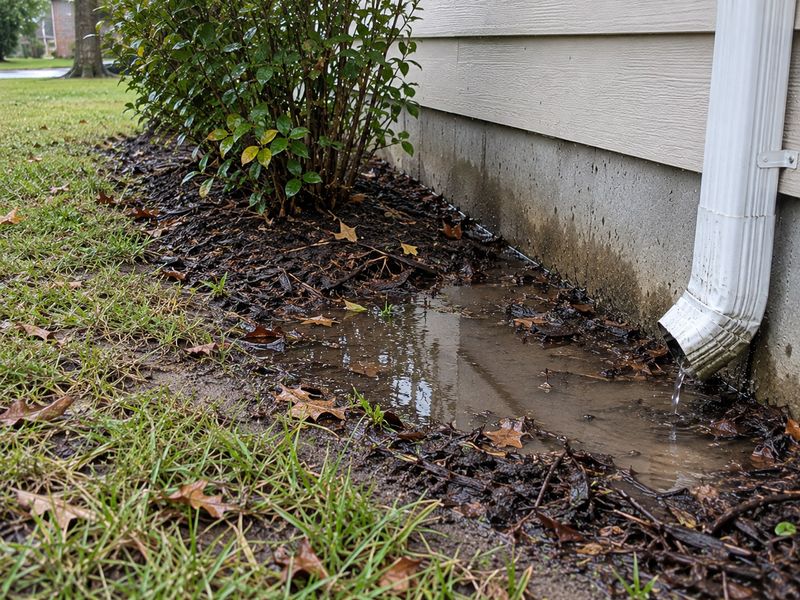
Keep some leaves and clear the places that need it
© Landscaping And Lawn Care Port Charlotte FL | Lawn Care, Pest Control & Landscape Supply

You do not have to choose between a bare yard and a blanket of leaves. A reasonable middle path is to keep some leaves in landscape beds or beneath shrubs and trees.

Clear them from walkways, from lawn areas where they smother grass, and from spots where rain can carry them away.

The runoff part matters in Florida. UF/IFAS yard waste guidance notes that leaf litter, acorns, and other debris can add nutrients to waterbodies when stormwater washes them in.

Sweeping leaves off driveways, curbs, and drainage paths helps keep them out of storm drains.

Ticks are another reason to be selective. UF/IFAS tick guidance recommends removing litter and debris from places where people spend time.

Play areas and well-used paths are good places to start.

Neither source gives a leaf depth that suits shrews, and no one has shown that leaving leaves will attract them. Treat this as sensible yard care that may also leave some cover for small wildlife.

A thin layer in a back bed and a clean path to the door is an easy way to put it into practice.

Give a suspected shrew space

If you spot something small and mouse-like in the leaves, one glance is not enough to name it. Several small mammals look alike, and a sighting alone does not tell you the species.

The best move is to keep your distance and let it go on its way.

Do not handle it or try to catch it. FWC offers wildlife viewing tips about keeping space from animals, and guidance for injured or orphaned wildlife if one looks distressed.

Sherman’s short-tailed shrew is state-threatened, and FWC guidelines outline protections against taking listed wildlife. Trapping a suspected one could cause harm to the animal.

The sources reviewed do not establish a serious human outcome from a shrew bite, but nobody should call one harmless either. If any wild mammal bite breaks your skin, wash the wound and contact a health professional or your local health department, and see Florida Department of Health rabies guidance.

A leaf pile can offer habitat potential, and it still says nothing about who is inside.

Share this story
MV

Written by

Marisol Vega

More from Marisol Vega →

About Gardening Latest

Gardening Latest provides in-depth guides to maintaining and enhancing your garden and backyard. Learn how to make the most of the space you have and create a beautiful garden.

More about us →

Latest stories

  • Missouri GardeningIf Your Missouri Woodpile Sits Against the House, You’re Inviting Brown Recluses Indoors This Winter

    If Your Missouri Woodpile Sits Against the House, You’re Inviting Brown Recluses Indoors This Winter

    1 min ago
  • Tennessee GardeningBefore You Dig In, Here’s How To Recognize Every Venomous Creature Sharing Your Tennessee Yard

    Before You Dig In, Here’s How To Recognize Every Venomous Creature Sharing Your Tennessee Yard

    7 min ago
  • Alabama GardeningThat Burning Saddleback Caterpillar Sting in Your Alabama Garden Calls for These Steps Right Away

    That Burning Saddleback Caterpillar Sting in Your Alabama Garden Calls for These Steps Right Away

    13 min ago
  • Minnesota GardeningBefore You Pick Up That Big Black Caterpillar With White Spots In Minnesota, Read This

    Before You Pick Up That Big Black Caterpillar With White Spots In Minnesota, Read This

    19 min ago
  • Illinois GardeningDeer Are Rubbing Their Antlers on Your Illinois Saplings Right Now, and Here’s How to Save Them

    Deer Are Rubbing Their Antlers on Your Illinois Saplings Right Now, and Here’s How to Save Them

    25 min ago

Gardening by state

Stories for your state, and the hardiness zone most of it gardens in.

Keep exploring

Read next

All Florida Gardening →
Florida GardeningA Florida Mammal Weighing About Two Quarters Is Venomous, and It Hunts in Your Mulch
Florida Gardening

A Florida Mammal Weighing About Two Quarters Is Venomous, and It Hunts in Your Mulch

57 min ago
Florida GardeningThat Huge Black Moth Resting by Your Florida Front Door Is a Witch Moth, and Here’s Why It Showed Up
Florida Gardening

That Huge Black Moth Resting by Your Florida Front Door Is a Witch Moth, and Here’s Why It Showed Up

3 hr ago
Florida GardeningFrom Pygmy Rattlesnakes To Black Widows, Here’s How To Recognize Every Venomous Creature Lurking In Florida Yards
Florida Gardening

From Pygmy Rattlesnakes To Black Widows, Here’s How To Recognize Every Venomous Creature Lurking In Florida Yards

6 hr ago

More from Florida Gardening

  • Florida’s Winter Cold Snaps Push Opossums Toward Your Home, and Here’s What to Do

    Nov 27
  • A Yellow Jacket Nest Turned Up Near Your Florida Home, And Here’s What To Do About It

    Nov 26
Back to top

Leave a response Cancel

Your email address stays private. Required fields are marked with an asterisk.

Gardening Latest

In-depth guides to maintaining and enhancing your garden and backyard: how to make the most of the space you have, and how to make it beautiful.

  • Facebook
  • X
  • Pinterest
  • YouTube

We may earn a portion of sales from products or services that are purchased through our site as part of our affiliate partnerships with retailers.

Explore

  • About GardeningLatest.com
  • Contact Us
  • Terms and Conditions
  • Privacy
  • Editorial Note:
  • FTC Disclosure

Newsletter

New garden guides and seasonal tips, straight to your inbox.

We’ll email you a link to confirm. Unsubscribe any time.

Almost there! Check your inbox and tap the link to confirm.

© 2026 Gardening Latest. All rights reserved.

Back to top