If you spot a yellowjacket nest near your Ohio home, you can handle it safely by looking at where it sits and who walks nearby. A nest far from daily traffic may be fine to leave alone, while one by a door, play area, or mowing path needs a plan.
A nest in a wall or a hard-to-reach spot, or a household with a serious sting allergy, calls for professional help. Here is how to sort out your situation without getting close.
Where yellowjackets nest and how to spot activity safely
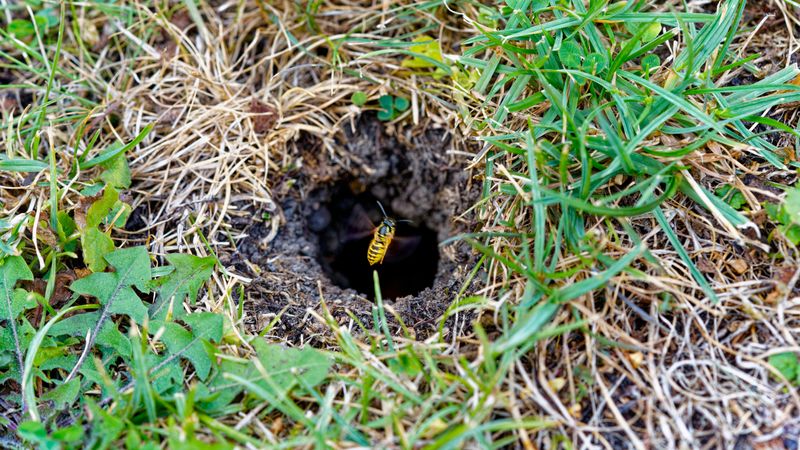
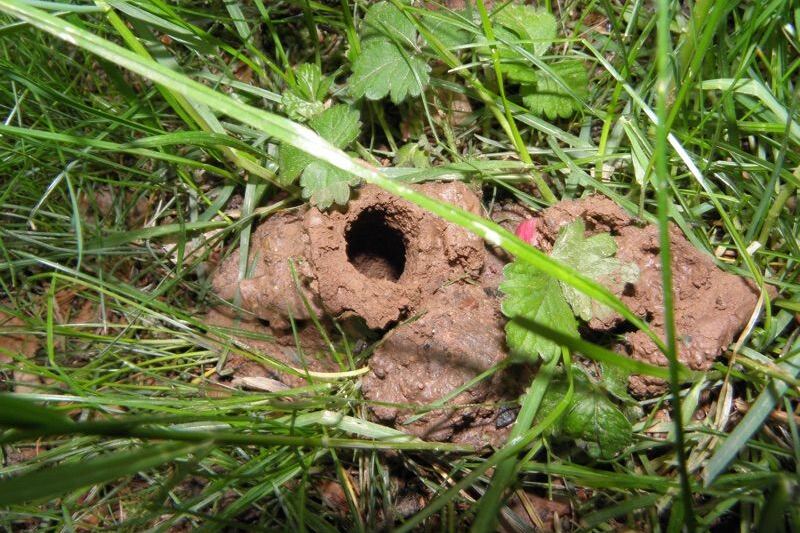
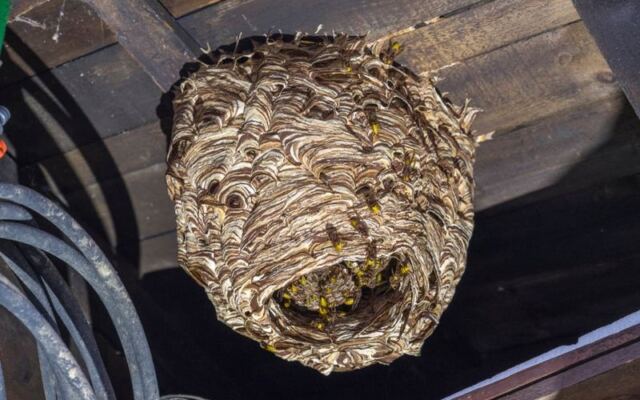
Yellowjackets are flexible about housing. They may nest underground, inside wall cavities, in attics, or in other protected spaces, so the nest itself is often hidden from view.
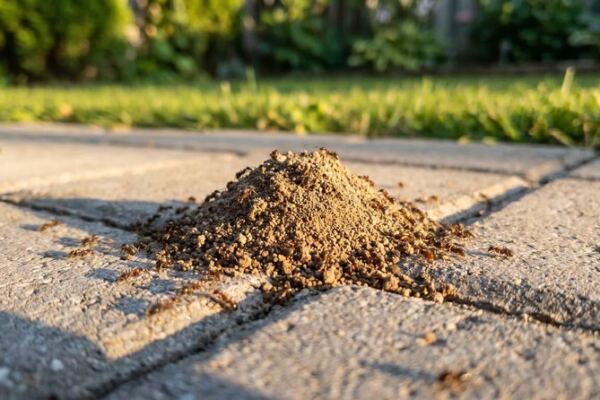
What you usually see is the traffic. Steady flying in and out of a small opening, such as a hole in the lawn, a gap in siding, or a crack near a vent, can help you notice a likely entrance.
That clue does not tell you how big the nest is, how far it reaches, or whether anyone can safely get to it.
Watch from a safe distance, such as from a window or across the yard. Do not walk up to the opening, poke it, shine lights into it, or try to peek inside.
Wasps defend their nest when they feel threatened, and a close look is exactly what sets that off.
Notes can help you later. Jot down where the opening is, what time of day you saw the most flying, and whether the spot is near a door, walkway, or play space.
Details like these matter because, according to Virginia Cooperative Extension, where a nest sits shapes the safest response. Next, you can compare that location with your daily routines.
When leaving a nest alone makes sense
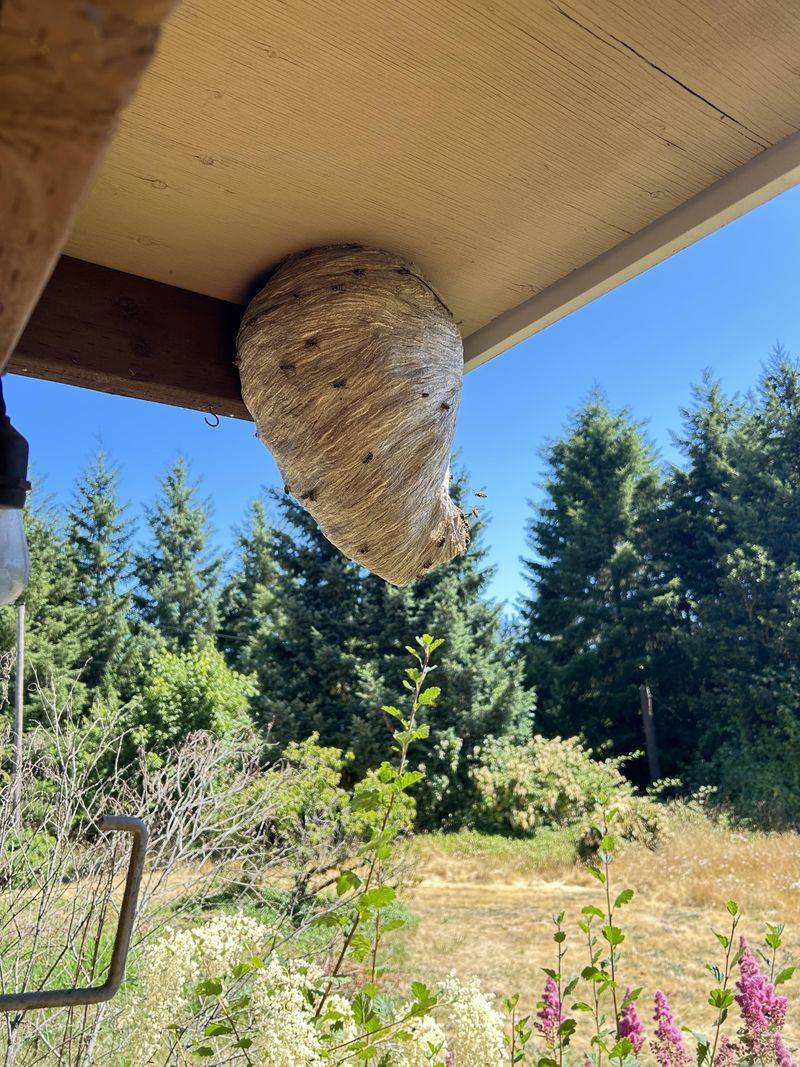
Not every nest is an emergency. An isolated nest that nobody walks past or mows near can often be left undisturbed, and an Ohio response from Ask Extension describes that kind of nest as something that may be tolerated.
The same source says yellowjackets are seldom aggressive when their nest is not threatened.
There is an upside to patience. Ohio State Extension notes in its yellowjacket fact sheet that these wasps prey on other insects, so they can be beneficial around a yard or garden.
Location is the deciding factor. A nest at the back edge of a lot, behind a fence, or in a wooded corner carries little exposure.
A nest beside a doorway, near a play area, along a path people use daily, or in the line of a lawn mower carries much more.
Walk through your week in your mind. Who goes where, and when?
Kids heading to a swing set, a dog running along a fence, or someone mowing every Saturday all count as exposure.
If people regularly pass near the nest, keep them away from that area and arrange appropriate control. If nobody goes near it, leaving it alone is a reasonable choice.
Why an active wall nest needs a different response
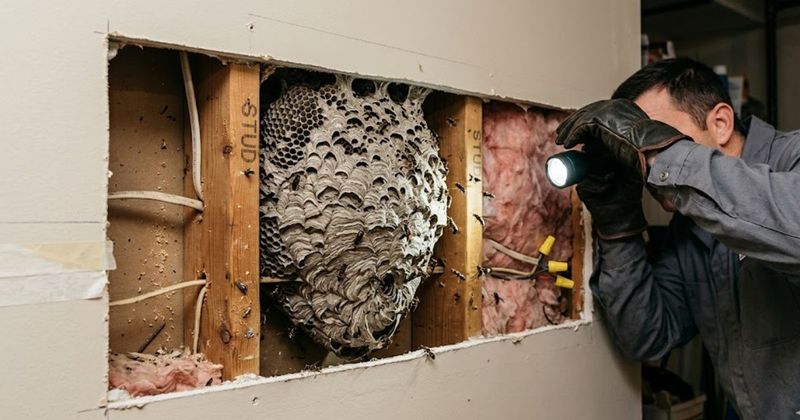
A nest inside a wall or another building cavity plays by different rules. You cannot see it, you cannot easily aim anything at it, and the wasps are living right next to your living space.
Resist the urge to plug the hole. Virginia Cooperative Extension advises against blocking an active wall-nest entrance because the wasps may look for another route, which could lead them into the home through a light fixture, vent, or gap in the trim.
Hard-to-reach nests are a job for a professional pest control company. They can judge the structure, choose a method, and work with the right protection.
This guidance applies even more strongly if anyone in your household has a serious sting allergy, since an unexpected encounter carries higher stakes for them.
This article does not offer a do-it-yourself method for treating a wall void, and that is on purpose. Close-up work in a confined space is where most problems start.
In the meantime, keep people away from the area around the entrance, keep doors and windows near it closed if you can, and call for help sooner rather than later.
Reduce encounters while you decide
Whether you are leaving a nest alone or waiting for a service visit, a few habits cut down on run-ins. Yellowjackets are drawn to sweet drinks and protein, so food is where most people meet them.
Keep trash cans covered, and put food away as soon as you finish eating outside. Before you take a sip, look into cans and glasses, since a wasp can crawl inside unnoticed.
Rinse bottles and cans before they go into recycling, too.
Guidance from University of Minnesota Extension covers many of these sanitation steps.
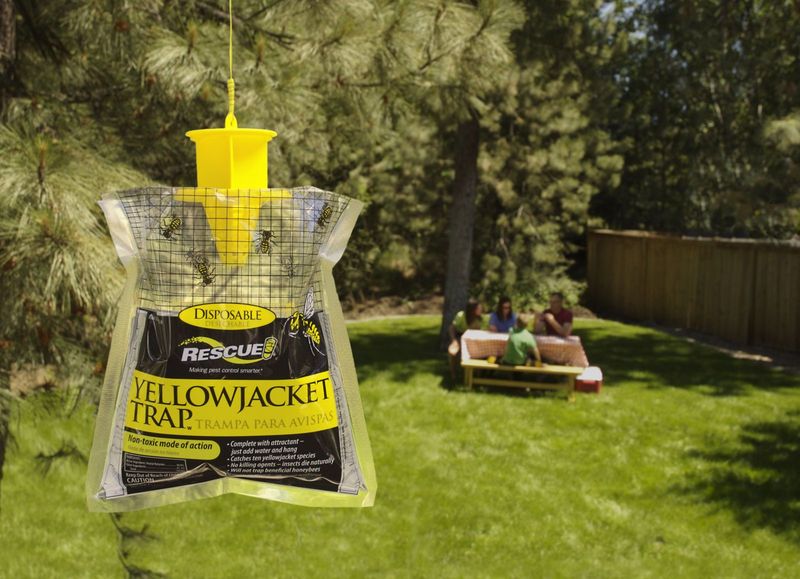
You may see traps for sale and wonder if one will solve the problem. Traps may catch some foragers, but they should not be counted on to eliminate a colony.
The nest keeps producing workers, so a trap is at best a small help with the wasps that wander into your picnic. The point is also made by Virginia Cooperative Extension.
Finally, move meals and play away from the nest side of the yard. Simple distance is one of the lowest-risk tools you have.
Match any control to the nest and product label

When a nest cannot be left alone, the first question is who should deal with it. For hard-to-reach nests, and for any household with a serious sting-allergy risk, professional help is the better route over close-up DIY treatment.
If you still consider a pesticide for an exposed nest, the label in your hand is your rulebook. Use only a product whose label permits that site and that use, and follow its directions and precautions.
A product made for a lawn or indoor use may not be allowed for a wasp nest.
As one example, a current EPA-registered product label advises treating when insect activity is low, standing at a safe distance, and not standing directly under the nest. Those directions belong to that product.
They are not a universal recipe for every nest or every pesticide, and one treatment may not end a colony, so a repeat treatment can be needed.
Skip improvised methods entirely. Virginia Cooperative Extension warns against flooding, burning, or smoking a nest, and against pouring gasoline, diesel, bleach, or other chemicals into it.
These approaches are dangerous to you and the environment and can provoke the wasps.
Waiting for cold weather is not always the answer
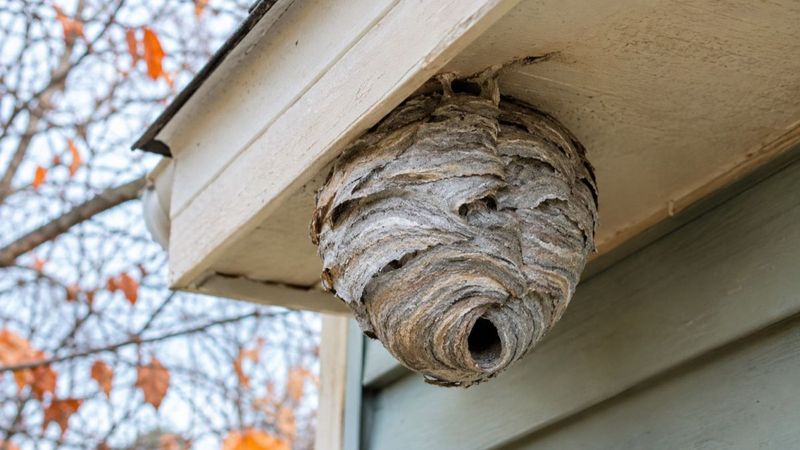
Seasons do work in your favor sometimes. Many yellowjacket colonies are annual, meaning the workers die as cold weather arrives and newly mated queens overwinter elsewhere to start fresh nests later.
For an isolated outdoor nest, waiting as activity declines can be a sensible choice.
There are limits to that plan. Virginia Cooperative Extension notes rare exceptions, including nests in warm building spaces, and says German yellowjackets may occasionally reuse nests.
No one can promise a date when a given nest goes quiet.
So tie the decision to what is happening now. Ask whether the nest is active today and whether anyone is likely to cross its path this week.
The Ohio guidance from Ask Extension separates a tolerable isolated nest from a hazard where people walk or mow.
A practical example: a nest at the far edge of a field can wait out the season. A nest by the garage door that your family uses daily should not be left to chance, and an active nest in or near the house calls for a case-by-case decision, ideally with professional input.
Know when a sting reaction needs emergency care
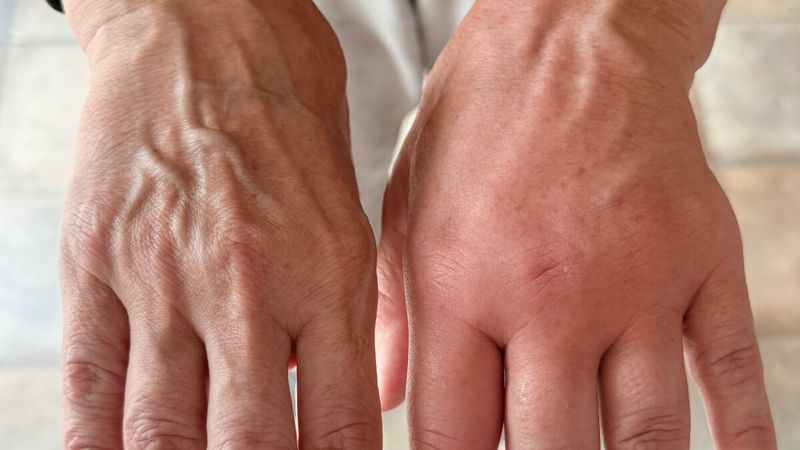
Most stings hurt and swell locally, but some reactions are emergencies. Trouble breathing, swelling of the throat or tongue, or collapse after a sting requires emergency help right away.
Call 911 instead of waiting to see if symptoms pass.
If someone in your home has a known sting allergy, follow their prescribed emergency plan. MedlinePlus advises using prescribed epinephrine promptly after a sting and contacting emergency care.
Make sure the auto-injector is not expired and that everyone who spends time with the person knows where it is kept and how to use it. Keep it within reach when you are outdoors near a known nest.
This advice stands apart from any plan for the nest. Removing or treating a nest does not replace emergency steps, and a serious reaction is not something to manage with home remedies.
Let exposure risk guide your next step
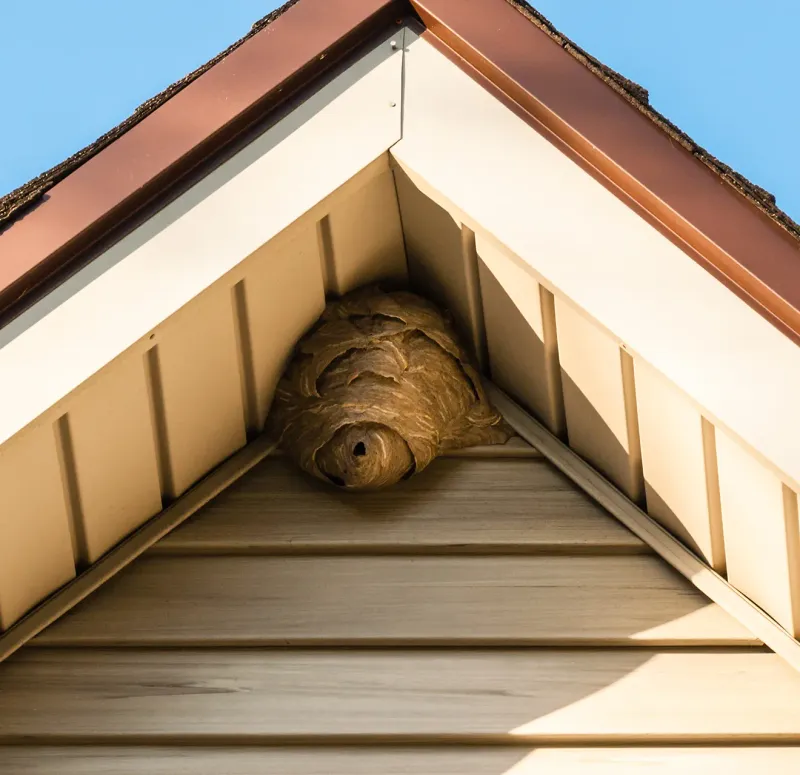
Start with exposure. If an isolated nest does not put anyone in its path, leave it undisturbed, as Ohio Extension guidance allows.
If it sits in a high-use area, keep people away and arrange appropriate control.
For a wall nest, a hard-to-reach spot, or a household with serious sting-allergy risk, call a professional. Distance is cheap, and a close call is not.
Share this story