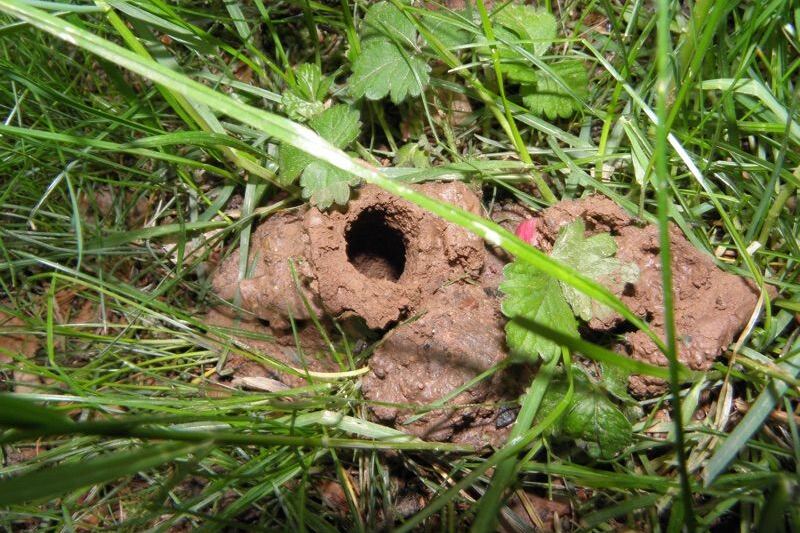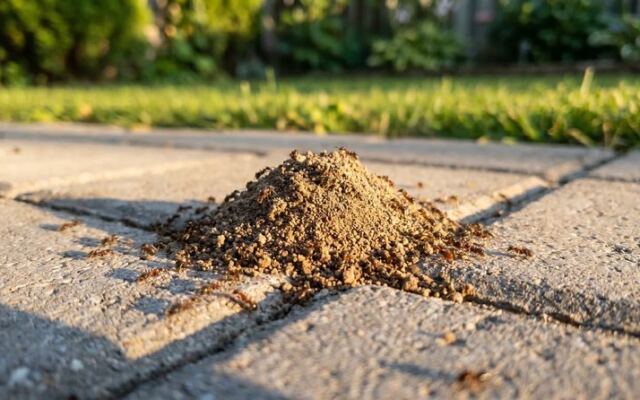
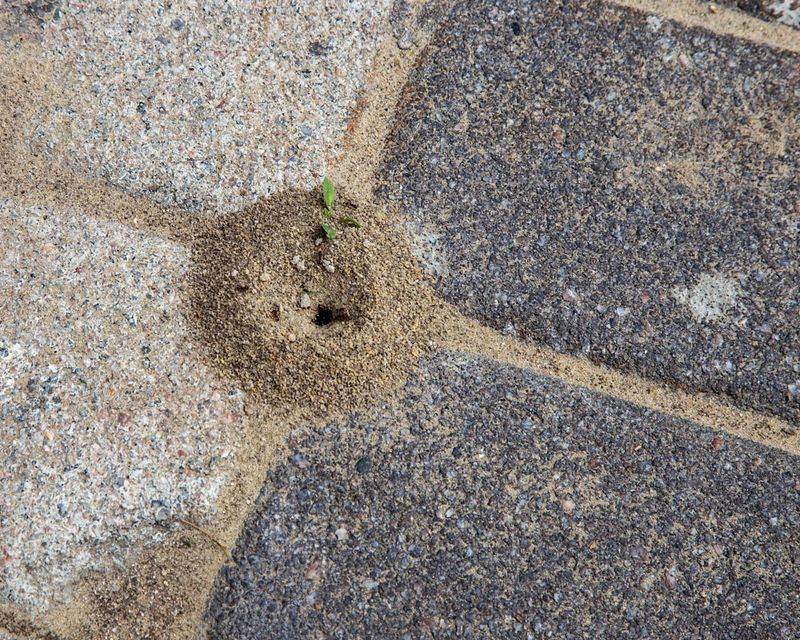
That little pile of loose soil beside your sidewalk is usually dirt the ants dug out of a nest entrance, and it is not a message about the weather or an invasion plan. Pavement-ant entrances can look bigger after rain, which is why the pile seems to show up overnight.
Knowing what the pile does and does not tell you can save you time, money, and needless spraying. Here is how to read it calmly and what to do if ants start showing up indoors.
The pile is usually soil excavated from a nest entrance
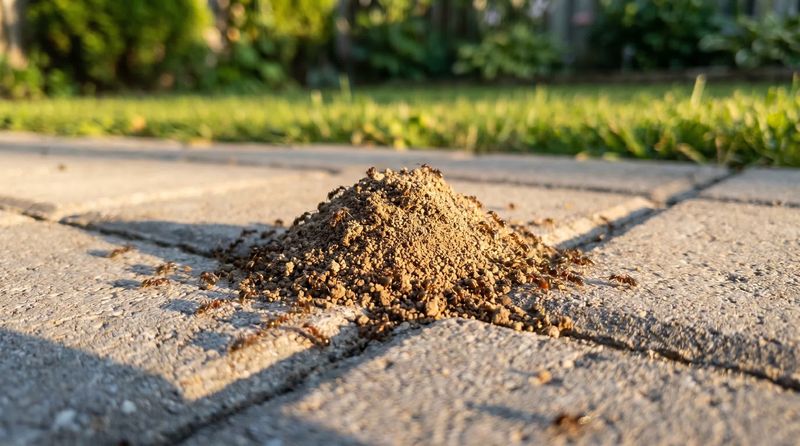
Pavement ants build their nests in soil, and they often choose spots under sidewalks, driveway slabs, patio stones, and other hard surfaces. As they dig tunnels and chambers, they carry the loosened soil up and out.
The workers drop it near the opening, and that is how a small heap forms beside a crack or paving edge.
That is the simple explanation for most fresh piles along pavement. Virginia Cooperative Extension describes pavement ants nesting under pavement, stones, and similar places, with excavated soil left near entrances.
Think of it as the dirt that had to go somewhere when the ants made room.
A pile like this is often excavated soil at an ant nest entrance, but it is not proof of pavement ants by itself. Other ants dig in similar places, and other things can leave loose soil near pavement.
Until you actually see ants at the opening or nearby, treat the pile as a clue rather than an answer.
The pile also tells you very little about how healthy, large, or busy the colony is. A tiny mound might come from a big nest, and a taller one might come from a short burst of digging.
For now, the useful takeaway is simply that soil near an entrance is a normal sign of digging, not a sign of trouble in itself.
What rain can change
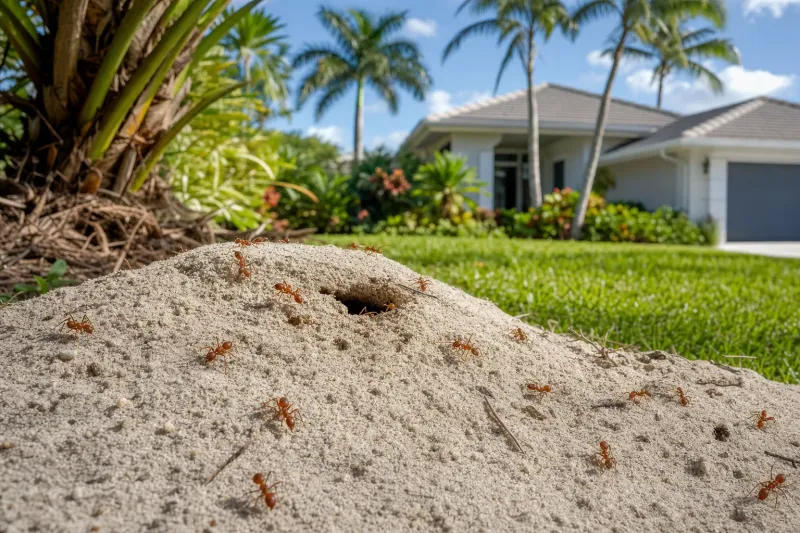
Rain does seem to change how noticeable these piles are. UF/IFAS notes that pavement-ant entrance mounds may build up after rain and then slowly collapse.
So a pile that was barely visible on Monday can look more obvious on Wednesday, and a few days later it may be flattened again.
That is about as far as the pavement-ant evidence goes. A post-rain pile does not show that the nest flooded, that workers are escaping, that the nest was destroyed, or that the colony is moving.
It also does not predict more rain, and rain does not explain every fresh pile you find.
Some other ant species do respond to flooding in documented ways. For example, research by LeBrun and colleagues looked at flooding and levee building in other ants.
Those findings belong to those species, and they should not be borrowed to explain what pavement ants are doing without species-specific evidence.
If you want a practical way to think about it, rain changes the soil and the mound, and your eyes pick up the change. Dry weather and ordinary digging can also produce piles.
Notice the pile, but do not read a story into it.
Check whether ants are making the pile
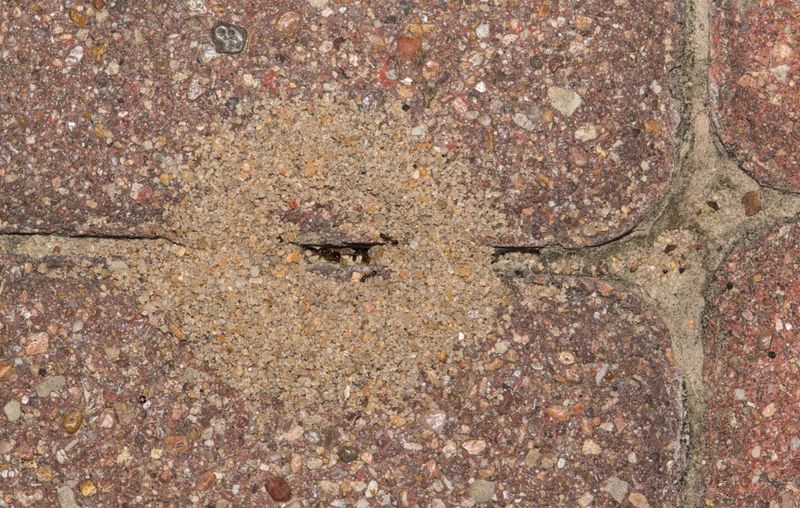
Spend a few quiet minutes watching the pile. If small ants are going in and out of the opening, or moving along the nearby pavement edge, ants made it.
If you see nothing, the pile may come from something else, so wait and check again at a different time of day before naming a culprit.
Many small, dark ants look alike. Pavement ants are small and brownish-black, and Cornell’s NYS IPM fact sheet notes that close identification can take magnification.
A hand lens, a clear photo, or a question to your local extension office can help if you need a firm answer.
You may run into two scientific names in your reading. The usual North American pavement ant is now identified as Tetramorium immigrans, while older sources may call it T. caespitum.
That is just a naming update, and it does not let you identify a species from mound shape alone.
As Virginia Cooperative Extension also describes, the ants themselves are the best evidence. Watch the traffic first, then decide what you are dealing with.
A mound marks an entrance, not the whole nest
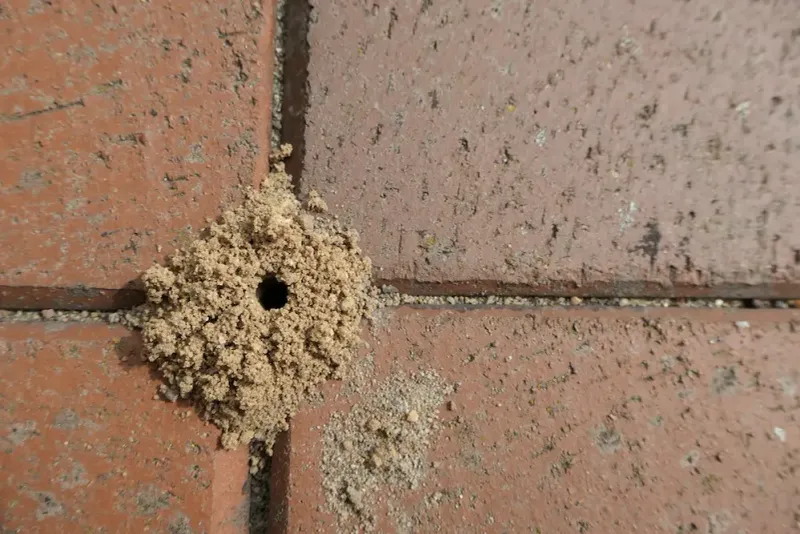
Where the pile sits does tell you something modest: ants are using an opening there. A mound at a sidewalk crack means there is a way in and out at that spot.
That is useful, but it is not a map.
Pavement ants can nest under slabs and foundations, so the main nest may sit well out of sight. Penn State Extension describes this under-pavement nesting habit.
A visible mound may not show how large the nest is or where its edges are.
There may also be more than one entrance. UF/IFAS information on the species fits with that, so a second pile a few feet away could belong to the same nest or to a different one.
You cannot tell from the piles alone.
So avoid drawing circles around the mound and guessing at the colony. Use the pile as a spot to watch, and let the ants’ movements tell you more.
A modest outdoor mound usually needs no treatment
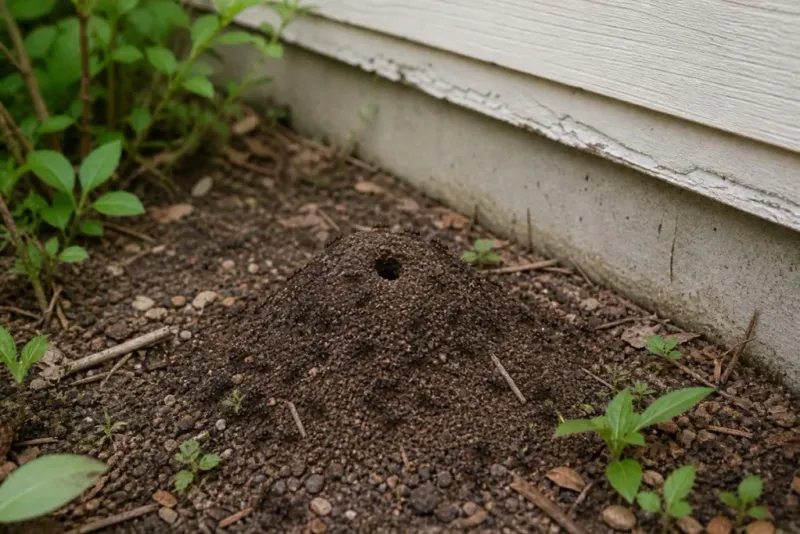
Most small outdoor mounds are a nuisance at worst. Extension guidance, such as Virginia Cooperative Extension’s pavement ant page, treats these ants mainly as a problem when they invade buildings or become objectionable around the home.
A small pile with no ants indoors and no damage to paving is not, by itself, a reason to apply pesticide.
Leaving it alone is proportionate guidance, not a guarantee. Colonies can grow, and ants may later find their way inside.
If that happens, you can change course.
You can sweep or brush the pile away if it bothers you, knowing it may return. Do not pour boiling water on it or drench the yard.
Those habits can harm plants and are not justified for an incidental mound, and broad pesticide treatment is not a routine answer either.
Pesticides are for use only as the product label directs, as noted by the Illinois Department of Public Health. The Cornell fact sheet also points toward targeted steps over blanket treatment.
A small pile just does not call for it.
If ants come inside, address their route and food sources
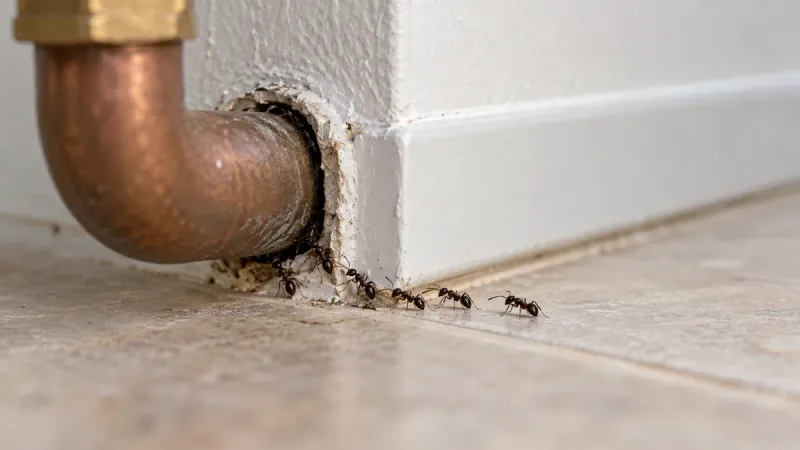
Ants indoors deserve a real response. Start by watching where they travel.
A trail along a baseboard, window frame, or door threshold shows you where they come in and where they are headed, and Cornell’s NYS IPM guidance supports starting with that kind of observation.
Next, seal the gaps you find with caulk or weatherstripping. Then remove what draws them: put food in sealed containers, wipe up crumbs and sticky spills, empty pet bowls between meals, and fix drips or damp spots.
Without easy food and water, trails tend to fade.
If you decide to use bait, choose a product labeled for the location and for ants. Place it where the ants are actually foraging, and follow the label.
Workers may carry the bait back to the colony, so give it time, because results are not instant, as Virginia Cooperative Extension notes.
Do not spray over bait placements. Illinois Department of Public Health guidance explains that residues can make ants avoid the bait, and contact sprays generally do not eliminate the colony.
Keep baits and pesticides away from children and pets as the label directs. Penn State Extension also stresses label-following use.
If the trail keeps coming after several weeks, a pest professional can help.
Let observed ant activity guide your next step
Use a simple rule. First, confirm that ants are actually there.
If they are only working a modest mound outdoors, watch it, since Virginia Cooperative Extension treats these ants mainly as a problem indoors or around the home.
Step up your response when ants enter the house or when paving is being damaged. Until then, the pile is just a pile.
The ants will tell you more than the dirt ever will.
Share this story