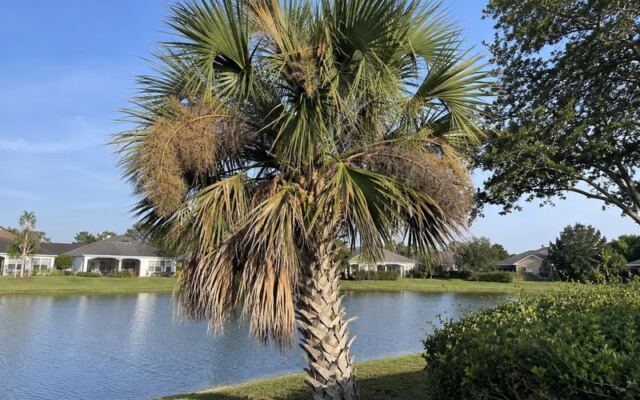
One summer morning, a tall branching spike shows up on top of your palmetto, and it looks like something has gone wrong. Good news: it is almost always a normal part of the palm’s life.
Knowing what the stalk is, and what comes after it, helps you decide whether to leave it or cut it. Either choice can work, and the right one depends on what you want from your yard.
A crown-top stalk is a normal part of cabbage-palmetto reproduction
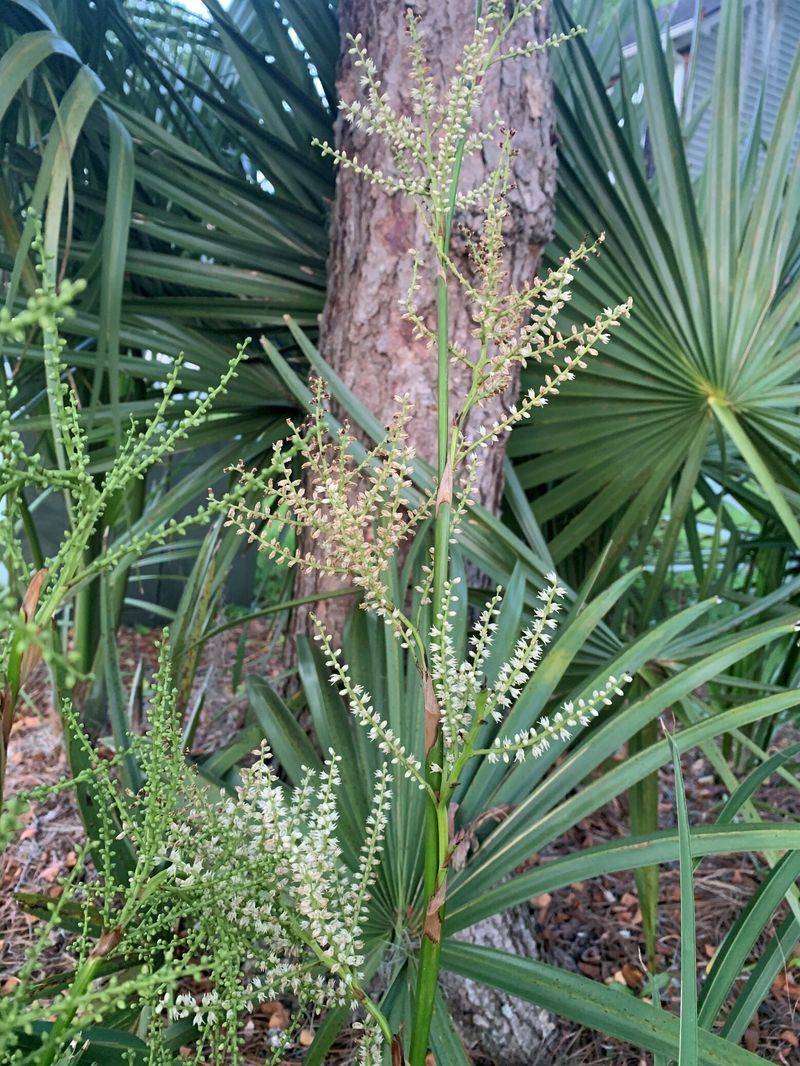
Those big branching spikes are flower clusters, which botanists call inflorescences. They are the palm’s way of reproducing, not a symptom of disease, and they do not mean the tree needs pruning.
A palmetto that sends one up is simply doing what mature palms do.
According to Clemson Extension, a cabbage palmetto (Sabal palmetto) shows its flower stalks in late spring to early summer. The stalk comes out of the top of the plant, curves, and runs roughly 5 to 8 feet long.
It can reach out past the fronds and carries many small, creamy-white flowers.
Not every palm called a palmetto behaves this way. South Carolina is also home to dwarf palmetto (Sabal minor) and saw palmetto (Serenoa repens).
Their flower stalks come up near the base of the plant and are shorter, so a tall spike growing from a crown on a trunk points to cabbage palmetto.
That difference matters because advice for one palm does not always fit another. If your palm is low and shrubby with a stalk near the ground, treat the rest of this article as general background only.
If you have a trunked palm with a curved spike at the top, you are looking at ordinary flowering, and UF/IFAS pruning guidance treats removal of these stalks as optional rather than as a fix for any problem.
Flowers give way to fruit as the season progresses
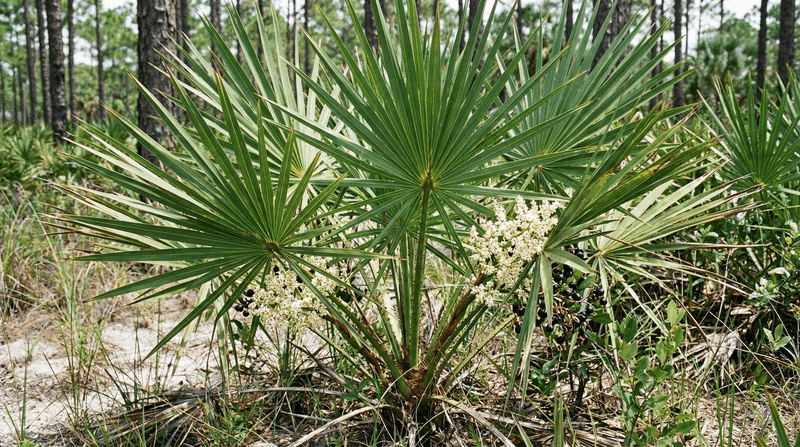
A palmetto stalk changes a lot between early summer and fall. At first it is covered in small, creamy-white flowers that give the whole spike a frothy look.
If you stand beneath it on a warm day, you may notice bees and other insects moving through the blooms.
Coastal Carolina University’s arboretum lists flowering in May through July and fruit maturing in October and November. Clemson’s description of stalks appearing in late spring to early summer fits that timeline.
Treat these months as a rough guide, because weather, location, and the individual palm can move the dates earlier or later.
Telling the stages apart is simple. A stalk in bloom looks pale and fluffy, with tiny flowers crowding the branches.
Once the flowers fade, small round fruit takes their place, and the color shifts toward dark green and then nearly black as it ripens.
If you want to know which stage you are in, look closely at the branch tips. Open pale flowers mean the bloom period is still going, while hard round berries mean the stalk has moved on.
That distinction becomes useful later if you decide to cut the stalk, since what you remove will either be flowers or fruit.
Leaving the stalks preserves flowers and fruit for wildlife
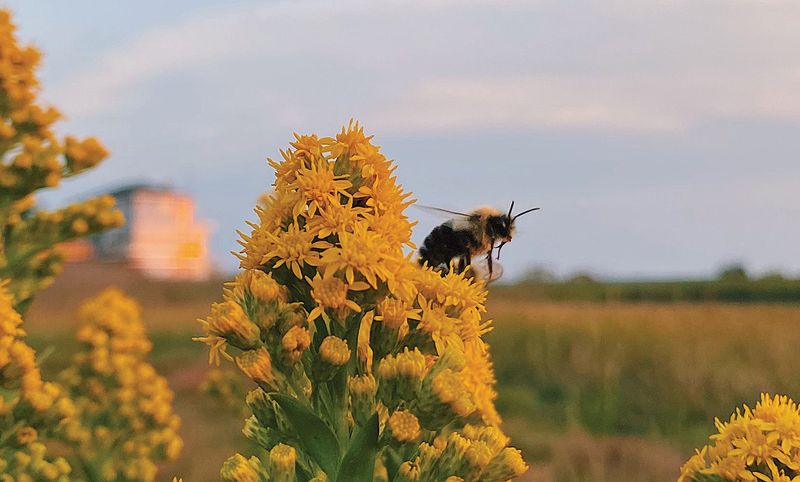
Plenty of homeowners keep their stalks simply because they like what they bring. The flowers offer pollen and nectar for pollinators, and the fruit later becomes food for wildlife.
A palmetto in bloom can turn into one of the busier spots in a yard during summer.
UF/IFAS notes that leaving flowers helps pollinators and that fruit left on the palm remains a food source. Coastal Carolina University’s arboretum page on cabbage palmetto also ties the flowers and ripening fruit to the palm’s natural cycle, and a UF/IFAS profile of Sabal palmetto covers the same plant.
Still, nobody is obligated to preserve every stalk. Wildlife value is one thing to weigh, alongside where the palm stands and how much cleanup you are willing to do.
A palm beside a patio or driveway may call for a different decision than one at the back of a wooded lot.
A middle path works too. You can enjoy the blooms through the flowering weeks and decide about the fruit afterward, or leave stalks on a palm far from walkways and trim those near them.
The palm itself does fine either way.
Removal can limit fruit litter and volunteer seedlings
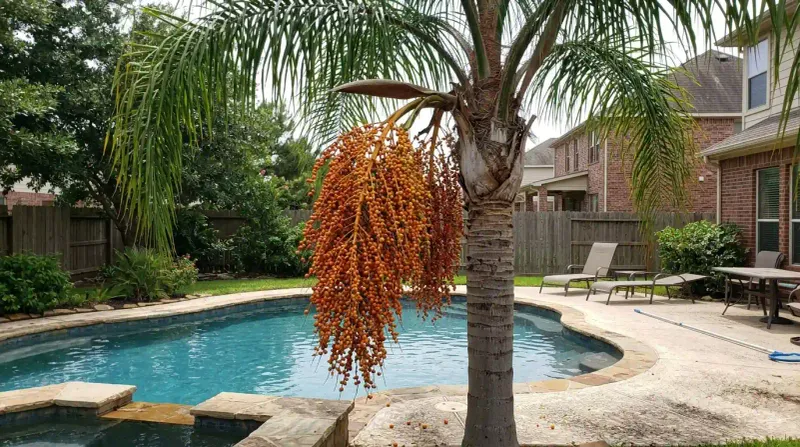
Some people want the stalks gone, and the reasons are mostly about housekeeping. Ripe fruit drops onto decks, driveways, and lawns, and it can leave a mess you have to sweep or rake.
Fruit that lands in garden beds may sprout as well.
UF/IFAS notes that sabal fruit can sprout into seedlings, and Clemson’s guide to volunteer native palms documents palmetto seedlings turning up in South Carolina landscapes. If you keep finding little palms in flower beds, a nearby fruiting palm is a likely source.
These are practical reasons, not health requirements. Your palmetto will not suffer if the stalk stays on, and it will not suffer if you take it off.
The choice comes down to how much fruit cleanup and seedling pulling you want in your future.
If you love the flowers, there is no need to rush. You can wait until the blooms have dropped and then remove the stalk, which gives you the flowers without much of the later fruit.
No particular season is required for the palm’s health, so pick a time that suits your schedule and your yard.
Remove stalks without damaging the crown or trunk
If a stalk is low enough to reach safely from the ground, the main rule is to cut the stalk and leave the trunk and crown alone. UF/IFAS considers removing flower or fruit stalks safe for palms when it is done that way, and reports no evidence that removing living stalks harms the palm.
Use clean, sharp tools and make the cut on the stalk itself.
That guidance covers stalks only. Green, healthy fronds are a different matter, because they feed the palm, and cutting them off reduces its food-producing leaves and can injure the crown.
Taking a stalk off is not a reason to start trimming leaves.
Do not treat stalk removal as storm protection either. Hurricane-cutting strips too many fronds and is a practice UF/IFAS warns against, and removing a stalk will not hurricane-proof a palm.
Likewise, a UF/IFAS publication on pruning palms says studies found more leaf production after stalk removal in palms generally, but that has not been shown for South Carolina cabbage palmettos, so do not count on it.
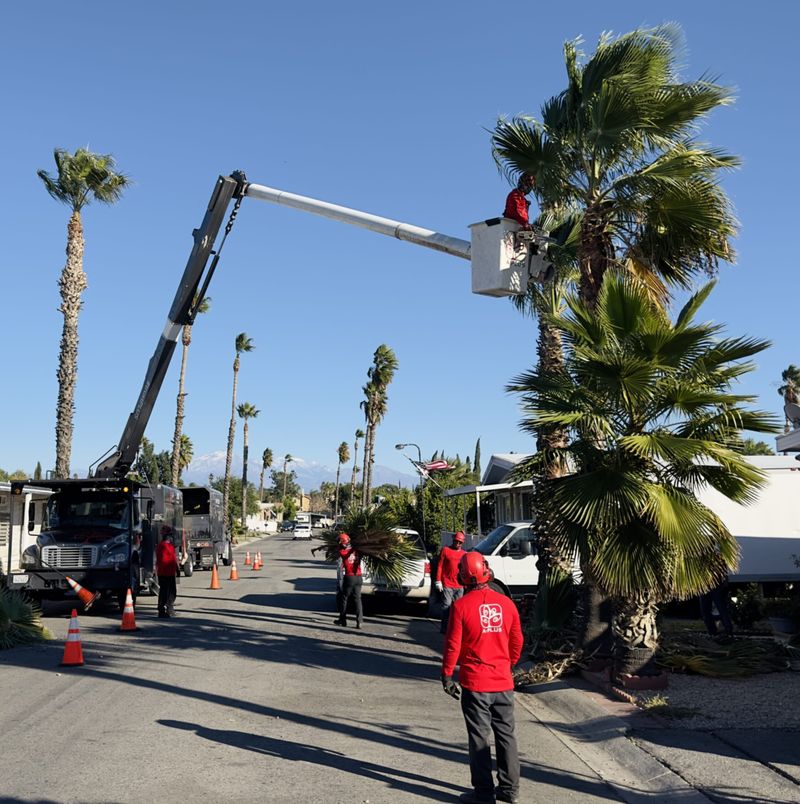
Safety comes first with tall palms. Do not climb the trunk, use climbing spikes, or make overhead cuts.
If a stalk needs a ladder, climbing, or any cutting above your reach, hire a qualified professional such as a certified arborist.
Choose based on your priorities, not fear for the palm
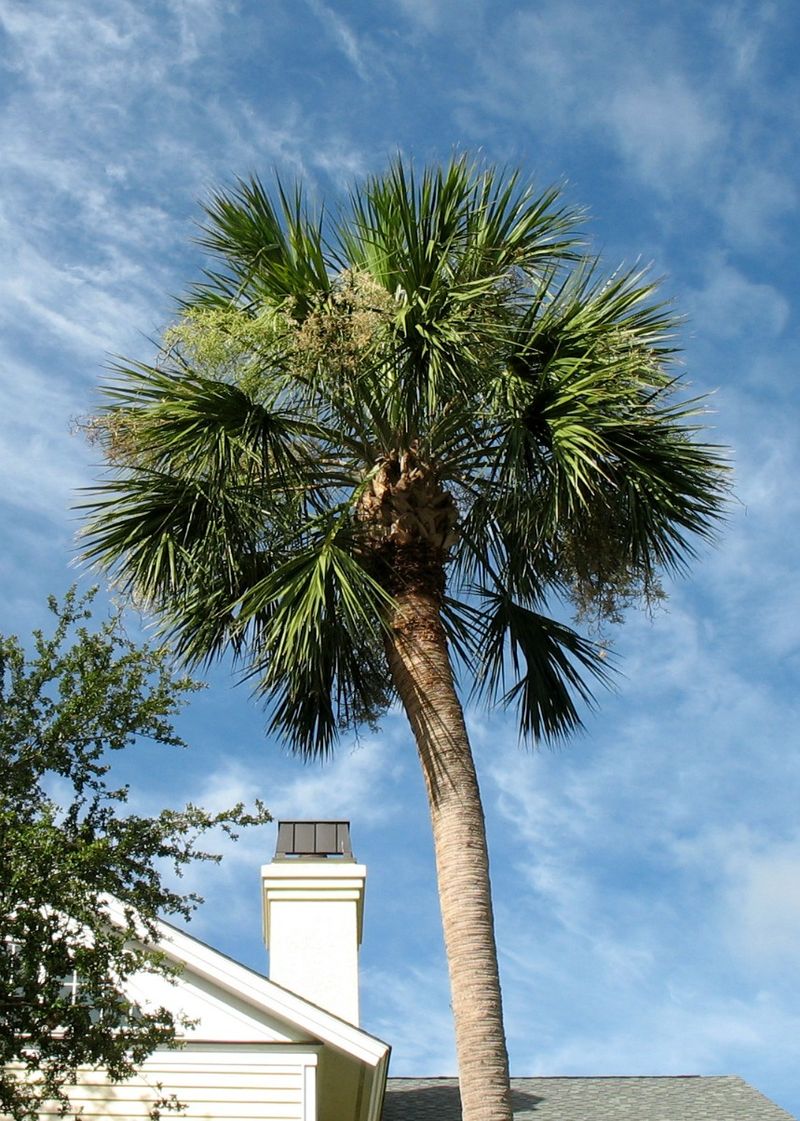
Leave the stalk if you want flowers for pollinators and fruit for wildlife. Remove it if you would rather have less fruit on the ground and fewer seedlings to pull.
Per UF/IFAS, neither choice is required for your palm’s health, and if the stalk is out of safe reach, call a professional.
A palmetto that flowers is a palm doing its job, and you get to decide how tidy or wild your yard looks.
Share this story