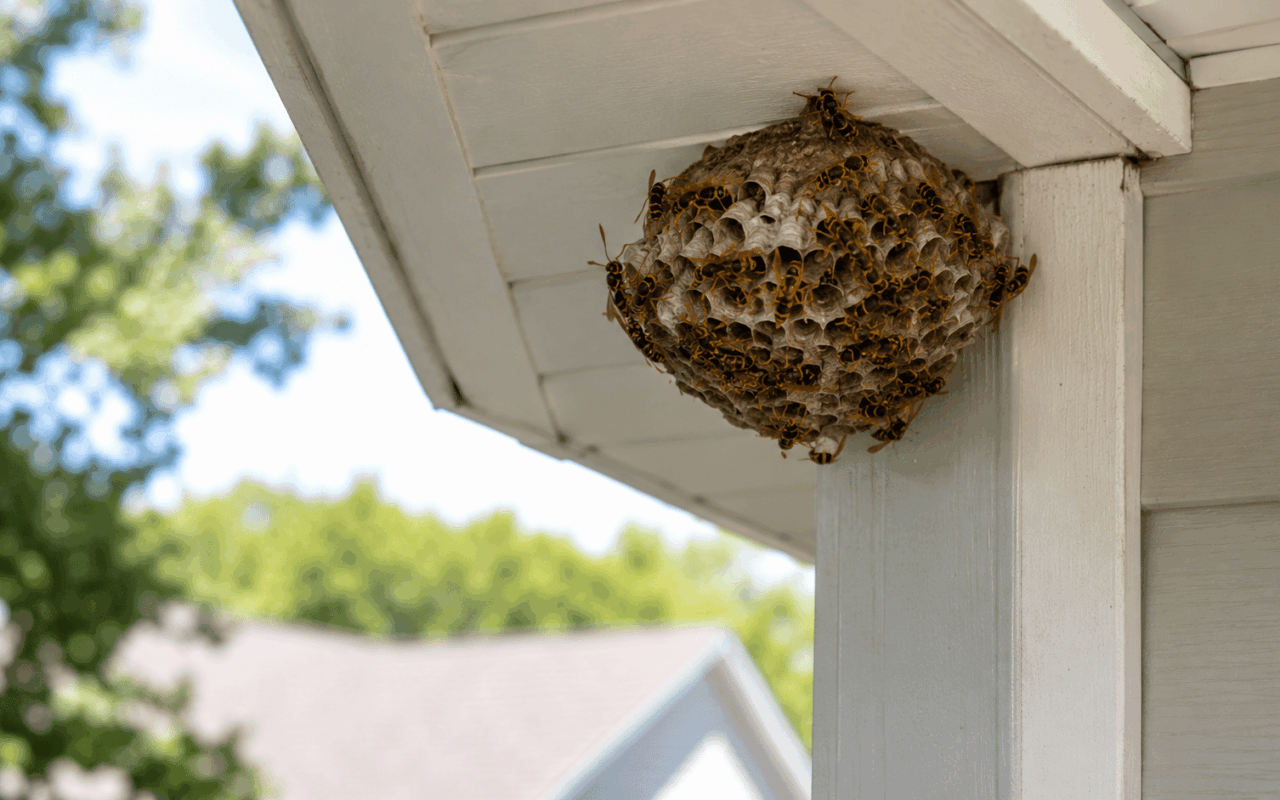
A yellowjacket nest near your home does not automatically have to be destroyed. What matters most is knowing what insect you have and whether your family can stay clear of the nest.
Some nests can be left alone, while others need a professional. Here is how to tell the difference and stay safe while you decide.
Start With Whether People Can Avoid It
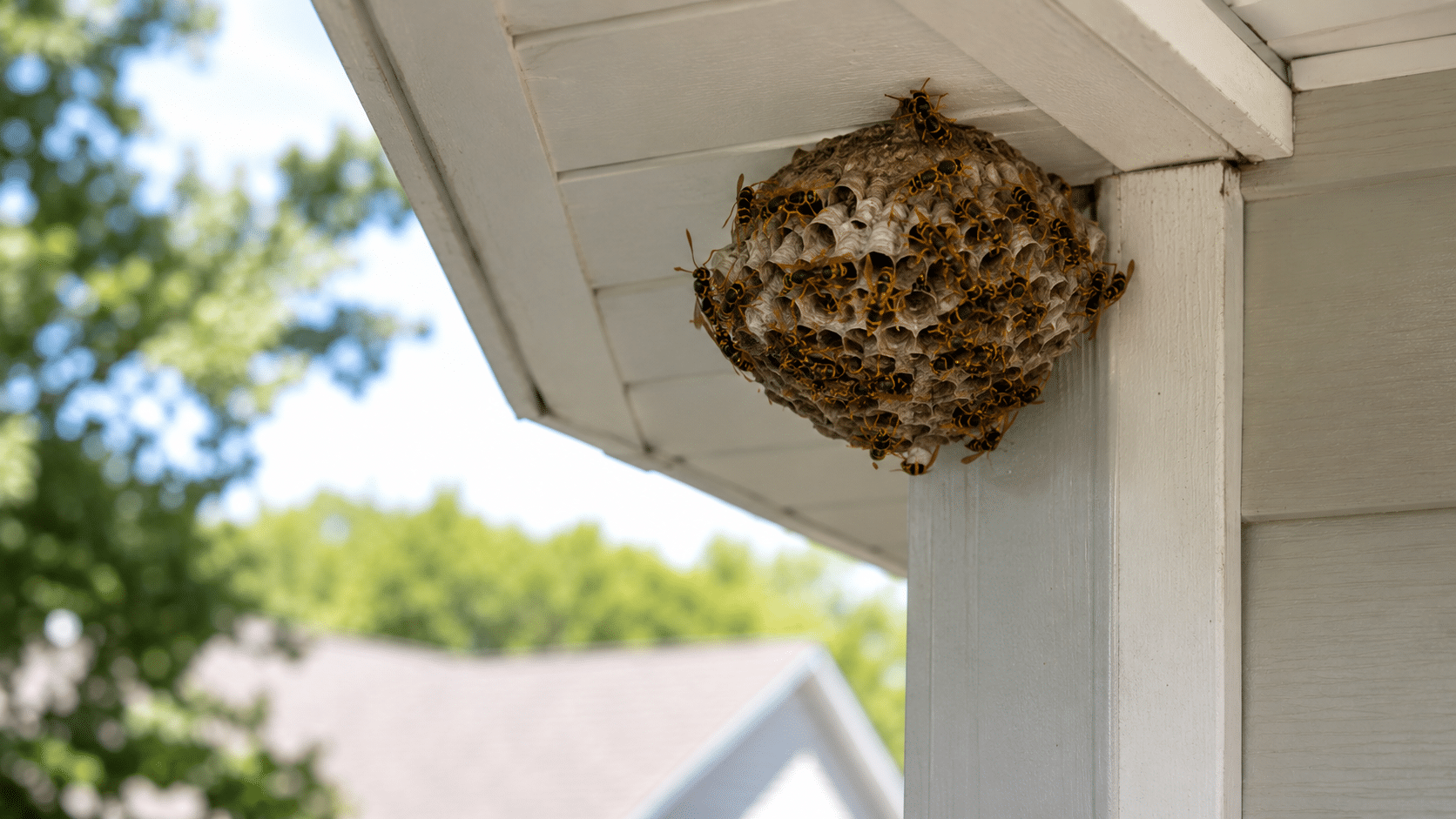
Finding a suspected nest can be unsettling, but it does not mean you must act right away. A suspected yellowjacket nest does not automatically need removal, and there is no magic distance or wasp count that decides it.
The real question is whether people can safely stay away. A nest in a far corner of the yard, away from paths and play areas, is a very different situation from one beside a front door.
University of Maryland Extension says social wasps generally sting in response to a perceived threat, recommends leaving nests alone when possible, and suggests treatment may be needed when a nest cannot be avoided.
If the nest is active inside a wall or somewhere else hard to reach, professional help is the safer route. Before doing anything else, confirm what kind of insect you are dealing with.
The next section walks through that step.
Check What Kind of Wasp You Have
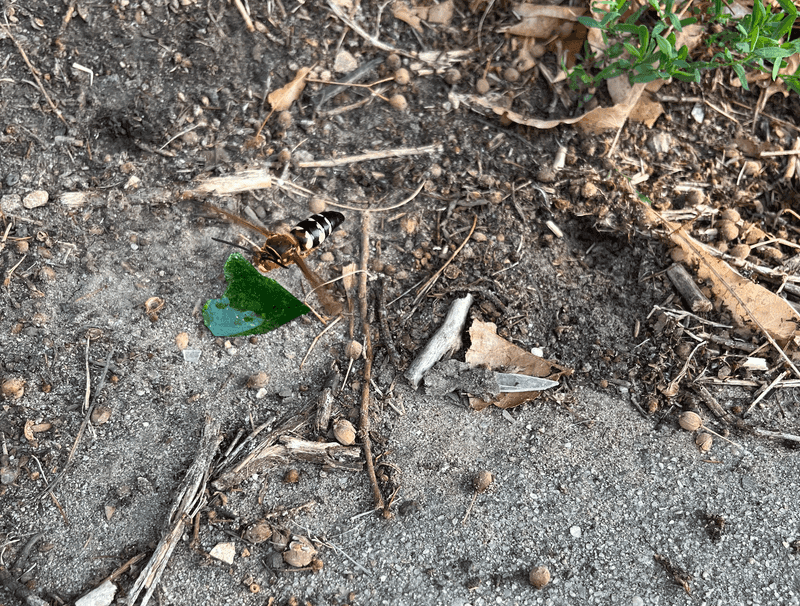
Yellow-and-black stripes can make almost any wasp look like a yellowjacket. But a ground opening or a paper structure alone does not confirm the species.
Maryland is home to several social wasps, including yellowjackets, hornets, and paper wasps, and each one nests a little differently.
Some lookalikes are quite alarming but behave differently. Cicada killers, for example, are large ground-nesting wasps that can resemble oversized yellowjackets.
Per Maryland Extension’s cicada killer page, they are solitary insects that are generally not aggressive toward people. Seeing a big wasp hovering over a bare patch of soil is not proof that a dangerous colony is underneath.
Look at the details from a safe spot. Note the size of the insects, whether many workers are flying in and out of one opening, and whether you see a papery covering.
Do not get close to get a better look.
If you are still unsure, a photo can help. Maryland Extension’s Ask Extension service accepts submitted photos for identification.
An alarming look is never enough reason to destroy a nest, so get the identification right first.
Reduce Encounters While You Decide
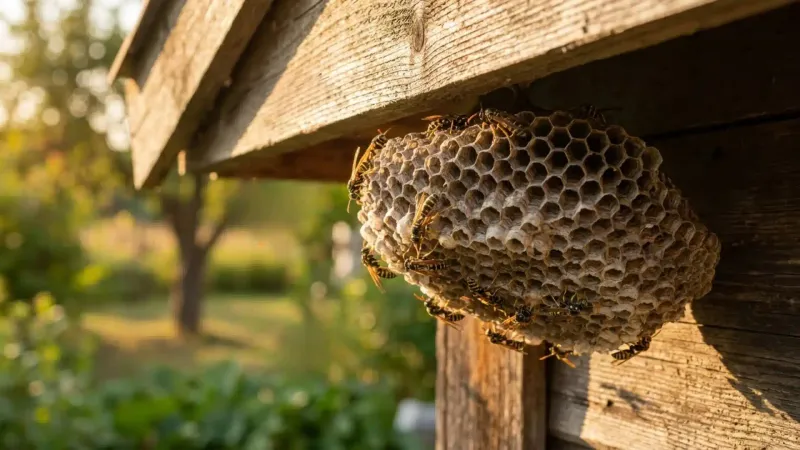
While you sort out the next step, a few small habits can lower the chance of a sting. Keep food and drinks covered when you eat outside, and make sure trash can lids close tightly.
Clear fallen fruit from the yard, since sweet scraps attract foraging wasps.
Resist the urge to swat at wasps. Social wasps can sting when they feel threatened or are defending a nest, so quick arm movements can make things worse.
According to Maryland Extension, workers can sting more than once if they feel threatened.
Keep a few other cautions in mind around the nest itself:
Do not mow directly under or beside a nest, because the vibration and noise can set off a defensive response. Do not strike the nest or the branch, shed, or structure it hangs from.
Never reach into an opening you cannot see into, such as a hole in the ground or a gap in siding.
It also helps to tell everyone in the household where the nest is. Children and visitors may not know to stay away.
If someone has to pass close to the nest every day, that is a sign you may need to consider other options.
An Avoidable Nest Can Often Be Left Alone
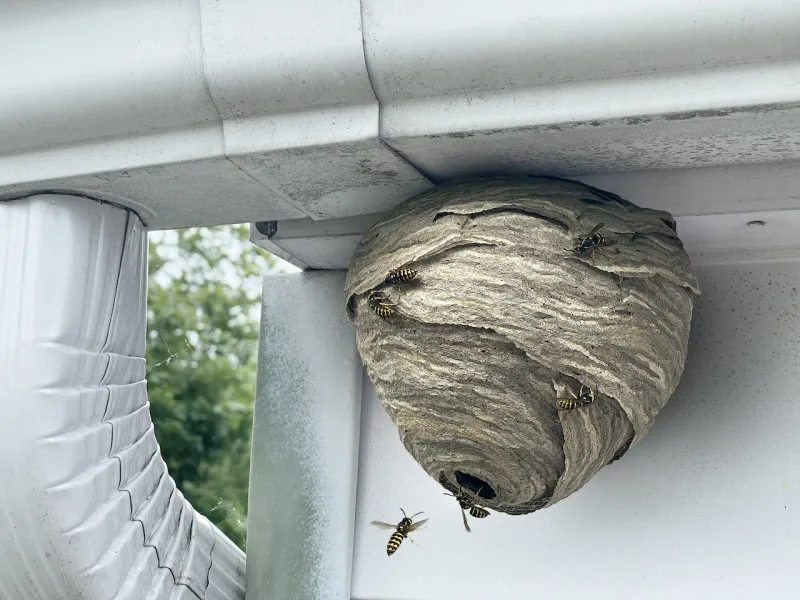
Many people assume any nest has to go, but a nest that stays out of everyone’s way can be left in peace. Maryland Extension recommends leaving social wasps alone when possible.
They hunt other insects and also feed on nectar, so they play a role in the yard.
Time is also on your side. As a general pattern, most social wasp colonies die off over winter, and ordinary old nests are not reused the next year.
That means a nest in an out-of-the-way spot may simply fade away once cold weather arrives. No one can promise a specific date when a given nest will go quiet, so keep your distance until you see that activity has stopped.
There are rare exceptions. Virginia Cooperative Extension notes that in protected or temperature-controlled spaces, such as some buildings, an occasional German yellowjacket nest can persist over winter.
So a nest inside or attached to a heated structure deserves more attention than one in an open field.
A practical example: a nest near the back fence, where no one walks, can be monitored from afar. A nest by the mailbox is a different story.
Call a Professional for Hidden or Hard-to-Reach Nests
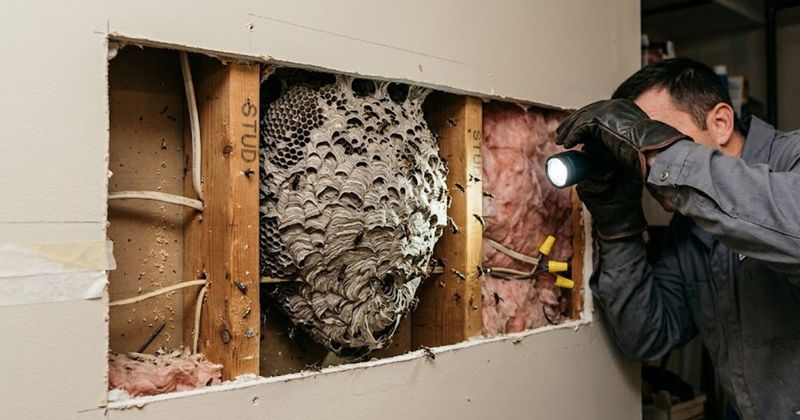
Some nests are tucked inside wall voids, attics, or other sheltered spaces. Those are harder to see, harder to reach, and much harder to treat safely.
University of Minnesota Extension says hidden nests in buildings are usually best handled by a pest-management professional.
Maryland Extension also advises hiring a professional when a nest is hard to reach or the homeowner is uncomfortable treating it. The same goes for any nest people cannot safely stay clear of, such as one beside a door or along a walkway you must use.
Whatever you do, do not plug the entrance of an active wall nest. Workers can chew another opening, and it may lead into your living space.
Virginia Cooperative Extension cautions against this kind of sealing.
When you call, describe where you see wasps entering and leaving, and how long you have noticed them. Keep family and pets away from that area until help arrives.
Follow the Label if You Use a Pesticide
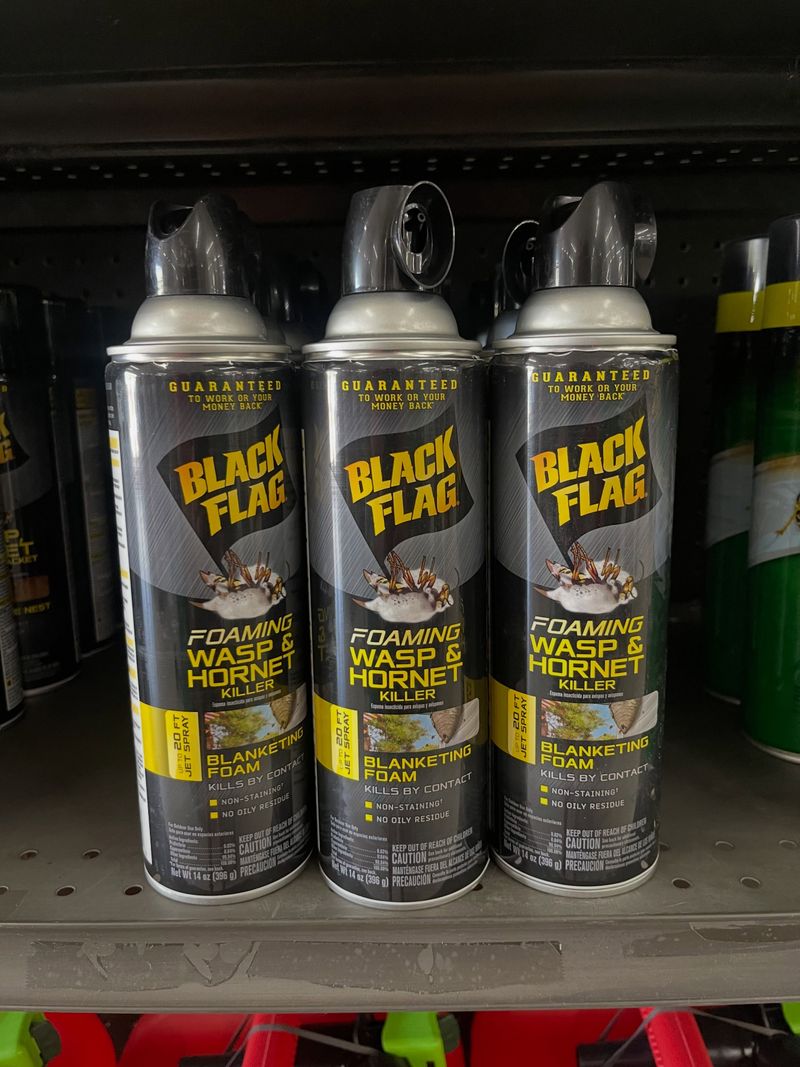
If you decide to treat a nest yourself, the product label is your rulebook. The EPA says using a pesticide in a way that is inconsistent with its label is illegal, and labels differ from product to product.
As one example only, one EPA-registered aerosol label advises applying at dawn or dusk, spraying from a safe distance, not standing directly below the nest, and keeping people and pets away as directed. Those directions apply to that product, not to every pesticide you might buy.
Do not expect instant results. Maryland Extension says residues may take several days to affect workers returning to a nest, and large nests may need repeated treatment.
Treating one nest also may not clear every wasp from your property, since workers can forage far from home.
Skip the folk methods. Do not flood a nest, burn it, smoke it, bury it, or pour gasoline or bleach into it.
These can agitate the wasps and raise your risk of being stung. Traps may catch some foraging workers, but they do not eliminate a nest.
Know When a Sting Is an Emergency
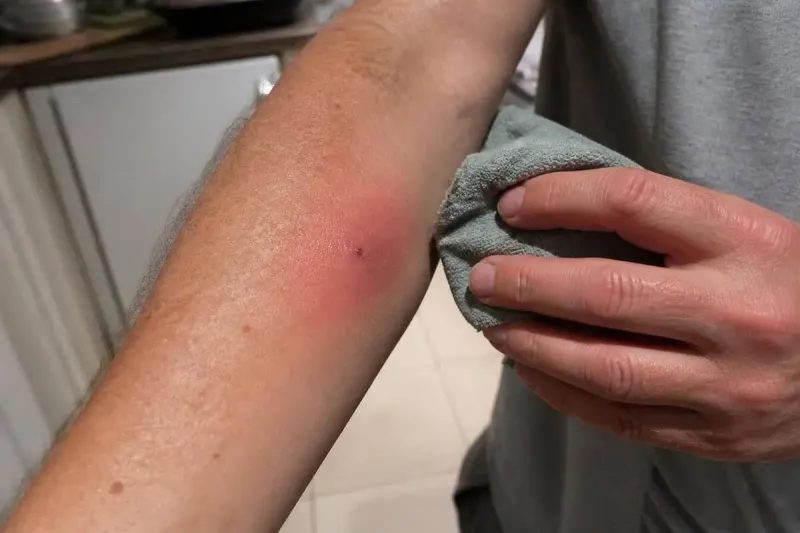
Most people who get stung have pain and local swelling, but some reactions are serious. Difficulty breathing, swelling of the mouth or throat, and collapse are warning signs of a severe allergic reaction.
Treat them as emergencies and get urgent help right away.
According to MedlinePlus, people with a known sting allergy should carry prescribed epinephrine and know how to use it. MedlinePlus also advises urgent help for a sting inside the mouth or throat, or for a person with a known allergy who has been stung.
If you or someone in your household has had a serious reaction before, talk with a health care provider ahead of time about a plan. Make sure others at home know where any prescribed medicine is kept.
Choose the Safest Next Step
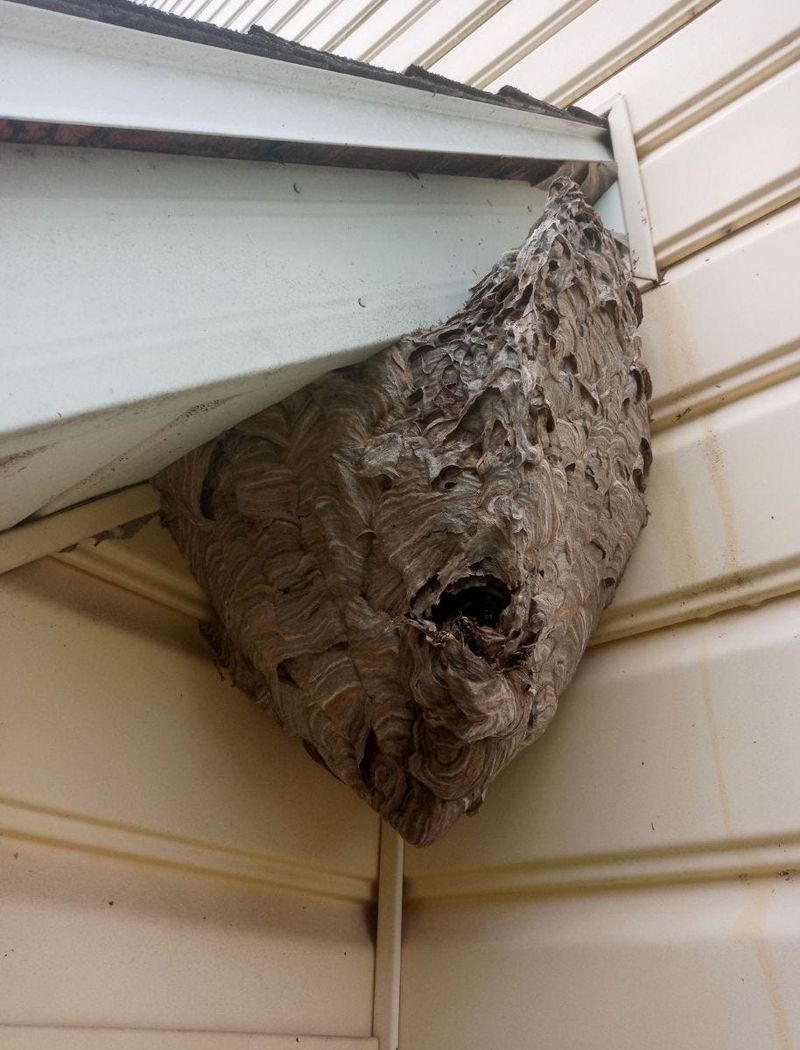
Think of it as a simple path. If you are unsure what insect you have, confirm it from a distance, with a photo if needed.
Keep everyone away from the nest while you judge whether people can stay clear. Maryland Extension supports leaving nests alone when that is practical.
If the nest is hidden, hard to reach, or impossible to avoid safely, bring in a professional. A calm, informed decision usually beats a rushed one.
A nest is only a problem when it shares your path, so the best plan often starts with simply walking a different way.
Share this story