Finding a dead mouse by your door on a cold fall morning can feel creepy. It is natural to wonder what happened and whether it means something is wrong at home.
The honest answer is that one carcass tells you much less than people think. Here is what it can and cannot show, and what to do next.
Frost can coincide with mouse movement without causing a die-off
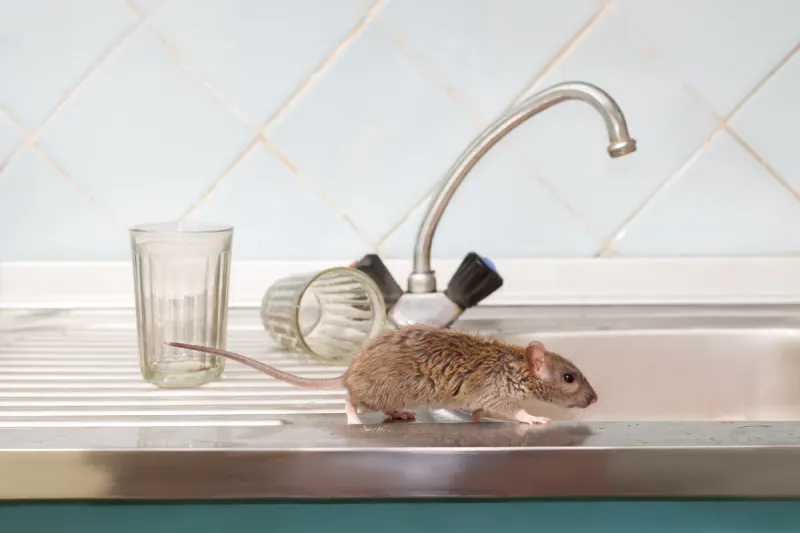
The timing feels meaningful. The first cold snap arrives, and a few days later there is a small body by the door.
It is easy to connect the two, but the connection is weaker than it looks.
Cooler fall weather can prompt mice to look for shelter, and UNH Extension notes that mice move toward buildings as temperatures drop. That means frost and mouse activity near homes can overlap on the calendar.
Overlap is not the same as cause.
Winter does not simply wipe out small mammals. According to Massachusetts wildlife officials, small mammals can stay active through the cold season by using insulated tunnels beneath the snow.
Nothing in these sources shows that a first hard frost triggers a general mouse die-off.
So a single carcass should not be read as proof that frost killed it, or that a wave of dead mice is coming. It also does not tell you what animal left it there.
Mice die from many causes, and a body by a door may have arrived in several different ways.
The more useful approach is to set the guesses aside and look at what you can actually check. Is there evidence of rodents inside?
Are there gaps in the house? Those questions have real answers, and the next sections walk through them.
What looks like a mouse may be another small mammal
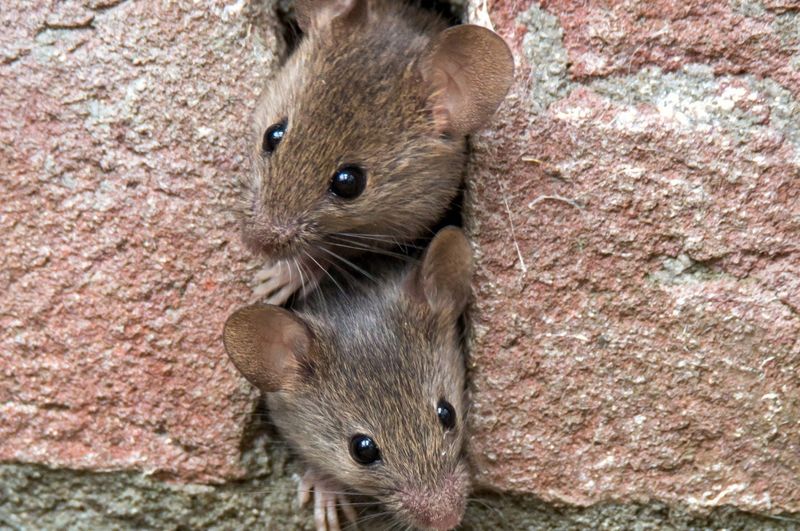
Before blaming anything, it helps to ask what the animal even was. A small, brownish, furry body is easy to call a mouse, but that label may be wrong.
Identification is hard, especially with a brief look or a carcass.
Massachusetts is home to several small rodents. State wildlife listings include house mice and deer mice, and UMass Amherst Extension describes voles as another common local animal.
At a glance, these can look alike.
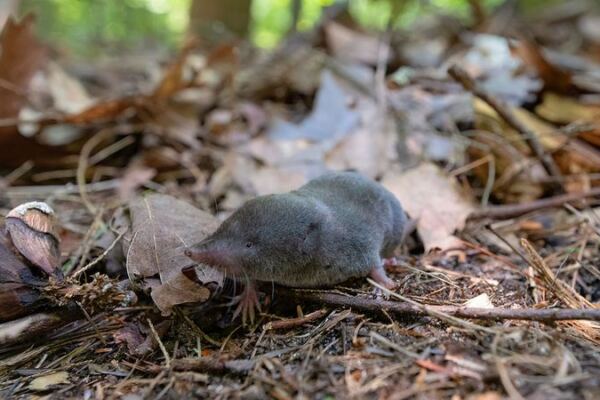
Then there are shrews. They look mouse-like, but they are not mice or even rodents.
The Missouri Department of Conservation says shrews mostly eat insects and other small invertebrates.
A shrew’s diet does not suggest it caused the death of a mouse nearby. Mentioning it here is only a reminder that the body on your step might itself be a shrew.
Why does this matter? Because a guess about the species can lead to a guess about the cause, and then to the wrong fix.
A vole near the yard says something different from a house mouse near the pantry. Without a clear identification, hold your conclusions loosely and focus on signs you can verify.
A cat may bring prey home, but the carcass is not proof
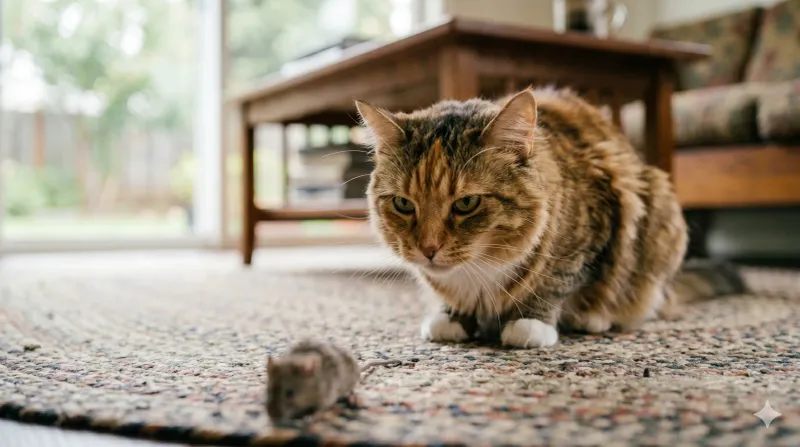
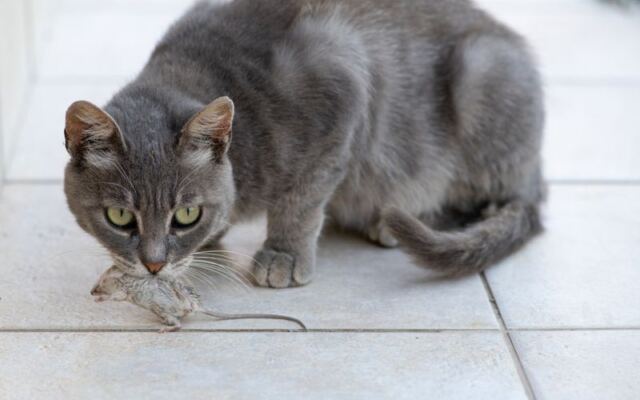
A cat is a reasonable first thought. Researchers have documented that domestic cats sometimes return prey to their homes, including rodents.
A peer-reviewed study of cat hunting behavior in France is one example of that work.
That is a real pattern, and it makes a cat a plausible explanation. It is not a verdict.
A mouse by your door does not prove that a cat left it.
Other things could explain the same scene. An animal may have dropped it, or the mouse may have died from some other cause and ended up there.
A single carcass cannot sort these possibilities out.
It also does not tell you that a cat lives close by. Cats roam, and a body can be moved.
If you do own a cat or know a neighbor’s cat is around, that adds context, but it is still only context.
You may have heard that cats bring prey as presents or to teach people how to hunt. Those are popular stories, not explanations backed by the research.
What has been observed is simply that cats sometimes return prey.
The practical takeaway is modest. Treat the cat idea as one possibility, not an answer, and move on to checks that give firmer information.
What evidence can—and can’t—say about owls, foxes, and shrews
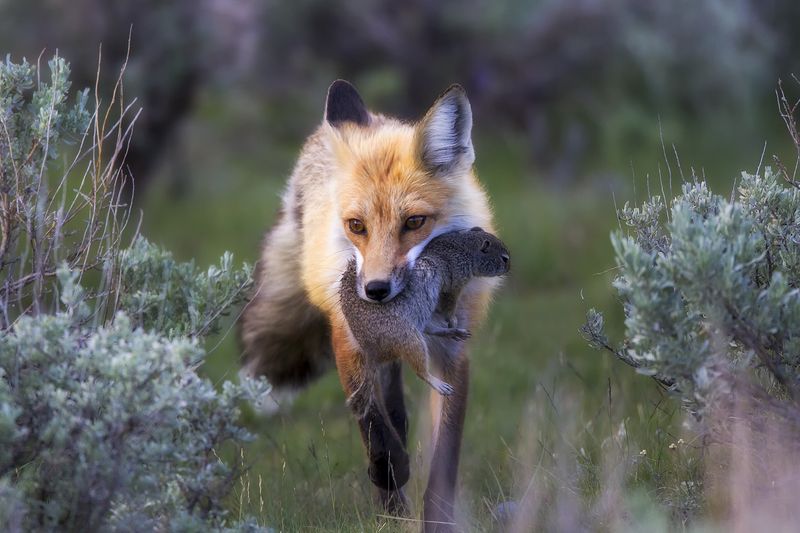
Owls, foxes, and shrews all come up when people try to explain a dead mouse. Each does interact with small animals, but none of that lets you read a doorstep carcass like a clue.
Start with shrews. Besides insects, some shrews also feed on dead animals, according to the Missouri Department of Conservation.
That fact does not connect a shrew to the death of a mouse by your door.
Owls are next. The Cornell Lab of Ornithology explains that owls commonly swallow small prey whole and later cough up the indigestible parts as a pellet.
So a whole mouse on a step is not a typical sign of owl feeding. A pellet or prey remains under a spot where an owl regularly roosts is far more relevant.
Foxes can hunt rodents and also scavenge, as described by Rutgers Cooperative Extension. Still, being able to catch a mouse is not evidence that a fox left this one.
To say a fox visited, you would want something direct, such as a clear camera image or tracks.
In short, these animals are possibilities, and a doorstep mouse does not reliably distinguish among them. If you are curious, look for better evidence, like a trail camera or a roost site, instead of reading meaning into the body itself.
Does one carcass mean mice are inside?
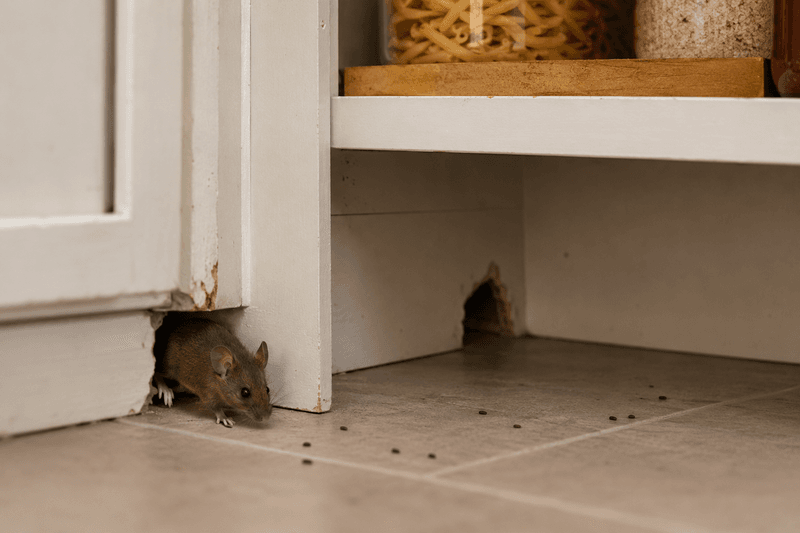
One dead mouse outdoors does not, by itself, mean you have an indoor problem. It could have been a passing animal that never went near your walls.
The better question is whether there are signs inside.
The EPA lists several things to look for: droppings, nesting material, chewed food packaging, gnawed entry holes, and stale smells. Check kitchen cabinets, the pantry, the basement, the garage, and spots behind appliances.
Try a flashlight along baseboards and in corners, where droppings and shredded paper or fabric tend to collect. Look at the bottoms of cereal boxes and bags of pet food for small chewed openings.
A musty odor in a closed space can also be a clue.
If you find droppings, do not sweep or vacuum them. CDC guidance warns that this can put contaminated particles into the air.
Wet cleaning with disinfectant is the safer route, and the steps appear in the final section.
If you find nothing, that is useful information too. It suggests the carcass may simply be an outdoor event.
Keep an eye out over the next few weeks, since signs can show up later.
Seal openings and reduce what attracts rodents
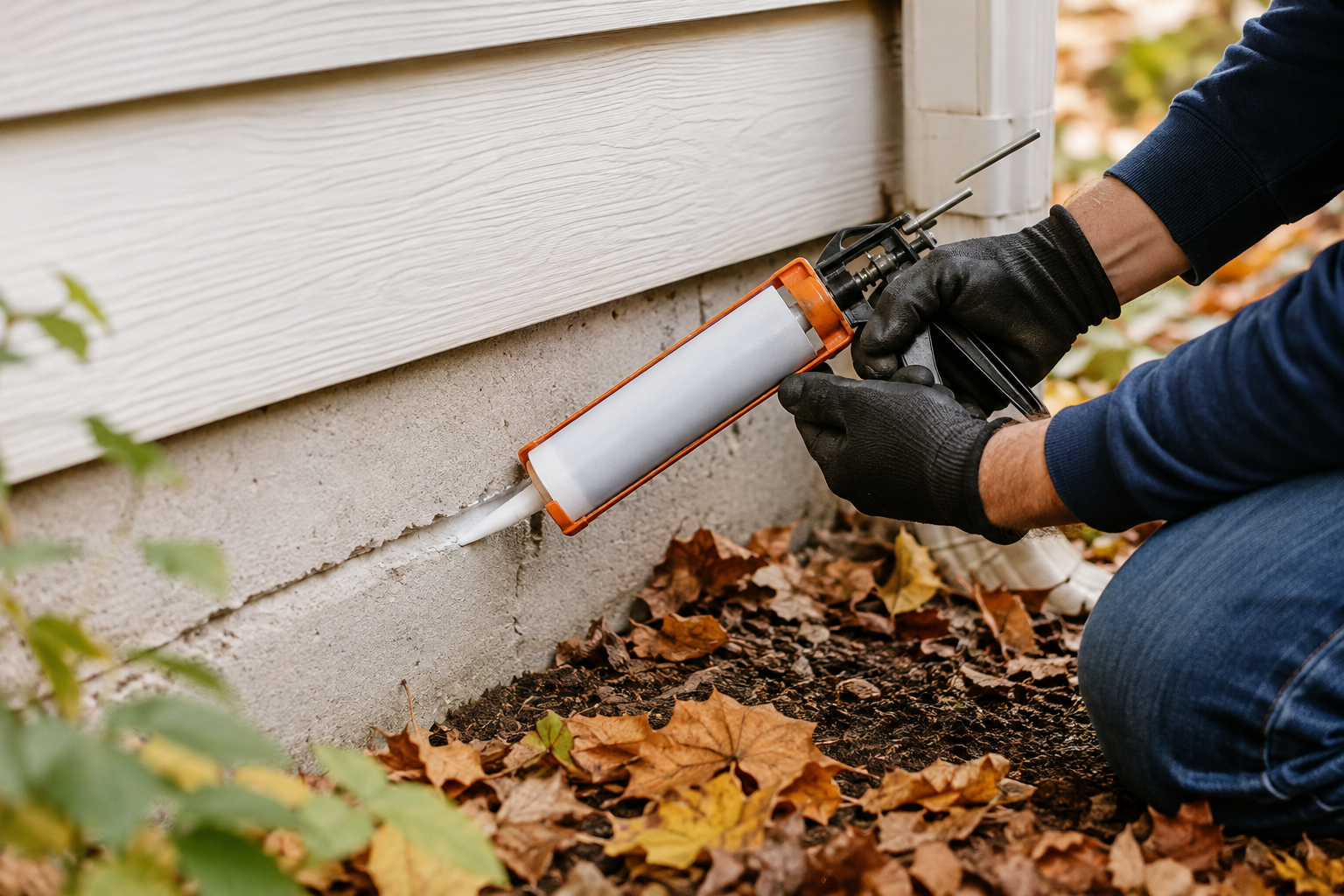
Cold weather pushes mice to look for warm shelter, so fall is a smart time to close up your house. Prevention will not explain any one carcass, but it makes it harder for rodents to get in and settle.
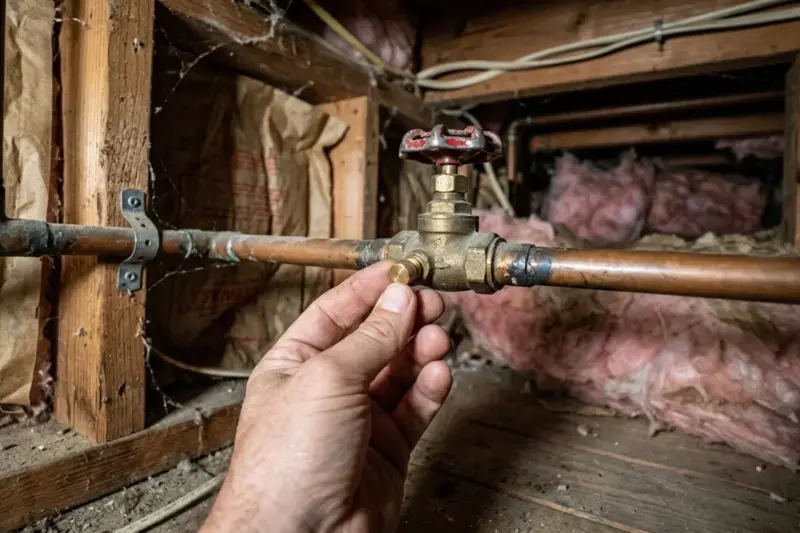
Start with the gaps. UNH Extension advises sealing openings larger than a quarter inch, especially around the foundation and where pipes, wires, and vents enter the home.
Walk the outside slowly and check low spots first.
Doors deserve a look as well. A worn sweep or a visible line of daylight under the door is an easy entry route.
Garage doors and basement windows are other common weak points.
The EPA also recommends sealing holes and cutting back on food, water, and shelter that rodents can reach. That means tight lids on garbage cans, pet food stored in sealed containers, and leaf piles raked away from the house.
Fix leaky outdoor faucets, and keep firewood and clutter off the walls of the home. Each change removes a reason for a mouse to hang around.
None of this guarantees you will never see another carcass outside. It simply lowers the chance that mice find a way in and make themselves at home.
Clean up safely and think twice before using poison
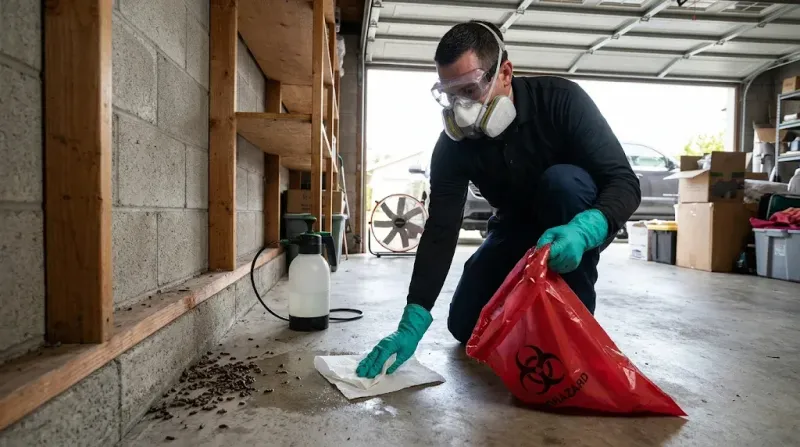
Whatever the cause, the carcass still needs to go, and it should be handled with care. CDC guidance lays out a simple sequence.
First, put on rubber or plastic gloves. Next, wet the carcass and the area around it with disinfectant, and leave it for five minutes or as the product label directs.
Then place the carcass in a plastic bag, seal it, and put that bag inside a second bag.
Finally, remove your gloves and wash your hands well with soap and water. Do not pick the mouse up bare-handed, even if it looks harmless.
Many people reach for poison next. Think twice.
Massachusetts warns that poisoned rodents can expose predators and scavengers, including owls and foxes, to secondary poisoning.
The state suggests considering non-poison management first. If you hire help, look for a licensed integrated pest management provider.
Notice what these steps share: none of them depend on knowing what left the mouse. Check for real signs inside, close the gaps, and clean up safely.
A single small body is a prompt to look around your home, not a verdict about frost or a predator.
Share this story