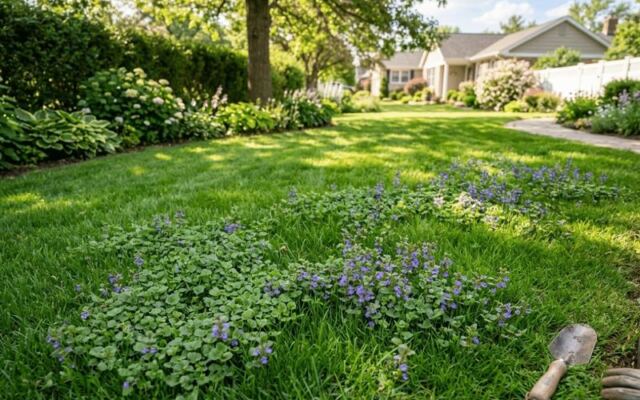
Few lawn weeds frustrate Iowa homeowners like creeping Charlie, the low, scalloped vine that sneaks across turf and into garden edges. Many people start by yanking it out by hand, then see green runners return a few weeks later.
That does not mean pulling is a waste of time. It means the job usually takes more than one try, and the right next step depends on how big your patch has grown.
Why one pulling attempt often falls short
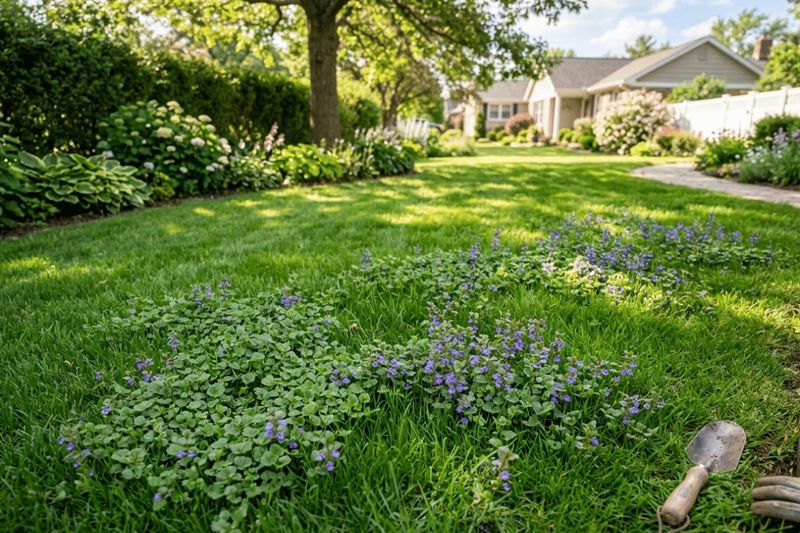
Creeping Charlie, also called ground ivy, spreads mostly by creeping stems that grow along the soil. At points along each stem called nodes, new roots form and anchor the plant.
That means one vine can turn into a chain of rooted plants.
When you pull a clump, the main part may come loose, but stems tucked under the grass can snap off. As Iowa State Extension explains, small patches can be dug or pulled, but this often fails when stem and root pieces stay behind.
Those leftover bits can regrow, though not every fragment will necessarily survive.
Picture a quick Saturday morning of tugging at the visible leaves. The top of the patch looks gone, but rooted stems under nearby turf keep growing.
A few weeks later the green is back, and it feels like the weed won.
The real difference is between one fast attempt and steady, repeated work. Pulling is not useless.
A single incomplete pass just rarely gives lasting control, especially once the weed has crept through a wider area.
The good news is that a small, young patch can be managed if you are thorough and patient. Larger, established infestations may need a different plan, and the next sections walk through both paths.
Neither one promises a one-and-done result, so it helps to plan for follow-up from the start.
Remove small patches by hand and revisit them
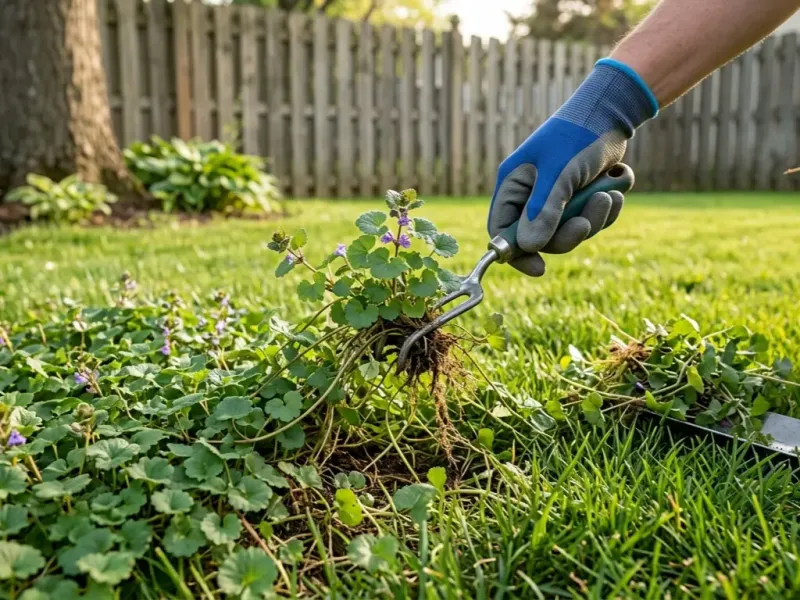
Timing helps. Iowa State recommends working after a soaking rain or a deep watering, when the soil is soft and roots slide out more easily.
Dry, hard ground tends to snap stems and leave more behind.
Start at the edge of the patch and work inward. Lift the rooted stems, and take as much root and shoot material as you can, using a trowel or small spade to loosen stubborn spots.
Follow Iowa State’s guidance on removing as much as possible, then bag the debris so loose pieces do not root somewhere else.
Next comes the part many people skip, which is going back. Check the area every week or two during the growing season and pull new growth as soon as it shows.
Repeated removal may control creeping Charlie, though it can take several growing seasons.
Patch the bare spots with grass seed or sod when it fits the season, since open soil invites weeds. A small, well-watched patch is where hand removal makes the most sense.
Setting matters too. In a lawn, persistent pulling is one option among several.
In flower or vegetable beds, Iowa State describes repeated hand-pulling and digging as the best approach, so lawn herbicide advice should not be copied over to those spaces. Maryland Extension also describes hand removal as useful for small patches, with repeat visits often needed.
Use Iowa’s fall guidance for an established lawn infestation
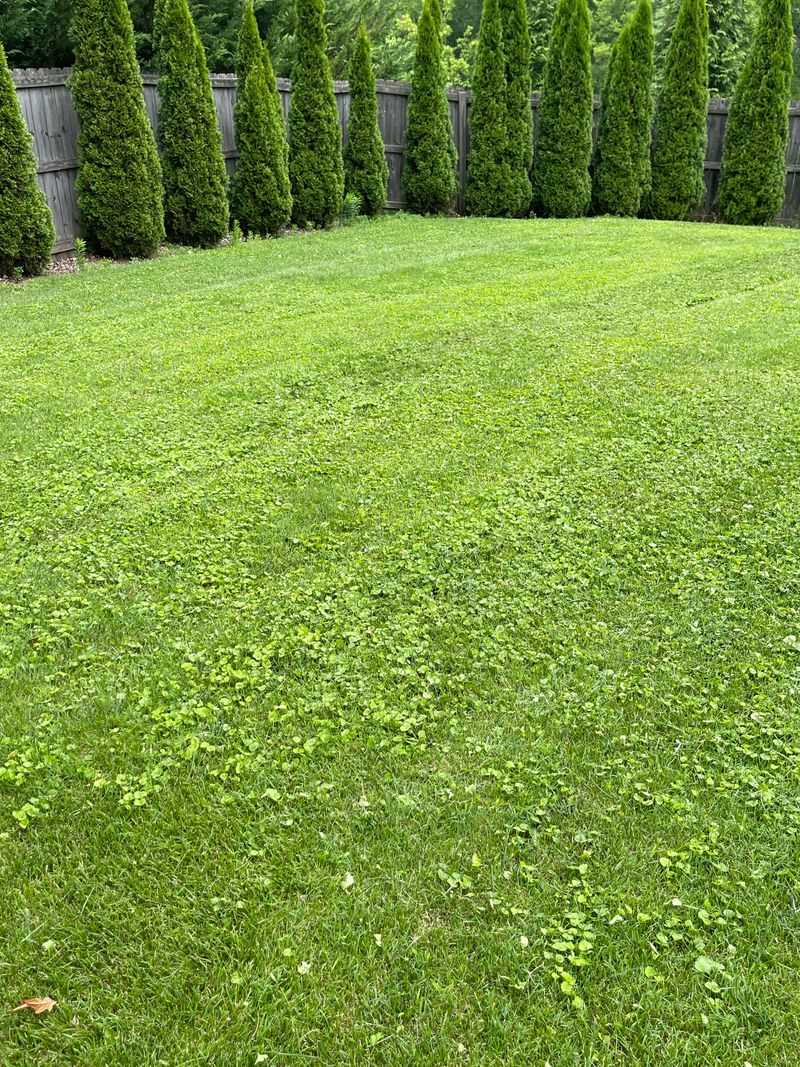
When creeping Charlie has spread across a good part of the lawn, hand removal can become a huge chore. For established lawn infestations, Iowa State Extension recommends fall treatment with a broadleaf herbicide labeled for lawns.
Its Iowa lawn guidance places applications from mid-September through November 1.
The same guidance suggests a second application about a month after the first. Its detailed page describes late September to early October as the first-treatment window, so a first spray in that period leaves room for the follow-up before the season closes.
Iowa State’s main control page also says two applications are needed.
Those dates are Iowa-specific guidance, not a universal calendar. Weather, local conditions, and the product you choose all matter, and the label has the final word on when and how the product may be used.
A neighbor in another state may be advised to treat on a different schedule.
Plan on repeat treatment as part of the process. If patches remain after the second application, that does not prove you did something wrong.
Ground ivy populations can differ in how well they respond, and follow-up may be needed in later seasons.
Herbicide recommendations vary by region
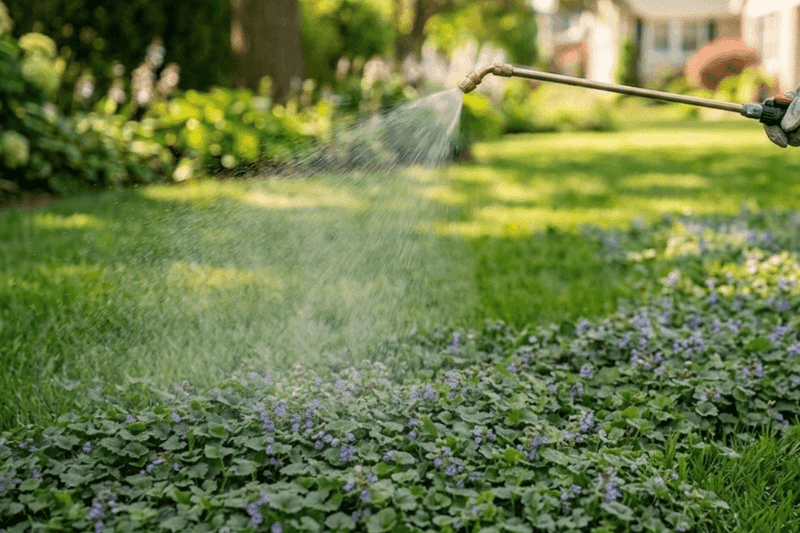
If you read several extension pages, you will notice the advice does not match perfectly. Iowa State recommends lawn products containing triclopyr or 2,4-D, as described in its control guide.
It also notes that ground ivy populations can differ in susceptibility.
Illinois points in a slightly different direction. Illinois Extension highlights triclopyr or fluroxypyr and reports the best results around bloom or in fall.
Minnesota is more cautious about one common ingredient, since Minnesota Extension says triclopyr can control it and that 2,4-D is not very effective.
So no single ingredient is the best answer for every lawn. The differences come from region, local testing, and the plants themselves, and they are a good reason not to trust a one-size-fits-all claim on a product display.
For an Iowa lawn, start with Iowa State’s recommendations and compare them with what your local extension office says. Then pick a product labeled for lawns, and read the label to confirm it allows the use you have in mind, on your grass type, in your location.
If a first season brings only partial results, ask your local extension office before switching products on a hunch. A short call can save you money and another year of frustration.
Borax and preemergence products are not reliable shortcuts
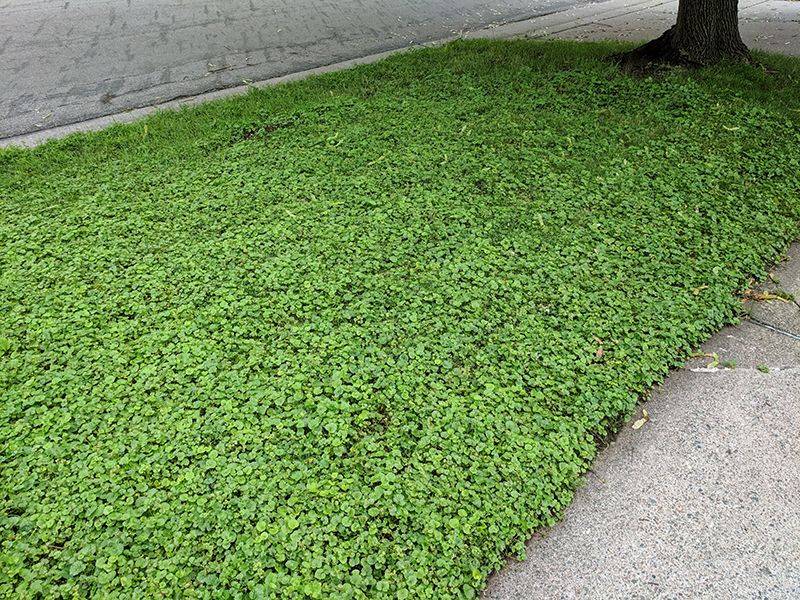
Quick fixes are tempting, and two of them come up often. The first is borax, sometimes promoted as a natural cure.
Iowa State says early research was not replicated, a later Wisconsin study did not get the same result, and soil conditions affect how it works.
Because of that, Iowa State does not recommend borax for this use. There is a real downside too, since excess boron can damage plants, including your grass and nearby shrubs.
A home mix that goes wrong could leave you with a bigger problem than the one you started with.
The second shortcut is a preemergence herbicide, the kind often sold to stop crabgrass. Those products target seeds before they sprout.
Penn State Extension says preemergence products do not effectively control ground ivy, which is a perennial that spreads mainly by runners.
That is why a spring crabgrass bag will not stop a creeping Charlie patch that already has roots in your lawn. The weed is not coming back from seed each year.
The supported options remain the two covered earlier: careful, repeated hand removal for small patches, and fall treatment with a lawn-labeled broadleaf herbicide for established infestations. Neither is instant, but both rest on extension guidance rather than guesswork.
Follow the label and protect nearby plants and pollinators
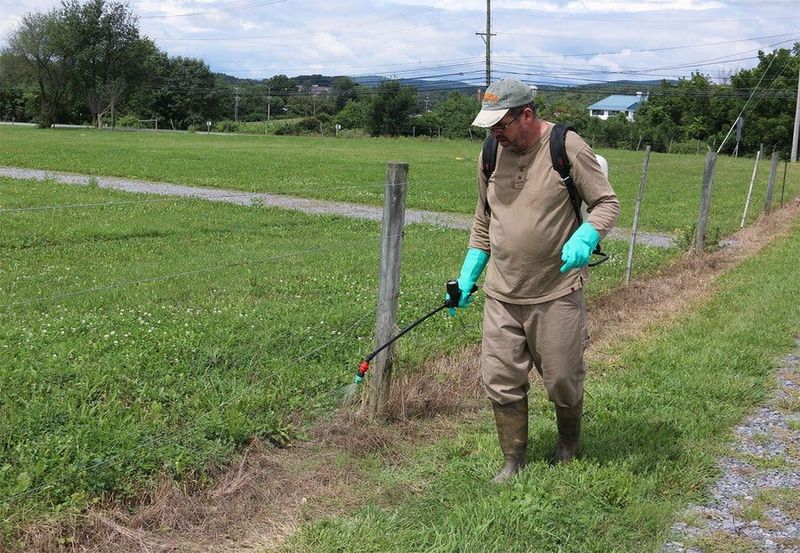
A pesticide label is more than fine print. The EPA explains in its introduction to pesticide labels that labels are legally enforceable, so they set where, how, and when a product may be used.
That is why this article gives no spray rate. Your product’s label is the only rate that counts.
The label also tells you how to protect people and pets, such as how long to stay off treated grass. The EPA’s pesticide safety tips add practical habits like keeping children and pets away as directed.
Wind matters too, so avoid spraying on breezy days to limit drift onto flower beds, gardens, and neighbors’ yards.
Lawn herbicides are not harmless to desirable plants. If your chosen product contains dicamba, Maryland Extension warns it can injure trees and shrubs through root-zone exposure, so check how close your plants are to the treated area.
Pollinators deserve a thought as well. Creeping Charlie is visited by bees, even though Minnesota Extension says it does not provide accessible pollen and is not a major honey source.
Follow the label’s pollinator precautions, and see this Minnesota guide to protecting pollinators from pesticides for more background.
Use turf care to discourage reinvasion
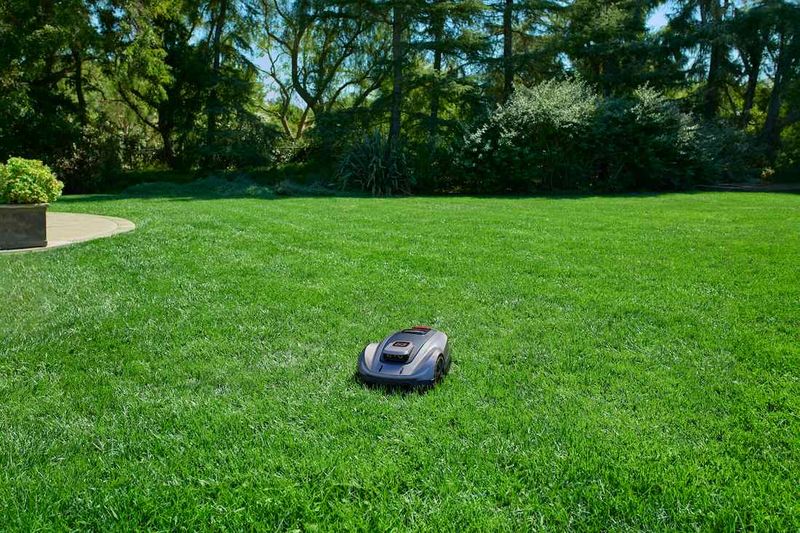
Thick grass leaves less open ground for weeds to claim. Iowa State recommends maintaining dense turf suited to your site and fixing conditions that weaken it.
In practice, that can mean mowing at a proper height, watering deeply rather than often, and addressing compacted or thin spots, as outlined in its control guide.
Think of these steps as a way to make a return trip less likely after you have dealt with the weed. They are not a quick cure for a large, established patch.
Penn State cautions that improving turf may not suppress an infestation once it is established.
Shade is a common trouble spot. Creeping Charlie thrives in damp, shady areas, and many lawn grasses struggle under heavy tree cover.
If grass keeps thinning there no matter what you do, a shade-adapted groundcover may be a more practical choice than fighting the same battle every year.
A simple routine can help. Overseed bare spots in the right season, keep an eye on lawn edges where runners often sneak in from beds and neighboring yards, and pull stray stems early.
Used alongside or after direct control, good turf care helps protect the progress you have made.
Aim for steady control, not a one-day clean slate
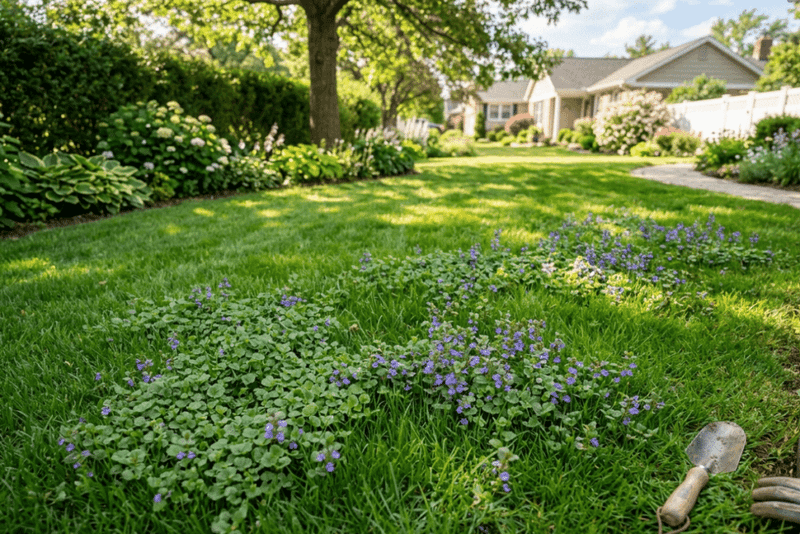
Here is a simple path to follow. For a small patch, hand-remove it and keep checking for regrowth.
For an established lawn infestation, use Iowa State’s fall guidance with a lawn-labeled product, and read the label first.
Then keep the lawn thick and suited to the site to discourage a comeback. Follow-up may be needed with any method, and no approach guarantees complete eradication.
Creeping Charlie rewards the homeowner who keeps showing up, not the one who wins a single afternoon.
Share this story