Get the latest garden guides in your inbox →
Gardening Latest
  • General Gardening
  • Lawn Care
  • Plant Care
  • Composting
  • Soil Health
  • Backyard
  • Garden Muse Magazine
  • General Gardening
  • Lawn Care
  • Plant Care
  • Composting
  • Soil Health
  • Backyard
  • Garden Muse Magazine
  • News
  • Gardening Calendar
  • Garden Structures
  • Vegetable Garden
  • Vertical Garden
  • Raised Beds
  • Hydroponics
  • General Equipment
  • Community Gardens
Garden Themes
  • Spiritual Garden
  • Hydroseeding
  • Seeding and Laying Sod
  • Artificial Grass
  • Lawn Care Equipment
  • Plants
  • Trees
  • Planting Tools
  • Composting Basics
  • Fertilizer
  • Alternative Growing Mediums
  • Front Yard
  • Backyard Activities
  • Landscaping
Gardening Latest

Explore by state

Which state is your garden in?

Currently viewing California

All states

Northeast

  • Connecticut —
  • Delaware 20
  • Maine —
  • Maryland 6
  • Massachusetts 23
  • New Hampshire —
  • New Jersey 6
  • New York 16
  • Pennsylvania 16
  • Rhode Island —
  • Vermont —

Southeast

  • Alabama 6
  • Arkansas —
  • Florida 6
  • Georgia 7
  • Kentucky 20
  • Louisiana 5
  • Mississippi —
  • North Carolina 5
  • South Carolina 19
  • Tennessee 3
  • Virginia 5
  • West Virginia —

Midwest

  • Illinois 5
  • Indiana 8
  • Iowa 19
  • Kansas —
  • Michigan 7
  • Minnesota 5
  • Missouri 5
  • Nebraska —
  • North Dakota —
  • Ohio 7
  • South Dakota —
  • Wisconsin 21

Southwest

  • Arizona 6
  • Colorado —
  • Nevada —
  • New Mexico —
  • Oklahoma —
  • Texas 5
  • Utah —

West

  • Alaska —
  • California 6
  • Hawaii —
  • Idaho —
  • Montana —
  • Oregon —
  • Washington —
  • Wyoming —

No state matches that search.

Site menu

Gardening Latest
  • General Gardening
    • News
    • Gardening Calendar
    • Garden Structures
    • Vegetable Garden
    • Vertical Garden
    • Raised Beds
    • Hydroponics
    • General Equipment
    • Community Gardens
    Garden Themes
    • Spiritual Garden
  • Lawn Care
    • Hydroseeding
    • Seeding and Laying Sod
    • Artificial Grass
    • Lawn Care Equipment
  • Plant Care
    • Plants
    • Trees
    • Planting Tools
  • Composting
    • Composting Basics
  • Soil Health
    • Fertilizer
    • Alternative Growing Mediums
  • Backyard
    • Front Yard
    • Backyard Activities
    • Landscaping
  • Garden Muse Magazine

Explore

  • About GardeningLatest.com
  • Contact Us

Get the latest from the garden

New guides on lawn care, plants and backyard projects, sent when they go up.

Subscribe →

Follow

  • Facebook
  • X
  • Pinterest
  • YouTube
California Gardening

This Is the California Shrub Rattlesnakes Love to Hide Under Near Your Path

The shrub you want to know about is chamise, with red shank close behind, because these are the plants tied to red…

JN

By Julia Navarro

November 23, 2026 · 6 min read

This Is the California Shrub Rattlesnakes Love to Hide Under Near Your Path

The shrub you want to know about is chamise, with red shank close behind, because these are the plants tied to red diamond rattlesnake habitat in one part of Southern California. No source names a single shrub that rattlesnakes everywhere in the state prefer, though, so the full picture is more useful than one plant name.

Rattlesnakes use many kinds of cover, and they sometimes lie right on the path itself. Knowing that can help you stay calm, watch your step, and enjoy the trail more safely.

At a glance

Where
California Gardening
Hardiness zone
9 20 to 30°F
Read
6 minutes
Published
November 23, 2026

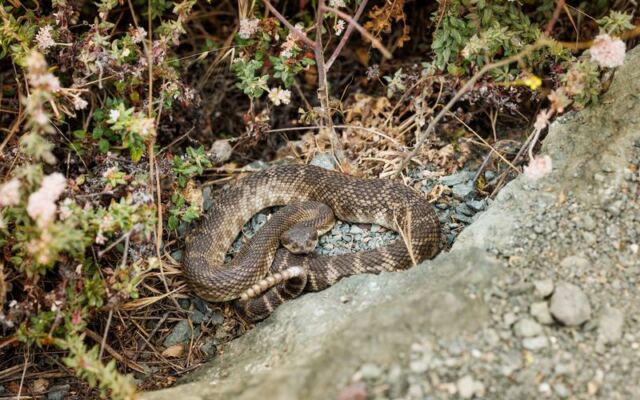
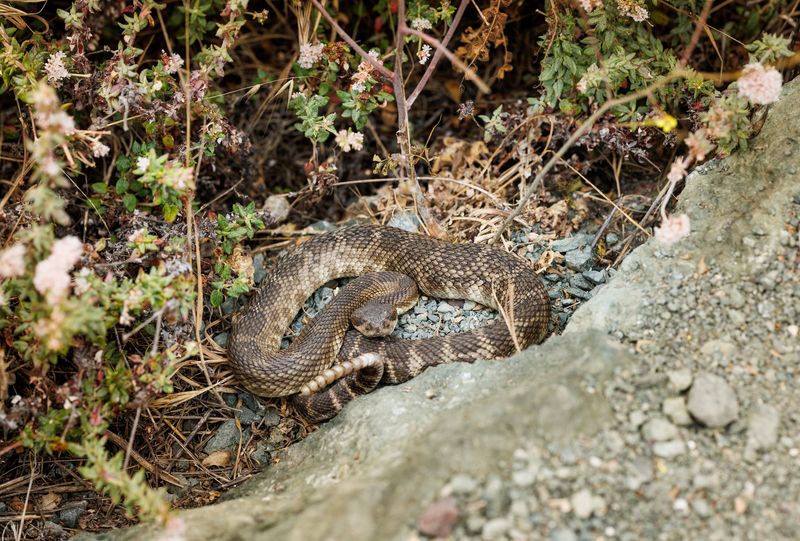
Rattlesnakes use more than one kind of cover
Rattlesnakes use more than one kind of cover
© Live and Let Hike

Ask where rattlesnakes hide, and the honest answer is: in lots of places. California Department of Fish and Wildlife describes rattlesnake habitat broadly, noting that snakes can turn up in brushy areas and under wood piles.

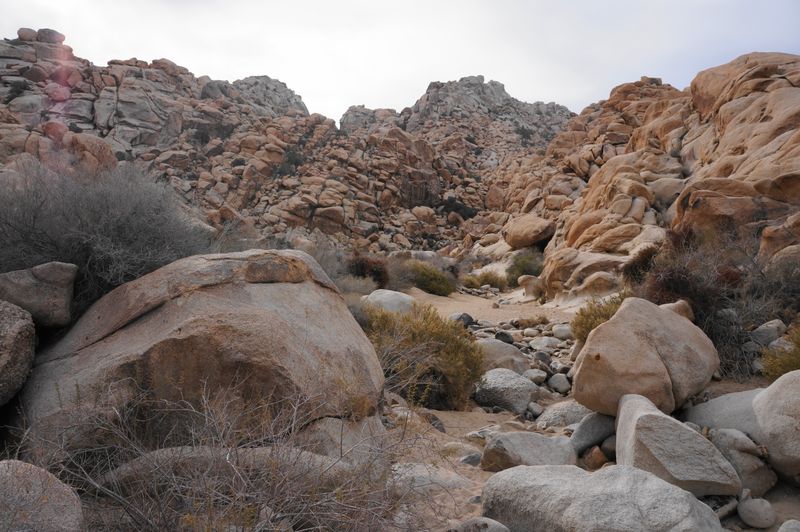
It also describes rocky, open areas where they can bask and hide.

The statewide pest management program at UC lists several kinds of possible cover too. UC IPM guidance names rock crevices, logs, heavy brush, and tall grass.

Notice what is missing from that list: one favorite plant. The sources describe types of cover, not a shrub that wins every time.

It helps to separate two ideas. A spot can offer shelter for a snake, and that is very different from a spot where you are likely to meet one.

The sources describe possible habitat and cover. They do not show that dense shrubs, or shrubs right beside a trail, have higher encounter rates.

So a thick bush is not a warning sign by itself, and a bare patch of ground is not a guarantee of safety. Snakes also differ by species and by region, so what holds in a coastal canyon may not match a desert slope.

Think of cover as a general clue about habitat. Let it nudge you to pay attention, not to panic.

What chamise and red shank can tell you

Here is where chamise and red shank enter the story. A Riverside County habitat account says chamise and red-shank vegetation may offer good refuge and food-resource structure for the red diamond rattlesnake.

In plain terms, that kind of chaparral can give this snake places to shelter and the setting where its prey lives.

More space is even better, and it gives the snake a clear route out of the area.

That is a narrow finding. It is about one species, the red diamond rattlesnake, and one region, western Riverside County.

It is not a rule for every rattlesnake in California.

It also does not turn either shrub into a snake signal. Seeing chamise or red shank on a hillside does not mean a rattlesnake is nearby.

The account does not say that these plants attract snakes to trail edges or that walking past them carries extra risk.

A fair way to use this is as background knowledge. If you hike chaparral in Southern California, you are in the kind of habitat where red diamond rattlesnakes can live.

That is a reason to stay alert on the whole trail, not a reason to eye one plant with suspicion.

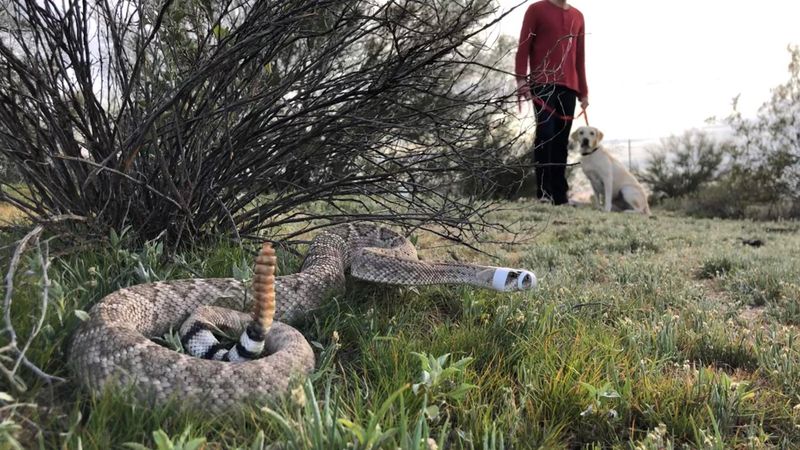
Rattlesnakes may also be on paths
Rattlesnakes may also be on paths
© Cal Poly

Picture a trail in your mind, and the snake is probably tucked in the bushes. Real life is looser than that.

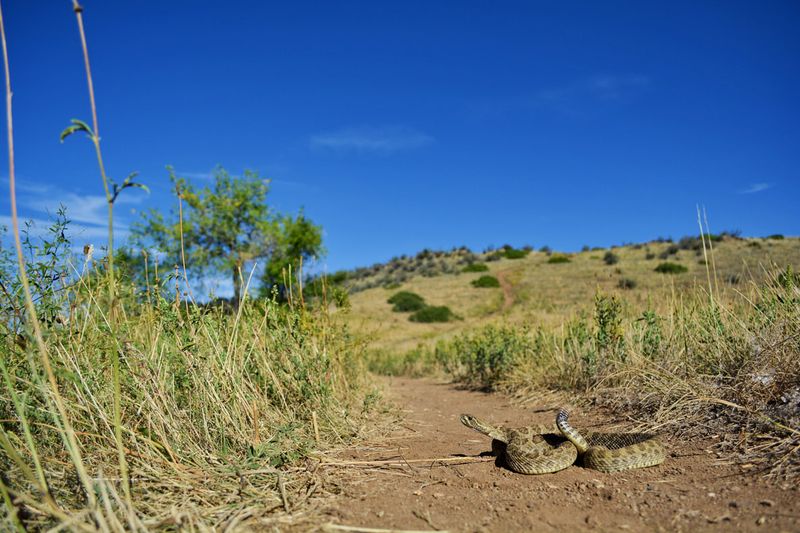
UC IPM notes that rattlesnakes can occur on roads and paths, not only in cover beside them.

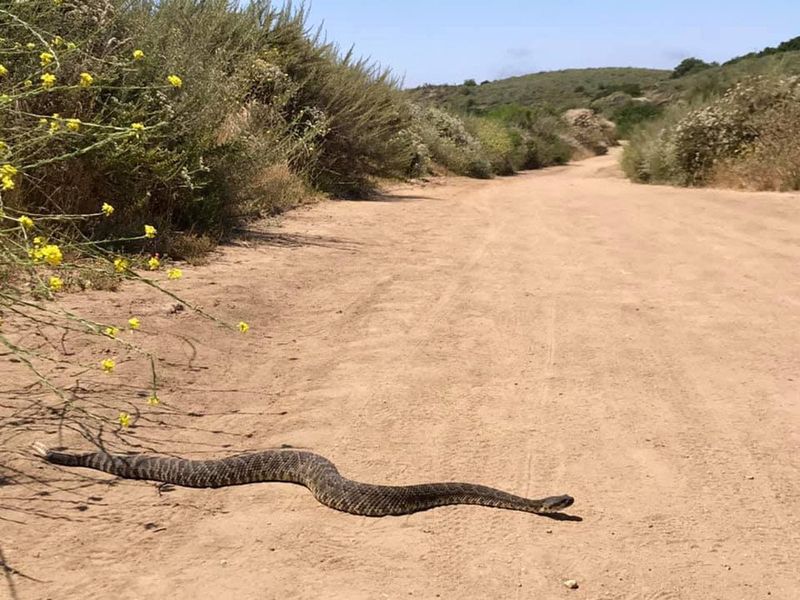
Camouflage makes this tricky. A snake with dusty, patterned skin can blend into dirt, gravel, and dry leaves, so it may be hard to spot even in the open.

That is why looking at the ground a few steps ahead is a smart habit.

Another point is easy to miss. CDFW cautions that a startled rattlesnake may not rattle before a defensive strike.

A quiet trail therefore does not prove a snake is absent, and silence should never be read as a safe sign.

None of this means every trail is dangerous. Most hikes pass without a single snake sighting.

The goal is steady attention, so a snake in an unexpected spot becomes something you notice early and walk around, not something you step on.

Simple habits can help you avoid close encounters
Simple habits can help you avoid close encounters
© Outside Magazine

Good trail habits are mostly about awareness. CDFW and California State Parks both offer advice that fits into any hike, and none of it needs special gear.

Start by staying on established trails, where the ground is more open and easier to read. Watch where you place each foot, and slow down when the path narrows or the view ahead is blocked.

Avoid wading through tall grass and heavy underbrush when you can choose a clearer way.

Before you sit on a log, rest on a rock, or climb over a stump, look it over carefully from where you stand. Pick a spot you can see all the way around.

Do not poke at cover, reach into it, or push brush aside with your hands to check for a snake.

Keep dogs leashed, especially near brush, so they do not nose into hiding spots you cannot see. A leash also keeps your dog close if you need to turn around fast.

These small choices cost almost nothing and keep your attention where it belongs.

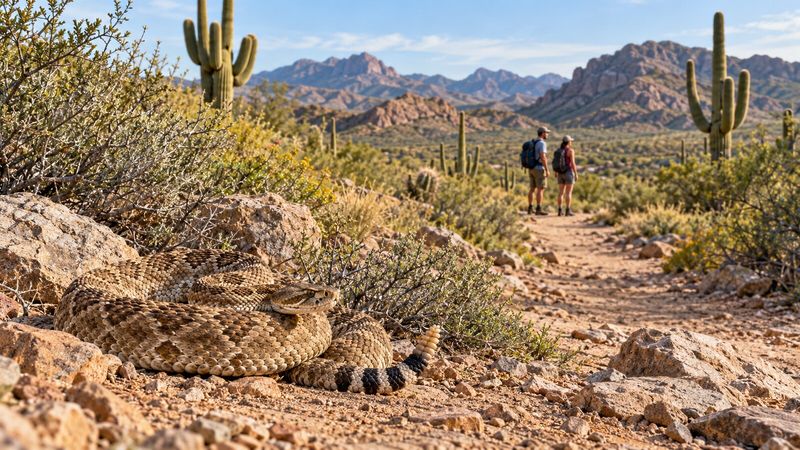
Give a rattlesnake room to move away
Give a rattlesnake room to move away
© Rattler Tattler Blog – ADAPTATION

Say you spot a rattlesnake ahead. The best first move is to freeze, breathe, and stay calm.

Then back away slowly and let the animal do what it wants, which is usually to leave.

California State Parks recommends staying at least six feet away from a rattlesnake. More space is even better, and it gives the snake a clear route out of the area.

Pull any dog or child back with you.

Do not wait for a warning rattle before you make room. As noted earlier, a startled snake may strike without rattling, so distance is your protection, not sound.

Treat every snake you see as one that deserves a wide berth.

CDFW advises keeping your distance and not handling snakes. That also means no approaching for a photo, no trying to catch it, and no trying to kill it.

If the snake sits right in the middle of a narrow path, wait for it to move on or turn around and choose another route.

Get emergency care after a bite
Get emergency care after a bite
© LP Health Directions

A bite is rare, but it helps to know the plan ahead of time. If a rattlesnake bites you or someone with you, seek emergency medical attention immediately.

Both CDFW and Poison Control point readers toward urgent professional care.

Some well-known tricks can make things worse. Do not apply a tourniquet or ice.

Do not cut the wound, and do not try to suck out the venom.

Do not risk a second bite by trying to catch or kill the snake. It does not help medical staff and it puts another person in danger.

Move away from the snake and focus on getting help.

Keep the steps simple: get away from the snake, call for emergency help, and get to medical care. Anything beyond that is best left to the professionals who answer your call.

Pay attention to cover, not a single plant
Pay attention to cover, not a single plant
© Path Projects

No single shrub is a dependable clue across California. Rattlesnakes may use varied cover, and they may also lie out in the open on a path.

Steady attention to the ground works better than watching one plant.

UC IPM suggests reducing hiding cover around homes and yards, which is advice for property owners, not a reason to clear native plants along trails. Keep your distance, stay on the path, and let the shrubs stand.

The best snake clue is the one you spot with your own eyes, a few steps early.

Share this story
JN

Written by

Julia Navarro

More from Julia Navarro →

About Gardening Latest

Gardening Latest provides in-depth guides to maintaining and enhancing your garden and backyard. Learn how to make the most of the space you have and create a beautiful garden.

More about us →

Latest stories

  • North Carolina GardeningGot Hit by Fire Ants in North Carolina? Here’s What to Do, and Why You Leave Those Blisters Alone

    Got Hit by Fire Ants in North Carolina? Here’s What to Do, and Why You Leave Those Blisters Alone

    1 min ago
  • Michigan GardeningWhy Some Michigan Towns Are Overrun With Black Squirrels While Others Never See One

    Why Some Michigan Towns Are Overrun With Black Squirrels While Others Never See One

    6 min ago
  • Massachusetts GardeningFall Is When Massachusetts’ Venomous Yard Critters Show Up, And They’re Closer Than You Think

    Fall Is When Massachusetts’ Venomous Yard Critters Show Up, And They’re Closer Than You Think

    11 min ago
  • New York GardeningStink Bugs Sneaking Into Your New York House? This Cheap Trap Catches Them Overnight

    Stink Bugs Sneaking Into Your New York House? This Cheap Trap Catches Them Overnight

    21 min ago
  • Ohio GardeningWhen Your Neighbor’s Tree Crashes Into Your Ohio Yard, Here’s Who Actually Pays

    When Your Neighbor’s Tree Crashes Into Your Ohio Yard, Here’s Who Actually Pays

    27 min ago

Gardening by state

Stories for your state, and the hardiness zone most of it gardens in.

Keep exploring

Read next

All California Gardening →
California GardeningThese Tall Stems Loaded With Purple Berries Are Popping Up in California Yards, and Here’s What They Are
California Gardening

These Tall Stems Loaded With Purple Berries Are Popping Up in California Yards, and Here’s What They Are

3 hr ago
California GardeningCalifornia Counties Are Cracking Down on These Garden Plants That Nurseries Still Sell
California Gardening

California Counties Are Cracking Down on These Garden Plants That Nurseries Still Sell

6 hr ago
California GardeningPassionflower Is a Strong Candidate for a California Fence, Depending on Your Yard
California Gardening

Passionflower Is a Strong Candidate for a California Fence, Depending on Your Yard

Nov 12

More from California Gardening

  • Fall Is When Massachusetts’ Venomous Yard Critters Show Up, And They’re Closer Than You Think

    11 min ago
  • Stink Bugs Sneaking Into Your New York House? This Cheap Trap Catches Them Overnight

    21 min ago
Back to top

Leave a response Cancel

Your email address stays private. Required fields are marked with an asterisk.

Gardening Latest

In-depth guides to maintaining and enhancing your garden and backyard: how to make the most of the space you have, and how to make it beautiful.

  • Facebook
  • X
  • Pinterest
  • YouTube

We may earn a portion of sales from products or services that are purchased through our site as part of our affiliate partnerships with retailers.

Explore

  • About GardeningLatest.com
  • Contact Us
  • Terms and Conditions
  • Privacy
  • Editorial Note:
  • FTC Disclosure

Newsletter

New garden guides and seasonal tips, straight to your inbox.

We’ll email you a link to confirm. Unsubscribe any time.

Almost there! Check your inbox and tap the link to confirm.

© 2026 Gardening Latest. All rights reserved.

Back to top