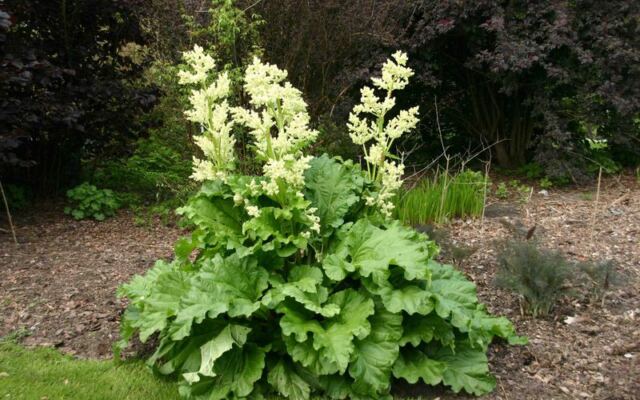
That tall stalk shooting up from your rhubarb is a flower stalk, also called a seed stalk, and if you want to harvest rhubarb, you should cut it off near the base. It is a normal part of how the plant grows, and it does not mean your rhubarb is sick.
Flowering also does not make the stalks you eat poisonous. Here is how to tell what you are looking at, what to do about it, and when it is fine to leave it alone.
That tall stalk is part of rhubarb’s reproductive cycle
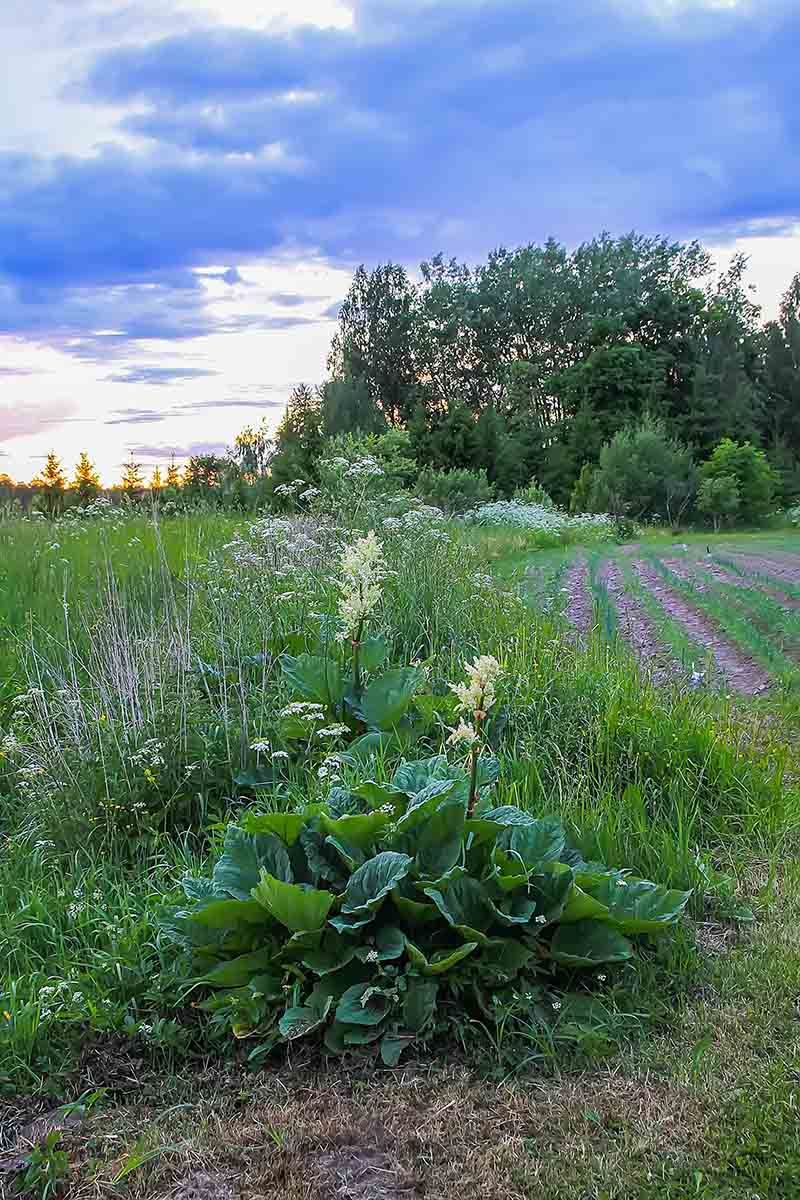
Gardeners often spot it first thing in spring or early summer: one thick stalk climbing well above the leaves, topped with a knobby bud that opens into a puffy cluster of tiny creamy flowers. That is a rhubarb flower stalk, sometimes called a seed stalk.
Making flowers and seeds is simply part of the plant’s reproductive cycle.
The biggest worry most people have is that something has gone wrong. A flower stalk on its own is not a sign of disease.
Plenty of healthy plants send one up, and Purdue Extension’s rhubarb guidance treats it as normal growth rather than a problem to panic over.
It helps to know how to tell the flower stalk apart from the stalks you cook with. The edible leafstalks grow from the crown and each one ends in a big, wrinkled leaf.
The flower stalk is thicker and rounder, often looks hollow or ribbed, and carries a budding flower head instead of a leaf.
Once you can spot the difference, you can relax and decide what you want from the plant. Whether to cut the stalk depends on your goal, and the next section covers that choice.
Cut the flower stalk if leafstalk harvest is your goal
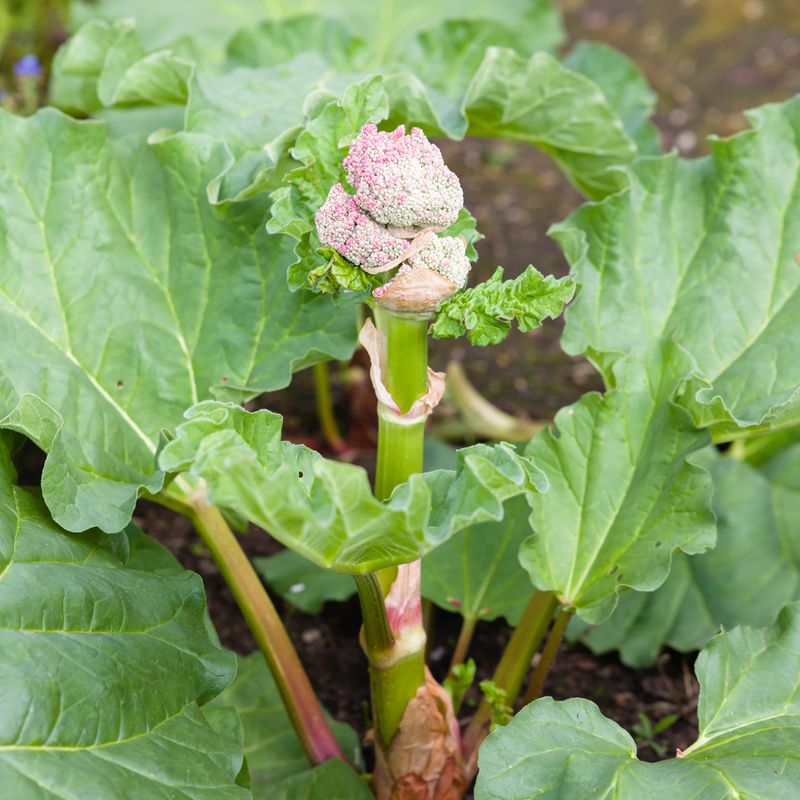
If you grow rhubarb for pie, sauce, or jam, take the flower stalk off. Cut it as close to the base as you can, or pull it away, whichever works for your plant.
Go slowly so you do not nick or damage the crown, which is the part that produces next year’s growth.
Extension advice is to remove the stalk at its base, and Penn State Extension adds a useful reminder: check the plant again later. Rhubarb can send up another stalk after you remove the first, so a quick look every week or two keeps you ahead of it.
The usual reason for cutting is about energy. Making flowers and seeds uses resources the plant could otherwise put toward leaf growth or building up reserves, which is the general rationale given by Purdue.
Keep your expectations realistic, though. Removing one stalk does not promise bigger or more leafstalks.
Think of it as a sensible bit of garden housekeeping that points the plant toward the part you want to eat, not a guaranteed way to boost your harvest.
A flower stalk cannot tell you why the plant bloomed
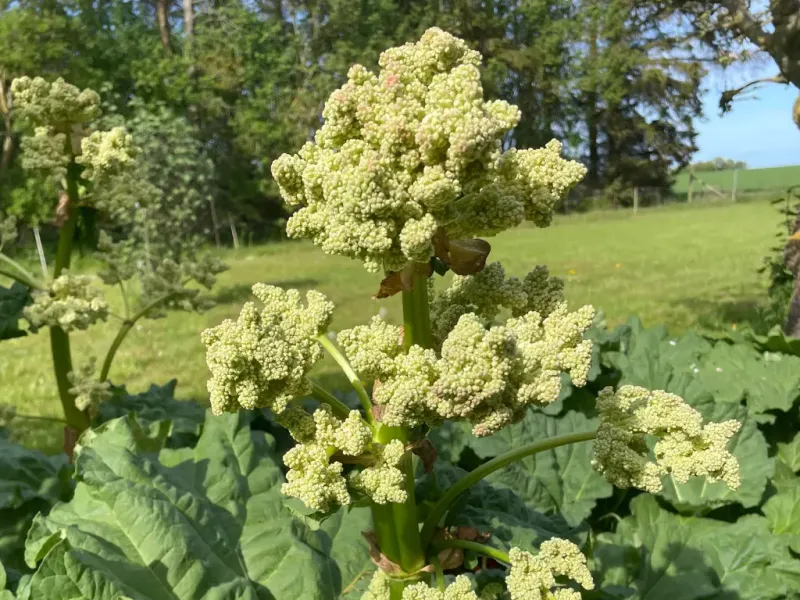
Several things can nudge rhubarb into flowering, and the stalk itself does not say which one is at work. Purdue lists plant maturity, cultivar, heat, drought, and poor nutrition.
Illinois Extension adds crowding, old plants, and low fertility to the list.
Some named varieties also flower more readily than others, so a plant may bloom simply because of what it is. A clump that has sat in the same spot for many years may flower for a different reason than a younger plant in a dry, hot season.
Looking at the stalk will not sort those out.
That is why it is better not to blame stress alone, and not to point at Delaware weather. The general guidance does not tie flowering to any local cause, so no one can honestly say the weather in your county made your plant bloom.
What you can do is look at the conditions you control. Ask whether the clump is packed tight, whether the soil has gone a long time without feeding, and whether it dries out in summer.
Those are reasonable things to check, but treat them as possibilities, not a diagnosis.
Flowering does not make the edible stalks poisonous
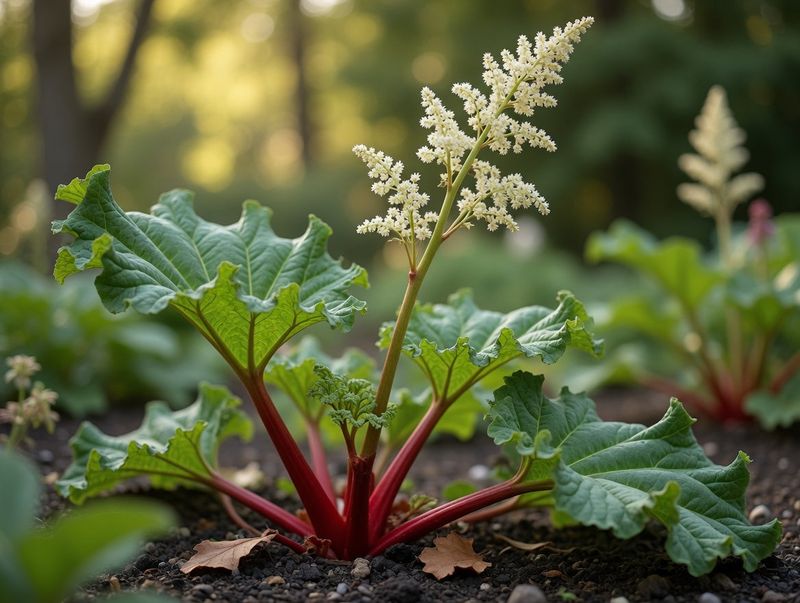
You can set aside one common fear. A flowering plant does not turn its edible leafstalks toxic, according to Purdue.
If the stalks looked good and tasted fine before the flower stalk appeared, flowering by itself is not a reason to throw them out.
The real safety line runs between the leafstalks and the leaves. Rhubarb leaves are not edible and should be removed and discarded.
University of Minnesota Extension notes that the leaves contain toxic levels of oxalic acid.
When you harvest, trim the leaf off right away and toss it. That habit keeps the leaves from ending up in the kitchen by accident.
If a plant has been damaged by a hard freeze, play it safe and discard any stalks that look soft or limp. Extension sources do not fully agree on what happens inside frozen plants, so the careful move is simply to skip material that has turned mushy.
Young plants still need time to establish
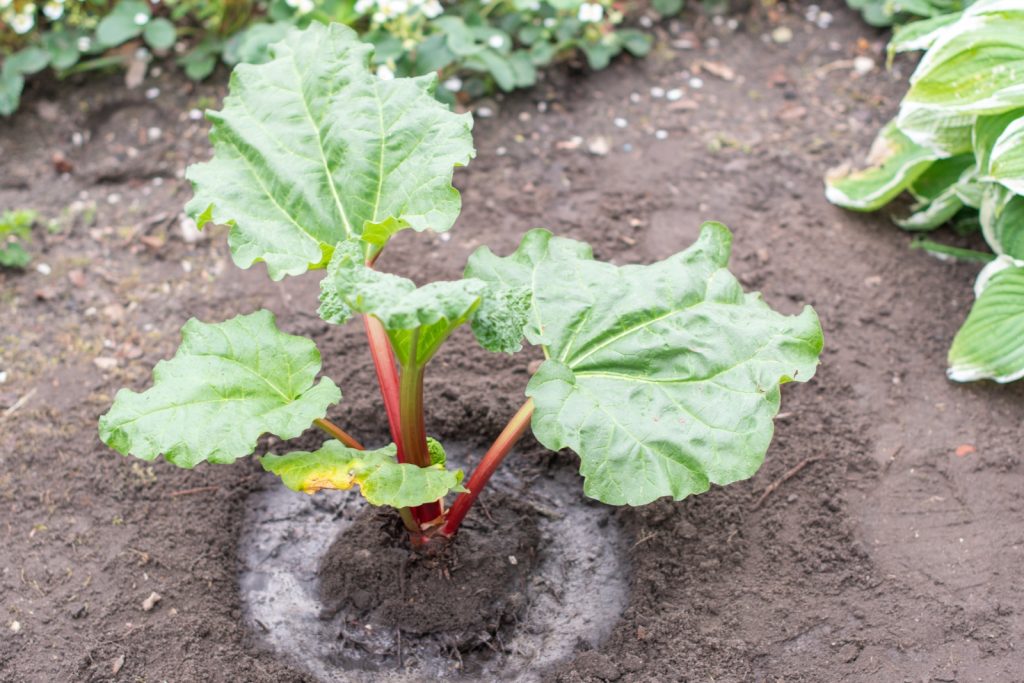
A newly planted rhubarb needs to build strength before it gives you much. The advice from South Dakota State Extension is to skip harvesting in the first year, then keep harvests light while the plant settles in.
Pulling too many stalks from a young plant can weaken it. Leaves are how the plant gathers energy, so taking most of them leaves little to store for next season.
This is also where mix-ups can happen. If a young plant sends up a tall stalk, do not treat it as a bonus stalk to pick.
The flower stalk is not the edible part, and its arrival is no cue to harvest heavily.
Instead, look for the true leafstalks with leaves attached, and leave most of them in place. Patience in the early years usually means a sturdier plant later, which is a better trade than one big first pull.
Leave the flowers when they suit your garden
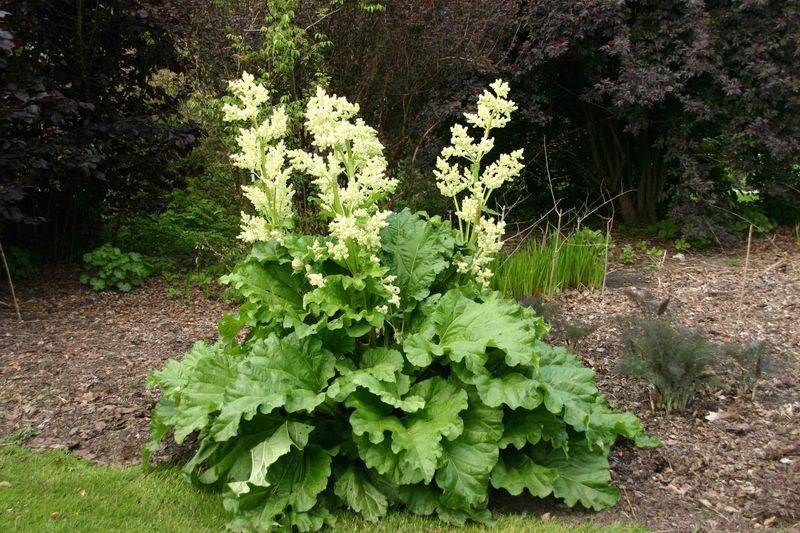
Not every gardener needs the flower stalk gone. Rhubarb blooms are tall, feathery, and surprisingly showy, and some people simply enjoy them.
Others want to collect seed. Leaving the flowers is a reasonable choice in either case.
If you would like the show but not the seeds, Purdue notes you can let the plant flower and then remove the stalks afterward to prevent seed from forming.
So the right call comes down to what you want from the plant. Cut the stalk early if leafstalks are the goal.
Let it bloom if you value the look. Keep it through seed set if you want to save seed.
No single choice is best for everyone, and none comes with a promised yield.
Either way, your rhubarb is doing what rhubarb does. A tall stalk is a signal, not a verdict.
Share this story