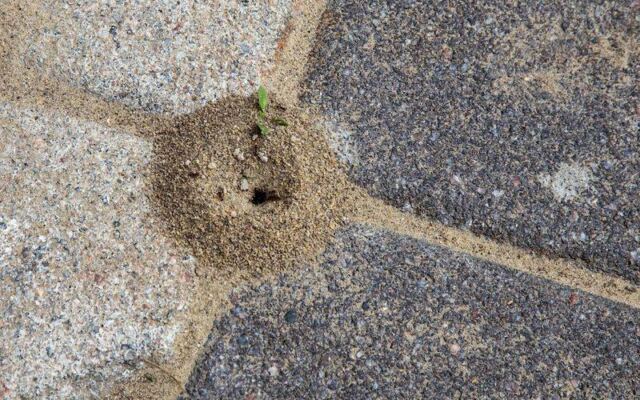
Those small sandy piles beside your sidewalk cracks are often soil that ants dug out of a nest under the pavement. Pavement ants are a likely suspect in Wisconsin, though a pile alone cannot tell you the species.
The rain may only be the moment you happened to notice it. A closer look can help you decide whether to do anything at all.
The pile may be soil from a nest beneath the pavement
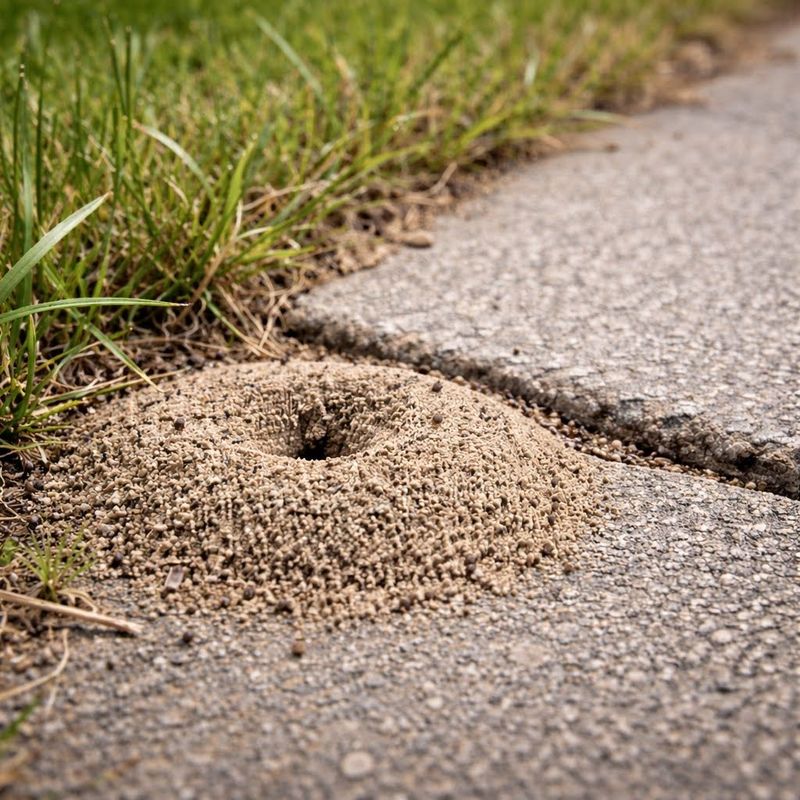
Ants are tiny builders, and a sidewalk gives them a handy roof. University of Wisconsin-Madison Extension notes that pavement ants commonly nest in soil beneath sidewalks, stones, and in foundation cracks.
As they dig tunnels and chambers, they have to put the loose dirt somewhere.
That is where the sandy pile comes in. Iowa State Extension describes pavement ants piling soil removed from their nests onto the pavement.
A small heap of fine, sandy grains right beside a crack fits that description well, since the crack is often the doorway between the nest and the surface.
Still, a pile is a clue, not a name tag. Pavement ants are a plausible explanation for what you are seeing, but the dirt itself cannot confirm which kind of ant dug it.
Other ants can also push soil out of their tunnels, and a pile may sit there with no ants in sight.
Think of the pile as a sign that something is likely living underground nearby. That is a reasonable starting point, and it is all the pile can honestly offer.
Before you reach any conclusions about rain or action, the next step is simply to watch the spot and see who comes and goes.
Look for ants before trying to identify the pile
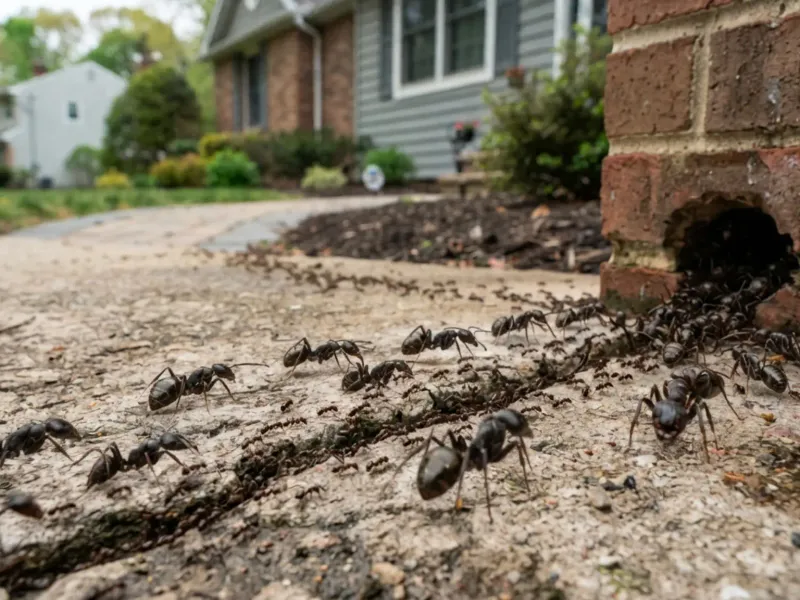
Spend a few quiet minutes watching the crack. Ants may be walking in and out of the opening, carrying soil grains or just traveling.
If you see a line of them, follow it and note where it goes, such as toward a garden, a trash can, or a foundation wall.
Wisconsin Extension offers some clues for pavement ants. Its pavement ant guide describes them as reddish-brown to black, with paler legs and antennae.
Under a magnifier, they have two nodes at the waist and fine grooves on the head and thorax.
Treat those features as clues, not a diagnosis. Ants are small and quick, and many species look similar to the naked eye.
If you see ants that do not match, that is useful information too.
If knowing the species matters to you, take a clear close-up photo or collect a specimen in a sealed container and ask an expert for help. Your local extension office is a good place to start.
Wisconsin Extension stresses identifying the species before choosing any control method.
That is also why the pile alone should not drive your decision. Dirt does not tell you what is nesting below, how large the colony is, or whether it will ever bother you.
Watching the ants gives you far better information than the mound ever could.
Rain timing does not establish what made the pile
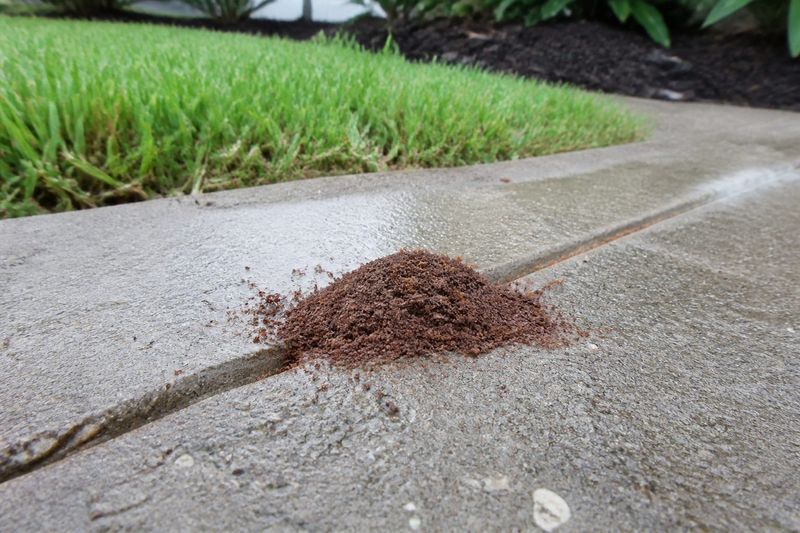
Noticing a pile after a storm feels like a cause and effect, but timing alone cannot prove it. Ants do react to water, though not in one standard way.
Research on a floodplain ant community, a study by LeBrun and colleagues, looked at flood-related behaviors that differ among species and conditions.
That work covers things like levee building in a floodplain. It does not explain why one particular sidewalk pile in Wisconsin showed up after a rain.
It also gives no reason to think ants can predict weather, so a pile is not a forecast.
Several simple explanations could fit what you saw. The ants may have pushed up fresh soil after the rain.
Wet, darker sand may simply stand out more against pale concrete. Or the pile may have been there for days, and you only spotted it when you were walking more carefully around puddles.
Nothing available can sort out which of those happened at your sidewalk. All three are possible, and more than one could be true at once.
That is fine, because the answer rarely changes what you should do.
If you are curious, check the spot on a dry day. A pile that returns or grows without rain suggests the ants are digging regardless of the weather.
Sidewalk piles differ from large lawn mounds
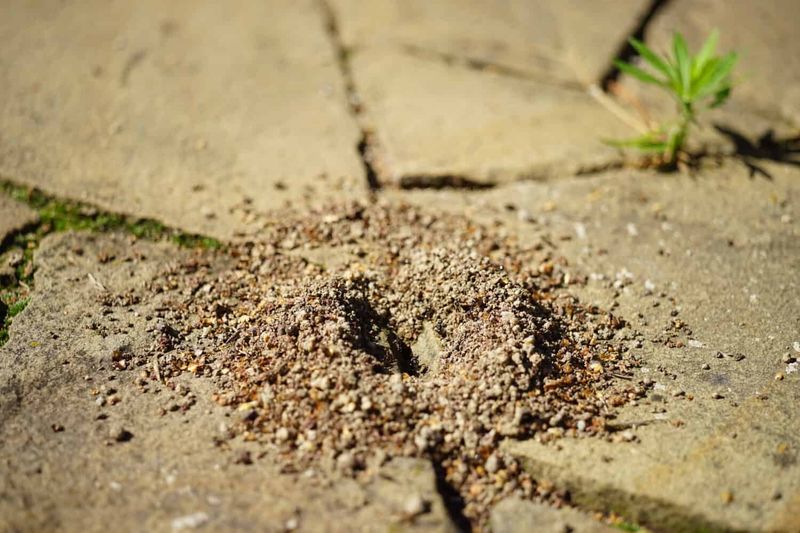
Scale and location tell two different stories. A small pile beside a sidewalk crack is a tidy handful of soil, often just a few inches across.
A lawn mound can be a very different sight.
UW-Madison Extension explains that Wisconsin also has field ants, and their mounds in lawns can be several feet wide. These ants build in open turf, so the mound rises from grass rather than from a pavement seam.
That contrast helps you figure out what situation you are in. A tiny pile at a crack suggests a small opening in a hard surface.
A broad mound in a yard suggests a nest dug into soil that has plenty of room to spread.
Neither feature alone names a species, though. Size and location are hints, and ants do not always follow the pattern.
Pavement ants, for example, are described by Wisconsin Extension as nesting under stones and in foundation cracks as well as under sidewalks, so they are not tied to one spot.
If you have both a sidewalk pile and a lawn mound, do not assume they came from the same colony. Look at the ants at each spot separately.
Comparing what you actually see, rather than how big the dirt is, keeps you from jumping to the wrong conclusion.
Leave an outdoor colony alone unless it causes a problem

Most outdoor ant colonies are simply part of the neighborhood. Cornell’s integrated pest management program says outdoor ant colonies can usually be left alone.
A little dirt on the pavement does not make a colony a threat.
The question to ask is whether the ants are causing a practical problem. Are they coming into your home?
Are they filling a patio, a doorway, or a play area you use every day? Those are reasons to act.
A tidy mound beside a crack, by itself, is not.
Curiosity and concern are different things. It is fine to wonder what is under your sidewalk without needing to do anything about it.
Sweeping the pile away is harmless, though the ants may push up more soil.
Routine pesticide use is not the answer to a mound. Spraying a colony that is not bothering anyone adds chemicals to your yard for no real gain, and it may not reach the nest anyway.
If you are unsure, give it a week or two. Watch whether ants show up in the house or in areas where you spend time.
If they do not, you can let the sidewalk colony carry on quietly beneath your feet.
If ants come indoors, limit food and water first

When ants do walk into the house, start with what draws them in. Wipe up crumbs and sticky spills, store food in sealed containers, and take out garbage regularly.
Fix drips under sinks and dry damp spots, since ants look for water as well as food.
If ants keep coming, consider bait rather than spraying everywhere. Penn State Extension recommends this kind of integrated approach.
Bait lets worker ants carry the product back to the nest, while broad spraying tends to kill only the ants you can see.
Choosing bait takes some thought. Wisconsin Extension says bait choice for pavement ants should take the species’ feeding habits into account.
No single bait is guaranteed to suit every colony, so you may need to watch what the ants actually take and try a different type if they ignore it.
Safety matters as much as results. Read and follow the pesticide label exactly, and keep any bait out of reach of children and pets.
Placing bait in spots they cannot get to, such as behind appliances or in tamper-resistant stations, is a sensible habit.
I will not name a specific product here, because the right one depends on your ants and your home. If the problem does not ease, an extension office or a licensed pest professional can help you sort out the next move.
Use ant activity and the practical impact to decide what to do
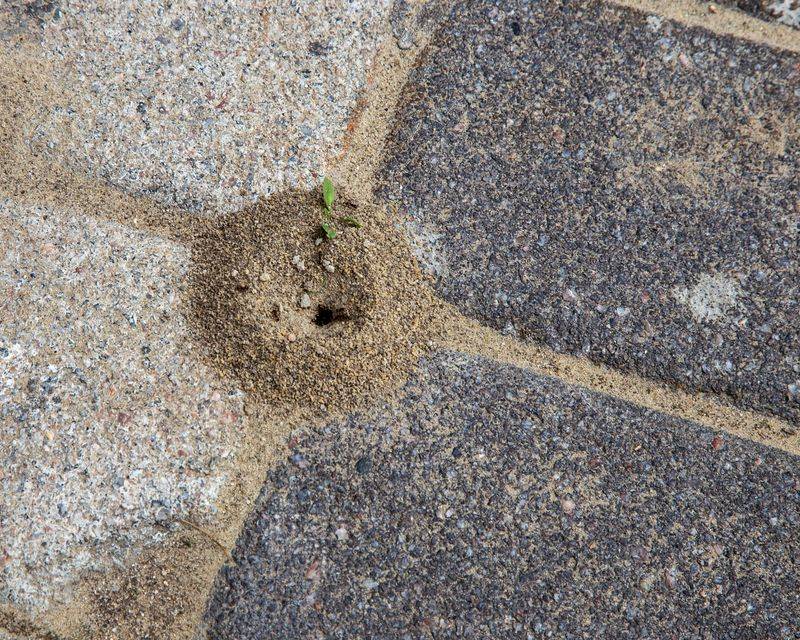
A sandy pile at a crack is often excavated soil from pavement ants, but rain timing is only a clue that varies by species. Let the ants you see and the trouble they cause guide you, as Cornell’s guidance suggests.
The dirt tells a small story. The ants decide the ending.
Share this story