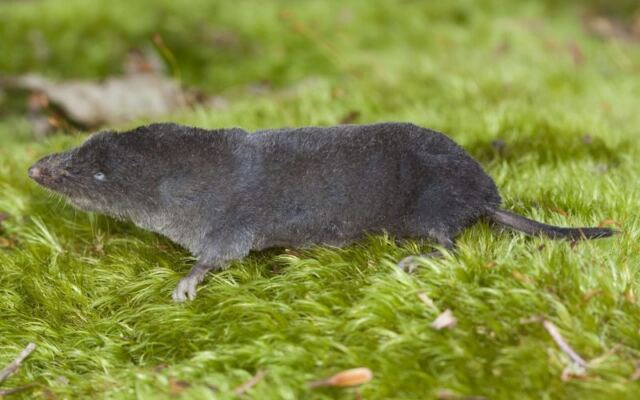
A tiny East Texas mammal has a reputation for killing its prey with venomous saliva, and the story is more interesting than the headline alone. The southern short-tailed shrew lives in the eastern part of the state, and one Texas species account says its saliva is venomous.
Most people think venom belongs only to snakes, spiders, and scorpions, so a venomous mammal sounds strange. Here is what is reported, what has been tested, and what to do if you ever meet one.
Southern short-tailed shrews occur in East Texas
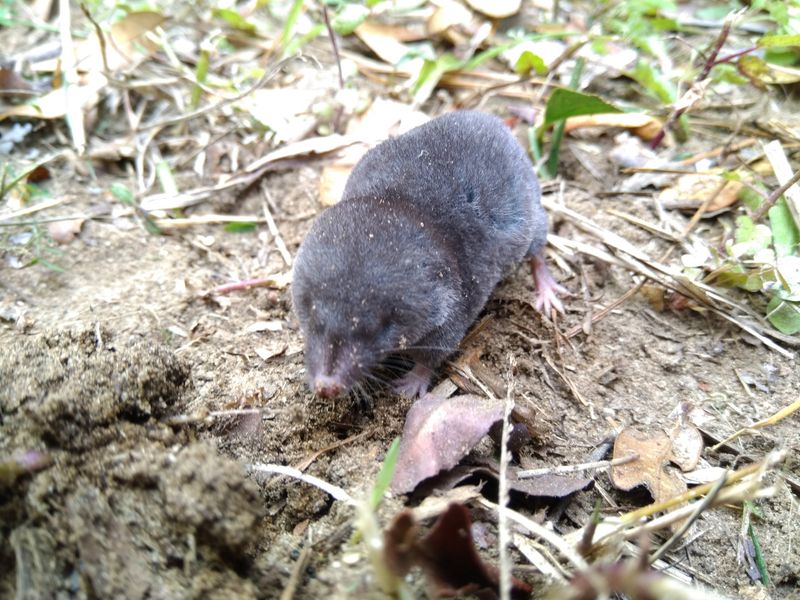
The southern short-tailed shrew, Blarina carolinensis, occurs in East Texas, and a Texas Tech species account reports that its saliva is venomous. That is the claim behind the headline, and it surprises many people.
We usually link venom to snakes, spiders, and scorpions, not to a small furry mammal that spends its days hunting in the dark.
Other references treat the same animal more carefully. The University of Michigan’s Animal Diversity Web says venom has not been tested in this species.
A peer-reviewed review of venom in shrews and their relatives names the northern short-tailed shrew as the one with confirmed venom, and treats the southern species as unverified.
So there is a gap between a report and a proven result. A report says someone described the saliva as venomous.
Settled evidence means researchers tested this species and showed what the saliva does. For the southern short-tailed shrew, the first exists and the second is still missing.
The idea is still reasonable. Close relatives have real venom, and a small animal that eats a lot of prey could gain from having it.
For now, though, the safest way to say it is that the southern shrew is reported or suspected to have toxic saliva. The rest of this article shows where that reputation comes from.
Its range does not make it a common yard visitor
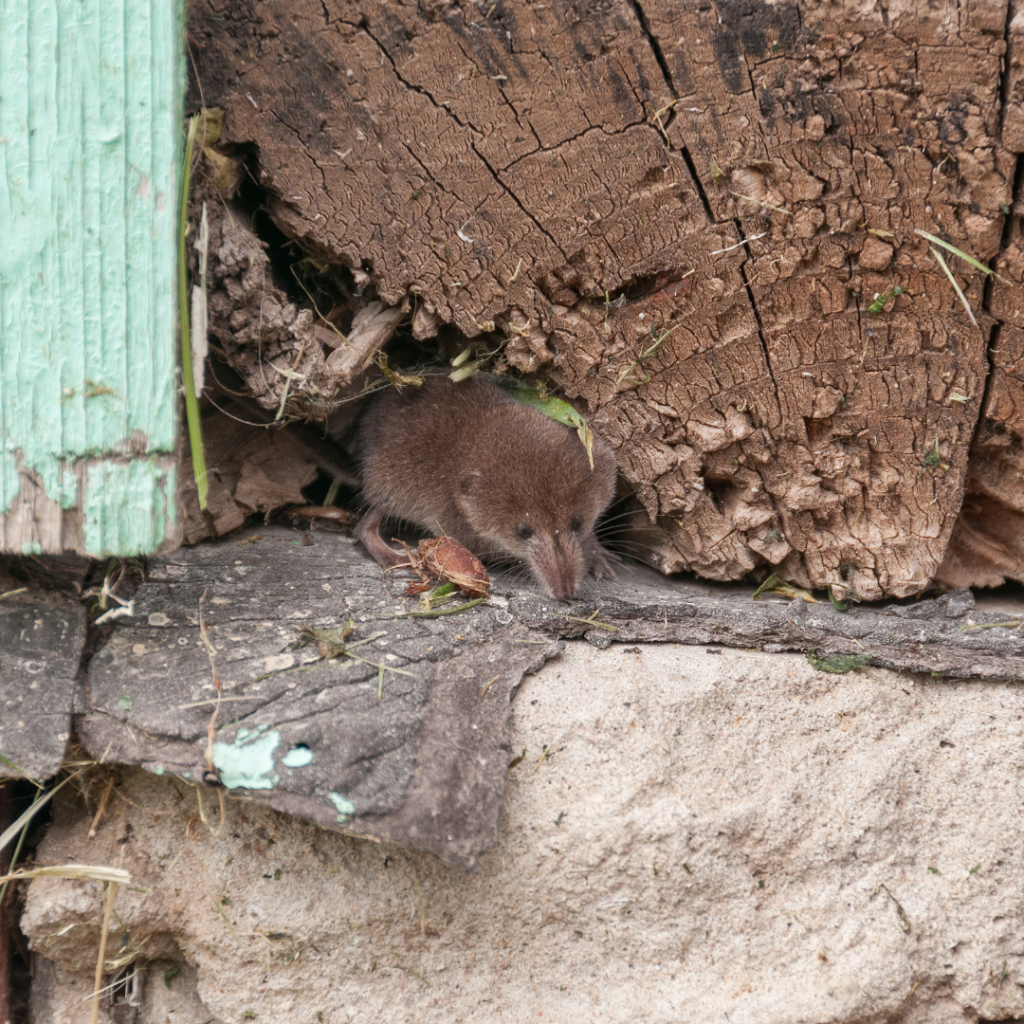
Texas records place this shrew in the eastern quarter of the state. The Texas Tech species account also lists a separate record from Bastrop County, which sits outside that main block.
So the range is broad, but it is a regional range and not a promise that you will see one.
The habitat matters more than the map. The shrew lives in forested areas and the meadows and openings that go with them.
The Texas Parks and Wildlife conservation action plan describes suitable habitat as hardwood and pine forests, meadows, and openings with moist ground cover and leaf litter.
Think of a damp forest floor with a thick blanket of fallen leaves. That cover gives a small hunter places to move out of sight and lots of insects and worms to find.
A mowed lawn with little cover does not fit that picture well.
You may read that these shrews turn up in East Texas yards. The sources do not show that.
A yard that backs onto woods might sit close to shrew habitat, but nothing here says residential sightings are common. Because shrews are small, quick, and secretive, most people never see one, even where they live.
It is small, but measures about three and a half inches long
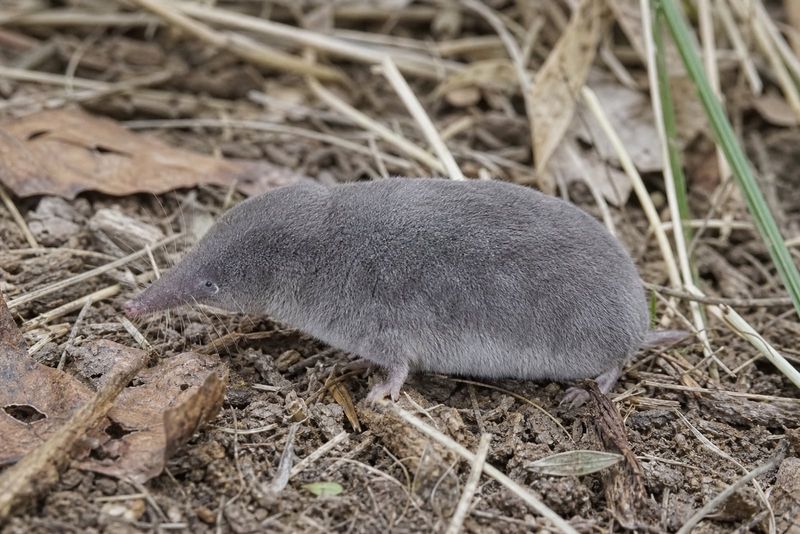
Measured with a ruler, the picture gets clearer. The Texas Tech account gives an average total length of 88 millimeters, or about 3.5 inches, and that includes the tail.
Adults weigh roughly 18 to 28 grams, about as much as a few coins.
That is small, but it is longer than a thumb. The body is compact and the tail is short, which is where the common name comes from.
The diet is the next piece. Researchers looked at more than 400 East Texas shrew stomachs, and insects showed up most often.
Annelids, which include earthworms, came next. Vertebrate remains, such as mice and salamanders, turned up less often.
That pattern describes a busy little predator that mostly eats small invertebrates. It does not mean that venom kills everything on the menu.
A beetle or a worm may be caught and eaten with no help from saliva at all, and the stomach study cannot say how any of the prey died.
Shrews also have fast metabolisms, so they need to eat often. That makes a varied diet useful, and it explains why they spend so much time searching the leaf litter.
The clearest venom experiments involve a different shrew
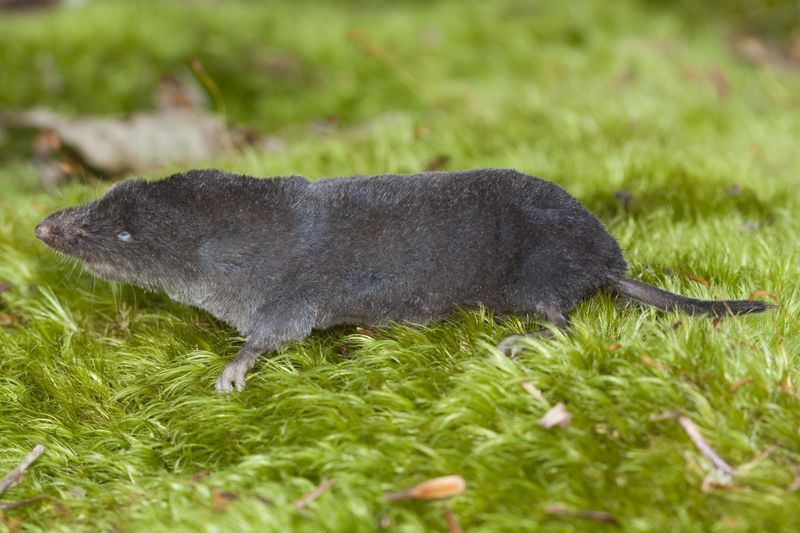
Two very similar shrews live in the eastern United States, so names matter. The northern short-tailed shrew is Blarina brevicauda, and the southern short-tailed shrew is Blarina carolinensis.
They look alike, but research on one does not automatically apply to the other.
The strongest venom work involves the northern species. A peer-reviewed study, Blarina toxin, a mammalian lethal venom, isolated and described a toxin from B. brevicauda.
That means scientists separated the active substance and studied what it does.
A broader review of venom evolution treats venom in the northern short-tailed shrew as confirmed. The same review treats it in the southern species as unverified.
Here is a simple way to see the difference. If a lab shows that one species has a toxin, that is solid knowledge about that species.
A close cousin may well have something similar, but that is a reasonable guess until someone tests it.
So the northern shrew’s toxin is a good clue about what the southern shrew might have. It is not proof.
Until researchers test B. carolinensis directly, its venom stays a likely but open question.
A gland extract does not show what a natural bite does
The Texas species account describes one experiment on the southern short-tailed shrew. An extract from its submaxillary glands, which are salivary glands under the jaw, killed mice at a specified dose.
The same account says serious effects in people are unlikely.
That result is real, but it has limits. Putting a measured extract into a mouse is not the same as a shrew biting.
In a natural bite, the amount of saliva that gets in, and where it goes, could be very different.
So the experiment shows that something in those glands can be harmful at a certain dose. It does not show that a bite delivers that dose, or that a bite kills prey in the wild.
It also tells us nothing about a dose-response in humans.
You may also hear that these bites cause burning pain or swelling. Those accounts come up in the research paper on the northern shrew’s toxin, which discusses human reports of Blarina bites.
They are stories, not controlled studies, and none of them tested bites from the southern species.
A lab result and a field result answer different questions. This one answers the first and leaves the second open.
Leave wild shrews alone, and get advice after a bite
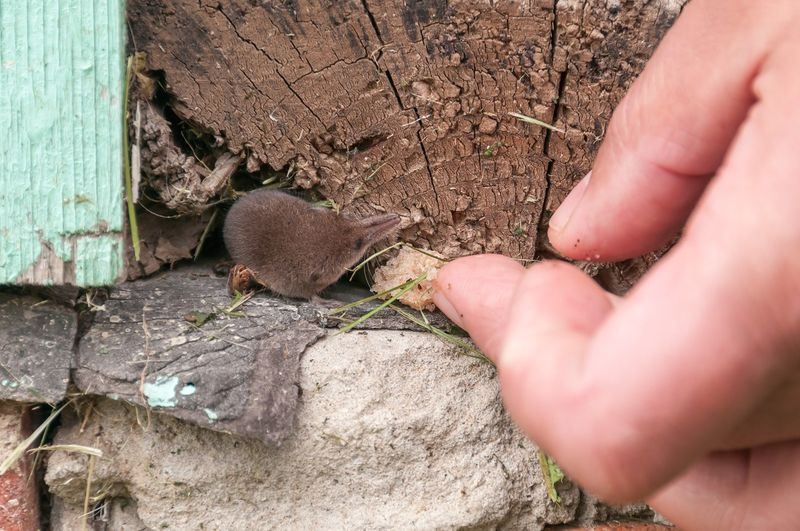
The plan is simple: do not catch or handle a wild shrew. The CDC advises keeping your distance from wildlife and teaching children not to touch unfamiliar animals.
If your cat brings one home, use gloves or a tool and keep your hands clear.
If a bite breaks the skin, wash it right away with warm, soapy water. Then contact a healthcare professional about the injury.
CDC rabies guidance explains that a clinician can decide whether you need a rabies assessment or a tetanus booster.
Do not try to work out the risk by guessing about venom. A bite can be a health concern for ordinary reasons, like germs in the wound, whatever the saliva contains.
The same caution applies to the shrew itself. The Animal Diversity Web says venom has not been tested in this species, even though the Texas account reports it.
A reported venom story is not the same as confirmed evidence for this shrew.
Maybe the most striking thing is how little we know about an animal that fits in one hand.
Share this story