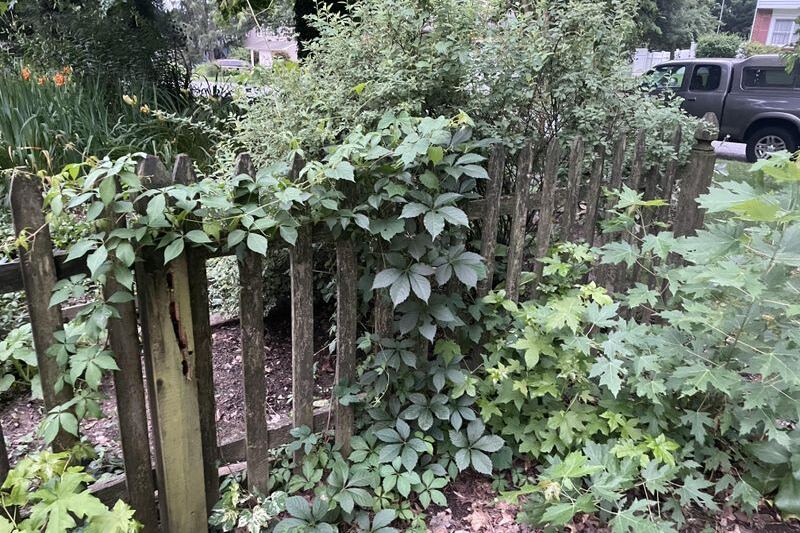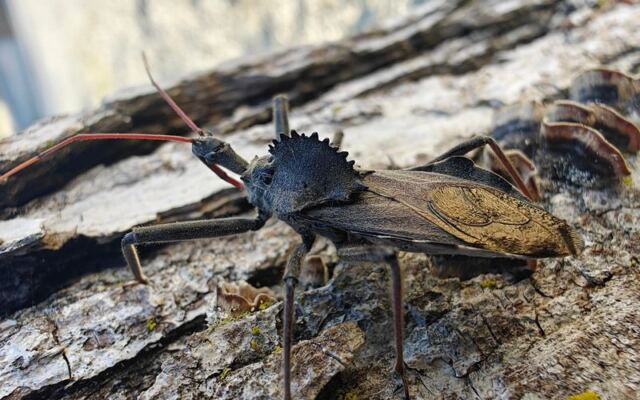
The bug with a tiny cogwheel on its back is the wheel bug, and yes, it can deliver a very painful bite. It lives across Virginia, often in gardens, on shrubs, and along fences.
Its strange crest makes it easy to spot once you know what to look for. Here is how to recognize it, why it bites, and what to do if you meet one.
How to recognize a wheel bug
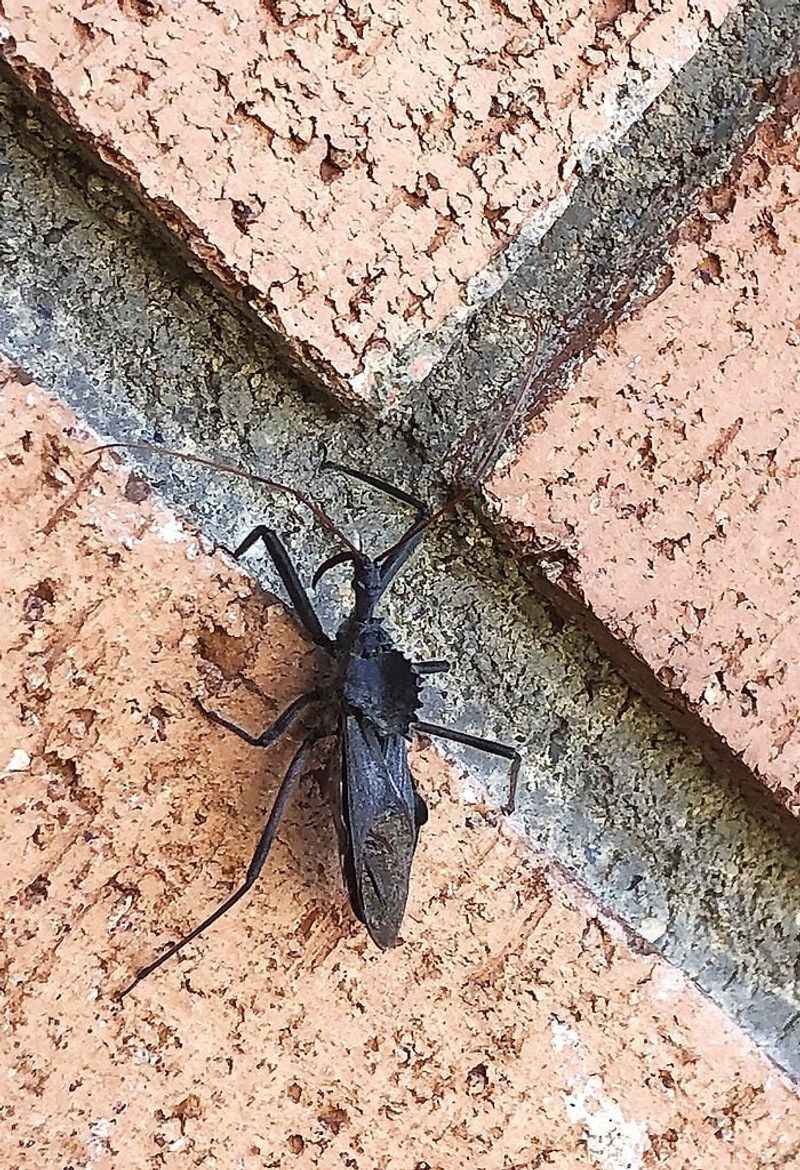
Picture a grayish-black insect about an inch long, with long legs and a narrow head. Now look just behind the head, on the thorax.
There sits a raised, semicircular crest with a toothed edge, and it looks remarkably like a small cogwheel. That crest is the wheel bug’s signature, and it is how the insect got its name.
According to Virginia Tech Cooperative Extension, wheel bugs are common in Virginia. You can find them on trees, shrubs, garden plants, and sometimes on fences or walls where they hunt other insects.
Their slow, deliberate walk and long, beak-like mouthpart tucked beneath the head add to their odd look.
Young wheel bugs, called nymphs, do not have the crest. They can look quite different from adults, and University of Florida Extension notes that nymphs often show red and black coloring and a more spindly shape.
So if you see a small insect with no visible wheel, you cannot rule out a young wheel bug just because the cog is missing.
Timing helps, too. Adults are most often noticed in late summer and early fall in Virginia, when they have finished growing and are easier to see.
That said, the exact timing can shift depending on where you live and what the weather has been like that year.
A good habit is to look closely from a respectful distance. If you can see the crest, you have confirmed an adult wheel bug without needing to touch it.
What a wheel bug bite feels like
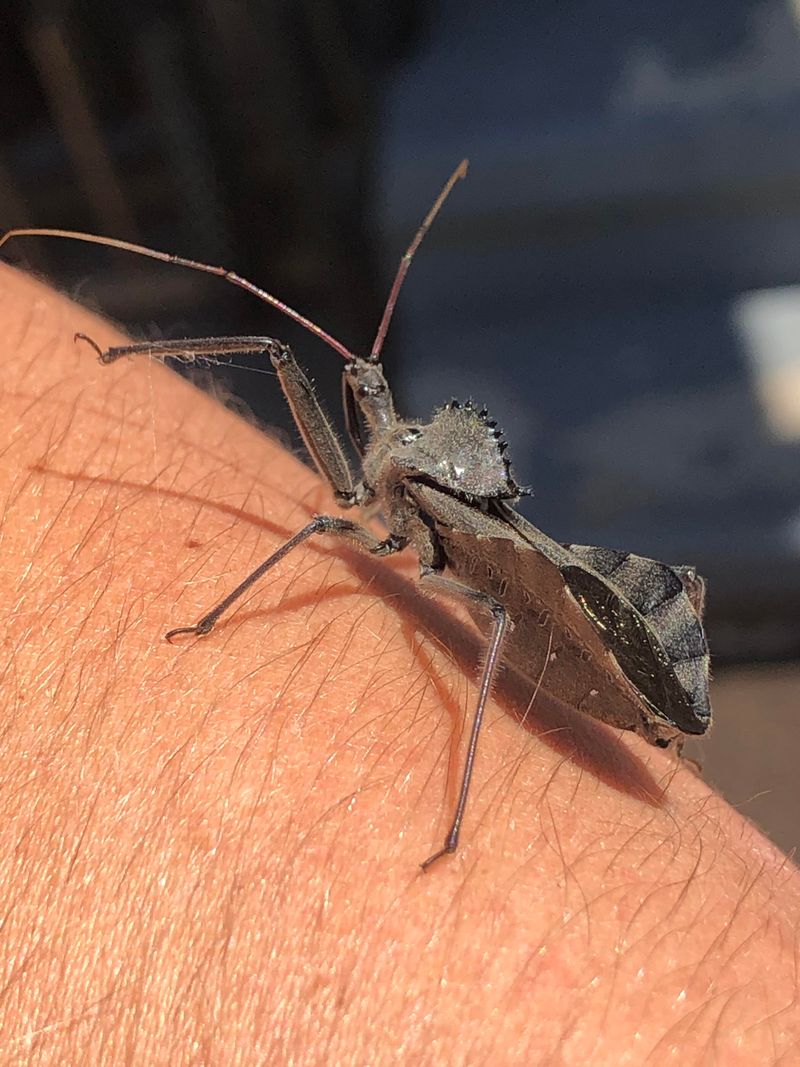
Reports about wheel bug bites keep coming back to one word: painful. University of Florida Extension says the bites are often intensely painful and are sometimes followed by numbness.
The pain is usually tied to someone picking up or disturbing the insect.
You may come across comparisons to bee, wasp, or hornet stings. Those are descriptions people have shared, and the Florida account relays them.
They are not the results of controlled or standardized testing, so nobody can honestly say the bite ranks above or below any other sting or bite. Pain is personal, and one person’s experience can differ from another’s.
The same goes for other effects. Numbness, skin changes, or lingering soreness are possible for some people, but they are not guaranteed.
Serious or prolonged problems are usually linked to a secondary infection or an individual’s hypersensitivity, not to the typical bite.
In other words, a wheel bug bite is a good reason for caution, not a reason for alarm. Most encounters end without any bite at all, because the insect is more interested in hunting than in people.
The practical lesson matches what Virginia Tech advises: look, but do not touch. If you never pick one up, you are very unlikely to find out how the bite feels.
Why wheel bugs bite
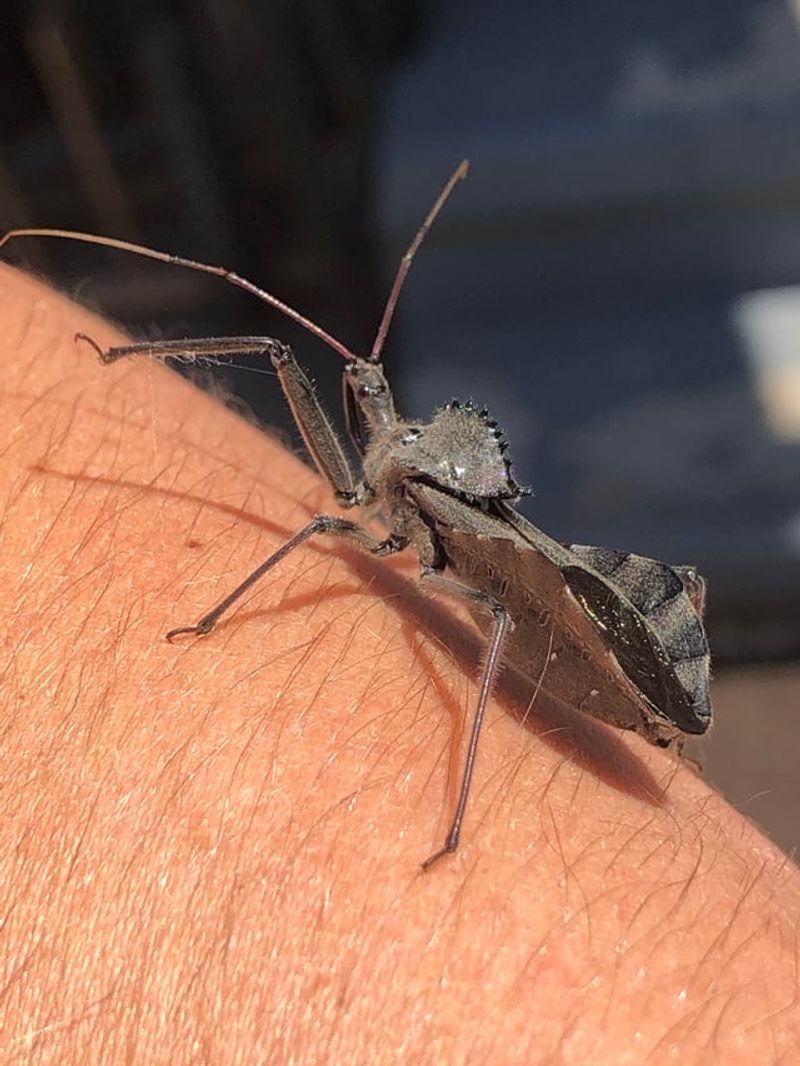
A wheel bug’s mouthparts are built for hunting. It has a sharp, piercing beak that it uses to stab other insects and feed on them.
People are not on the menu.
That is why seeing one on your tomato plants or porch rail does not mean it is looking for you. Bites are associated with handling, disturbance, or mishandling.
The Missouri Department of Conservation and Texas A&M AgriLife Extension both describe bites in that context, usually when someone grabs the bug or it gets pinned against skin.
Think of the bite as a defensive reaction. A wheel bug that feels trapped in a glove, a pile of laundry, or a child’s hand may use the only tool it has.
Some people confuse wheel bugs with kissing bugs, so the difference matters. According to Virginia Tech, wheel bugs do not feed on mammalian blood, and they are sometimes mistaken for kissing bugs.
A wheel bug is a predator of insects, and that is a very different lifestyle.
If you notice one, the simplest response is to give it room. Leaving it undisturbed keeps both you and the insect safe.
What wheel bugs do in gardens
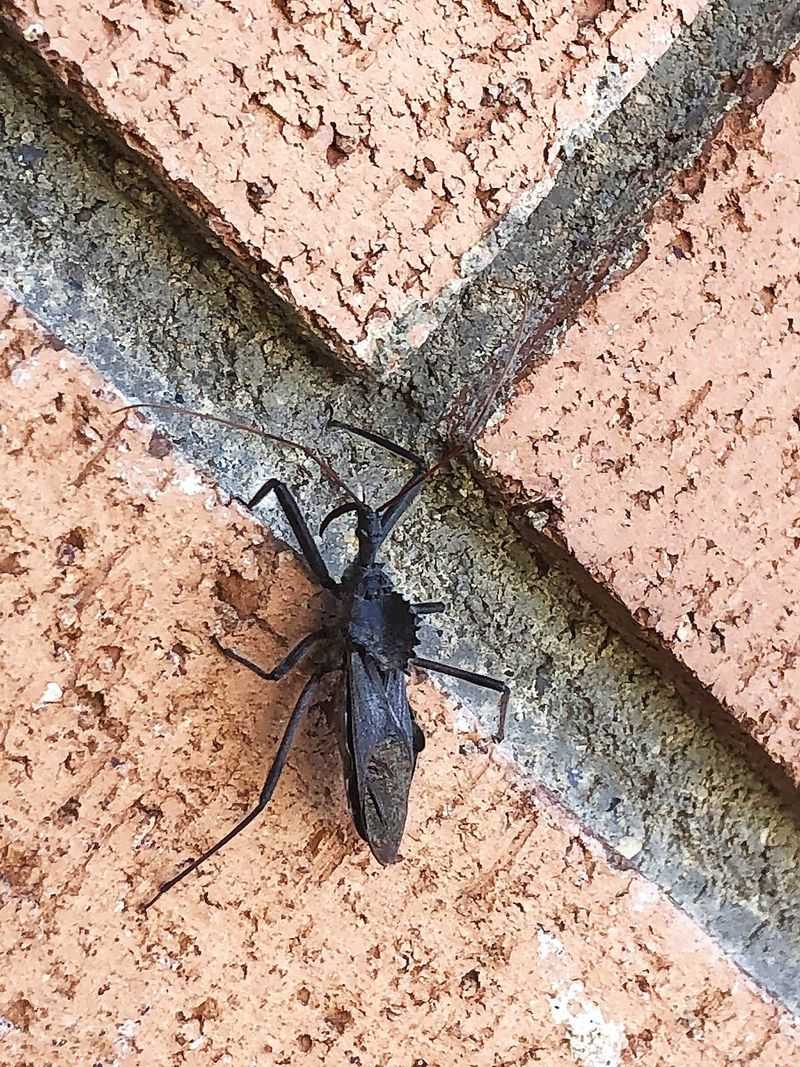
Gardens are full of small hunters, and the wheel bug is one of the larger ones. It feeds on other insects, including caterpillars and beetles that chew on plants.
For that reason, Virginia Tech generally considers wheel bugs beneficial in gardens and landscapes.
Gardeners often find them in late summer, patrolling leaves and stems. A slow-moving wheel bug can quietly reduce the number of pests without any effort from you.
There is a catch, though. Wheel bugs are not picky, and University of Florida Extension notes that they also prey on helpful insects, including lady beetles and honey bees.
So beneficial does not mean they eat only pests.
That mix is typical of natural predators. A garden with many kinds of insects will have hunters and prey in balance, and a single wheel bug is unlikely to change that much.
If you grow flowers for pollinators, you may notice a wheel bug waiting near blooms. That is simply a good ambush spot, since visitors keep arriving.
The ecological picture is balanced: mostly helpful, occasionally costly to other helpers. Whether to keep one in your garden is a separate question, and it depends on where it is and who uses the space.
What to do when you find one
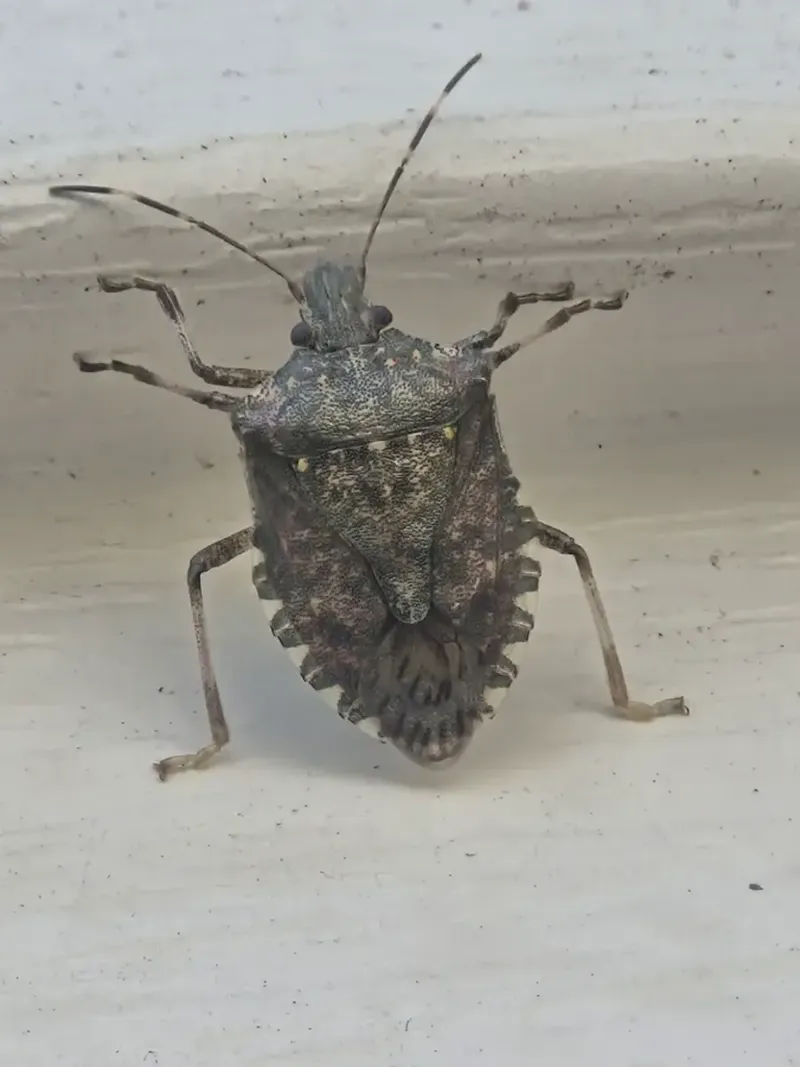
The basic rule is easy to remember: do not handle a wheel bug. Skip the gloves-and-gentle-hands approach as well, since the goal is to avoid contact altogether.
Where you find it changes what makes sense. If a wheel bug is on a plant, Virginia Tech says spraying is unnecessary.
Leave it alone and let it carry on hunting.
A different situation is a wheel bug near an entry or where children play. In that case, Virginia Tech describes using a fly swatter as an option.
This is a limited choice for those specific spots, not advice to swat every wheel bug you see.
There is a caution attached. The Missouri Department of Conservation warns that crushing or slapping at a wheel bug can provoke a bite.
If you do decide a swatter is needed, act deliberately and keep your hands and bare skin well away from the insect.
Some practical examples help. A wheel bug on your tomato plants can stay.
One crawling across the doorframe where kids run in and out might be worth dealing with. One on a fence post at the back of the yard is best admired from afar.
It also helps to tell children what the bug looks like and to teach them a simple rule: if you see the little cogwheel, leave it be and tell a grown-up.
What to do after a bite

If a wheel bug does bite, start with simple first aid. Wash the area with soap and water, then apply a cold compress.
Poison Control lists these steps among its general advice for insect bites.
Texas A&M AgriLife Extension also advises washing the bite and says medical treatment is not usually needed. Local discomfort, such as pain, redness, or mild swelling around the spot, can be part of an ordinary reaction.
Some signs call for more attention. Seek emergency care right away for difficulty breathing, a closing-throat sensation, or swelling of the lips, tongue, or face.
Those can be signs of a severe allergic reaction, and they should not wait.
Other warning signs are less urgent but still worth acting on. The American Academy of Dermatology suggests getting medical advice if local symptoms get worse, or if symptoms show up beyond the bite site.
Everyone reacts differently, so it is not possible to predict how a particular bite will go or how long it will take to feel normal. If you are unsure about what you are seeing, a doctor or pharmacist can help sort it out.
A wheel bug is a remarkable insect with a calm approach to life, and it asks very little of us. Admire the cogwheel, and keep your hands to yourself.
Share this story