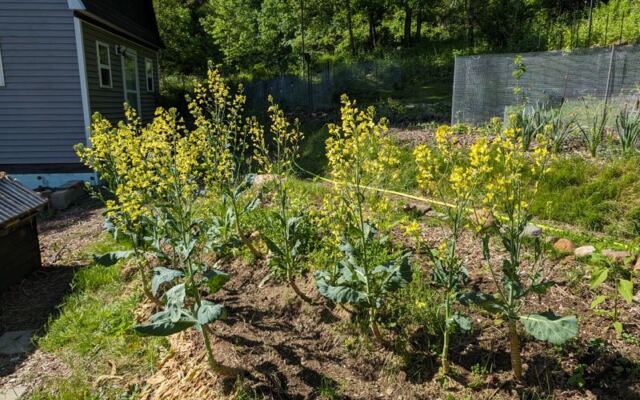
Yes, you can cut that tall stalk, but it will not turn your mustard back into a leafy plant. The stalk means your mustard has started bolting, which is the normal switch from making leaves to making flowers and seeds.
You can still pick leaves you like, eat the flowers if you have the right kind of mustard, or save seed. Here is how to decide what to do with that plant.
A giant central stalk usually means the mustard has bolted
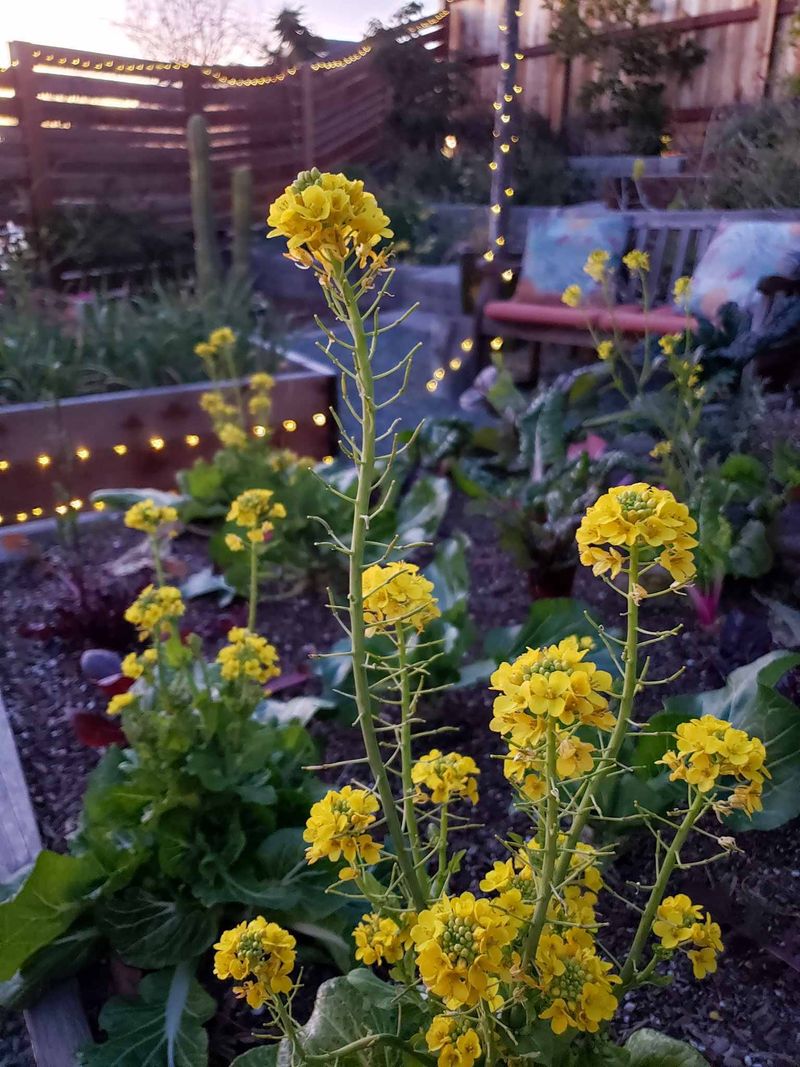
Bolting is when a plant shifts from growing leaves to making flowers and seed. That tall center stalk is the first big sign.
Mustard does this as part of its normal life cycle, much like a lettuce or spinach plant that sends up a tower late in its run.
A flower stalk is not a disease symptom on its own. Maryland Extension describes bolting in vegetables as a regular reproductive stage, and it does not treat it as a sign of illness.
Spots, mold, sticky residue, or chewed holes are separate problems, and you would see those on the leaves themselves.
Look at what the plant is doing before you decide anything. A stalk just beginning to rise usually sits above leaves that are still decent.
Utah State University Extension notes in its mustard growing guide that leaves are best picked before the seed stalk forms, which tells you timing matters for quality.
Quality is the real change here. Illinois Extension points to flavor and texture as the harvest concerns for mustard, not a sudden safety problem.
So a bolting plant is not automatically trash. Taste a leaf, and let your own palate guide you.
Mustard’s flowering response depends on conditions and variety
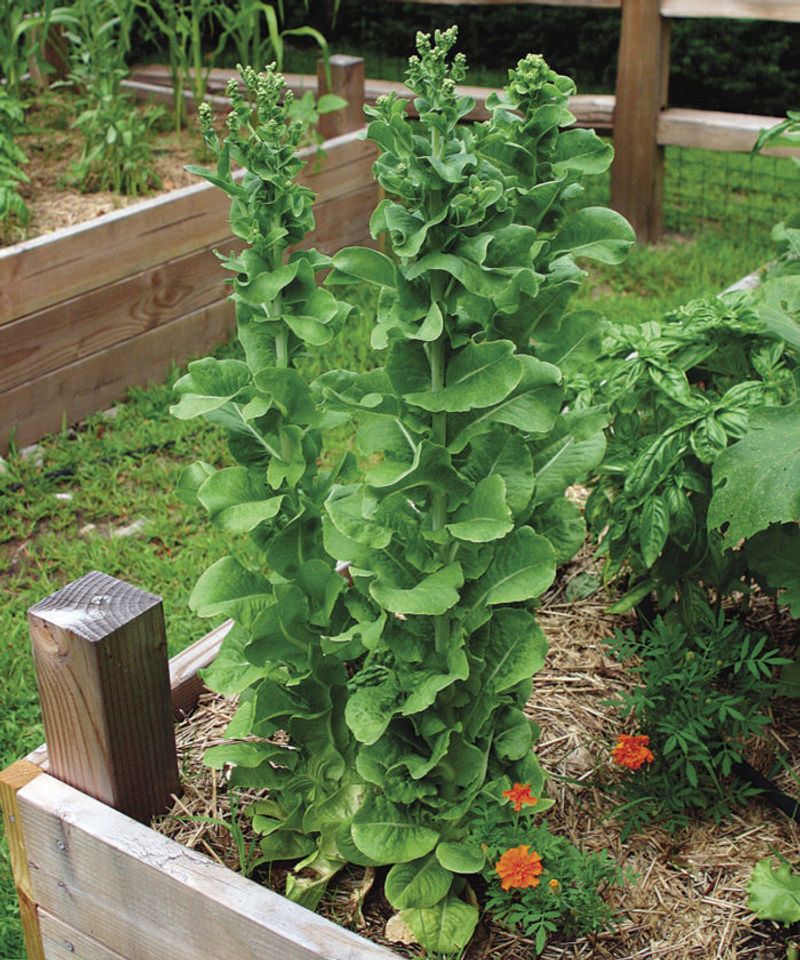
Mustard is a cool-season crop, and it likes mild weather. When days turn warm and long, it tends to hurry toward flowers.
Utah State University Extension connects mustard flowering with warm, long days, which is why a spring planting in Alabama can start bolting as the season heats up.
Do not expect one exact trigger, though. Plants respond differently, and there is no single temperature or calendar date that works for every garden.
Two rows planted a week apart can behave differently, and so can two varieties side by side.
Researchers have seen this variety directly. A study of 22 Myanmar mustard accessions found large differences in how long plants took to bolt and in how they reacted to temperature and day length.
The practical lesson is to watch your own plants instead of trusting a rule. Keep a quick note of when each variety sent up a stalk in your yard.
Over a couple of seasons, that record will tell you more than any general chart.
Cutting the stalk is not a proven reset button
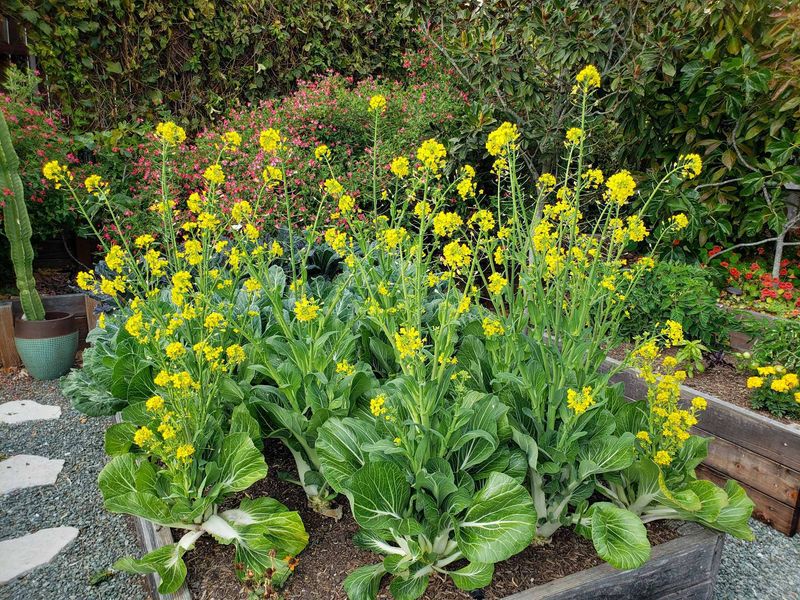
Here is the direct answer to the question in the headline. Mustard-specific guidance backs harvesting before the seed stalk forms.
It does not show that cutting off a mature stalk sends the plant back to making tender leaves.
You may have heard that snipping a flower stalk redirects energy. Maryland Extension says that works for certain crops such as rhubarb, onions, and hard-neck garlic.
Its discussion of leafy crops that bolt does not promise the same result for mustard.
So treat stalk removal as a tidy-up, not a fix. If you cut it, do not count on better-tasting leaves or a big second harvest.
The plant is following its life plan, and it may simply try again with new flower shoots.
The better move is to act earlier next time. As Utah State University Extension suggests, pick leaves before the stalk shows up.
If a stalk is already tall, harvest what still looks good and decide what the plant is best used for from here.
Judge the leaves by their condition, not by the stalk alone
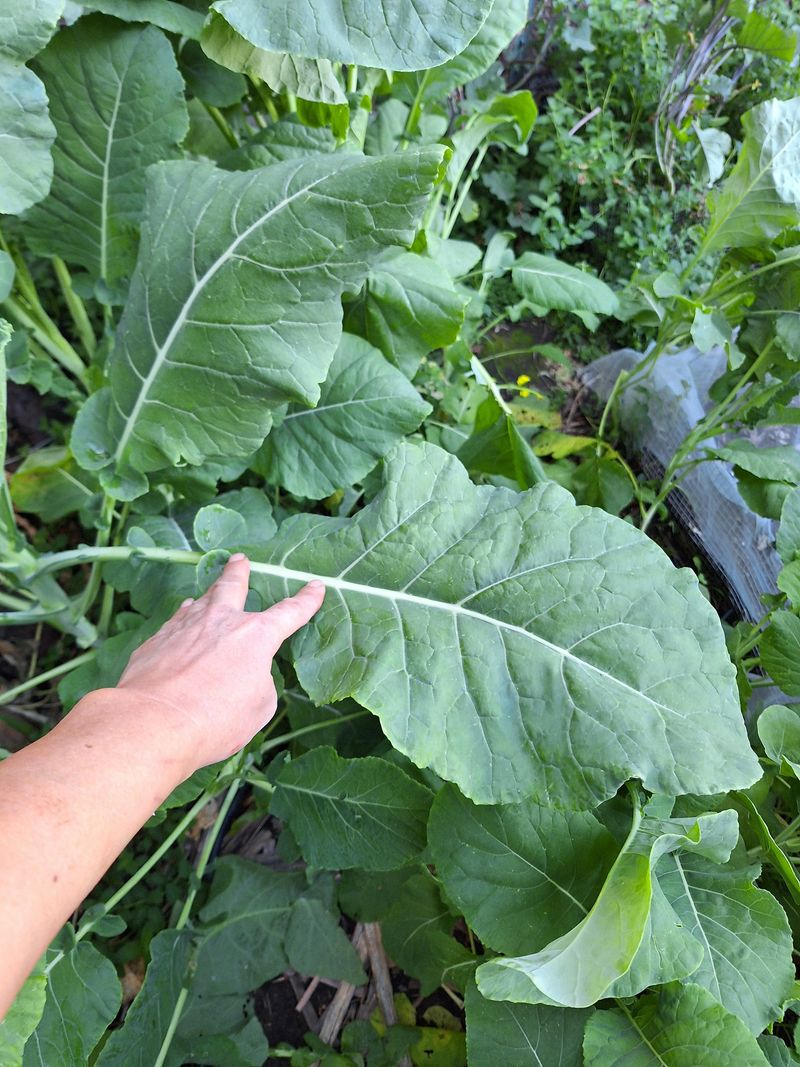
Your eyes and taste buds are the best test. Pick a leaf and look at it, then nibble a piece.
If it is tender and the flavor suits you, it is fine for the kitchen.
Age and growing conditions both shape how a leaf turns out. Illinois Extension describes mustard as a crop where quality changes, and tougher texture and sharper flavor are common as plants mature.
Not every leaf on a bolting plant is inedible, but many will be stronger than you like.
For a steady supply, take young outer leaves and leave the center alone. Alabama Extension suggests harvesting outer leaves when they reach about 6 to 8 inches.
The inner growing point keeps producing new growth that way.
Once a plant is bolting, use what is still appealing, or pull the whole plant if the leaves have lost their charm. You can also cut all leaves close to the soil.
Utah State University Extension says regrowth is possible only if the growing point is not damaged, and that is not a way to undo bolting.
Identified brown mustard offers more than leaves
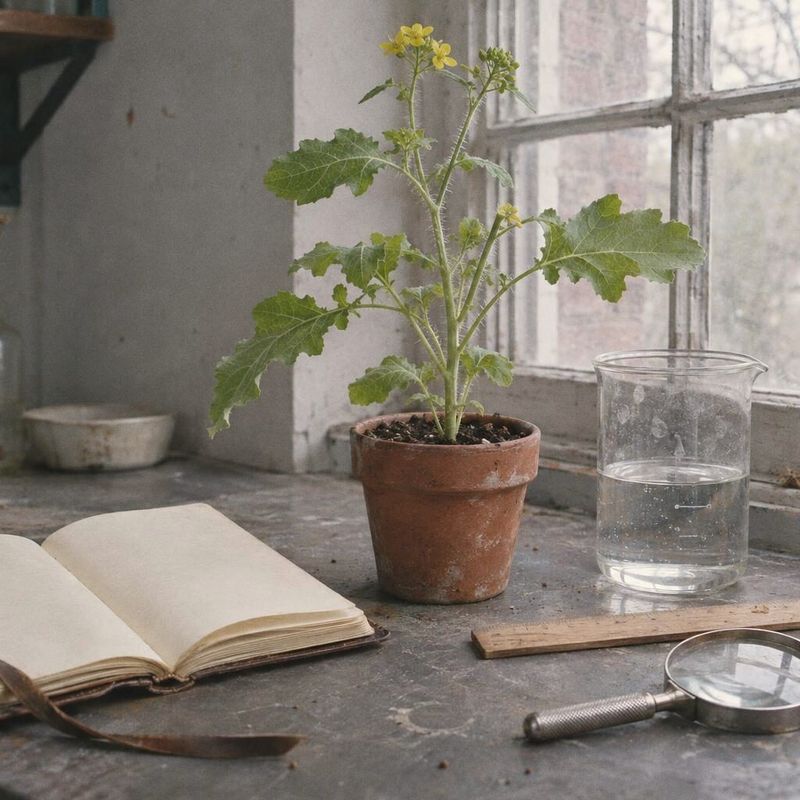
If your plant is cultivated brown mustard, Brassica juncea, the stalk may be worth eating. North Carolina State Extension lists the flowers and stems of this plant as edible, with a mustardy flavor.
That makes a clean, correctly identified plant more useful than a discard pile.
Try the tender flowering tops in a stir-fry or salad, where the sharp taste can be a feature. Start with a small amount to see how strong it is.
This advice has a firm limit. It applies to cultivated brown mustard, not to every plant with yellow flowers that looks like mustard.
Many wild or garden plants resemble it at a glance.
If you are not sure what you are growing, do not eat it. Check the seed packet, plant tag, or your records first.
When identity is unclear, the safest choice is to leave the flowers for the bees and enjoy them visually.
Leave some flowers if you want mustard seed
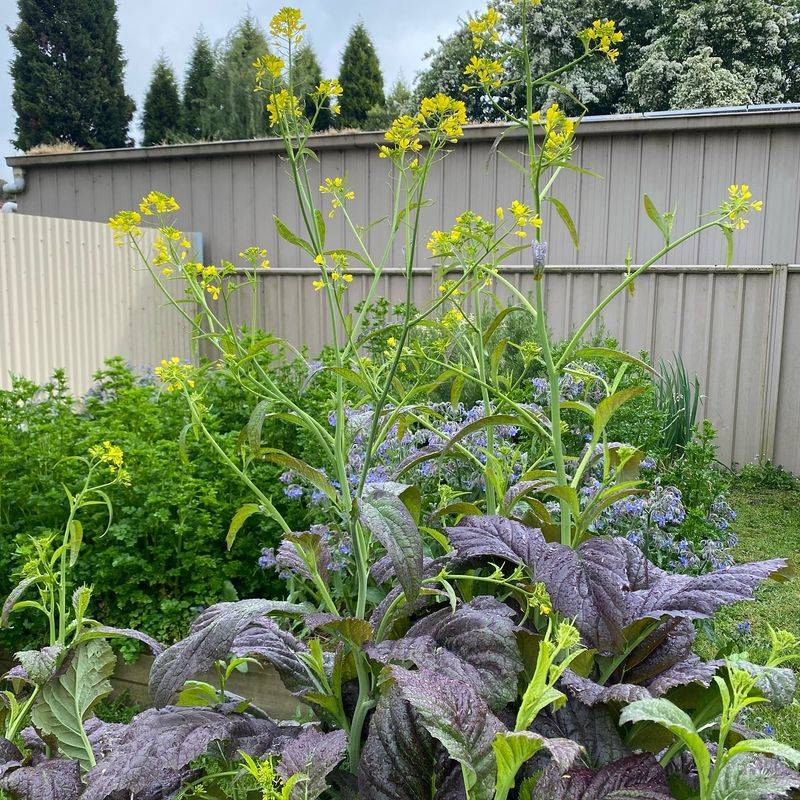
Wanting seed changes the whole plan. Instead of cutting the stalk, let the flowers do their job.
They will mature into pods that hold the seed.
North Carolina State Extension describes brown mustard as producing pods and seeds, and it notes that bees are attracted to the plant. So a patch left to flower can also support pollinators in your yard.
Choose a plant or two to set aside for seed rather than your whole row. That way you can still harvest leaves from the rest while the seed plants finish their cycle.
No yield is promised, and results will depend on your plant and your season.
Seed saving takes patience. The plant will look a bit scruffy while pods fill out, but that untidy stage is what you are after.
A fresh sowing is the better reset for tender leaves
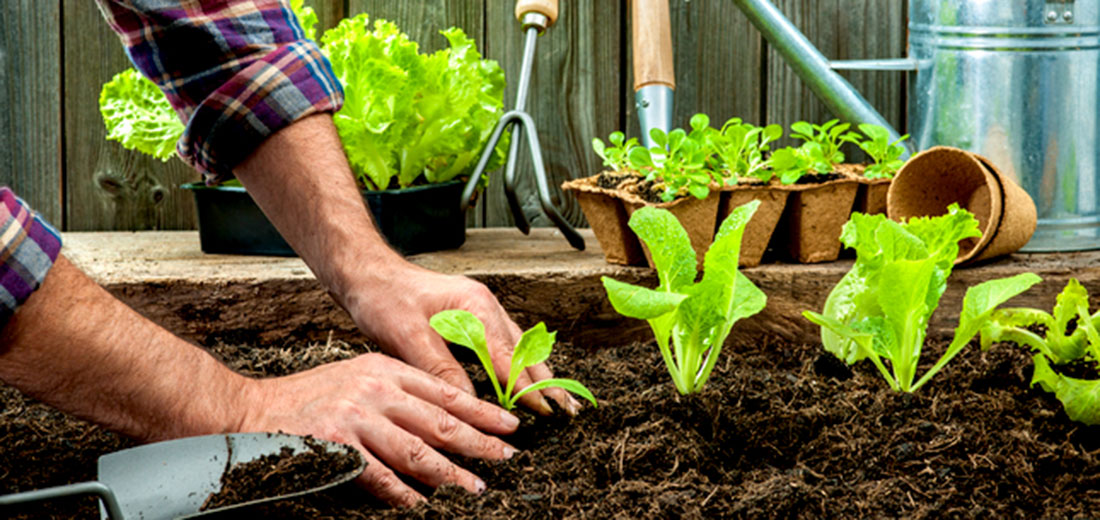
When you want soft, mild leaves again, plant new seed. A young plant starts the cycle over, which cutting a stalk does not do.
Alabama Extension also recommends reseeding in late summer for milder, tender growth.
Alabama’s planting table gives broad windows. For spring, Alabama Extension lists January 1 to May 1 in North Alabama and January 1 to May 15 in South Alabama.
For fall, it lists August 1 to September 15 in North Alabama and August 1 to November 1 in South Alabama.
Treat those dates as regional guidance, not a promise. Your site, the weather that season, and your variety can all shift what works.
Sow a little at a time so you always have young plants coming along.
So your choices are simple: harvest the leaves that still appeal, leave flowers for seed, or plan another sowing. A mustard plant that has bolted has not failed you, it has just finished one chapter.
Share this story