The first big snow in Iowa changes everything outside your kitchen window. Seeds and bugs get buried, so hungry birds start lining up at backyard feeders like it’s a lunch counter.
Some of them look a lot alike at first glance, which can make naming them tricky. Once you learn a few simple clues, you’ll be able to tell your winter visitors apart in seconds.
1. Northern Cardinal
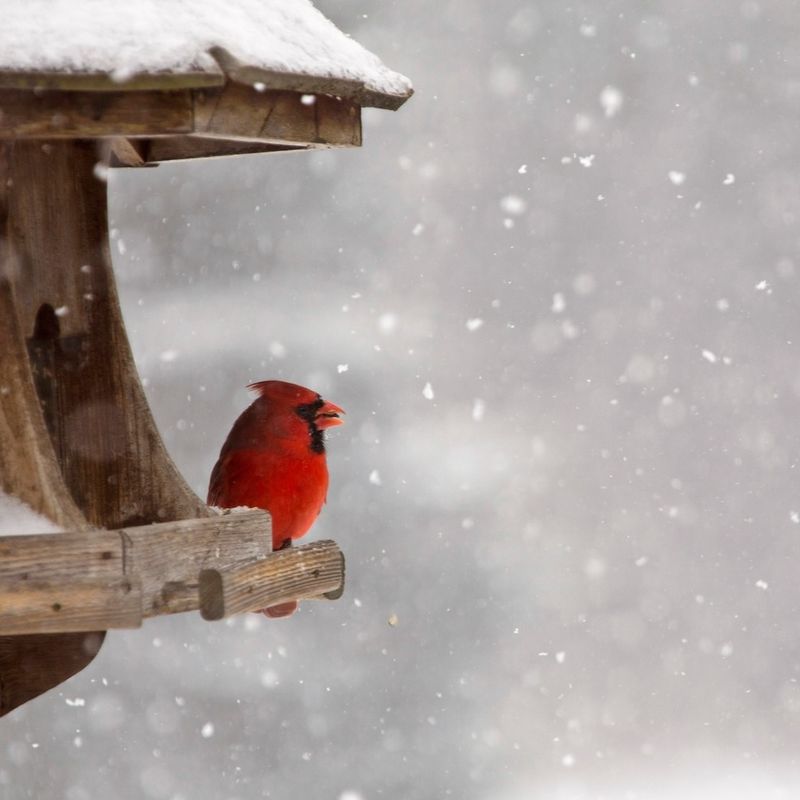
Nothing beats a flash of red against fresh snow. The male northern cardinal is Iowa’s most famous winter guest, and he is hard to miss with his scarlet feathers, pointed crest, and black mask around a thick orange beak.
The female causes more confusion. She is mostly warm tan with reddish touches on her wings, tail, and crest, but she keeps that same chunky orange bill.
If you see a brownish bird with a crest and a bright beak, you’re looking at a lady cardinal.
Cardinals love black oil sunflower seeds and safflower. They often show up early in the morning and again near dusk, so keep an eye out during those quiet hours.
2. Black-capped Chickadee
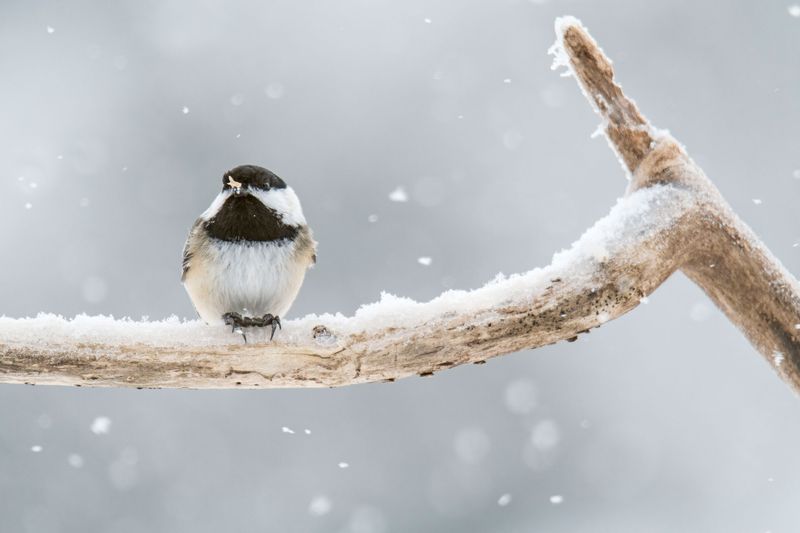
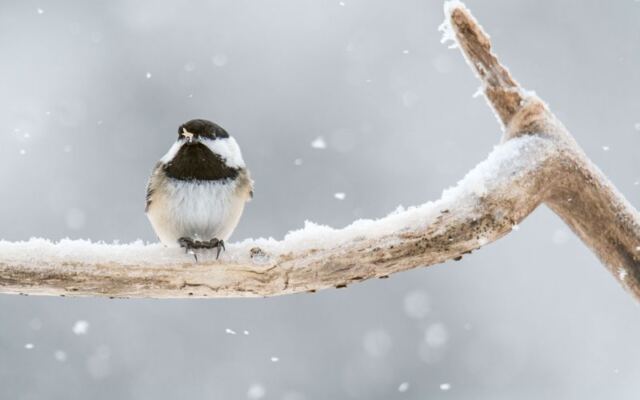
Tiny, bold, and a little bit cheeky, the black-capped chickadee acts like it owns your feeder. It weighs about as much as two quarters, yet it will grab a seed while you are standing just a few feet away.
Look for a black cap, a black bib under the chin, and bright white cheeks. The sides are soft buff, and the back is gray.
Its call sounds like its name: chick-a-dee-dee-dee.
Here’s a fun one. Chickadees hide thousands of seeds each fall and can remember where many of them are.
On frigid nights, they even lower their body temperature to save energy.
3. Dark-eyed Junco
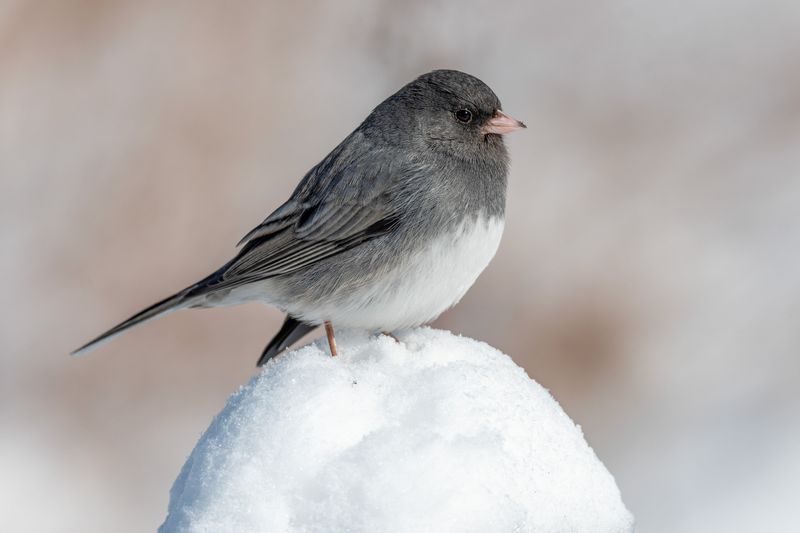
Old-timers in Iowa call them snowbirds, and for good reason. Dark-eyed juncos arrive from Canada in late fall, almost as if they bring the cold with them, and they leave again in spring.
A junco looks like it was dipped in gray paint from the top down, with a clean white belly underneath. The beak is pale pink.
When one flies off, watch for white outer tail feathers flashing on each side.
You’ll rarely see them on the feeder itself. Juncos prefer hopping around on the ground below, picking up millet and dropped seeds, so scatter a little on a cleared patch of snow.
4. Downy Woodpecker
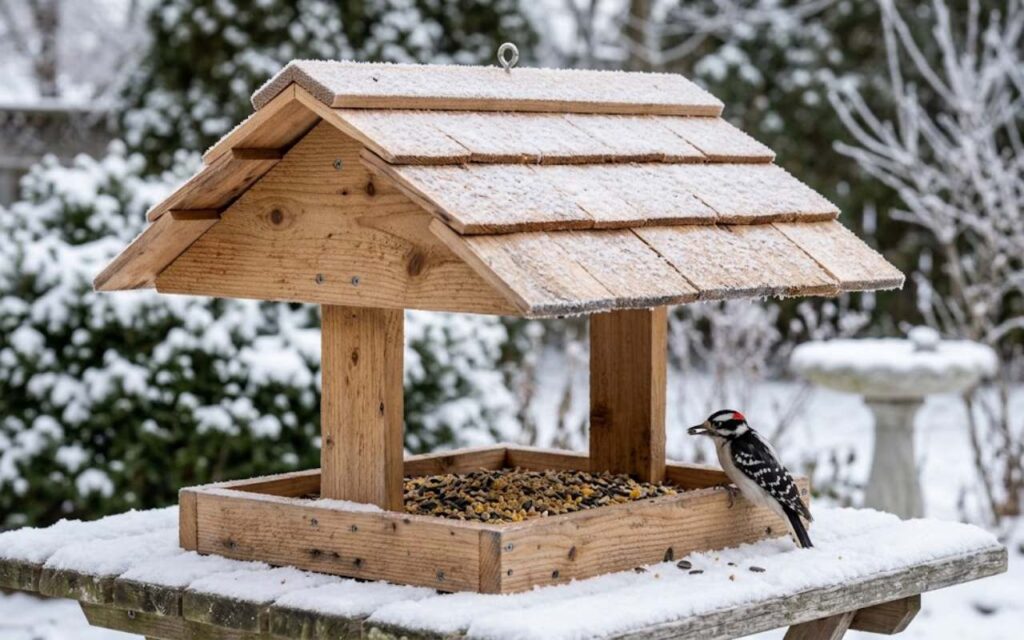
Hang a block of suet, and within days you may hear soft tapping. The downy woodpecker is the smallest woodpecker in North America, and it is a regular at Iowa suet feeders all winter long.
It has a checkered black and white back, a white stripe down the middle, and a short little beak. Males wear a small red patch on the back of the head.
Females skip the red.
The tricky part is its look-alike cousin, the hairy woodpecker. Hairies are bigger, with a beak almost as long as the head.
A downy’s beak is short and stubby, roughly a third of its head length.
5. Blue Jay
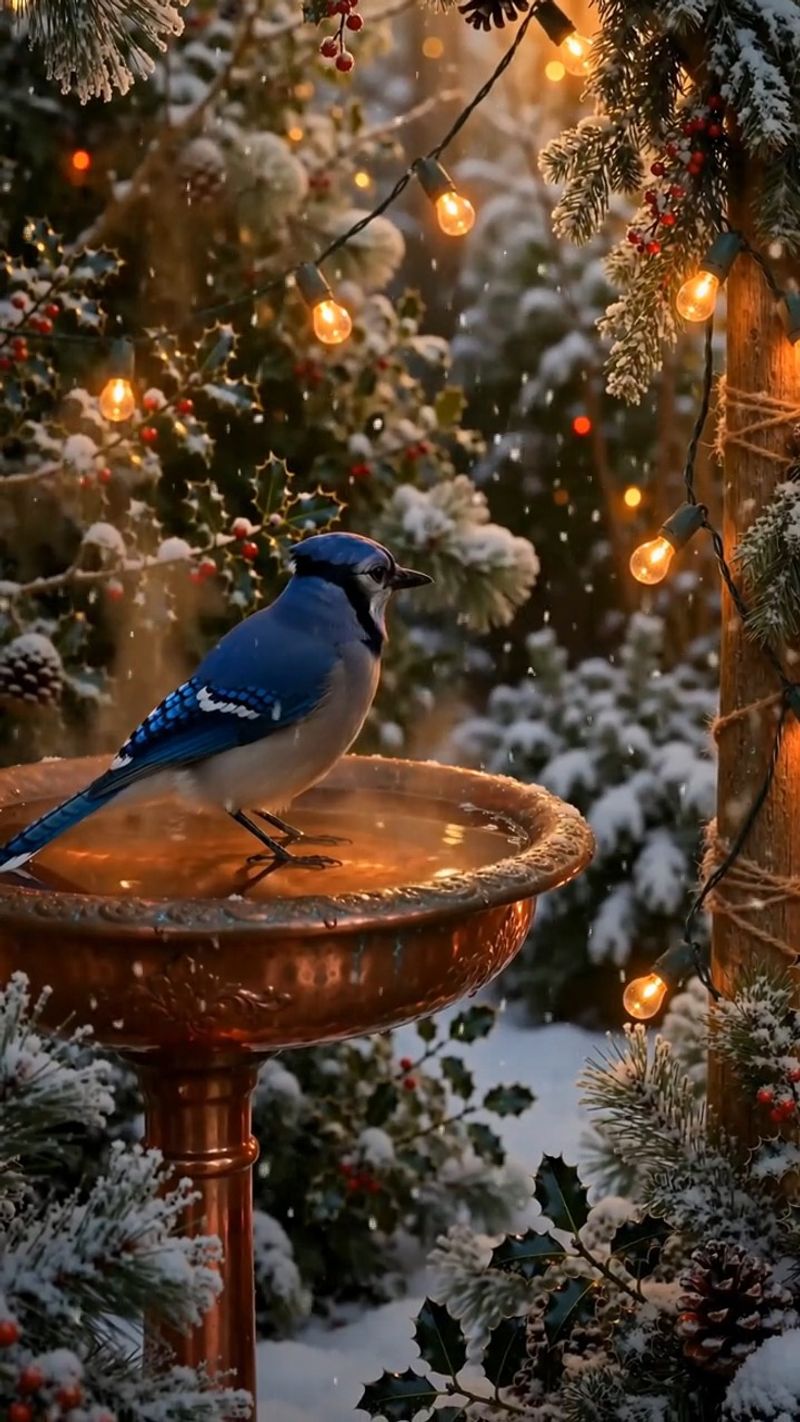
Loud, flashy, and full of attitude, the blue jay rarely sneaks in quietly. You’ll usually hear its harsh jay-jay call before it lands and scatters the smaller birds.
Identification is easy. Look for a bright blue crest, blue wings and tail with white and black bars, and a black necklace across a whitish chest.
It is much bigger than a cardinal.
Blue jays adore peanuts and acorns. They can even mimic the scream of a red-tailed hawk, possibly to scare off competition at the feeder.
6. American Goldfinch
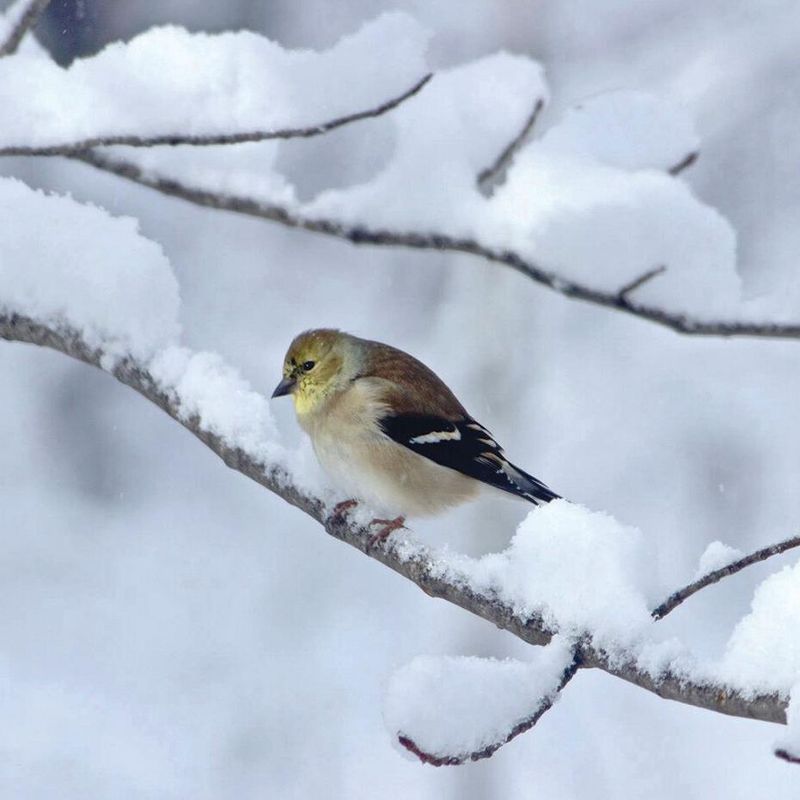
Plenty of people think their goldfinches flew south. The truth is funnier: they’re still here, just wearing their winter clothes.
In summer, males glow lemon yellow. By snowfall, both males and females turn a dull olive-brown with hints of yellow at the throat.
The giveaway clues are black wings with bold white bars and a small cone-shaped beak.
Iowa’s state bird loves nyjer seed and sunflower chips. Put out a thistle feeder, and a whole flock may cling to it at once, chattering away.
Share this story