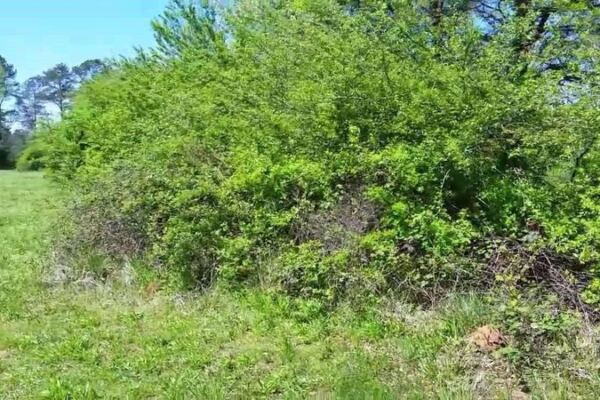
Those fresh dirt mounds that seem to appear after a rain are telling you something: fire ants that were already there may be rebuilding and showing themselves. A mound that you notice after a storm does not mean a brand new colony moved in.
It also does not mean your yard suddenly has more ants. Knowing what the mounds can and cannot tell you helps you decide when to act and when to leave things alone.
Rain can prompt mound repair
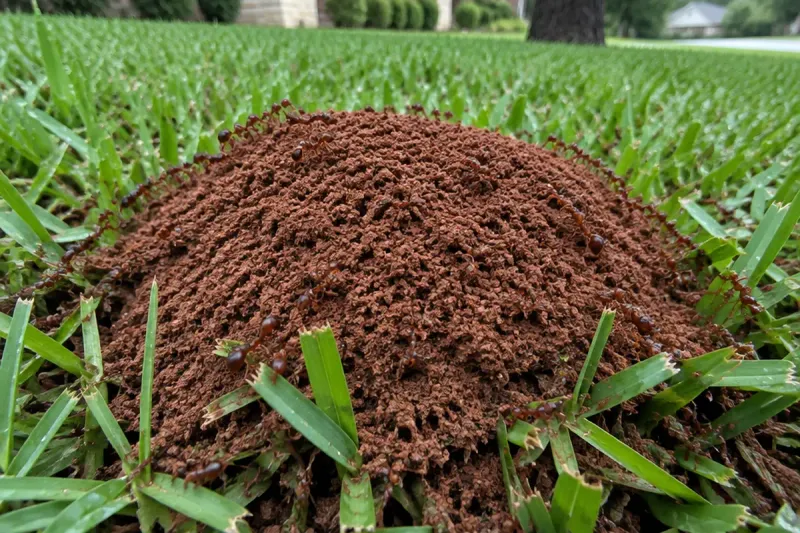
Rain may prompt fire ant colonies that already live in your yard to repair the surface of their mounds. That is a different thing from rain creating a colony, and a mound you spot afterward does not prove a new colony formed or that the yard’s ant population grew.
The best evidence comes from a Mississippi study on rainfall and summer mound building. Researchers found that rain during hot summer weather mainly led ants to repair the surface of their mounds.
Bigger jumps in mound height and volume were linked to rainfall paired with cooler fall temperatures.
So temperature mattered along with the water. A summer downpour and an autumn rain may produce different-looking results, even from the same colony.
The study looked at imported fire ants, including a hybrid called Solenopsis richteri x invicta. It describes what happened in the conditions tested.
It is not a rule that every Alabama yard will respond the same way after every rain.
Think of it this way. Mounds can hide in thick grass or look flat and weathered for weeks.
Wet soil gets worked into a fresh, rounded pile, and suddenly a mound that was easy to miss is easy to see. Your yard may hold the same number of colonies it did last week.
You are simply noticing them now.
Swarming is a different event
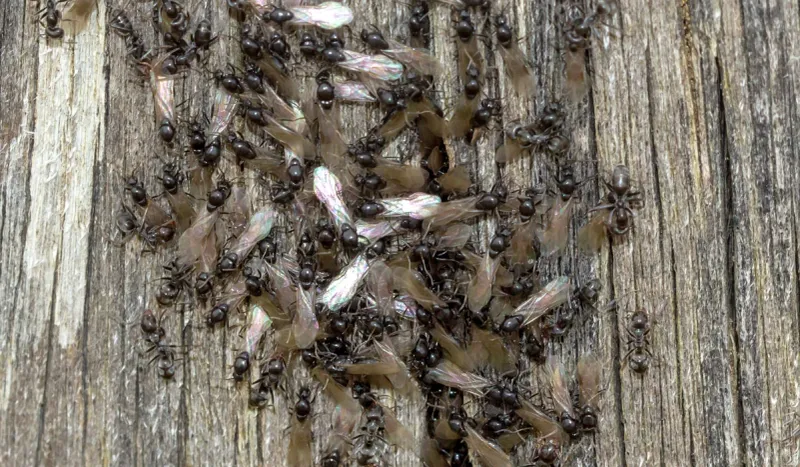
Winged ants drifting around after a storm are a separate story. Alabama Extension reports that winged fire ants commonly swarm a day or two after rain that follows a dry period.
Swarming is a reproductive flight. Winged males and young queens leave their colonies to mate in the air, and the queens then look for places to start new nests.
Mound repair is ordinary housekeeping by workers, and it happens on the ground. The two events can overlap in time, but they are not the same thing.
Say you notice winged ants on your driveway on Thursday after a Tuesday rain that broke a dry spell. That tells you a flight may have happened nearby.
It does not tell you that the dome of soil by your mailbox is a newly founded colony.
Most queens that leave on a flight never establish a colony, and a new nest takes time to grow into a visible mound. Many mounds you see right after a flight were already there.
Treat winged ants as one clue about the weather and the season, and treat each mound as its own question.
A mound’s shape is a clue, not a diagnosis
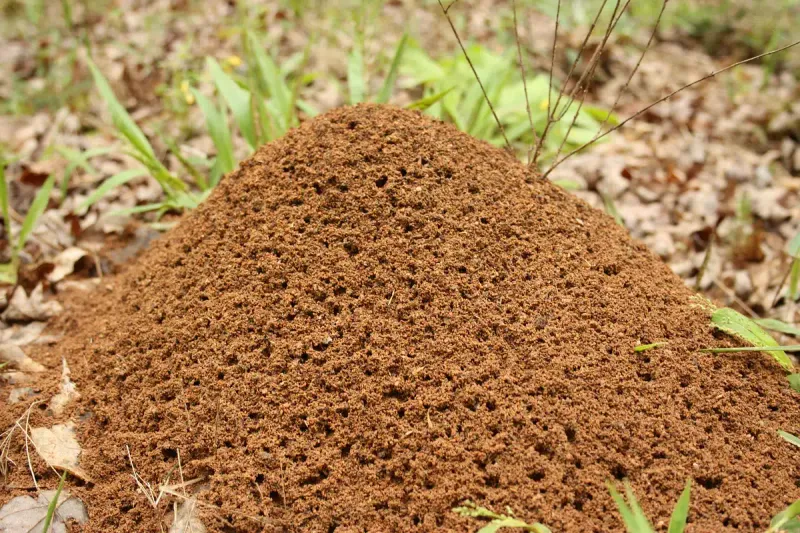
Imported fire ants usually build a dome or pile of worked soil. Often there is no obvious hole in the middle, because the colony’s entrances are underground.
Texas A&M’s fire ant project describes this look as one sign to watch for.
It is only a clue, though. Other ants and some digging animals can leave similar piles.
Looking at a mound cannot confirm the species, tell you how many colonies are in the yard, or show that the population has grown.
Resist the urge to poke it. Kicking, opening, or otherwise disturbing a suspected mound can send workers pouring out to sting, a point stressed in guidance from Texas A&M and Alabama Extension.
If you are unsure what you are looking at, observe from a few steps away. Note where the mound sits, how big it is, and whether children or pets play nearby.
Then contact your county Extension office for help with identification. They can tell you what you have and what, if anything, needs to be done.
Flooding changes the safety picture
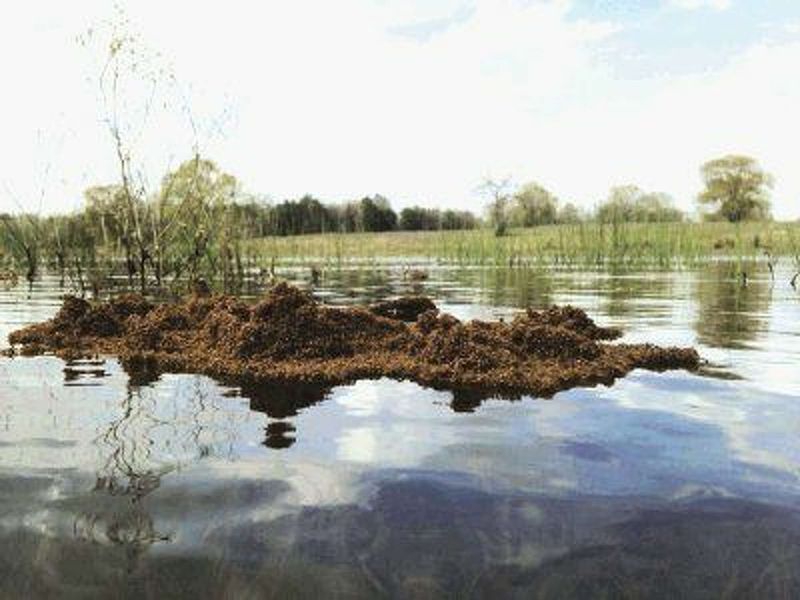
A flood is not the same as an ordinary rain shower. After a normal rain, most colonies simply stay put and tidy their mounds.
Flooding can change their behavior in a hurry.
According to Alabama Extension’s flooding guidance, colonies may leave saturated soil and form floating masses of ants. As the water recedes, those ants look for refuge on dry objects such as debris, fence posts, vehicles, and the edges of buildings.
That makes cleanup a real hazard. A floating clump or an ant-covered log can look harmless until you touch it.
Avoid contact with displaced ants, and be careful when moving soggy debris or wading through standing water.
This situation is distinct. It explains why ants show up in odd places after high water.
It does not explain every fresh-looking mound in a lawn after a regular storm.
If your yard only got wet and was never under water, the repair activity described earlier is the more likely story.
Choose treatment based on contact risk
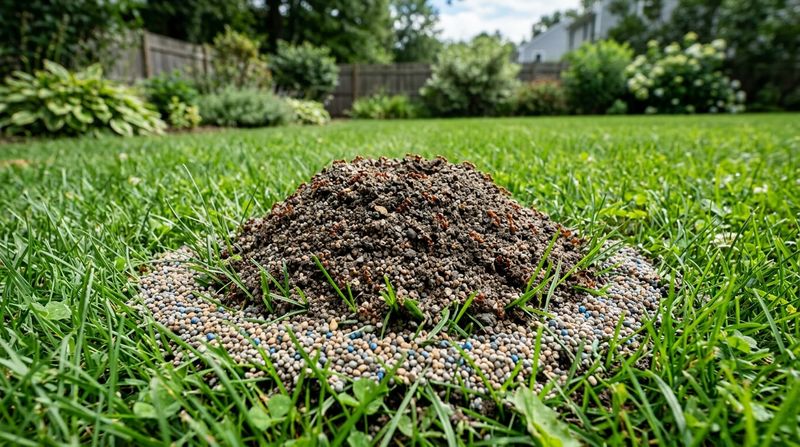
Before reaching for any product, ask where people and animals are likely to meet the ants. A mound at the far corner of a fenced lot is a very different problem from one beside a play set, a patio, or a pet’s favorite spot.
The date a mound became noticeable should not drive the decision. Not every mound needs treatment, and the guidance cited here offers no magic number of mounds that triggers action.
For a small number of problem mounds, spot treatment can be practical. Broadcast bait is an option for larger areas, as described by Alabama Extension on managing fire ants with baits and Texas A&M’s control methods page.
A simple way to sort it out is to walk the yard and mark the mounds close to where people sit, play, mow, or walk barefoot. Those are your priority spots.
Mounds far from activity can wait while you decide on a plan.
Whatever you pick, read the label first. It sets the rules for how, where, and when the product can be used.
Use bait and other controls carefully
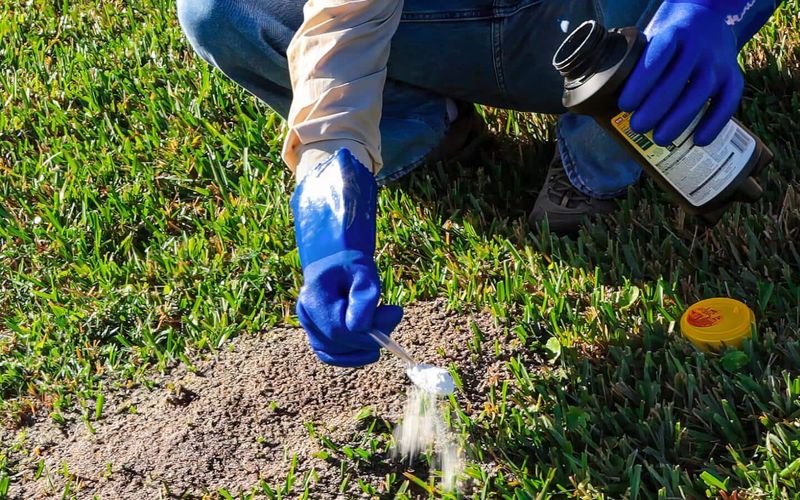
Bait works because ants do the delivery. Active foragers pick up the granules and carry them back to the colony, so results are not instant.
Control can take weeks.
Always follow the product label. For timing, Texas A&M’s two-step method page advises applying bait to dry ground and grass when no rain is expected for 24 to 48 hours.
Treat that as guidance beneath the label, because the label takes precedence. Make sure ants are actively foraging when you apply it.
Storage matters too. Alabama Extension cautions that bait can lose effectiveness if it is kept too long or stored improperly, so an old open bag in the shed may disappoint you.
Skip the dangerous shortcuts. Gasoline, diesel, bleach, ammonia, and similar household chemicals are not treatments, and they can harm soil and groundwater, as the Texas A&M and Alabama Extension publication explains.
Kitchen remedies fare no better. Alabama Extension says grits, club soda, soapy water, wood ashes, vinegar, baking soda, and molasses are ineffective for colony control.
Very hot or boiling water is an imperfect choice. Texas A&M estimates it eliminates colonies about 60 percent of the time, and it can injure nearby plants and cause burns if spilled.
Know when a sting reaction needs emergency care

Most fire ant stings are painful but pass without a crisis. For some people, though, a sting can trigger a serious allergic reaction, and that is a medical emergency.
Get emergency help right away for trouble breathing, swelling of the throat or tongue, fainting, or other signs of a severe reaction. MedlinePlus describes anaphylaxis as a life-threatening reaction that needs urgent care, and the American College of Allergy, Asthma & Immunology covers insect sting allergies in more detail.
Do not wait to see whether symptoms settle on their own. Call 911 or your local emergency number, and stay with the person until help arrives.
This is also a good reason to keep children and pets away from mounds you cannot treat yet. A little caution costs nothing, and some stings cannot be taken back.
A mound is a clue about the yard, but a person struggling to breathe is the only thing that matters.
Share this story