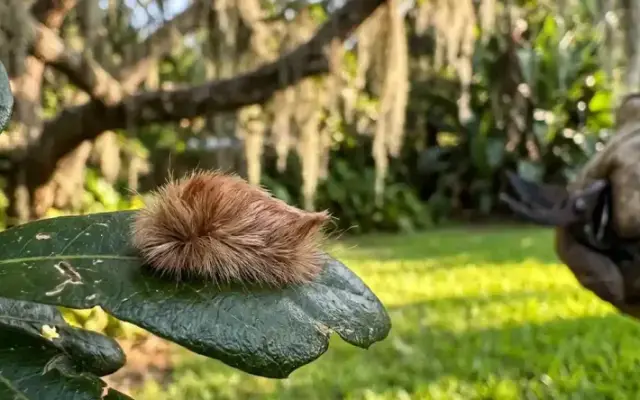
A puss caterpillar sting can cause intense pain, and the right first steps can make a real difference. The caterpillar looks like a soft tuft of fur, but venomous spines hide underneath.
Virginia has several stinging caterpillar species, so any painful brush with a fuzzy caterpillar during yard work deserves quick, careful action. Here is what to do, step by step, and when to get help.
Move the caterpillar without touching it
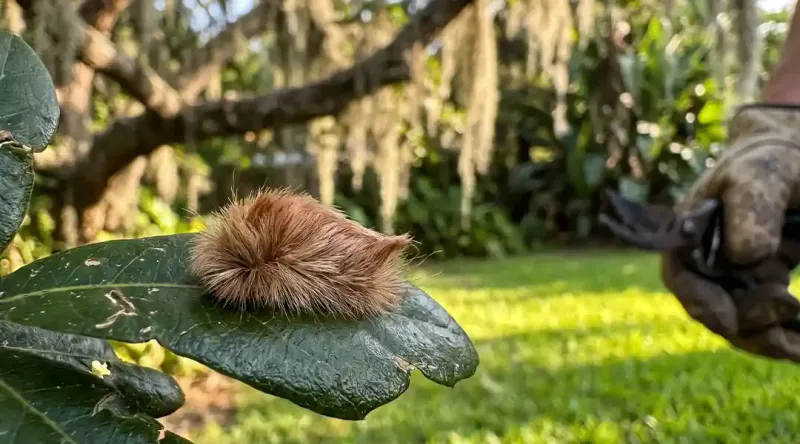
Bare hands and caterpillars do not mix. Fuzzy or spiny caterpillars might be venomous, and Poison Control advises against touching them.
Grabbing one can push hidden spines into your fingers and turn a single sting into several.
If the caterpillar is still on your skin, take it off with an object. A stick, a folded piece of paper, a spoon, or a pair of tweezers all work.
Flick or lift it away in one motion, then put some distance between you and the insect.
Do not swat it, brush it off with your hand, or scrape at it. Those moves can break spines and press them deeper.
The Virginia Poison Center’s bites and stings guide points readers toward tape and Poison Control advice after a sting.
Once the caterpillar is gone, stop what you are doing and move on to caring for your skin. You do not need to figure out which species it was first.
Use tape, then wash the affected skin

Now deal with any hairs or spines left behind. Press a piece of sticky tape lightly onto the affected skin, then lift it straight off.
Use a fresh piece each time and repeat a few times. Poison Control recommends this tape method, and the Virginia Poison Center does too.
Think of tape as practical first aid. It is a sensible step, but it is not a guarantee that every spine comes out or that venom is neutralized.
Some pain may linger even after you do it well.
Skip the rubbing and scraping. Rubbing can break hairs and drive them in.
Light pressure and a clean pull are all you need.
After the tape, wash the area gently with soap and water, as MedlinePlus advises. Pat the skin dry with a clean towel instead of rubbing.
Wash your gardening gloves and clothing that touched the caterpillar before wearing them again.
A wrapped cold pack may ease the pain

Once your skin is clean, cold may take the edge off the burning. It will not remove venom or stop the reaction, but many people find it makes the pain easier to bear.
Wrap an ice pack or ice cubes in a thin cloth first. MedlinePlus describes holding the wrapped ice on the area for 10 minutes, then taking it off for 10 minutes before repeating if needed.
Do not press ice directly against bare skin or leave it on for long stretches. Extra care matters for anyone with circulation problems, since cold can injure skin that does not get good blood flow.
If the pain keeps climbing despite cold, or new symptoms show up, move on to the warning signs in the sections ahead.
Which symptoms should you watch for?
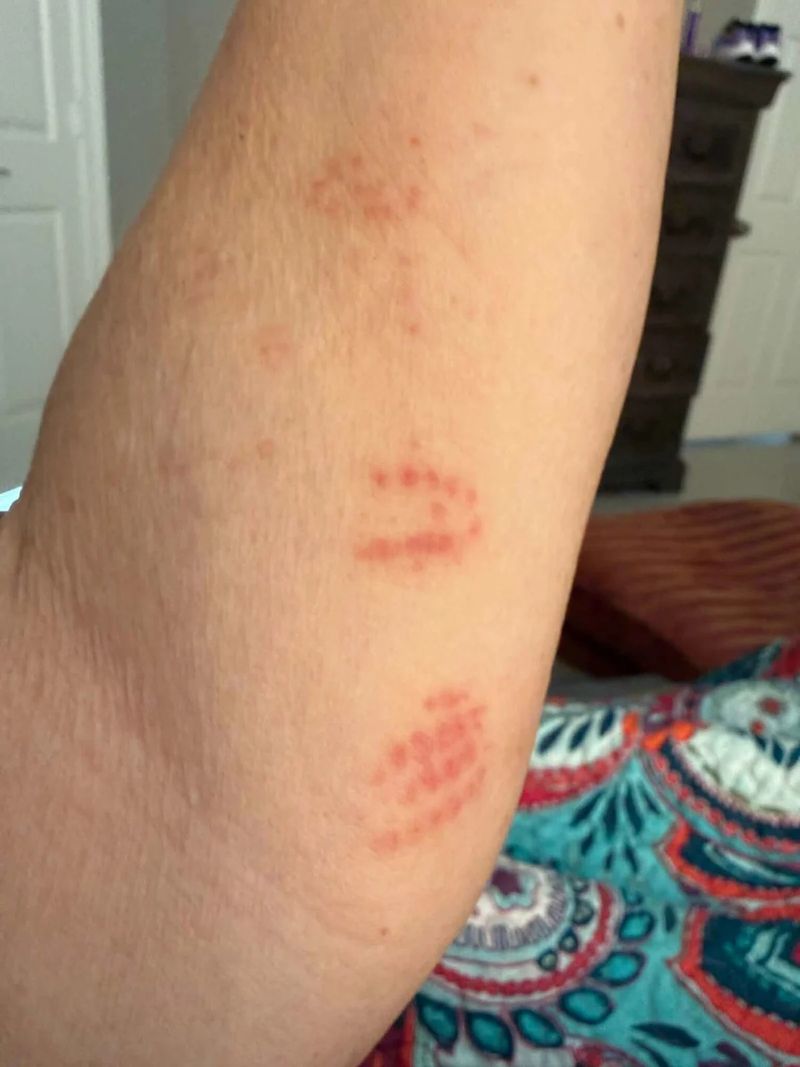
Most caterpillar stings cause local symptoms. Expect burning or stinging pain, redness, itching, and swelling around the spot.
Poison Control lists these common signs.
Reactions vary a lot from person to person. Puss caterpillar stings in particular can also bring nausea, headache, or other symptoms, according to a medical report on asp caterpillar envenomation.
Feeling a bit unwell does not always mean something dangerous, but it is worth tracking.
You may read that a puss caterpillar leaves a grid-like or M-shaped rash. Medical and extension sources, including University of Florida IFAS Extension, describe that pattern.
Still, seeing it does not prove a puss caterpillar was responsible, and not seeing it does not rule one out.
The same goes for pain and appearance. A painful rash after yard work could come from several kinds of stinging caterpillars, so treat the symptoms in front of you instead of trying to name the culprit.
Get emergency help for serious symptoms
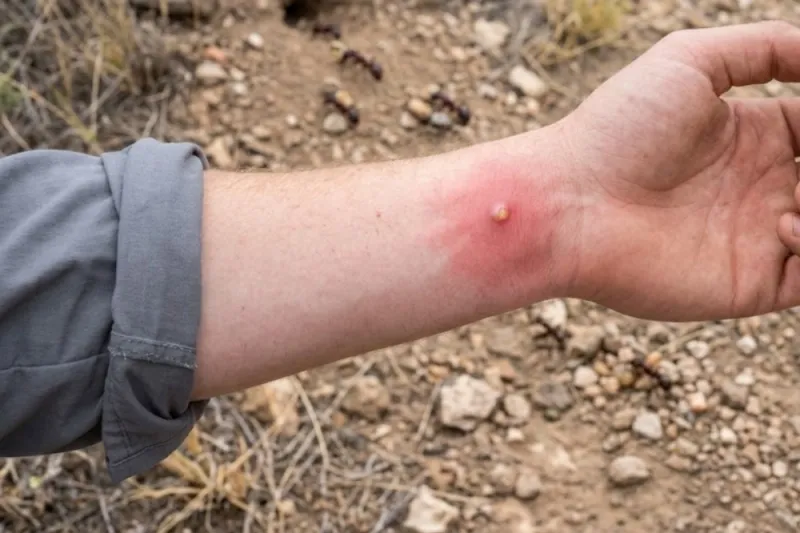
Most stings stay local and are not emergencies. A few signs, though, call for immediate action.
Call 911 for difficulty breathing, fainting, or swelling of the lips, face, or tongue. Severe allergic reactions are rare, but they can move fast, so do not wait to see if they pass.
Other problems need prompt advice but not necessarily an ambulance. Contact a clinician or urgent care if the area blisters, you suspect a localized allergic reaction, or symptoms keep getting worse.
MedlinePlus outlines these warning signs.
Eyes need special care. If a caterpillar’s hairs get in an eye, rinse with lukewarm water and seek advice, especially if irritation lasts.
Poison Control offers guidance for eye exposure and other situations.
If hairs may have been inhaled, get medical care. Coughing or trouble breathing after yard work around caterpillars should not be shrugged off.
Calling Poison Control is also an option whenever you are unsure how worried to be. Plain, calm advice is a phone call away.
A sting in Virginia does not identify the caterpillar
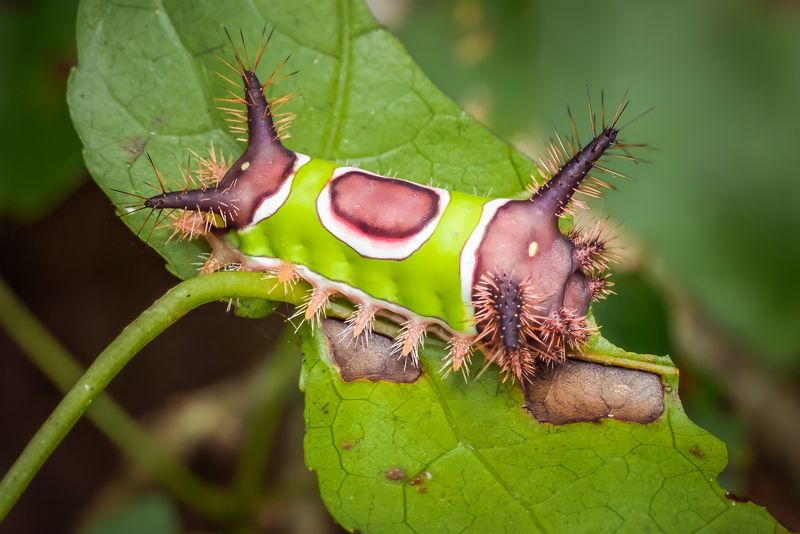
Virginia has several species of stinging caterpillars, as the Virginia Poison Center’s guide notes. So a painful sting after raking leaves could come from any of them.
The pain alone cannot tell you which one.
Fall is a plausible time to meet caterpillars in general, but nobody can say Virginia has a proven puss caterpillar season. In a study of where and when these caterpillars turn up, the Mid-Atlantic had only four larvae on record.
That is too few to show a reliable local peak.
Other regions have clearer numbers. A review of 188 reported puss caterpillar stings found cases peaking from July through November, mostly in Texas, Louisiana, and Florida.
Those findings come from other places and do not describe Virginia risk.
The practical takeaway is simple. Puss caterpillars are possible in Virginia, but you should not assume that is what stung you.
For treatment advice, call the Virginia Poison Center at 804-828-4780. The same guide also displays the national Poison Help line, 1-800-222-1222.
Keep fuzzy caterpillars at arm’s length

The easiest sting is the one that never happens. Leave fuzzy or spiny caterpillars alone, since some might be venomous, and Poison Control suggests not touching them.
That does not mean every fuzzy caterpillar is dangerous, only that looks are a poor guide.
Sturdy gardening gloves are a sensible precaution during leaf cleanup and pruning. Pay attention when you move debris, lift branches, or reach into shrubs, and use a tool to nudge a caterpillar out of your way.
If contact happens anyway, you already know the routine: remove it with an object, lift hairs with fresh tape, wash up, and use wrapped cold for comfort. Know the signs that call for urgent help.
A caterpillar’s fuzz may look soft, but it is best admired from a distance.
Share this story