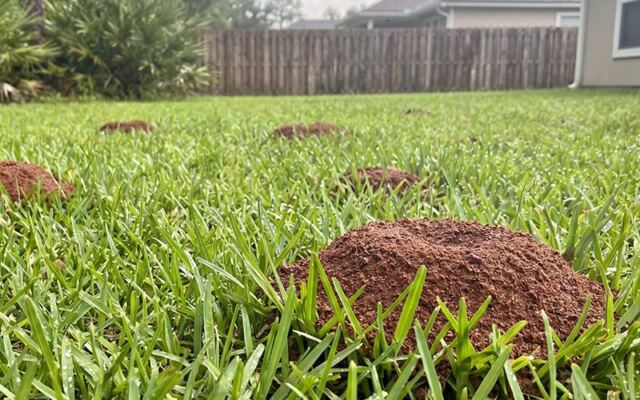
A fresh fire ant mound after a rain really can be a message, but it is a smaller one than most people fear. Rain can change how a mound looks or how easy it is to see.
That does not mean a brand new colony moved in overnight. Knowing the difference helps you stay calm, stay safe, and decide what to do next.
Rain can change a mound without creating a new outbreak
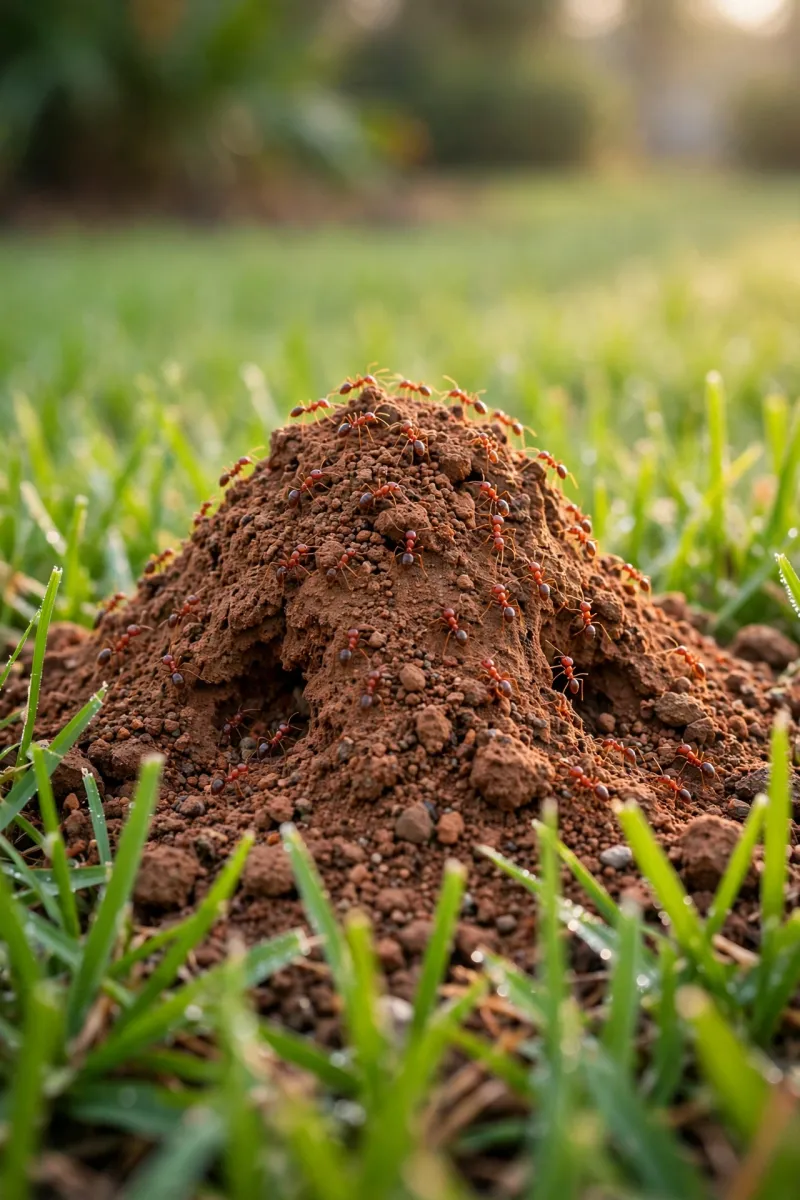
Here is the practical answer. Rain can coincide with changes in how a fire ant mound is built or how visible it is, but a new mound after a storm does not prove that a new infestation has formed.
A USDA Agricultural Research Service study on simulated and natural rainfall looked at how imported fire ants build mounds. Under hot, dry summer conditions, rain mainly prompted surface repair of the mound.
When rain came with cooler fall temperatures, mounds grew taller and larger in volume.
So the same weather event led to different results depending on the season and conditions. That is why there is no simple rule that rain makes fire ant mounds appear.
The study also has limits. It was conducted in one region under the specific summer and fall conditions that researchers examined, so its results are not a universal rule for every yard in every place.
Most important for a homeowner, it cannot diagnose why a particular mound showed up in your Georgia lawn. Think of the research as a helpful background story, not an answer key for the patch of grass outside your door.
A fresh-looking mound cannot tell you when its colony began
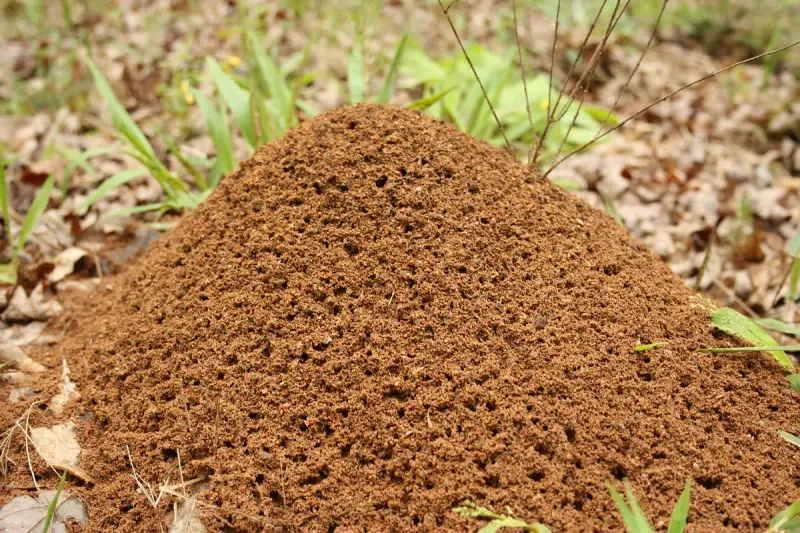
Suppose you spot a tidy dome of loose soil the morning after a storm. It is tempting to guess that it popped up overnight, but the mound itself cannot confirm that.
A mound that looks new may have been there all along, just harder to notice under thick grass or dry, packed soil. It may also have been repaired after the rain washed or flattened part of it.
Or it may have changed in size, getting a little taller or wider.
From the surface, you cannot reliably tell which of these happened. Fresh soil does not work like a calendar, and appearance alone cannot date a colony or show whether a mound was less visible, repaired, or resized.
This is also where the research reaches its edge. The USDA rainfall study shows that mounds can respond to rain in different ways, but it does not say which explanation fits your lawn.
A better habit is to note where the mound is, how large it looks, and whether more appear over the next few weeks. Those observations tell you far more than a single fresh-looking dome.
Mating flights are a separate event
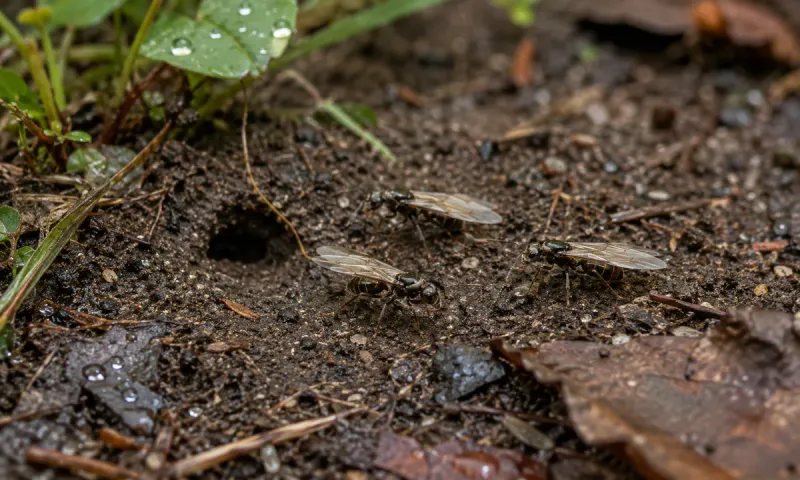
Wet weather brings another fire ant event that is easy to mix up with mound changes. According to University of Georgia Extension, imported fire ant mating flights commonly occur after rainy periods.
In a mating flight, winged reproductive ants take to the air. That is a different thing from soil being repaired, raised, or made more visible on a mound.
One is about flying ants, and the other is about the nest itself.
Seeing winged ants does not prove that the fresh mound in your yard is a new colony. Likewise, a changed mound does not prove that a flight happened nearby.
The two events can overlap in time without one explaining the other.
Neither sign shows a sudden population surge. If you see winged ants and a new-looking mound in the same week, treat them as two separate clues.
The useful next step is the same either way: keep your distance, look for ongoing activity, and confirm what kind of ants you have before taking action.
Confirm the ants without provoking the mound

Imported fire ants do live in Georgia, so a mound in your yard could belong to them. According to USDA APHIS, a mound or a painful sting can be a clue to their presence.
A clue is not the same as a confirmed identification. Other ants and other critters also leave soil piles in lawns, and a sting alone does not tell you which insect was responsible.
If you are not sure, call your county Extension office. Staff there can help you work out what you are dealing with, and a clear photo taken from a safe distance can make that conversation easier.
Do not kick, dig into, or poke a mound to test it. UGA Extension guidance notes that disturbing a mound can bring workers streaming out to sting, and that is a bad trade for a bit of curiosity.
Keep children and pets away from the area while you sort things out. Wearing closed shoes when you walk the lawn is a simple extra precaution.
Choose control for the lawn problem, not just the mound
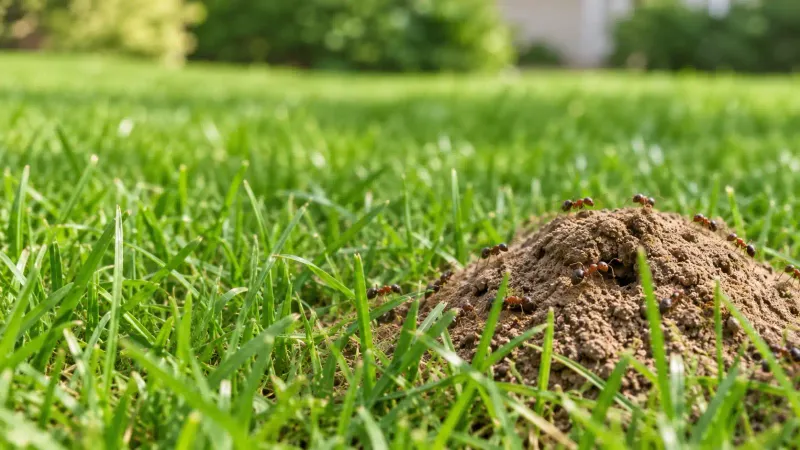
Before reaching for any product, decide what problem you want to solve. A single mound in a back corner is not the same as many mounds across a play area, and one visible mound rarely shows the full extent of ant activity in a lawn.
Not every mound needs treatment. If ants are far from where people walk, sit, or play, you may choose to watch and wait.
If they are in busy spots, control may be worth the effort.
When a lawn needs managing, University of Georgia Extension describes one approach: broadcast bait across the area, then, if needed, treat the nuisance mounds that remain. It is one lawn-management approach, not a universal or guaranteed fix.
Bait works differently from a quick spray. Worker ants carry it back to the colony, so it is not an instant-kill method.
You may not see mounds go quiet for days or longer.
That slower pace surprises many homeowners, who expect immediate results and apply more product. More is not better, and the label tells you what is allowed.
Use bait only when conditions and the label allow
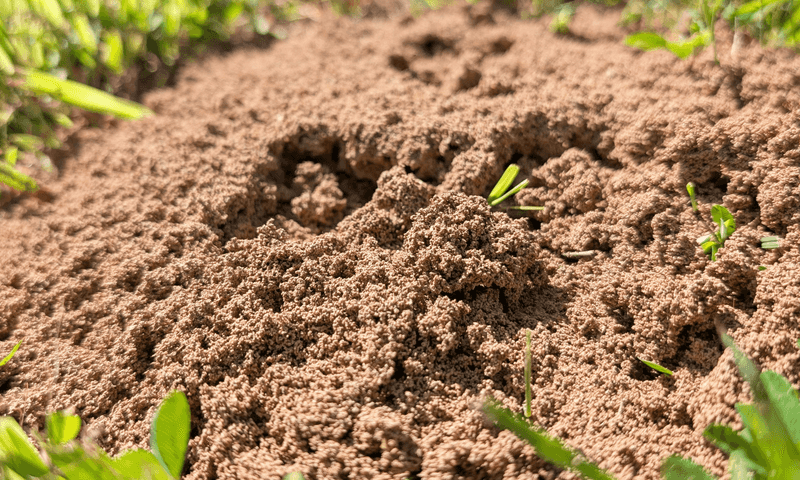
Timing matters more than most people expect. UGA guidance points to applying bait when ants are actively foraging, the ground and grass are dry, and rain is not expected soon.
That means a fresh rain is not a signal to treat. Wet grass and a forecast of more showers are reasons to wait, not to hurry.
Do not assume all bait products share the same directions. Read the specific label for the application rate and timing, and follow it exactly.
Labels also spell out precautions for people and pets, including how long to keep them off the treated area. Follow those directions as written.
Take extra care to prevent runoff near drains, ponds, streams, and flood-prone areas, a point also stressed in the Texas A&M fire ant FAQ. Never use a product anywhere its label does not permit.
If you cannot tell whether ants are foraging, your county Extension office can help you choose a good time.
Treat suppression as management, not a permanent cure
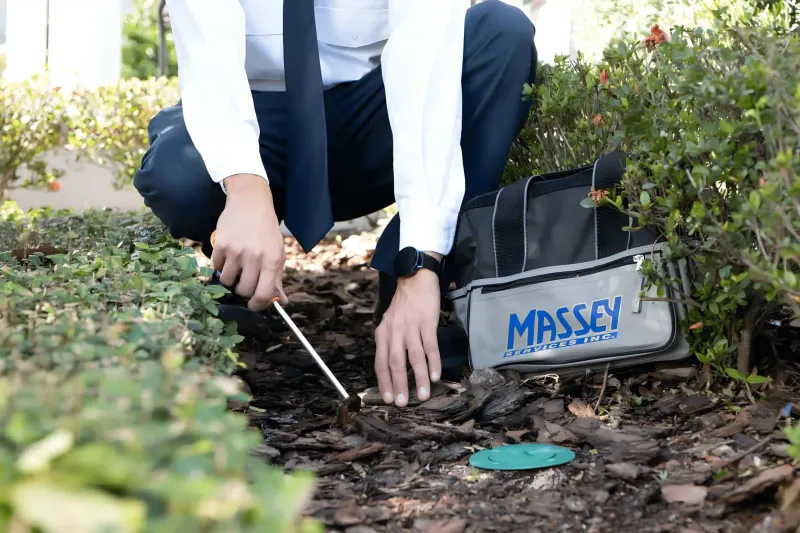
Even careful treatment gives you suppression, not a permanent cure. UGA notes that colonies can migrate into treated areas and that reinfestation can occur, so plan to keep an eye on your lawn.
Shortcuts do not change that. Gasoline is hazardous, with risks of fire or explosion, plant damage, and soil or groundwater pollution.
Grits are described as ineffective, and boiling water is unreliable and can cause burns and damage to grass and plants.
The Texas A&M FAQ also lists many home remedies as unproven, which is a good reason to stick with label-directed products.
Check back every few weeks, repeat the steps that fit your situation, and ask Extension for help if ants keep returning.
A mound after rain is a reason to look closer, not to panic.
Share this story