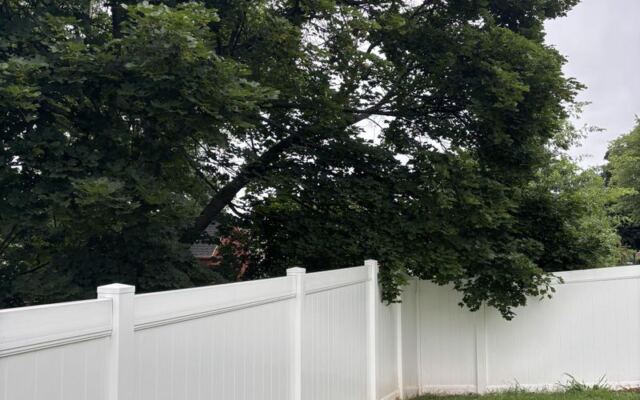
If a neighbor’s branches reach over your fence, Pennsylvania law generally lets you trim them back to the property line, and you do not have to prove they caused damage. That right has clear limits, though, and crossing them can turn a small annoyance into a bigger problem.
Knowing where the line sits, literally and legally, helps you act with confidence. Here is how it works and what to do before the saw comes out.
Overhanging branches can be trimmed without proving damage
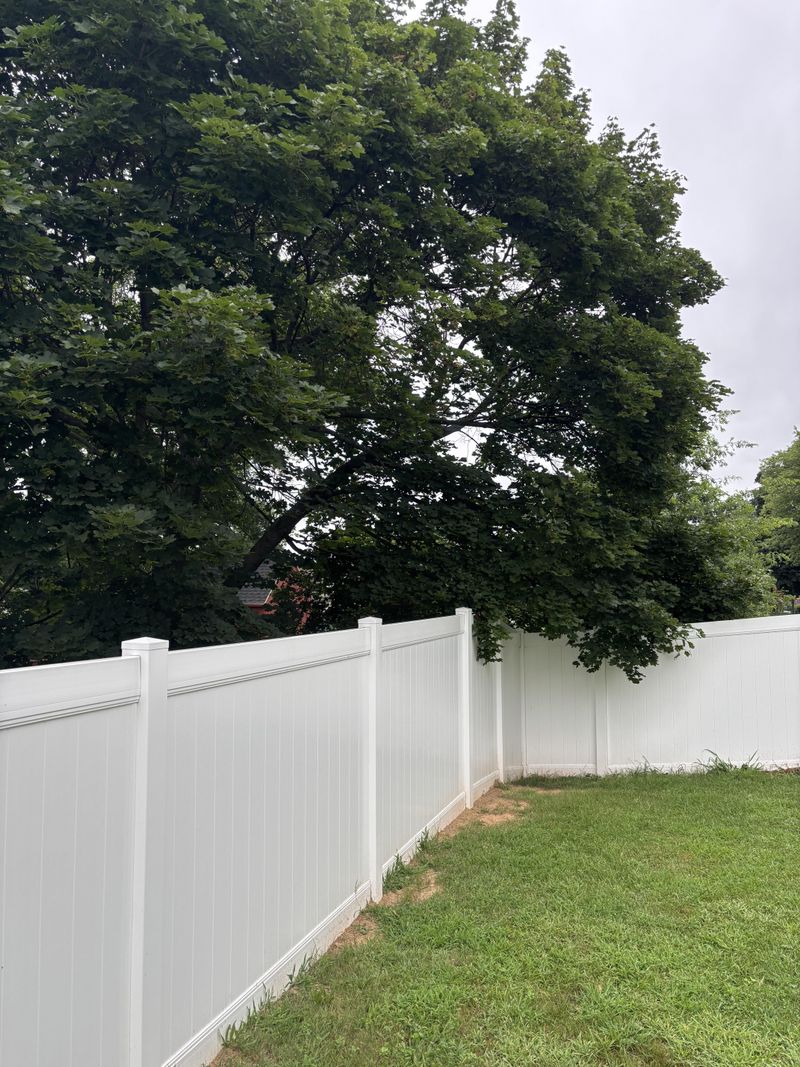
Under Pennsylvania law, a landowner may generally trim a neighbor’s branches that extend over the property line. The rule comes from Jones v.
Wagner, a Superior Court case that treated overhanging limbs as a continuing trespass. That means the branches are treated as an ongoing intrusion onto your land.
Because of that, the court allowed self-help trimming to the extent of the encroachment. You do not have to show that the branches cracked a roof, clogged a gutter, or hurt your lawn first.
Overhang alone is enough for this basic remedy.
The Pennsylvania Local Government Commission’s 2025 Municipal Deskbook gives a similar summary. It says overhang by itself can support trimming back to the line.
Keep this rule separate from other tree disputes. The no-damage point applies to the basic overhang-trimming remedy, not to every tree-related claim.
Claims about nuisance, falling trees, or money are different questions with their own requirements, and later sections cover them.
The property line—not the whole tree—is the limit
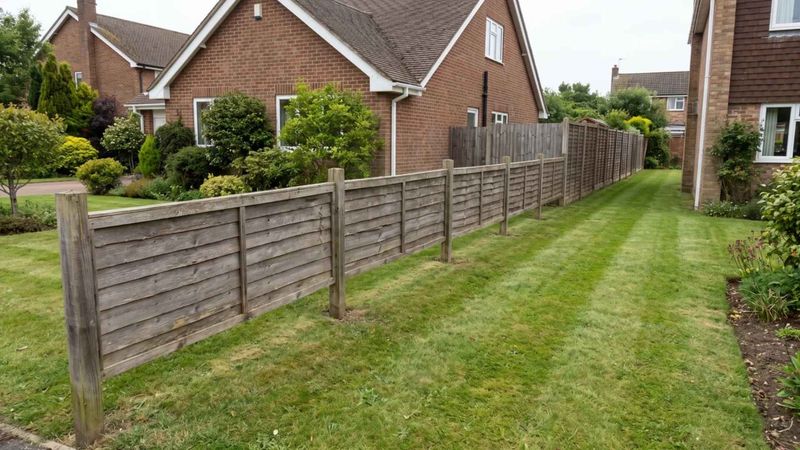
The right to trim stops at the boundary. Jones v.
Wagner supports cutting only to the extent that branches encroach on your land. It does not allow you to cut branches on the neighbor’s side, shape the whole tree to your taste, or remove it.
Picture a limb that crosses your fence by six feet. You may remove those six feet, cutting at the line.
You may not take the rest of the limb back toward the trunk.
Fences and hedges are not always on the true boundary. If you are unsure where the line sits, establish it before any cutting, for example by checking your deed and plat or hiring a licensed surveyor.
A wrong guess can mean cutting on the neighbor’s land.
A trunk that straddles the boundary is a different matter. A Pennsylvania tree-law guide found no appellate decision that definitively settles ownership and control of such a tree.
Do not assume either neighbor may remove it alone. Talk with the neighbor and consider legal advice first.
Talk with the neighbor, and hire a pro for hazardous work
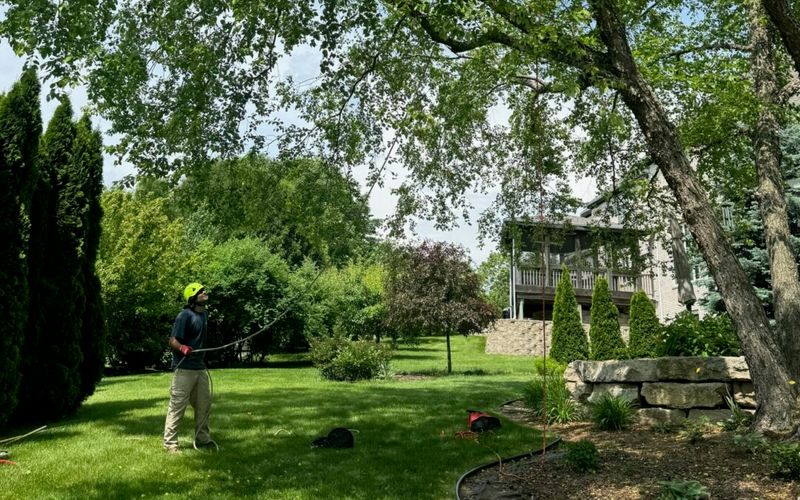
A friendly conversation is often the quickest fix. Tell your neighbor about the branches, show them where they cross, and ask whether they would like to handle it or split the work.
Many disputes end right there.
Jones does not make advance notice a condition of the self-help right. Contacting the neighbor is simply a sensible, prudent step that can keep things calm.
It also helps to document the issue with dated photos showing the overhang and where it crosses the line. If you reach an agreement, a short written note or text can help later.
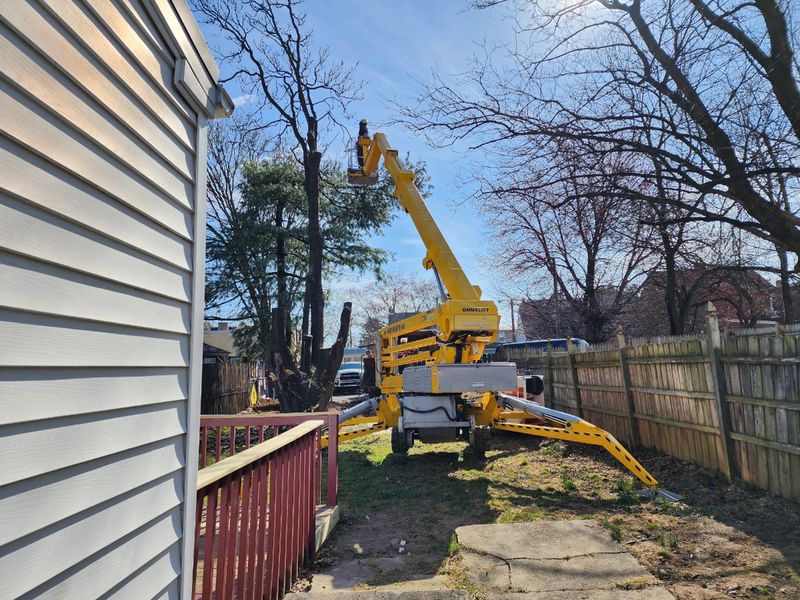
Some jobs should not be done by homeowners. Penn State Extension advises leaving hazardous pruning, climbing, power-tool work above the ground, and work near electric lines to qualified professionals.
A large limb that hangs over a roof or a driveway is a good example. So is any branch that touches or sits near a utility wire.
Hire a qualified tree service with proper insurance, and make sure the crew knows exactly where the property line is.
Check local rules before pruning
State law is only part of the picture. Some Pennsylvania municipalities have tree-preservation or heritage-tree ordinances that may apply to certain trees or certain kinds of work.
Penn State Extension’s guide explains that these rules differ from one municipality to the next.
That means no single statewide requirement covers every town. A township may regulate one thing while a borough nearby says nothing.
Check the ordinance that applies where the tree stands.
Start with your municipal office or its website, and ask whether permits or limits apply to the tree in question. Be especially careful with protected trees and trees in a public right-of-way, such as those along a street.
Work on those may require approval or may belong to the municipality.
Private restrictions can matter too. An HOA’s rules or a deed restriction may limit what you can do, or how.
The WeConservePA tree-law guide is a useful starting point for learning where these rules come from. When rules are unclear, a short call to the municipality can save real trouble.
Leaves and shade are not automatically a nuisance

Falling leaves, acorns, and shade are annoying, but they are not automatically a legal nuisance. Jones v.
Wagner notes that shade or falling leaves alone are not necessarily a nuisance. A nuisance claim generally involves a substantial or unreasonable interference with the use of your property.
That is a higher bar than ordinary yard mess. A single oak dropping leaves each October is usually just part of living next to trees.
A condition that seriously and repeatedly disrupts how you use your land is a different story, and the facts matter a great deal.
Keep this separate from the trimming right. You can trim overhanging branches to the line without proving damage, nuisance, or any harm at all.
But that right covers the encroaching branches, not the leaves that blow over from the neighbor’s side of the tree.
If you think a problem rises to the level of a nuisance, keep records such as photos, dates, repair bills, and any messages with your neighbor. Then consider speaking with a Pennsylvania attorney about whether the situation fits.
A falling tree raises a different liability question
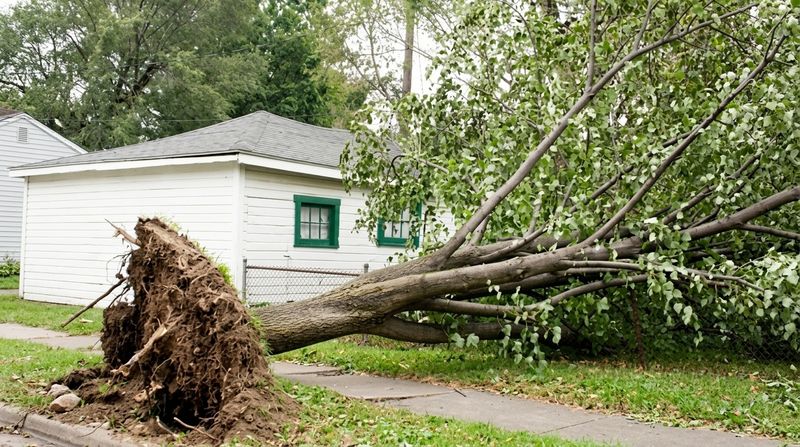
Branches that cross a boundary are one issue. A tree that later falls onto your property is another, and the legal question changes.
Liability for a falling tree does not follow from the overhang rule.
In Barker v. Brown, the Superior Court addressed trees in or near developed or residential areas.
There, liability may arise when reasonable care would have revealed a dangerous defect and allowed the owner to make the tree reasonably safe. Rural or undeveloped land involves different considerations.
So an owner is not automatically liable whenever a tree falls. A healthy tree toppled by a violent storm is very different from a visibly rotting one that an owner ignored for years.
Signs such as dead limbs, fungus, leaning, or cracks can matter, and photos taken before a failure can be valuable.
A 2025 Superior Court decision, Harris v. Felouzis, involved a tree falling onto an urban public highway.
The court distinguished that setting from a tree falling onto adjoining private property, so it should not be read as a rule covering every neighbor dispute.
If you worry about a dangerous tree, tell the owner in writing and consider asking a certified arborist for an assessment. After damage occurs, contact your insurer and consider legal advice.
Court remedies are possible, not guaranteed
Jones v. Wagner says a landowner may seek reasonable expenses incurred in self-help, as well as damages or equitable relief.
Equitable relief means a court order that tells someone to do or stop doing something. These are remedies you may ask for, not outcomes you can count on.
Nothing in the rule makes reimbursement automatic. A court decides what is reasonable based on the facts, and a trimming bill may or may not be recovered.
Likewise, a court is not guaranteed to order a neighbor to remove a tree.
Be careful with claims about timber. 42 Pa.C.S. § 8311 addresses timber cut or removed without consent. Its measures vary with the circumstances, such as whether the conduct was deliberate, negligent, or based on a reasonable belief about ownership.
It is not a rule that awards triple damages in any branch-trimming dispute. Cutting beyond the line could still create legal exposure for you, which is another reason to stay within the boundary.
If money or a court order is in play, a Pennsylvania attorney can explain what fits your situation.
Confirm the boundary and choose a safe next step
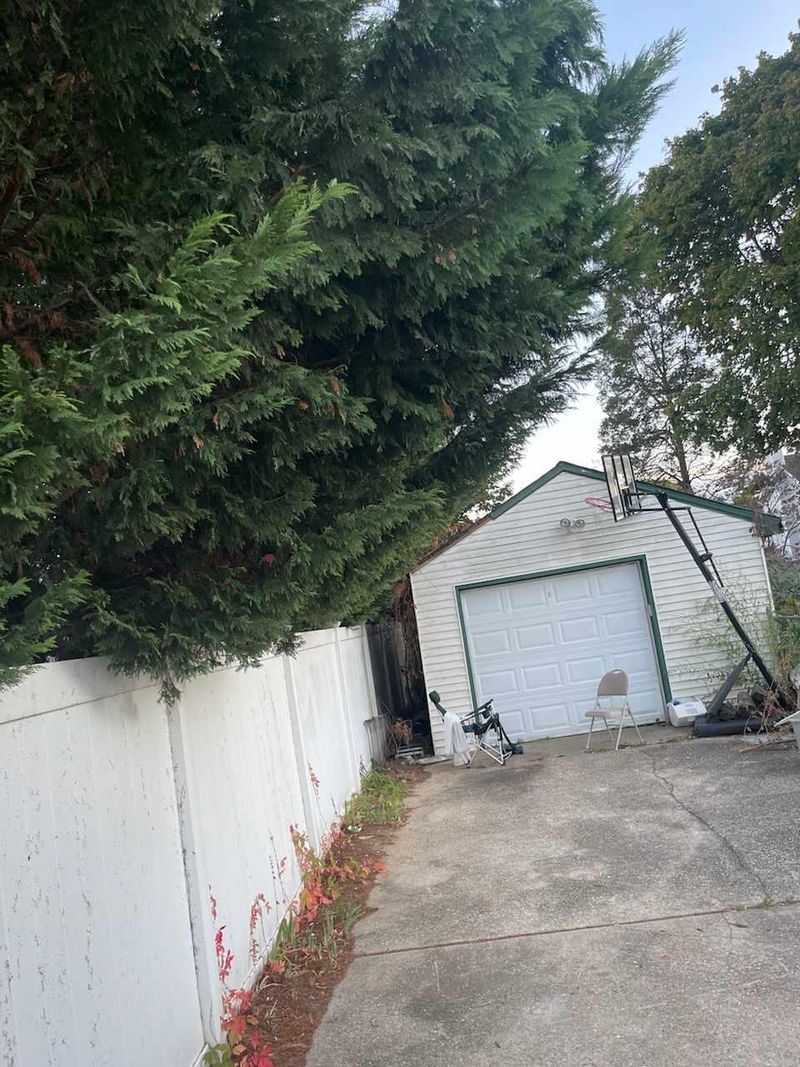
You may generally trim encroaching branches back to the line without proving damage, as Jones v. Wagner supports.
Before you start, confirm where the boundary is and check any local, HOA, or deed restrictions.
For anything high, heavy, or near wires, Penn State Extension points to qualified professionals.
A clean cut at the line is a small job when you plan it well.
Share this story