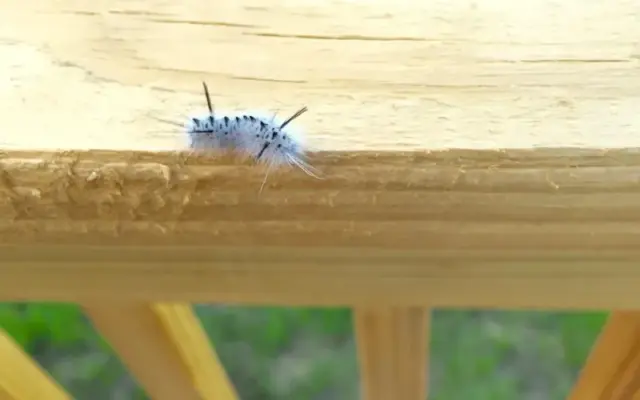
If a hickory tussock caterpillar touched your skin, remove it with a tool, lift the hairs with tape, and wash the area with soap and water. The caterpillar does not sting like a bee, but its hairs can make skin itchy or rashy.
People react differently, and most cases call for simple care at home. Here is what to do, what to avoid, and when to get help.
What the caterpillar’s hairs can do
Call 911 right away for trouble breathing, fainting, or swelling of the face, lips, or tongue. Those signs are not typical, but they need emergency care and should not wait for home treatment.
For most gardeners, the issue is not venom. The concern is contact with tiny irritating hairs, and calling it a sting is just familiar shorthand.
Unlike a bee or wasp, this caterpillar is not described as injecting venom, and University of Maine Extension describes tussock hairs as irritating rather than poisonous or venomous.
The usual result of touching the hairs is localized itching or a rash, according to Penn State Extension. Some people notice almost nothing, while others get a more bothersome rash, so sensitivity varies from person to person.
Never assume a reaction will be mild, and never assume it will happen to everyone.
Severe allergic reactions are described as rare by UMass Extension, and evidence specific to this species is limited. That is why the emergency signs above matter even though they are unlikely.
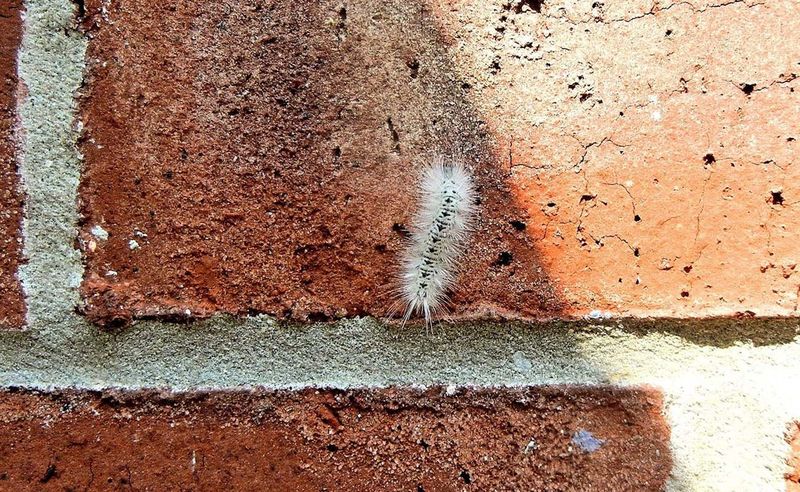
New York lies within the historical range of this species, so gardeners here may meet it on trees and shrubs or along paths. A pale, hairy look can help with identification, but appearance alone cannot prove what an unknown caterpillar is or whether it is safe.
Advice written for another species may not apply, so treat any fuzzy caterpillar with care.
Remove the caterpillar and hairs safely
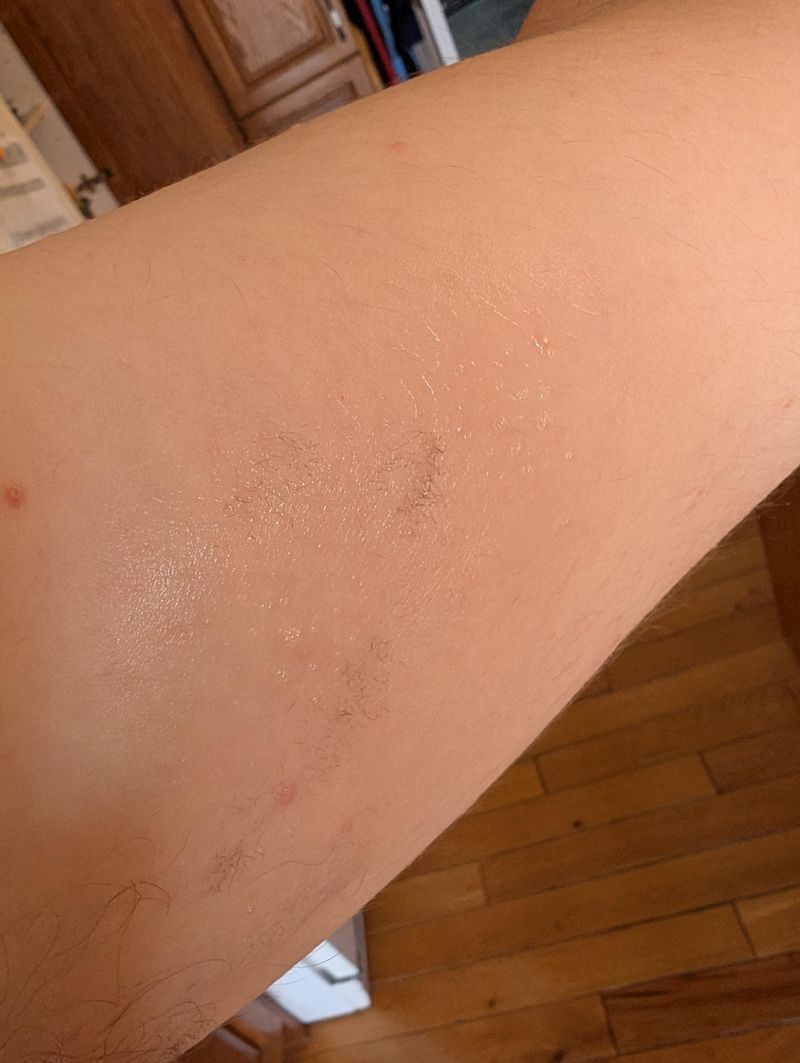
Start by getting the caterpillar off without using bare fingers. Use a tool such as tweezers, a stick, or a folded piece of paper, and flick or lift it away from you.
Brushing it with your hand can push more hairs into your skin.
Next, press a piece of tape gently onto the affected skin and lift it away. The tape picks up loose hairs that may still be clinging.
Use a fresh piece each time and repeat until little remains on the tape, as described by Poison Control.
After the tape, wash the area with soap and water. Rinse well and pat the skin dry rather than rubbing.
If you were gardening, change clothes that may carry hairs and wash them separately, and wash your gloves too.
These steps are meant to remove hairs and limit more contact. They are not a guaranteed way to prevent or stop a reaction, because some irritation may still show up.
Guidance from MedlinePlus follows the same basic approach for caterpillar contact.
Try not to scratch while you work. Scratching can spread hairs to other spots and make skin more irritated.
If you are unsure about the caterpillar or the reaction looks worrying, the poison center can talk you through it.
Ease itching and discomfort carefully
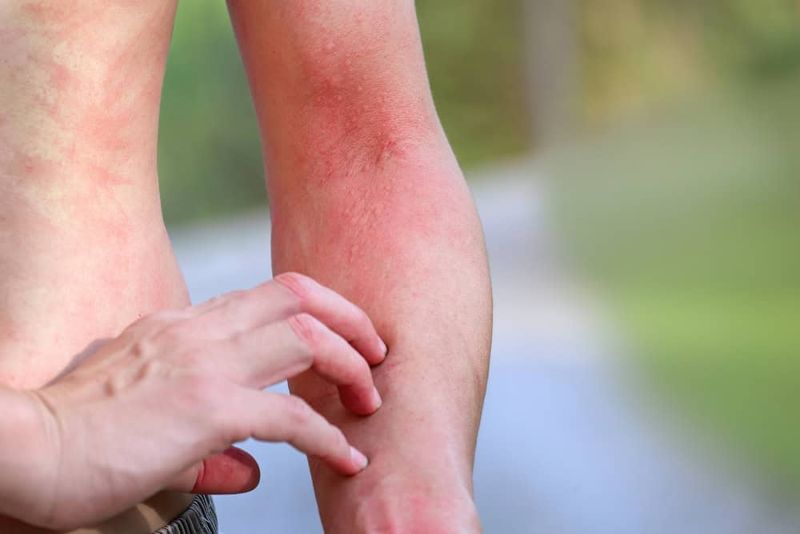
Once the hairs are off, comfort becomes the goal. Wrapped ice held on the area for short intervals may ease discomfort.
Put a cloth between the ice and your skin so the cold does not irritate it further, a tip that appears in MedlinePlus guidance.
For itching, Poison Control says hydrocortisone may help. That wording is worth taking seriously: it may help, but it is not a cure and results differ.
Read the product label for how and where to use it, and stop if the skin looks worse.
Medication choices need extra care for children. If a child touched the caterpillar, follow the label for their age or ask a clinician or the poison center before using any cream or tablet.
A product that suits an adult may not suit a small child.
Keep an eye on the skin over the next day or two. Redness and itching can come and go, and people differ in how long it lasts.
Details on caring for caterpillar contact are available from Poison Control.
Treat eye and inhalation exposure differently
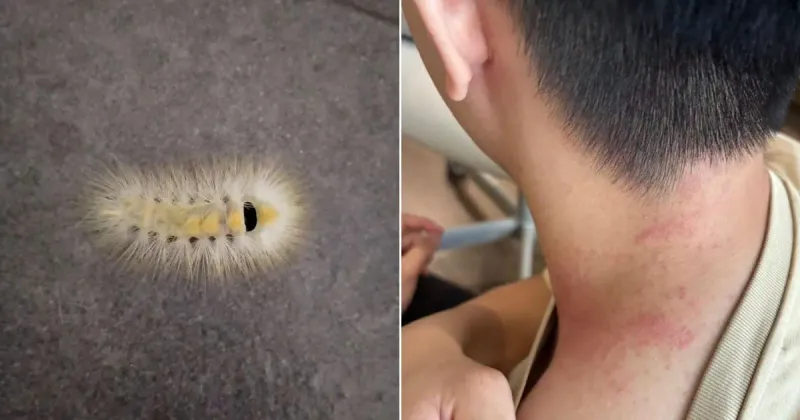
Eyes and lungs are not skin, so tape and soap are not the answer here. If hairs reach an eye, rinse it with lukewarm water.
Let the water run gently over the eye and avoid rubbing, which can make things worse.
Irritation that sticks around after rinsing deserves attention. Get medical advice if the eye stays red, painful, or bothered, as noted by Poison Control.
The poison center can help you decide how urgently to be seen.
Breathing in hairs is a separate situation. MedlinePlus advises medical care after inhaling caterpillar hairs, so do not wait to see whether it passes.
If you have trouble breathing, call 911.
A practical example: you shake out a branch of leaves and a cloud of fine debris drifts into your face. Move away, rinse your eyes if they sting, wash your face, and seek advice if you cough or feel irritation in your nose or throat.
Know when to call 911 or Poison Control

Some situations need an ambulance and others need advice. Call 911 for trouble breathing, fainting, or swelling of the face, lips, or tongue.
Do not drive yourself if you feel faint or are struggling to breathe.
For everything else that leaves you unsure, call New York poison center help at 1-800-222-1222. The New York State Department of Health lists that number for the state’s regional poison control centers.
Specialists can give advice that fits your exact exposure.
Good reasons to call include a rash that spreads or worsens, strong symptoms after contact, or a child who touched a caterpillar. Call too if you cannot tell what kind of caterpillar it was.
Different species can cause different effects, and guidance from Poison Control for one may not fit another.
It helps to have a few details ready: where on the body the contact happened, how long ago, what you have done so far, and a photo of the caterpillar if you safely have one. A quick call costs nothing and can save worry.
Save the number in your phone before gardening season starts.
Avoid contact with caterpillars and cocoons
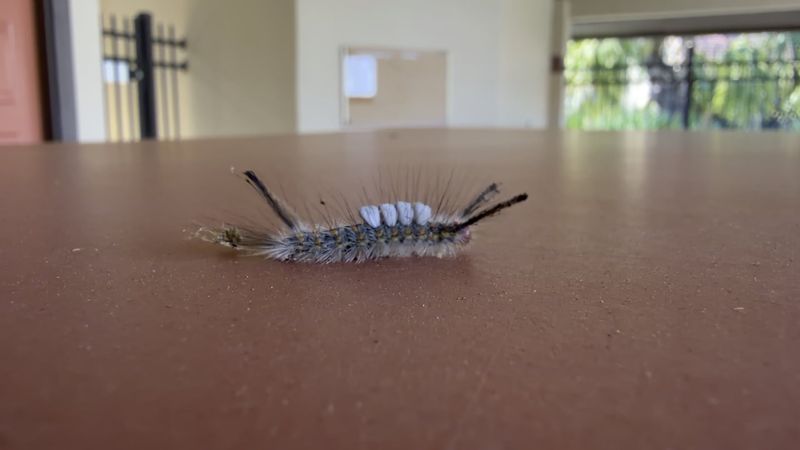
Prevention starts with not touching. Hairs may also be woven into the caterpillar’s cocoon, according to UMass Extension, so a cocoon can expose you just as the caterpillar can.
Leave both alone, and use a tool if one must be moved.
Long sleeves, long pants, and gloves are sensible when you work around trees and shrubs. Check leaf piles, fences, and woodpiles before reaching in.
Kids can be curious about fuzzy creatures, so a quick rule of look but do not touch goes a long way.
A pale, hairy look, as described by Penn State Extension, may help you recognize this species, but it does not prove that an unknown caterpillar is safe. Treat any fuzzy one with the same caution.
None of this suggests a local outbreak; it is simply good habit.
If contact happens, skip bare hands, clean the exposed skin, and get the right help for severe symptoms or uncertain exposure through Poison Control or the state poison center list. The best garden habit is a calm one: a little fuzz is no reason to panic, only a reason to use a stick instead of a finger.
Share this story