New York courts do allow some trimming of growth that reaches onto your land, but the rules are narrower than many people think. The cases mostly involve tree branches, and one city court looked at bamboo.
A wrong cut can turn a small annoyance into a legal fight. Here is what the decisions say and how to stay on the safe side.
The clearest New York rule concerns tree branches
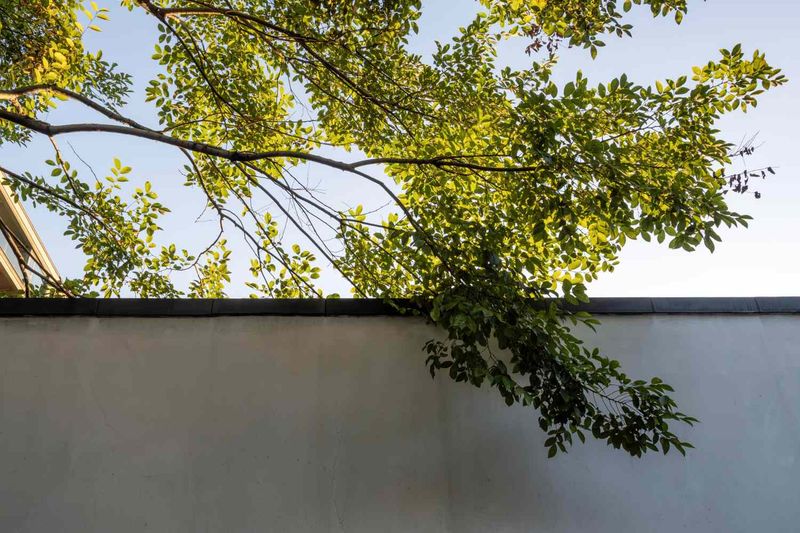
Picture a branch reaching over your fence into your yard. In a New York appellate decision about tree branches, the court recognized a limited kind of self-help.
An owner may trim ordinary growth that hangs onto their property, but the trimming cannot go past the property line.
The court also said the trimming cannot destroy or injure the tree’s main support system. In plain terms, you may take back the part that crosses onto your land, but you may not harm the tree itself.
That is a real limit, and it keeps a neighbor’s tree alive and stable.
This is the strongest statewide precedent found for this topic, and it is about trees. It is not a ruling about vines.
Applying it to a vine is an analogy, and courts have not settled that as a statewide rule for every kind of plant.
An overhang does not give you an unrestricted right to cut. The right is limited to ordinary pruning of the part that is actually on your side.
Anything beyond that, such as stepping onto the neighbor’s land or cutting deep into the plant, moves you into riskier territory.
Keep this limited rule in mind as you read the rest of the article. The other cases add detail, but they do not widen it.
A bamboo case offers a limited comparison

Bamboo is closer to a vine than a tree is, so one New York City case gets attention. In Muniz v.
Shen, a small-claims court said an adjoining owner could cut encroaching vegetation without trespassing. But it found the defendant went beyond trimming the overhang and destroyed plants.
That second point matters most. Cutting back what crosses the line was one thing, and wiping out the neighbor’s plants was another.
The court treated the destruction as going too far.
Keep the level of the decision in mind. Muniz v.
Shen is a New York City small-claims decision, a trial-level ruling. It is not a statewide appellate ruling, and the appellate tree rule is a different kind of authority.
Neither one settles a statewide rule for every vine. Vines, shrubs, bamboo, branches, and roots are not interchangeable in the cases, so the bamboo decision is a useful comparison and nothing more.
A 2026 case, Gully v. Varghese, shows how unsettled things can be.
It involved disputed claims about removing bushes, vines, and undergrowth from a neighbor’s land. The court denied summary-judgment motions from both sides, so the claims stayed unresolved.
It did not decide that anyone has a general right to cut vines.
A fence may not mark the property line
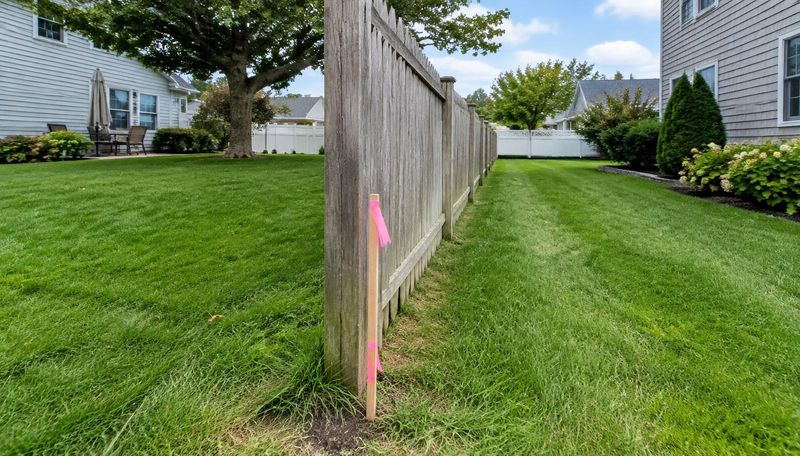
Many people assume the fence is the boundary. It often is not.
The legal question is whether the growth crosses the actual property line, not whether it crosses a fence.
A 2025 New York decision shows the risk. A landscaper cut branches back to the trunks instead of stopping at the boundary and entered the neighbor’s land.
The court found the landscaper liable for trespass.
The lesson is practical. Cutting back to the trunk, or stepping over the line to reach a branch, can create a problem even when some of the growth really did overhang.
Stopping at the line is what keeps the work within the limited right.
When the line is unclear, a survey can help. In New York City, NYC311 tells owners to consult a title survey to tell whether a tree is on private or city property.
That guidance is about trees and city property in New York City, but the same idea of checking records helps with any boundary question.
Look at your deed or survey papers before you pick up the shears. If a neighbor disputes the line, a licensed surveyor can settle the facts.
Cutting should wait until you know where your land ends.
Limit trimming to growth clearly on your side
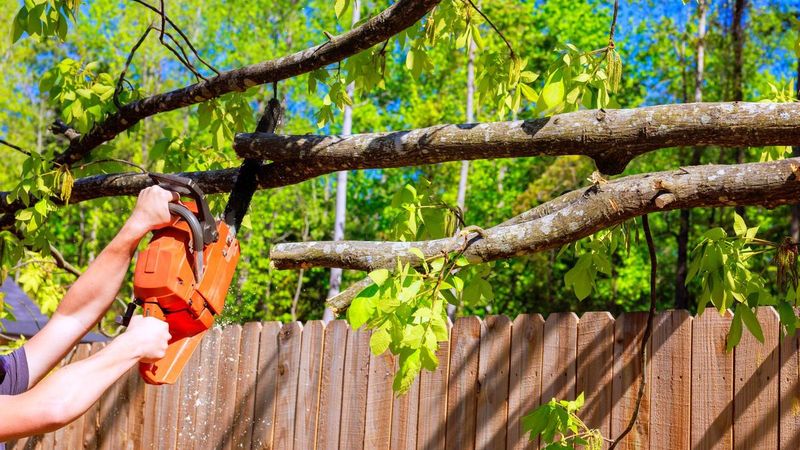
Turning the legal limits into habits is simple. Cut only the part of the growth that is clearly over your land.
Do not cut a vine at its base, and do not remove more than the overhanging portion.
That caution comes from the cases. The bamboo court in Muniz v.
Shen found that destroying plants exceeded trimming. The appellate tree rule likewise limits self-help to ordinary pruning of the encroaching part.
Start by talking to your neighbor. A friendly request often solves it, and the neighbor may trim it or give permission.
Before any cutting, take photos of the growth and the boundary so you have a record of what was on your side.
If you are not sure who owns the plant, or what cutting will do to it, get permission or hire a qualified professional. A big vine may be woven into a fence or tree, and a cut could kill it.
These steps lower your risk, but they do not guarantee you will avoid liability. They simply show you acted carefully and stayed within the limits the courts have described.
A nuisance complaint is different from a right to trim
Feeling annoyed by a neighbor’s plants is not the same as having a legal claim. A nuisance claim asks a court for a remedy.
It does not expand your right to cut on your own.
The Court of Appeals discussed this in Iny v. Collom.
It said tree-related nuisance claims generally require sensible property damage. Shade or dropped leaves alone do not make a nuisance.
Sensible damage means real harm to the property, the kind that can be seen and shown. A messy yard or less sunlight, by itself, will not usually meet that standard.
The case also talks about self-help and other remedies in context, so keep those paths separate. Self-help is the limited trimming of growth on your side.
A nuisance claim is a court process with its own requirements.
The case concerns trees, and it does not resolve every vine dispute. If a plant is causing actual harm, such as pushing into a wall or foundation, document the damage and talk to a lawyer before deciding what to do.
Power lines and local rules require extra care
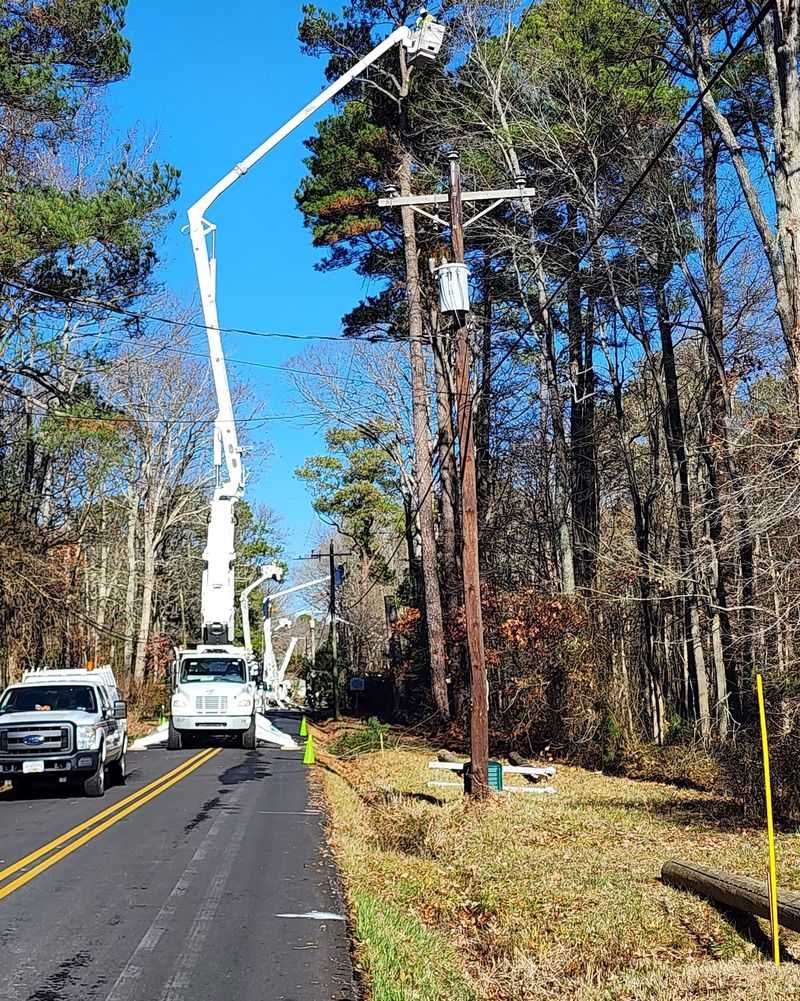
If a vine or branch is near a power line, stop. NYSEG warns people not to attempt tree work near power lines and tells them to contact the relevant utility.
A limb touching a line can be deadly, so leave that job to professionals.
Local rules matter too. New York’s court law library guidance advises checking municipal regulations when you have a neighbor dispute.
Your town or village may have its own tree or property rules.
New York City has its own setup. According to NYC311, permits apply to work on street trees.
The Parks Department does not issue permits for trees on private property, though landmark-property rules may apply.
Those points describe New York City only. They should not be read as requirements across the state.
Outside the city, call your local municipal office to ask what applies.
If your plan involves a street tree, a landmark building, or anything near wires, make a call before you cut. A short phone call costs far less than a dispute or an injury.
Pause if the boundary or plant is uncertain
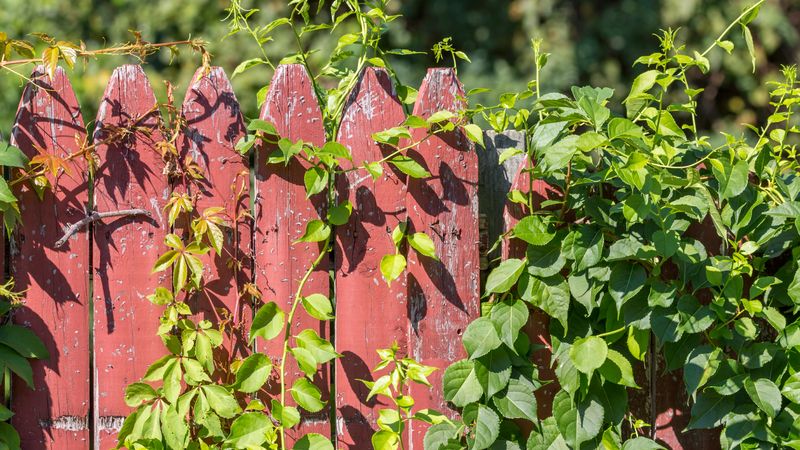
Before cutting, check the actual boundary, as the 2025 trespass decision shows. Trim only limited growth clearly on your side, and never remove or damage a neighbor’s plant.
Stay off the neighbor’s land and away from power lines, as NYSEG advises.
When facts are uncertain, ask permission or hire qualified help. No step guarantees a legal result.
A conversation is cheaper than a lawsuit.
Share this story