Get the latest garden guides in your inbox →
Gardening Latest
  • General Gardening
  • Lawn Care
  • Plant Care
  • Composting
  • Soil Health
  • Backyard
  • Garden Muse Magazine
  • General Gardening
  • Lawn Care
  • Plant Care
  • Composting
  • Soil Health
  • Backyard
  • Garden Muse Magazine
  • News
  • Gardening Calendar
  • Garden Structures
  • Vegetable Garden
  • Vertical Garden
  • Raised Beds
  • Hydroponics
  • General Equipment
  • Community Gardens
Garden Themes
  • Spiritual Garden
  • Hydroseeding
  • Seeding and Laying Sod
  • Artificial Grass
  • Lawn Care Equipment
  • Plants
  • Trees
  • Planting Tools
  • Composting Basics
  • Fertilizer
  • Alternative Growing Mediums
  • Front Yard
  • Backyard Activities
  • Landscaping
Gardening Latest

Explore by state

Which state is your garden in?

Currently viewing New York

All states

Northeast

  • Connecticut —
  • Delaware 45
  • Maine —
  • Maryland 31
  • Massachusetts 47
  • New Hampshire —
  • New Jersey 31
  • New York 40
  • Pennsylvania 40
  • Rhode Island —
  • Vermont —

Southeast

  • Alabama 31
  • Arkansas —
  • Florida 31
  • Georgia 31
  • Kentucky 45
  • Louisiana 30
  • Mississippi —
  • North Carolina 29
  • South Carolina 44
  • Tennessee 28
  • Virginia 30
  • West Virginia —

Midwest

  • Illinois 30
  • Indiana 32
  • Iowa 44
  • Kansas —
  • Michigan 31
  • Minnesota 30
  • Missouri 30
  • Nebraska —
  • North Dakota —
  • Ohio 31
  • South Dakota —
  • Wisconsin 45

Southwest

  • Arizona 30
  • Colorado —
  • Nevada —
  • New Mexico —
  • Oklahoma —
  • Texas 29
  • Utah —

West

  • Alaska —
  • California 30
  • Hawaii —
  • Idaho —
  • Montana —
  • Oregon —
  • Washington —
  • Wyoming —

No state matches that search.

Site menu

Gardening Latest
  • General Gardening
    • News
    • Gardening Calendar
    • Garden Structures
    • Vegetable Garden
    • Vertical Garden
    • Raised Beds
    • Hydroponics
    • General Equipment
    • Community Gardens
    Garden Themes
    • Spiritual Garden
  • Lawn Care
    • Hydroseeding
    • Seeding and Laying Sod
    • Artificial Grass
    • Lawn Care Equipment
  • Plant Care
    • Plants
    • Trees
    • Planting Tools
  • Composting
    • Composting Basics
  • Soil Health
    • Fertilizer
    • Alternative Growing Mediums
  • Backyard
    • Front Yard
    • Backyard Activities
    • Landscaping
  • Garden Muse Magazine

Explore

  • About GardeningLatest.com
  • Contact Us

Get the latest from the garden

New guides on lawn care, plants and backyard projects, sent when they go up.

Subscribe →

Follow

  • Facebook
  • X
  • Pinterest
  • YouTube
New York Gardening

When New York Rhubarb Bolts Into a Giant Flower Stalk, Here’s What’s Happening and Why Cutting It Helps

That tall, chunky stalk shooting out of your rhubarb is a flower stalk, and cutting it off at the base can help…

E

By Elyanna

November 28, 2026 · 6 min read

When New York Rhubarb Bolts Into a Giant Flower Stalk, Here’s What’s Happening and Why Cutting It Helps
When New York Rhubarb Bolts Into a Giant Flower Stalk, Here's What's Happening and Why Cutting It Helps

That tall, chunky stalk shooting out of your rhubarb is a flower stalk, and cutting it off at the base can help your plant focus on the leaf stalks you want to eat. It is normal growth, not a sign that your plant is sick.

Knowing what the stalk means takes the worry out of spotting one in your garden. Here is what is going on and what to do about it.

At a glance

Where
New York Gardening
Hardiness zone
7 0 to 10°F
Read
6 minutes
Published
November 28, 2026

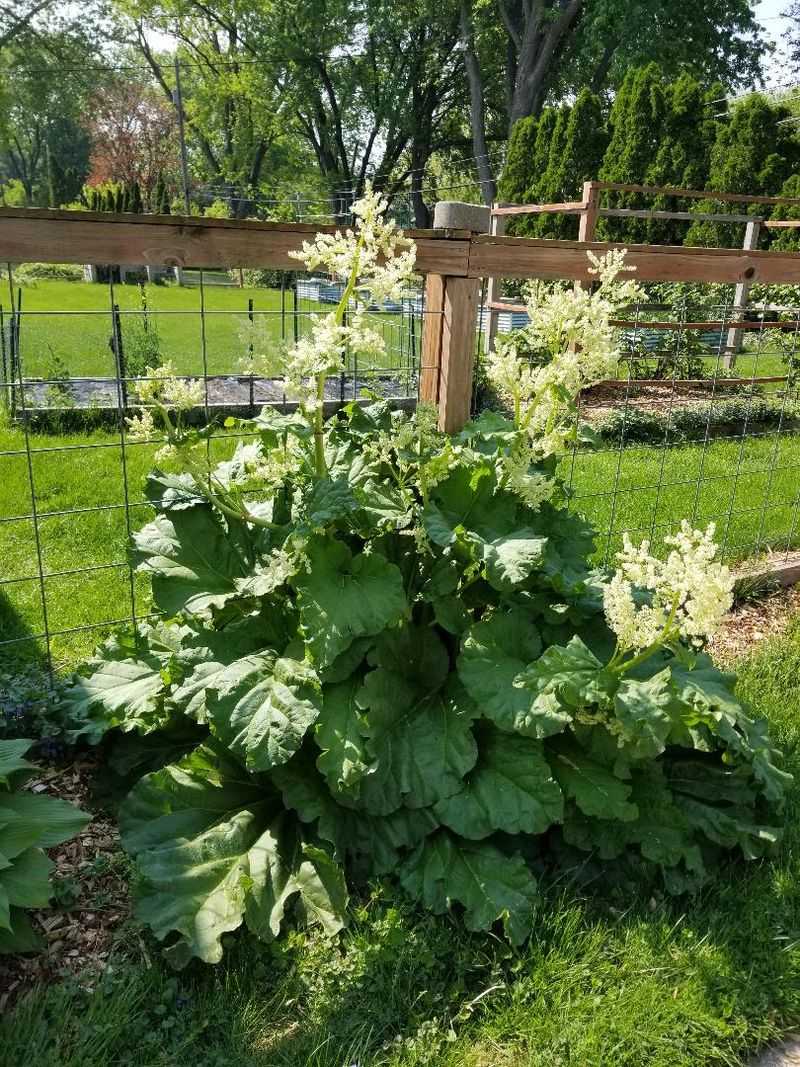
A flower stalk is part of rhubarb’s reproductive cycle
A flower stalk is part of rhubarb’s reproductive cycle
© Beyond Behnke’s

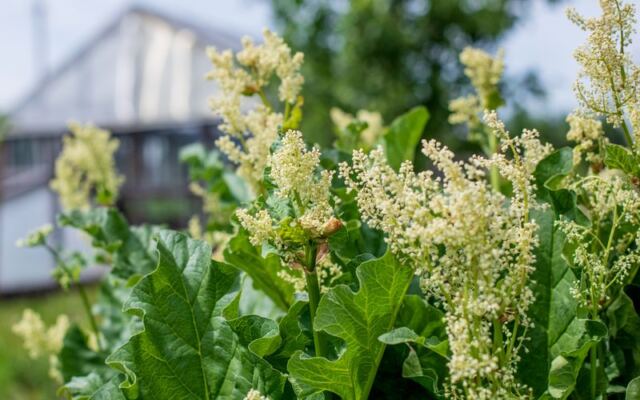
Picture the scene: you walk out to the garden and a thick, pale green shoot has climbed far above the leaves overnight. That is rhubarb’s flower stalk, and it is part of the plant’s reproductive cycle.

Its job is to bloom and make seed.

The height can be startling. Cornell Cooperative Extension of Oneida County notes that these stalks can reach about 5 feet.

A stalk that big looks dramatic, but its size says nothing about disease. It simply shows a plant that is growing vigorously in a new direction.

Gardeners often call this bolting, and the word makes it sound like a crisis. It is not.

Flowering is reproductive growth, the same kind of thing many garden plants do when they shift from making leaves to making seed. It does not mean your plant is dying.

Many people also worry about the edible part. According to Purdue Extension, flowering does not make the edible leaf stalks poisonous.

The red or green stalks you cook with are still the same stalks they were last week.

So the real question is not whether the plant is ruined, but what you want from it. If you grow rhubarb for pies, sauces, and jam, you will probably want to deal with the flower stalk.

The next sections cover why it showed up and how to handle it.

Several things can lead rhubarb to flower
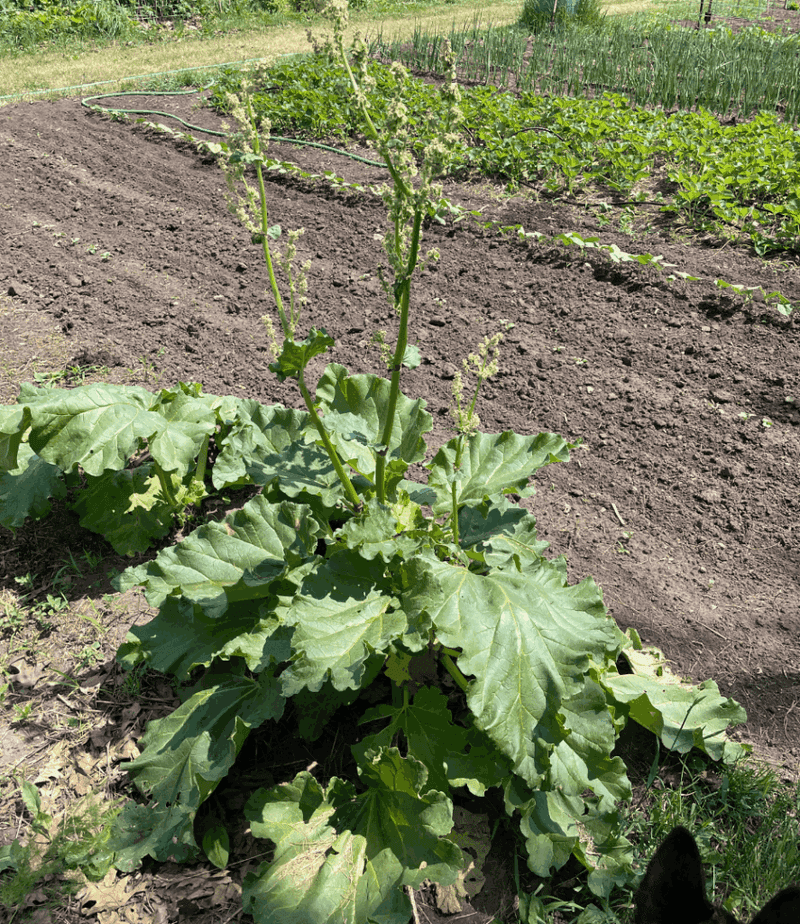
Several things can lead rhubarb to flower
© Homely Hens –

Nobody can look at a flower stalk and name the cause for certain. Purdue Extension lists several possible contributors, and more than one can be at work at once.

Think of them as clues rather than a diagnosis.

Cultivar is one clue. Some varieties simply flower more readily than others.

By removing the stalk, you leave more of the plant’s energy for leaves and for the reserves stored in the crown.

Plant maturity is another, since established plants tend to send up stalks more often than young ones.

Stress can play a part too. A long stretch of hot, dry weather may push a plant toward flowering, and so can poor nutrition.

If your summer was dry and the bed has not been fed in years, those are reasonable things to look at. Still, blaming heat alone would be guessing.

Age and crowding deserve a mention. Older or crowded plants may flower more often.

That does not mean a stalk is a signal to dig up the clump right away.

Division is better seen as a longer-term option for a clump that has become crowded or weaker. The Royal Horticultural Society suggests dividing large clumps about every five years, especially when they are crowded or weak.

The University of Connecticut describes flowering as a sign the plant may need division.

Notice that the sources do not agree on one schedule. A healthy, productive clump that flowers once can often wait.

Look at how thick the clump is and how the stalks perform before deciding.

Remove the flower stalk at its base
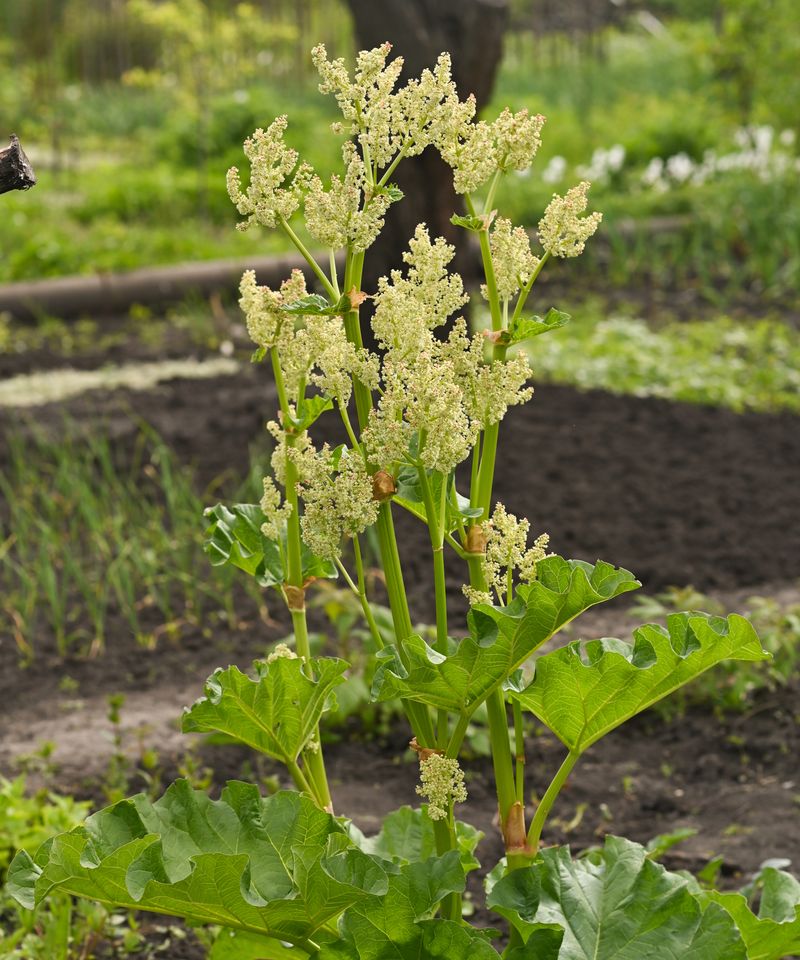
Remove the flower stalk at its base
© Gardening Know How

If harvest is your goal, the fix is simple. Cut the flower stalk off at its base as soon as it appears or starts to stretch upward.

Cornell Cooperative Extension of Oneida County recommends removing them to increase production, and Utah State University Extension advises doing so as they begin to elongate.

Use a clean, sharp knife or pruners. Follow the stalk down into the clump and cut as close to the crown as you can.

Taking it low means you are not leaving a stub that keeps drawing attention from the plant.

Early is easier. A young stalk is tender and quick to cut, while a tall one is thick and heavy.

Checking the clump every few days in spring makes catching it simple.

Keep your expectations realistic. This step is meant to favor leaf-stalk production, not to cure a disease, because the plant is not diseased.

It also does not guarantee a bigger harvest.

Once cut, put the flower stalk in the compost or the trash. It is a flowering structure, not a vegetable, and nothing here suggests it is safe to eat.

Stick to harvesting the leaf stalks.

Cutting favors production but cannot guarantee a bigger crop
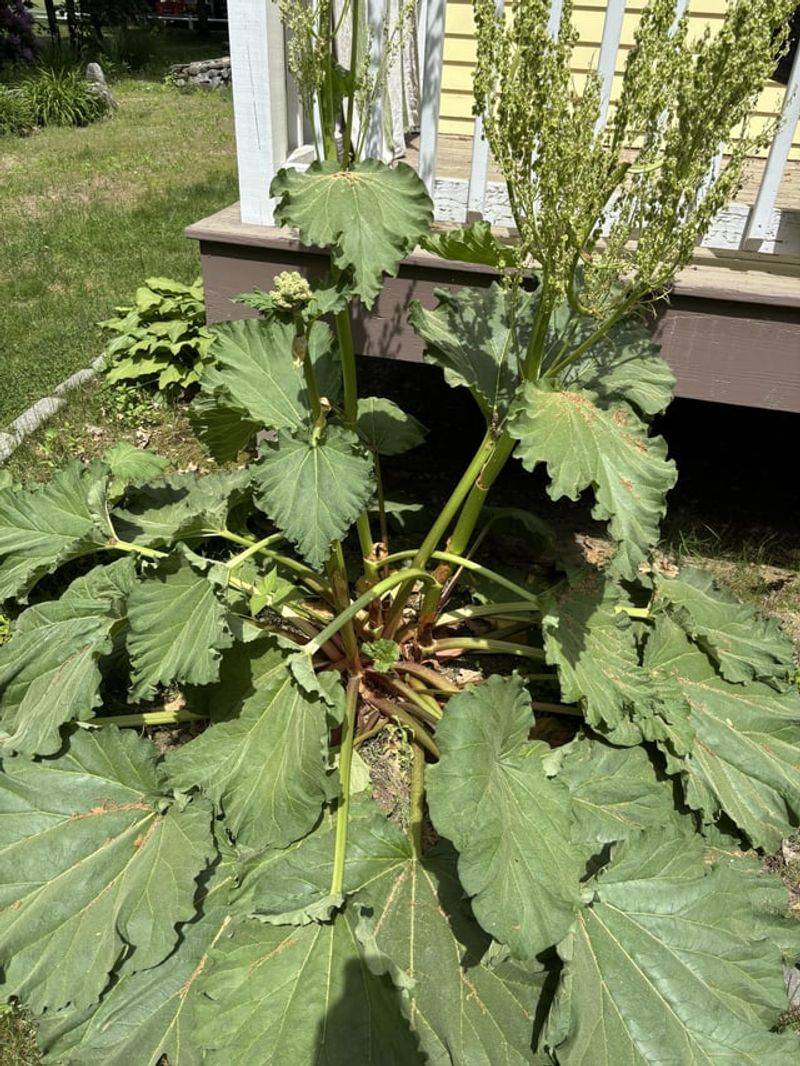
Cutting favors production but cannot guarantee a bigger crop
© Reddit

Why does cutting help at all? Flowering and seed production take energy.

Purdue Extension describes this diversion of resources as the reason to remove flowers, and Utah State University Extension reports reduced vigor and leaf-stalk production when plants flower.

By removing the stalk, you leave more of the plant’s energy for leaves and for the reserves stored in the crown. Those reserves matter for next year’s growth.

Letting seed ripen has a cost, too, since seedlings can turn out unlike the named parent variety.

That reasoning is sound, but it is not a promise. You may not see thicker stalks right away, and nobody can say how much more you will pick.

Think of cutting as tilting the odds in your favor.

Another thing to expect is a second try. The plant may send up another flower stalk after the first is gone.

If you want to put harvest first, remove that one too.

A quick walk past the clump once a week is usually enough. If new stalks keep coming, look back at the possible causes, such as dry soil or thin feeding.

Fixing those can matter as much as the cutting.

Flowering does not make the leaf stalks poisonous
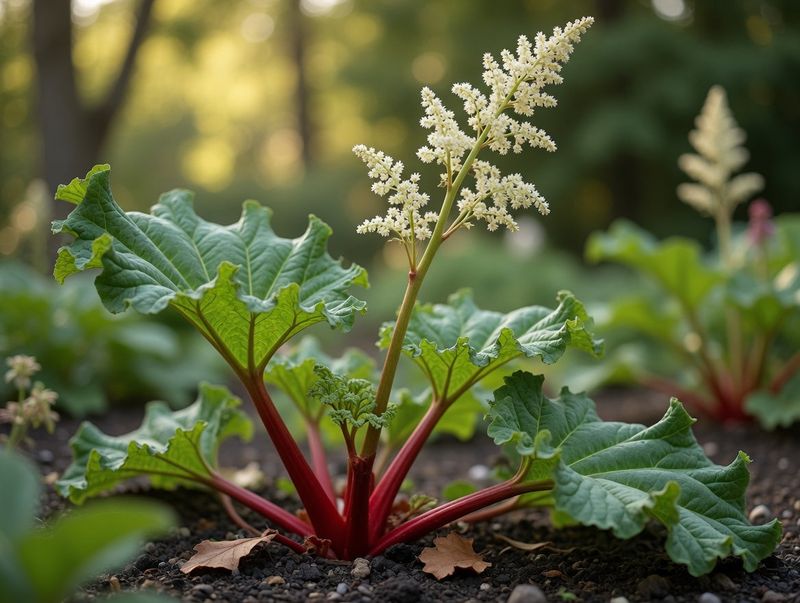
Flowering does not make the leaf stalks poisonous
© Pépinière.ca

A common fear goes like this: the plant bolted, so the stalks must be unsafe. That is not the case.

Purdue Extension says flowering does not make the edible leaf stalks poisonous.

The trick is knowing the three parts of the plant. The leaf stalk, also called the petiole, is the part you eat.

The leaf blade is the big flat leaf on top, and it is toxic. The flower stalk is the tall bloom-bearing shoot, and the sources reviewed do not show it to be food-safe, so leave it out of the kitchen.

Always trim the leaf blades off and throw them away. University of Minnesota Extension advises removing and discarding them.

Do not cook them or add them to dishes.

Timing questions come up as well. Advice on when to harvest varies by region and source, so there is no single New York calendar date to follow.

Minnesota Extension says established plants can still be picked later in the season, though the stalks may be tougher.

That same page calls the idea that the whole plant turns toxic late in summer a myth. So judge your stalks by texture and quality, and keep tossing the blades every time.

Check for another stalk and keep the goal in mind
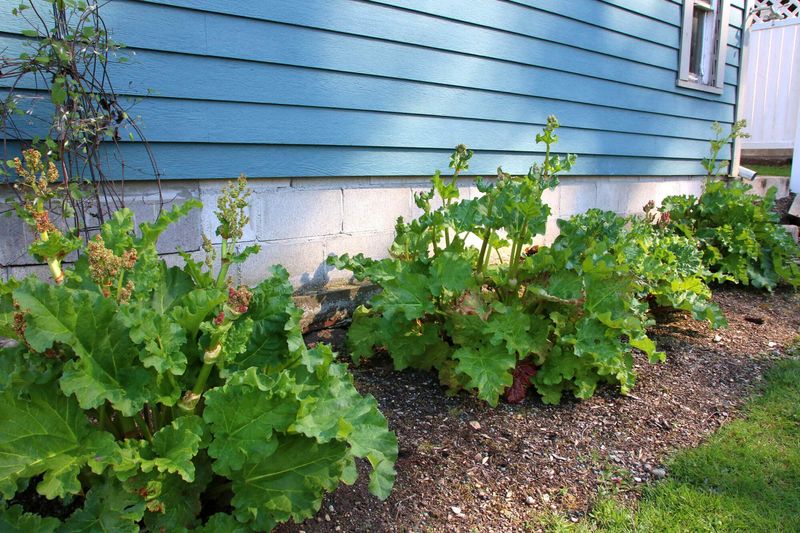
Check for another stalk and keep the goal in mind
© The Daring Gourmet

Treat the tall stalk as normal reproductive growth, and cut it at the base if harvest is your priority. Then look the clump over again, because Purdue Extension notes another stalk may follow.

Cornell backs removal to boost production, though no crop size is guaranteed, and one stalk alone does not mean dividing.

Rhubarb forgives a lot, and a flower is only a flower.

Share this story
E

Written by

Elyanna

More from Elyanna →

A passion for lavender! From a young age, Elyanna has had a passion for lavender. It began at the age of two when her mother walked her through fields of lavender in Norfolk England. This ignited her interest; she has grown harvested and learned about this beautiful herb.

About Gardening Latest

Gardening Latest provides in-depth guides to maintaining and enhancing your garden and backyard. Learn how to make the most of the space you have and create a beautiful garden.

More about us →

Latest stories

  • Missouri GardeningIf Your Missouri Woodpile Sits Against the House, You’re Inviting Brown Recluses Indoors This Winter

    If Your Missouri Woodpile Sits Against the House, You’re Inviting Brown Recluses Indoors This Winter

    4 min ago
  • Tennessee GardeningBefore You Dig In, Here’s How To Recognize Every Venomous Creature Sharing Your Tennessee Yard

    Before You Dig In, Here’s How To Recognize Every Venomous Creature Sharing Your Tennessee Yard

    10 min ago
  • Alabama GardeningThat Burning Saddleback Caterpillar Sting in Your Alabama Garden Calls for These Steps Right Away

    That Burning Saddleback Caterpillar Sting in Your Alabama Garden Calls for These Steps Right Away

    16 min ago
  • Minnesota GardeningBefore You Pick Up That Big Black Caterpillar With White Spots In Minnesota, Read This

    Before You Pick Up That Big Black Caterpillar With White Spots In Minnesota, Read This

    22 min ago
  • Illinois GardeningDeer Are Rubbing Their Antlers on Your Illinois Saplings Right Now, and Here’s How to Save Them

    Deer Are Rubbing Their Antlers on Your Illinois Saplings Right Now, and Here’s How to Save Them

    28 min ago

Gardening by state

Stories for your state, and the hardiness zone most of it gardens in.

Keep exploring

Read next

All New York Gardening →
New York GardeningThis Invasive Tree Keeps Sprouting From New York Sidewalk Cracks and Yards, No Matter How Often You Pull It
New York Gardening

This Invasive Tree Keeps Sprouting From New York Sidewalk Cracks and Yards, No Matter How Often You Pull It

1 hr ago
New York GardeningBefore You Cut Your Neighbor’s Vines Hanging Over The Fence, Know What New York Law Allows
New York Gardening

Before You Cut Your Neighbor’s Vines Hanging Over The Fence, Know What New York Law Allows

7 hr ago
New York GardeningNew York Gardeners, Here’s What to Do Right Away When a Hickory Tussock Caterpillar Stings You
New York Gardening

New York Gardeners, Here’s What to Do Right Away When a Hickory Tussock Caterpillar Stings You

10 hr ago

More from New York Gardening

  • The Glossy Nuts New York Children Gather Every Fall Are Actually Poisonous

    Nov 27
  • 7 Firewoods That Keep New York Homes Warmest All Winter, And 3 You Shouldn’t Burn

    Nov 26
Back to top

Leave a response Cancel

Your email address stays private. Required fields are marked with an asterisk.

Gardening Latest

In-depth guides to maintaining and enhancing your garden and backyard: how to make the most of the space you have, and how to make it beautiful.

  • Facebook
  • X
  • Pinterest
  • YouTube

We may earn a portion of sales from products or services that are purchased through our site as part of our affiliate partnerships with retailers.

Explore

  • About GardeningLatest.com
  • Contact Us
  • Terms and Conditions
  • Privacy
  • Editorial Note:
  • FTC Disclosure

Newsletter

New garden guides and seasonal tips, straight to your inbox.

We’ll email you a link to confirm. Unsubscribe any time.

Almost there! Check your inbox and tap the link to confirm.

© 2026 Gardening Latest. All rights reserved.

Back to top