That tuft of fluff on an oak leaf can hurt badly enough to make you drop everything and shake your hand. It is the puss caterpillar, and its soft look hides a painful surprise.
Plenty of South Carolina yards have the trees it likes, so it pays to know it by sight. Here is how to spot it, avoid it, and handle a sting if one happens.
The soft-looking coat conceals venomous spines
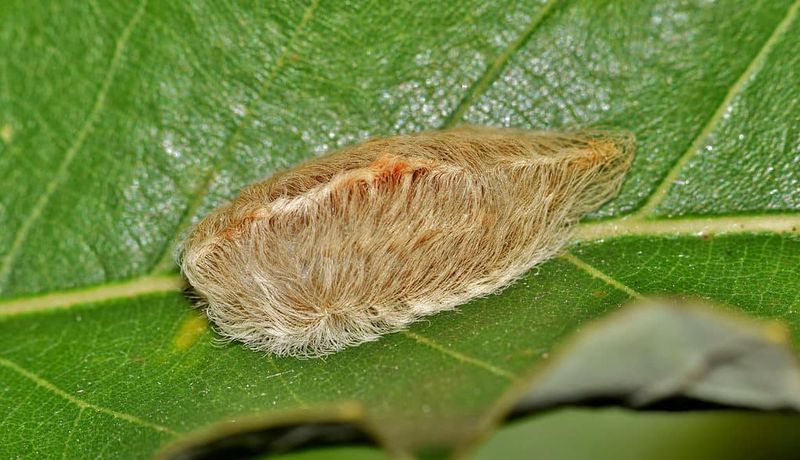
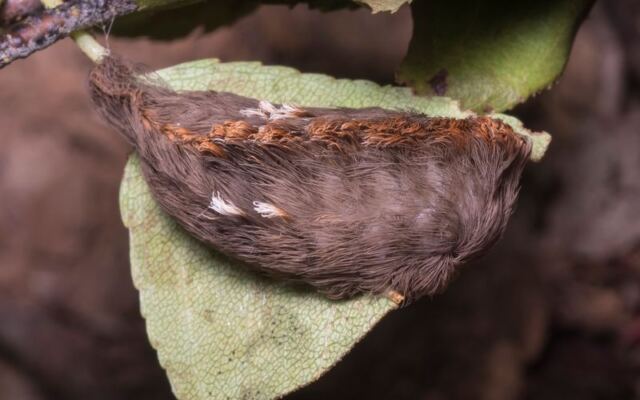
Picture a tiny toupee crawling along a leaf. That is the puss caterpillar, the larva of the southern flannel moth, Megalopyge opercularis.
Its thick, silky coat can look tan, gray, brown, or reddish, and it often tapers into a tail-like point at the back end.
The fur is the problem. According to Clemson Extension, the long hairs cover shorter spines that carry venom.
Those spines can break off in your skin and release venom on contact.
This is not a wasp-like stinger. The caterpillar has no needle it jabs on purpose.
The pain comes from brushing against it or pressing it, which is why a gentle touch to something that looks cuddly can go wrong fast.
Research on the venom, including a peer-reviewed study on asp caterpillar stings, shows these caterpillars produce toxins that cause painful reactions. That helps explain why a small insect can cause so much trouble.
Looks alone are not a guarantee. Several fuzzy caterpillars share similar colors, and young ones can look different from older ones.
The safest habit is simple: treat any furry caterpillar as something to leave alone, and look instead of touching.
Where South Carolina gardeners may encounter it
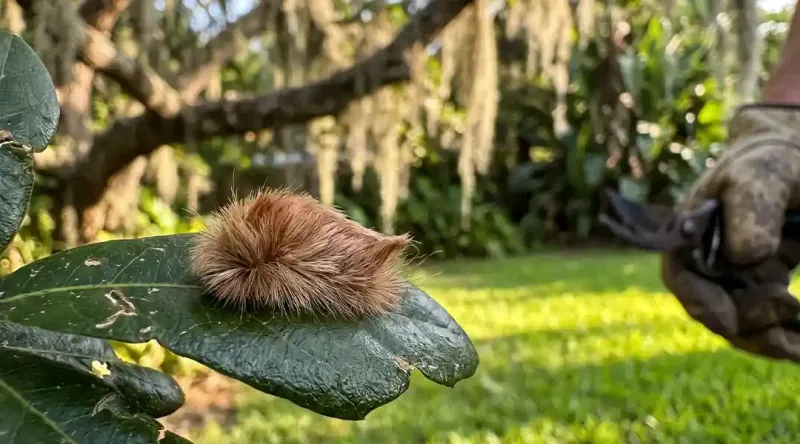
Oaks are among the puss caterpillar’s host plants, which means the leaves are part of its menu. Other trees on the reported list include elm, hackberry, and maple.
A typical South Carolina yard may have several of those.
Timing matters too. Clemson reports broods in South Carolina in July and early October, so those are good months to pay extra attention.
You can read more in Clemson’s guidance on the southern flannel caterpillar.
Other states describe a similar pattern. NC State Extension says caterpillars are most abundant around July and October.
So where should you look? On and among foliage.
Glance at leaves, branches, trunks, and the undersides of leaves when you prune, trim, or reach into shrubs and low limbs.
Notice what is not claimed here. The sources do not show that these caterpillars commonly hide in piles of fallen leaves.
Raking is still a good time to wear gloves, but the best-supported advice is to watch the plants themselves.
Contact can cause intense pain, but reactions vary
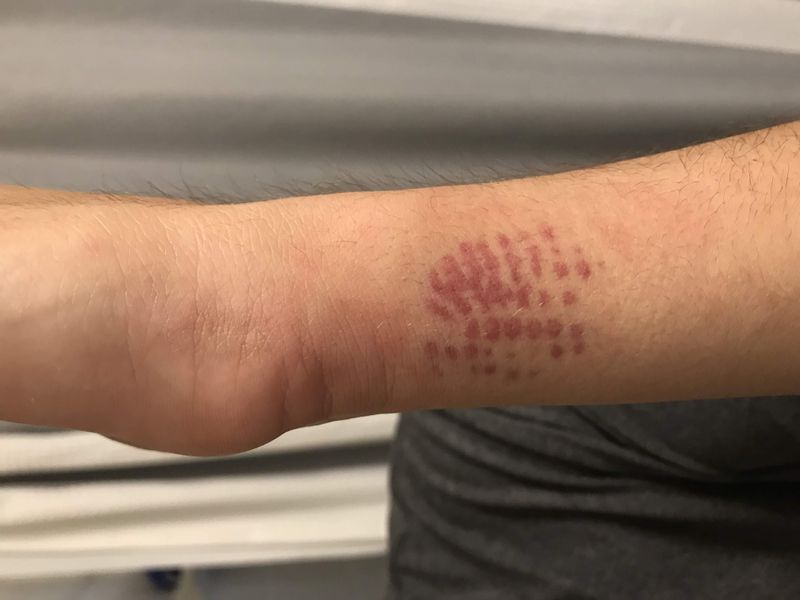
Reactions to puss caterpillar contact range widely. Some people feel a sharp, burning pain right away, followed by redness and swelling where the spines touched the skin.
Others report broader symptoms such as nausea or headache.
A study of 188 reported cases, published in a medical journal, describes severe pain and other symptoms among people who were stung. It shows what can happen, particularly in the more serious cases.
A larger look at reports to Texas poison centers adds balance. In that Texas poison-center review, most reported patients had no or minor effects and were managed outside health-care facilities.
Both findings are useful. A sting can be miserable, and some people do have serious symptoms.
Many others recover with basic first aid at home.
One caution about the numbers: Texas reports tell you about Texas. They do not count how many South Carolinians are stung.
Use them to understand the range of reactions, not to guess how common stings are here.
Your own reaction can depend on how much of the hair touched your skin, where it landed, and how your body responds. That uncertainty is a good reason to avoid contact altogether.
Pain comparisons depend on more than a vivid description
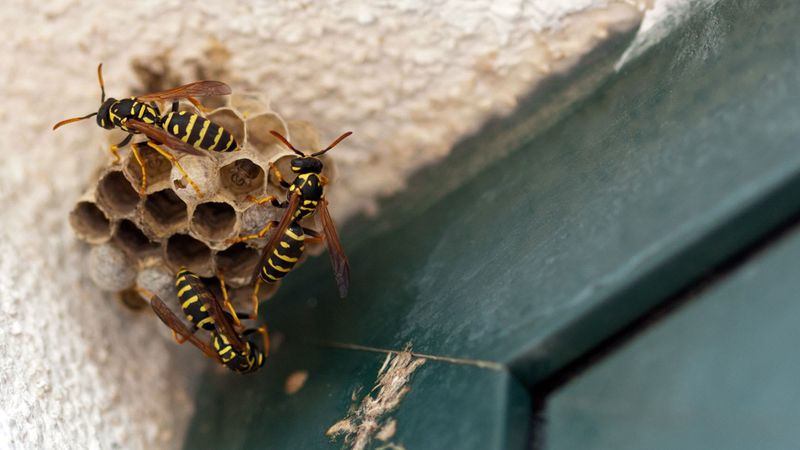
Headlines love a showdown, but pain does not line up neatly. Nobody has run a standardized, side-by-side test of puss caterpillar contact against a wasp sting.
So no one can honestly say it hurts more or less across the board.
What the records do show is that the pain can be intense. The study of reported envenomations describes severe pain, and a Texas poison-center review found a wide span of outcomes, from minor effects to more serious ones.
Older sources use everyday comparisons. One Virginia Cooperative Extension page says a sting can be as painful as a bee sting.
That is a handy picture, but it is a description, not a ranking against wasps.
People also feel pain differently. A tough gardener may shrug off what sends someone else to the sink.
The amount of venom, the spot on the body, and past sensitivity all play a part.
The practical takeaway is simple. You do not need a verdict on which insect wins to treat the caterpillar with respect.
Expect that contact may hurt a lot, and plan to keep your skin away from it.
Keep bare hands away during yard work
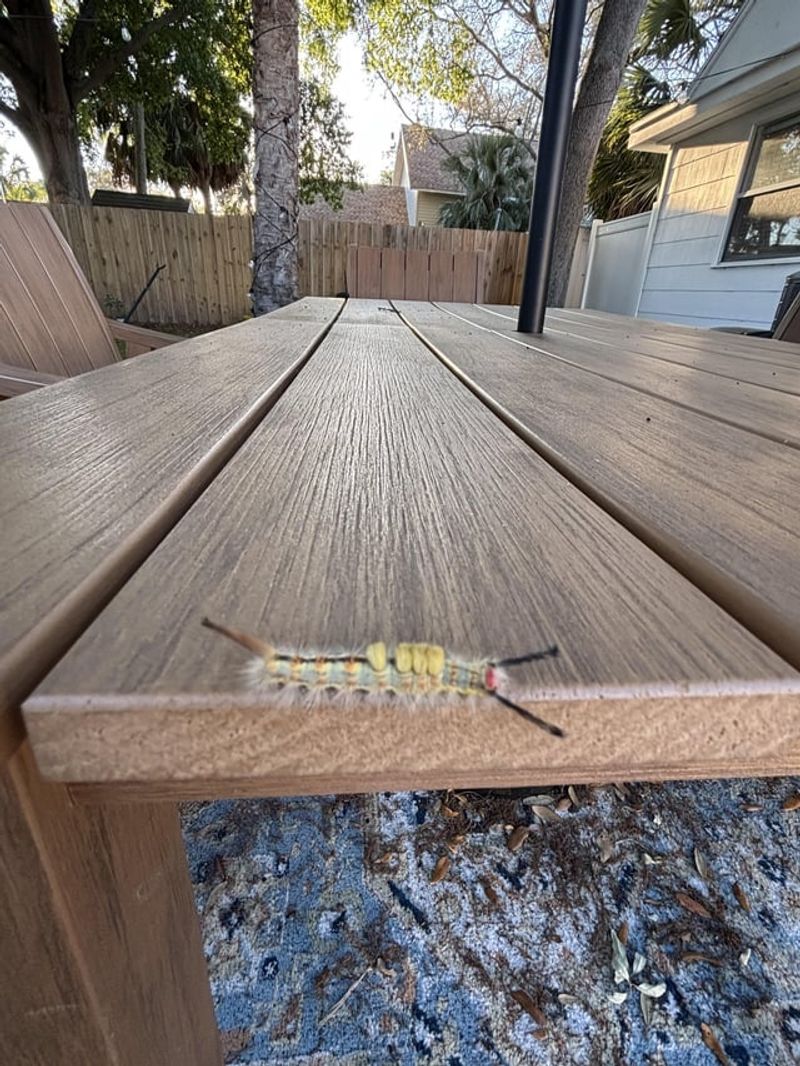
The best sting is the one that never happens. Poison Control, in its guidance on caterpillar stings, advises against handling fuzzy caterpillars and recommends wearing gardening gloves.
If one lands on your skin or sits where it needs to be moved, use a stick or other tool. Bare fingers are the wrong choice, and so is flicking it off with your hand.
Build a few small habits into yard work. Look over a branch before you grab it.
Check the leaves and stems you are about to cut, and pause when you spot something furry.
Plan around the seasons. Clemson says South Carolina broods show up in July and early October, so those weeks deserve a slower, more careful pace around trees and shrubs.
Keep your attention on the foliage itself. Oak, elm, hackberry, and maple branches are the places to scan.
Leaf piles are still worth gloves, but the plants are where the caterpillars have been documented.
Finally, tell children and helpers what to look for. A short rule works well: if it looks like fur and it is crawling, we do not touch it.
Remove hairs or spines before soothing the skin
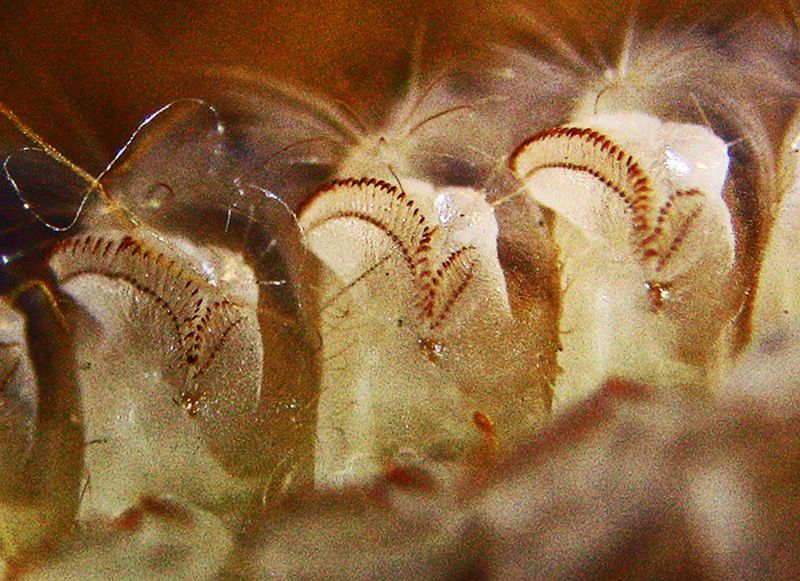
If the caterpillar touches you, take care of the spines first. Soothing creams can wait.
Poison Control’s caterpillar sting advice lays out the steps in order.
Start by gently pressing a piece of tape, sticky side down, over the spot. Lift it straight off to pull out hairs or spines.
Repeat with fresh tape as many times as needed.
Next, wash the area gently with soap and water. Skip scrubbing, which is not part of the guidance and could irritate the skin more.
After that, you can ease the symptoms. Poison Control says ice and ordinary pain relievers may help, and hydrocortisone is suggested for itching.
For advice that fits your situation, call Poison Control at 1-800-222-1222. Describe what happened, how you feel, and any health conditions, and they can tell you what to do next.
Stick with this plan and leave out folk remedies. Tape, gentle washing, and the listed symptom relief are the steps that have been recommended, and extra home tricks could slow things down.
Know when to get urgent help
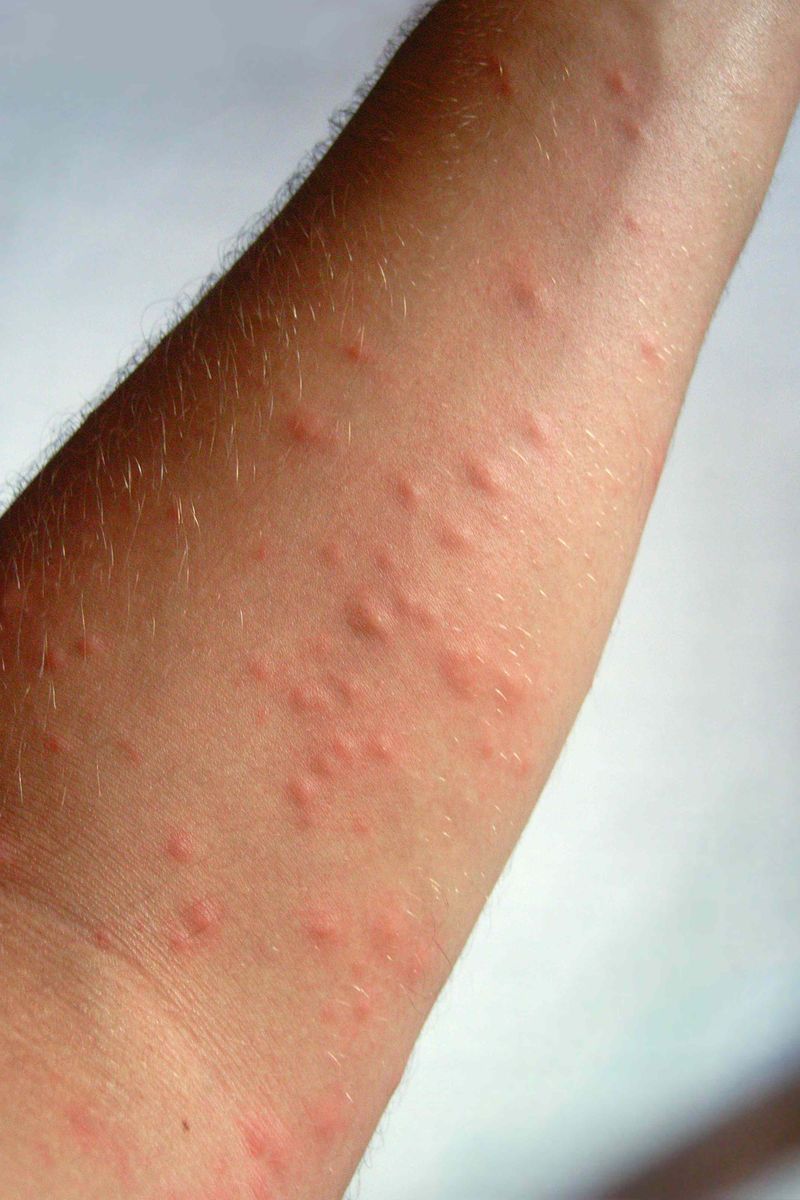
Most stings are local problems, meaning pain, redness, and swelling at the spot. Still, a few signs mean you should stop first aid and get help right away.
Call 911 immediately for trouble breathing, fainting, or swelling of the lips, face, or tongue, as Poison Control advises. Do not wait to see whether it passes.
Eyes need their own response. If hairs or spines get in an eye, rinse with lukewarm water.
If irritation persists, seek expert advice from Poison Control at 1-800-222-1222 or a medical professional.
None of this means every sting is an emergency. Many people manage with tape, washing, and basic relief at home.
The point is to know the line between sore and serious.
A sting is a reason to keep your gloves close, not to avoid your yard. A fuzzy leaf-dweller only wins when someone reaches out to pet it.
Share this story