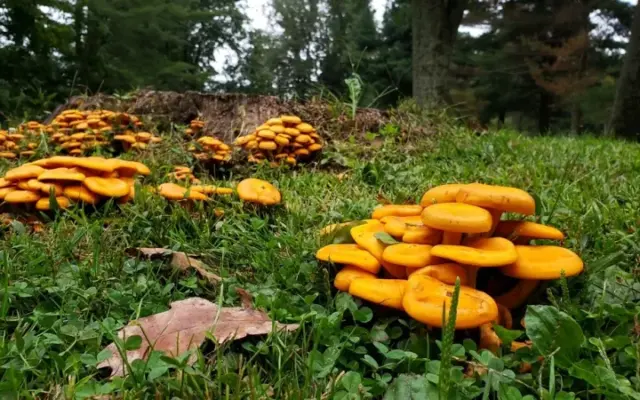
Jack-o’-lantern mushrooms are bright orange, they are poisonous, and they can sprout in the mulch around your South Carolina home after a rainy spell. Many people mistake them for edible chanterelles, which is why a quick look is never enough.
Knowing a few clues, and what to do if a child or pet gets into mushrooms, can help you stay calm and safe. Here is what to check, what to avoid, and who to call.
Why jack-o’-lanterns can appear in mulch
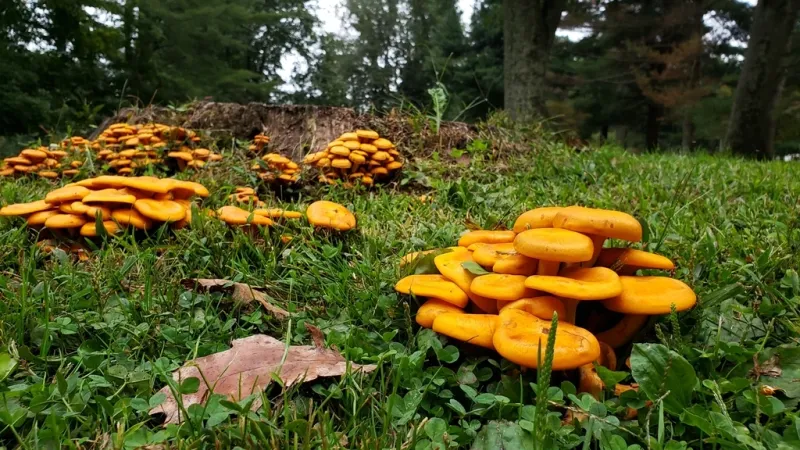
Jack-o’-lanterns are poisonous mushrooms that grow on wood, and that includes wood buried under the surface. A mulch bed often hides old roots, stump remnants, or chunks of buried lumber, so an orange mushroom in your garden could be a jack-o’-lantern.
The Missouri Department of Conservation describes them as orange to yellow-orange mushrooms that often grow in clusters on wood.
Rain matters, but only a little. Wet weather favors many fungi, and mulch beds can produce several kinds of mushrooms and other fungi, as University of Maryland Extension explains.
Its guidance on lawn mushrooms says the same about damp yards in general. So neither the orange color nor the mulch location tells you which mushroom you have.
The species matter too. Sources describe Omphalotus illudens as a poisonous species of eastern North America, and a mycological paper in Persoonia lists O. subilludens in the southern United States.
Those sources do not establish what every orange mushroom in South Carolina is, or what is growing in your yard. Treat any orange mushroom as unknown until an expert says otherwise.
Look for clusters growing from wood
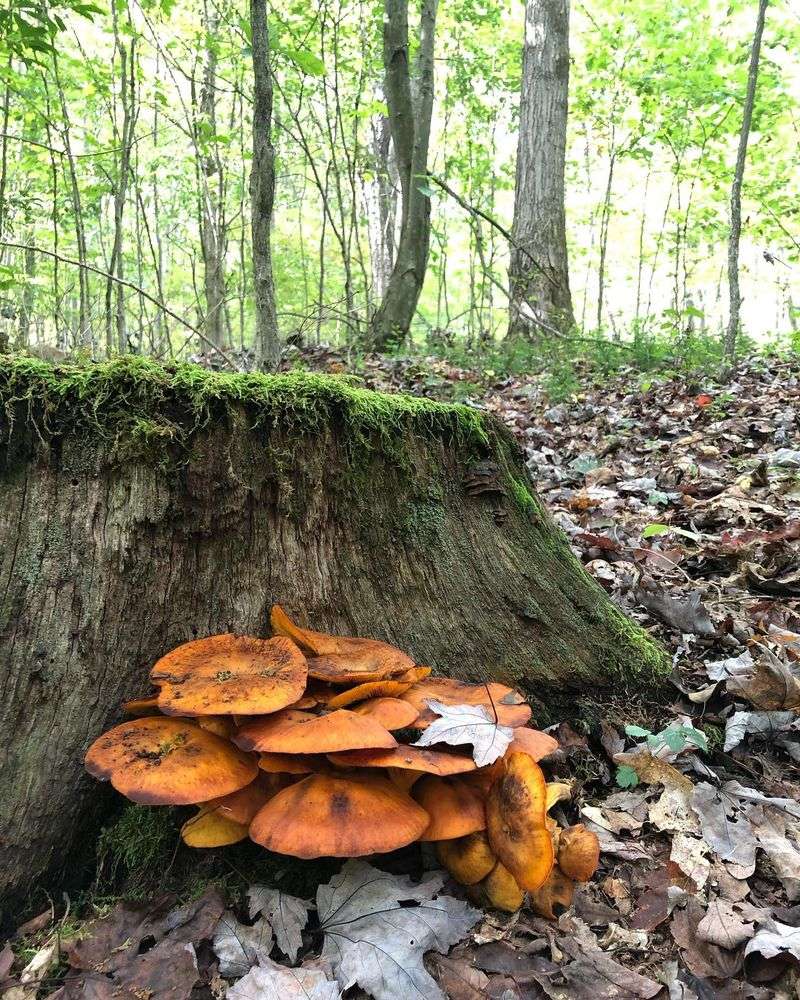
Habitat is one of the easiest clues to observe. According to the Missouri Department of Conservation, jack-o’-lanterns commonly form clusters on stumps, at the bases of trees, or on buried wood.
The stems often join together near the bottom, so the mushrooms look like one crowded bunch rather than scattered singles.
Mulch beds can fit that description more often than you might expect. Chipped bark and wood are made of the very material these fungi feed on, and many beds sit over roots from removed shrubs or trees.
A bunch of orange mushrooms sprouting from one spot in the mulch might be growing from wood underneath.
Still, a wood connection is only a hint. Many mushrooms in mulch grow from wood, and plenty of them are orange, yellow, or brown.
If you gently check where the stems meet the ground, you may see whether they seem tied to buried wood, but wear gloves and keep children and pets back while you look.
Think of habitat as a reason for caution, not as a final answer. A cluster on wood is a good reason to keep everyone away from the mushrooms, and not a reason to be sure about the name.
Compare true gills with chanterelle folds
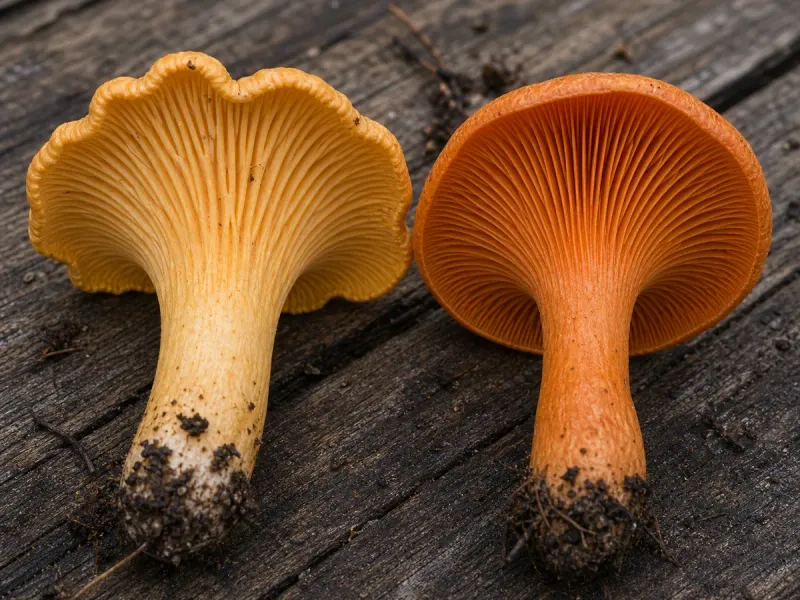
Under the cap, jack-o’-lanterns and chanterelles look different. Jack-o’-lanterns have narrow, sharp-edged, blade-like true gills that run down the stem, according to the Missouri Department of Conservation.
Run your eye along them and they look like thin, crisp pages.
Chanterelles have blunt ridges or folds instead. Those ridges are often forked and look more like wrinkles or melted wax than blades.
University of Florida IFAS Extension publishes information on the common chanterelles of Florida, and the same look-alike problem applies across the Southeast.
Where the mushroom grows offers another clue. Chanterelles generally grow from the forest floor, often near trees, rather than in tight clusters from wood.
A crowded bunch coming out of mulch or a stump leans toward the jack-o’-lantern side of the comparison.
These are field clues, not a key for beginners. Color, shape, and habitat can overlap or look different with age, weather, and damage.
Please do not use this comparison to decide that a mushroom is safe to pick or eat, because a wrong guess can mean a poisoning.
A faint glow cannot identify a mushroom
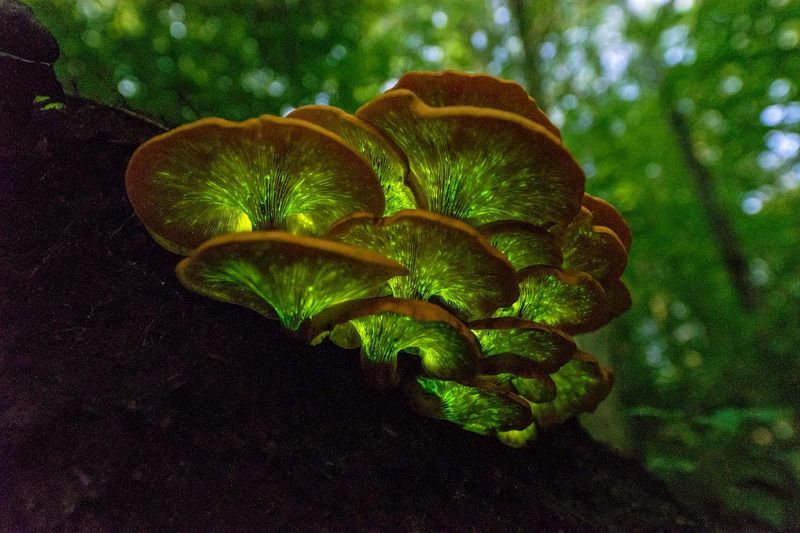
Jack-o’-lanterns have a reputation for glowing in the dark, and there is some truth to it. The gills may give off a faint light, though the Santa Barbara Museum of Natural History notes that the glow can be weak and is most observable in young, fresh specimens under very dark conditions.
That means a backyard flashlight check will not tell you much. Your eyes need time to adjust to real darkness, and an older or dried mushroom may show nothing at all.
If a mushroom does not glow, that does not rule out a jack-o’-lantern.
The opposite mistake matters just as much. Seeing a glow, or not seeing one, should never be treated as a home test for identity or safety.
Nobody should decide a mushroom is fine to eat because of how it looks in the dark.
A better plan is simple. Leave the mushroom alone, keep pets and children away, and get help from a knowledgeable person if you need a real identification.
What to do after someone eats a wild mushroom
A correctly identified jack-o’-lantern is poisonous. The Illinois Poison Center describes stomach and intestinal illness after eating one, including abdominal pain or cramping, vomiting, and diarrhea, often within a few hours.
If anyone has eaten an unidentified wild mushroom, call Poison Control promptly at 1-800-222-1222. Poison Control advises not waiting for symptoms to appear.
Some dangerous mushrooms cause trouble later, so a calm call right away is the safer choice.
When you call, it helps to know roughly how much was eaten, when it happened, and who ate it. If it is safe to do so, set aside a mushroom or a photo of the one in question, along with a picture of where it was growing.
Do not make anyone vomit or try home remedies unless the expert tells you to.
This article cannot identify a mushroom in your yard, and it cannot replace advice from Poison Control, a doctor, or emergency services. If someone is very sick, has trouble breathing, or cannot be woken, call 911.
Contact an expert if a pet may have eaten one
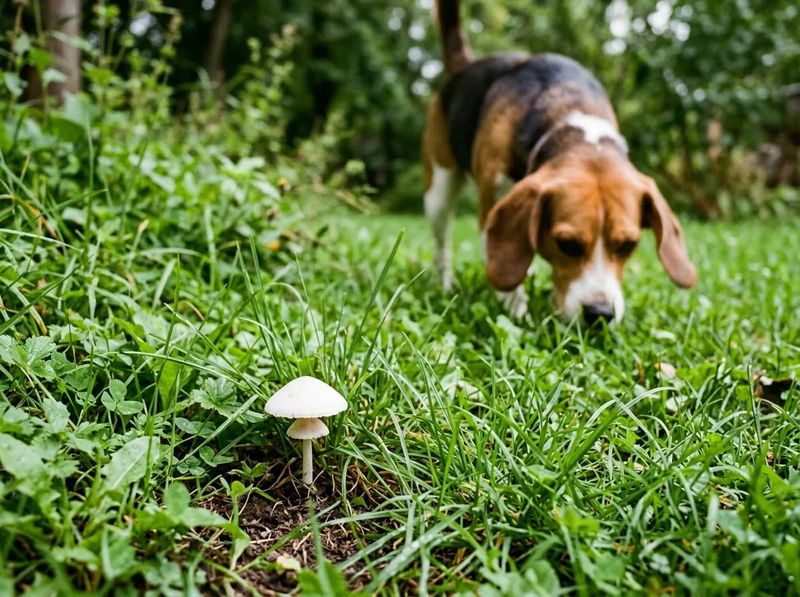
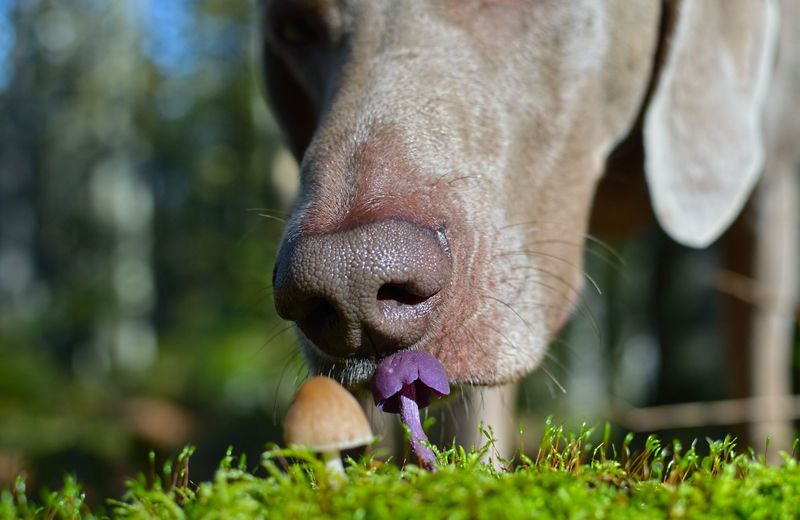
Pets explore with their mouths, and a mulch bed can be tempting for a curious dog. If you think your pet may have eaten a mushroom, treat it as potentially toxic.
Pet Poison Helpline advises that unless an expert can quickly identify the mushroom as non-toxic, it should be handled that way.
Call your veterinarian or an animal poison service promptly. Do not wait to see whether your pet seems sick, and do not assume everything is fine because the animal acts normal for now.
The sooner you get professional advice, the more options you and the vet have.
Human medical advice does not automatically apply to animals, so skip home remedies unless a vet or poison specialist tells you to use them. Poison Control’s number for people is not the right call for a pet.
Have some details ready, such as your pet’s species, size, and what you saw. If you can, take a photo of the mushroom and collect a small sample in a bag or container to show the vet.
Wash your hands afterward.
Remove visible mushrooms, but expect the fungus to remain
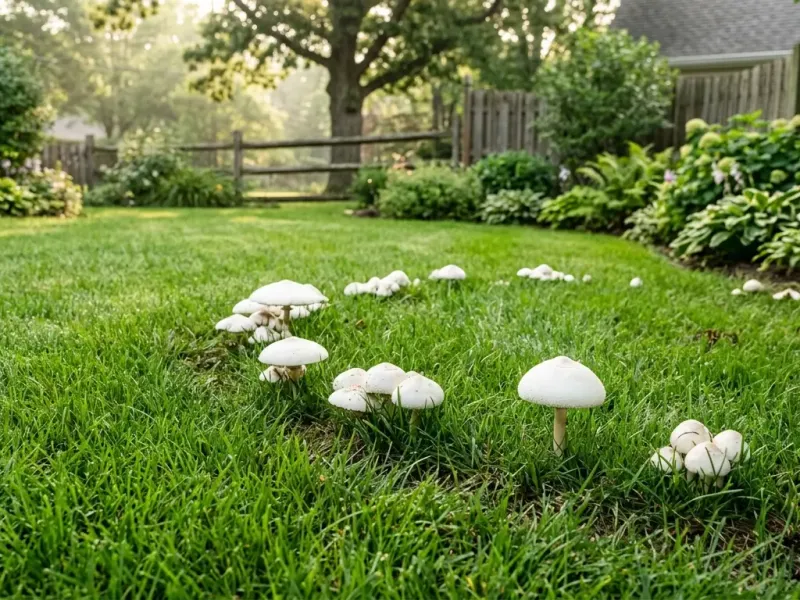
If children or pets use your yard, picking or scraping away visible mushrooms is a sensible short-term step. Wear gloves, bag the mushrooms, and throw them in the trash instead of a compost pile.
University of Maryland Extension recommends this for homes where kids or animals might eat them.
Expect more to come back. The mushrooms are only the fruit of a fungus living in the mulch or soil, and removing them does not get rid of it.
Ordinary mulch fungi generally break down organic matter, which is part of how mulch turns into soil, as this extension guide to lawn mushrooms explains. Fungicide is not an effective or necessary fix.
Raking or turning the mulch and letting it dry out may make the bed less inviting to some fungi, but nothing here promises permanent removal. Check the bed again after wet weather and remove new growth as it appears.
Above all, never eat a mushroom you cannot identify. If anyone may have eaten one, call Poison Control at 1-800-222-1222, and for pets, contact a vet or Pet Poison Helpline.
The mushroom is only the part you can see, and the better habit is to keep it out of reach.
Share this story