Get the latest garden guides in your inbox →
Gardening Latest
  • General Gardening
  • Lawn Care
  • Plant Care
  • Composting
  • Soil Health
  • Backyard
  • Garden Muse Magazine
  • General Gardening
  • Lawn Care
  • Plant Care
  • Composting
  • Soil Health
  • Backyard
  • Garden Muse Magazine
  • News
  • Gardening Calendar
  • Garden Structures
  • Vegetable Garden
  • Vertical Garden
  • Raised Beds
  • Hydroponics
  • General Equipment
  • Community Gardens
Garden Themes
  • Spiritual Garden
  • Hydroseeding
  • Seeding and Laying Sod
  • Artificial Grass
  • Lawn Care Equipment
  • Plants
  • Trees
  • Planting Tools
  • Composting Basics
  • Fertilizer
  • Alternative Growing Mediums
  • Front Yard
  • Backyard Activities
  • Landscaping
Gardening Latest

Explore by state

Which state is your garden in?

Currently viewing Texas

All states

Northeast

  • Connecticut —
  • Delaware 45
  • Maine —
  • Maryland 31
  • Massachusetts 47
  • New Hampshire —
  • New Jersey 31
  • New York 40
  • Pennsylvania 40
  • Rhode Island —
  • Vermont —

Southeast

  • Alabama 31
  • Arkansas —
  • Florida 31
  • Georgia 31
  • Kentucky 45
  • Louisiana 30
  • Mississippi —
  • North Carolina 29
  • South Carolina 44
  • Tennessee 28
  • Virginia 30
  • West Virginia —

Midwest

  • Illinois 30
  • Indiana 32
  • Iowa 44
  • Kansas —
  • Michigan 31
  • Minnesota 30
  • Missouri 30
  • Nebraska —
  • North Dakota —
  • Ohio 31
  • South Dakota —
  • Wisconsin 45

Southwest

  • Arizona 30
  • Colorado —
  • Nevada —
  • New Mexico —
  • Oklahoma —
  • Texas 29
  • Utah —

West

  • Alaska —
  • California 30
  • Hawaii —
  • Idaho —
  • Montana —
  • Oregon —
  • Washington —
  • Wyoming —

No state matches that search.

Site menu

Gardening Latest
  • General Gardening
    • News
    • Gardening Calendar
    • Garden Structures
    • Vegetable Garden
    • Vertical Garden
    • Raised Beds
    • Hydroponics
    • General Equipment
    • Community Gardens
    Garden Themes
    • Spiritual Garden
  • Lawn Care
    • Hydroseeding
    • Seeding and Laying Sod
    • Artificial Grass
    • Lawn Care Equipment
  • Plant Care
    • Plants
    • Trees
    • Planting Tools
  • Composting
    • Composting Basics
  • Soil Health
    • Fertilizer
    • Alternative Growing Mediums
  • Backyard
    • Front Yard
    • Backyard Activities
    • Landscaping
  • Garden Muse Magazine

Explore

  • About GardeningLatest.com
  • Contact Us

Get the latest from the garden

New guides on lawn care, plants and backyard projects, sent when they go up.

Subscribe →

Follow

  • Facebook
  • X
  • Pinterest
  • YouTube
Texas Gardening

When Coyotes Start Howling Near Your Texas Home After Midnight, This Is What They’re Telling Each Other

Coyotes howl and yip to talk to each other, and in Texas those calls often help them keep their space and stay…

RC

By Ruby Castillo

November 28, 2026 · 6 min read

When Coyotes Start Howling Near Your Texas Home After Midnight, This Is What They’re Telling Each Other
When Coyotes Start Howling Near Your Texas Home After Midnight, This Is What They're Telling Each Other

Coyotes howl and yip to talk to each other, and in Texas those calls often help them keep their space and stay in touch. The wild chorus outside your window can sound spooky, but it is mostly neighbors of the four-legged kind making their presence known.

Knowing what the sounds can and cannot tell you makes those late nights a lot less mysterious. Here is what the calls mean, what they do not mean, and what to do around your home.

At a glance

Where
Texas Gardening
Hardiness zone
8 10 to 20°F
Read
6 minutes
Published
November 28, 2026

Coyote calls carry information, not a sentence
Coyote calls carry information, not a sentence
© muliebral viewpoint

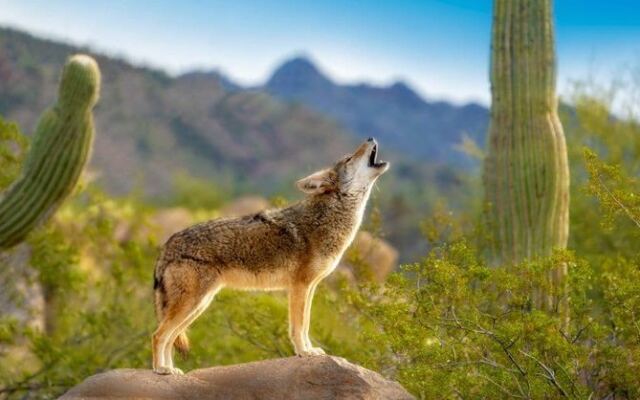
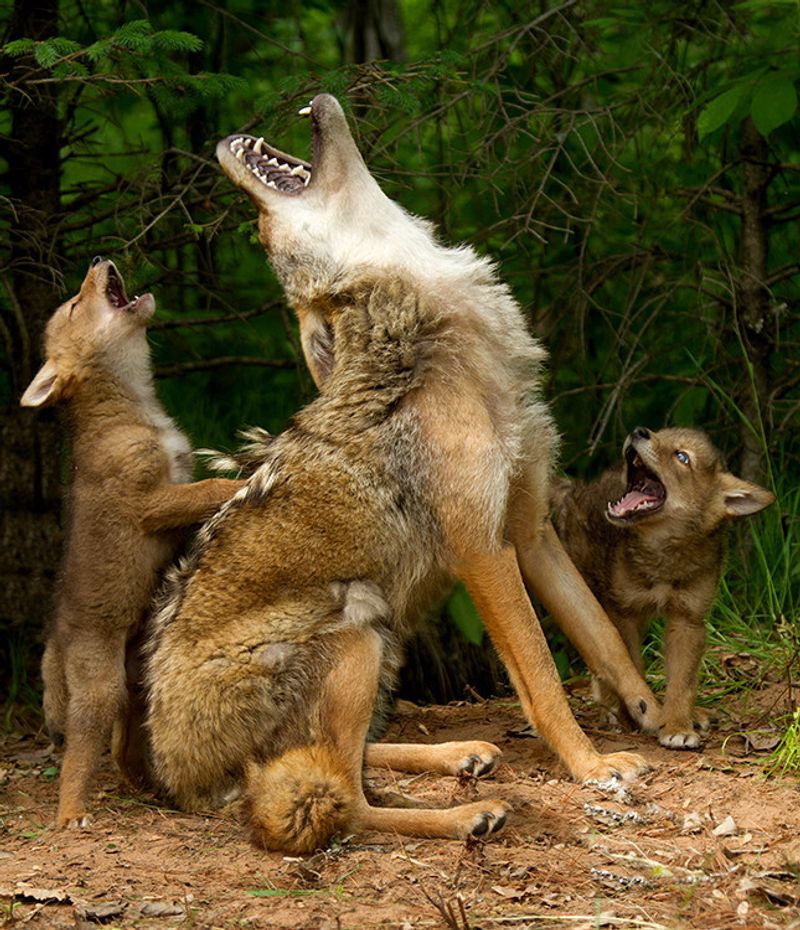
Coyotes howl and yip to communicate. Those calls can help maintain territory and spacing between groups, and Texas Parks and Wildlife Department also describes howls as a way coyotes keep in touch with each other.

So when a chorus rises near your fence line, you are hearing animals share information about where they are.

“Contact call” is a handy shorthand for that. It captures the idea that howls help coyotes locate one another across open ground, whether that is a pasture, a creek bottom, or the edge of a subdivision.

You may also hear the phrase “family check-in.” That is a simplified gloss, a friendly way to picture the behavior, and not a proven reading of any specific chorus you happen to hear. Nobody listening from a back porch can tell for sure whether a given set of calls is a greeting, a reply, or something else.

Researchers have tied howling mostly to territorial spacing. In a Yellowstone study of howling, the authors linked the behavior chiefly to how coyotes space themselves out.

That gives us a solid general idea of what calls do.

What the sound alone cannot reveal is which animals are calling, how old they are, or exactly why they started. Think of a howl as a signal with a purpose, not a sentence you can translate word for word.

A chorus can sound bigger than it is
A chorus can sound bigger than it is
© Cornell Wildlife Health Lab – Cornell University

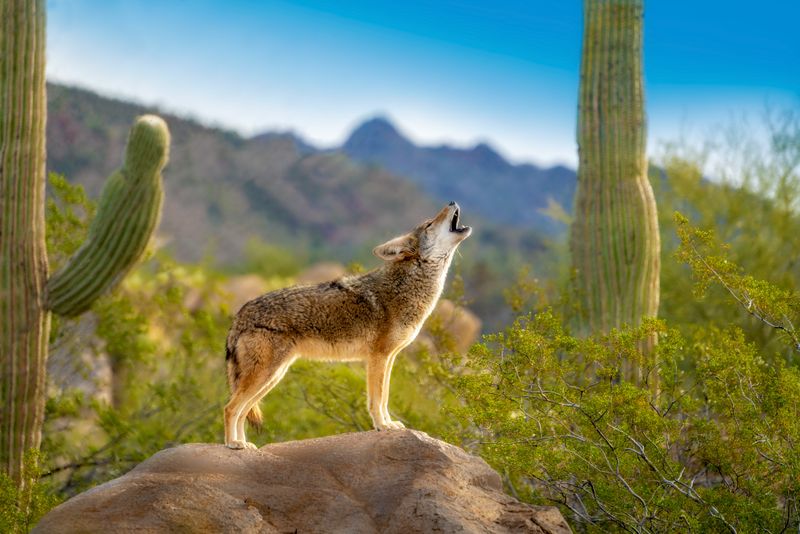
Ever heard a burst of yips and been sure a whole pack was circling the house? Your ears may be fooling you.

In a southern Texas study, 427 listeners generally overestimated how many coyotes they heard in recordings, by nearly twofold on average.

TPWD says they generally breed from mid-January to early March, with pups born after a gestation of about 63 to 65 days.

The recordings featured one to four coyotes, and the listeners came from southern Texas. Even so, many people guessed far too high.

Coyote voices are quick, high, and layered, and they bounce off buildings, trees, and hills, so a few animals can sound like a crowd.

What does that mean for you? It is a reason to be cautious about assuming a chorus means many coyotes are close by.

A small group, or even a pair, can make a surprising amount of noise.

The study does not hand you a formula for counting coyotes in your own neighborhood. Nobody can divide what they hear by two and get a trustworthy number.

Treat any headcount made by ear as a rough impression, not a fact.

If you really want to know what is around, a trail camera aimed at your yard edge will tell you more than your ears can.

Nighttime activity is common across Texas
Nighttime activity is common across Texas
© Chron

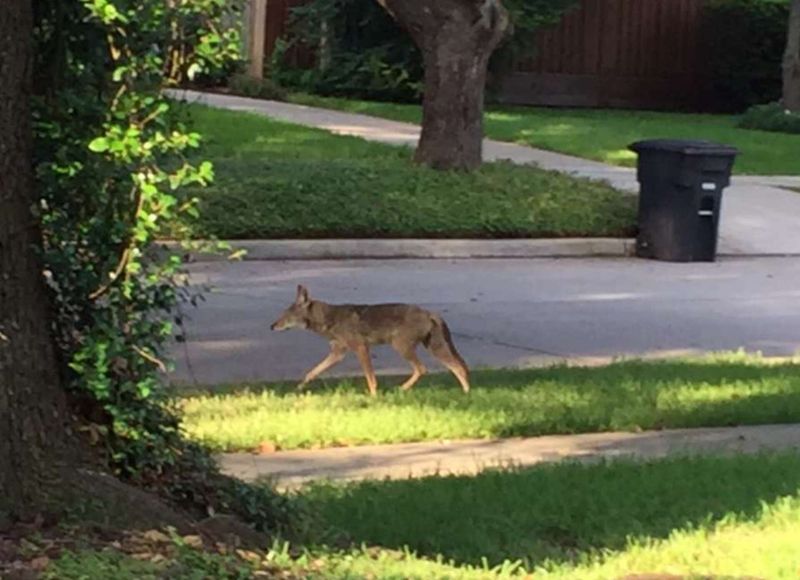
Coyotes live throughout Texas, from brush country and Hill Country ranches to the edges of Dallas, Houston, and San Antonio. According to Texas Parks and Wildlife, they can also live in urban and suburban neighborhoods.

That means a coyote might be closer to your cul-de-sac than you ever guessed.

They may be active at any hour of the day. Nighttime activity is common, though, which is why most people hear them once the sun is down and the neighborhood has gone quiet.

Quiet is a big part of it. Traffic, lawn mowers, and barking dogs drown out calls during the day, while a still night carries sound a long way.

A howl at midnight may simply be easier to hear than one at noon.

So an after-dark chorus is a normal part of sharing Texas with wildlife. The hour on the clock does not tell you the coyotes are up to something, and it does not reveal what set off that particular round of calls.

If you want a practical clue, notice patterns over several nights. Calls that come and go from the same direction suggest animals using a regular route, and that is ordinary coyote life.

Seasons add context, not a translation
Seasons add context, not a translation
© Farm and Dairy

Texas has a usual breeding window for coyotes. TPWD says they generally breed from mid-January to early March, with pups born after a gestation of about 63 to 65 days.

Late November is not Texas mating season, so a howl you hear then has some other cause.

In fact, the calendar alone cannot explain why coyotes called on any one night. Breeding, territory, and simple contact between animals could all play a part, and you cannot tell which from your porch.

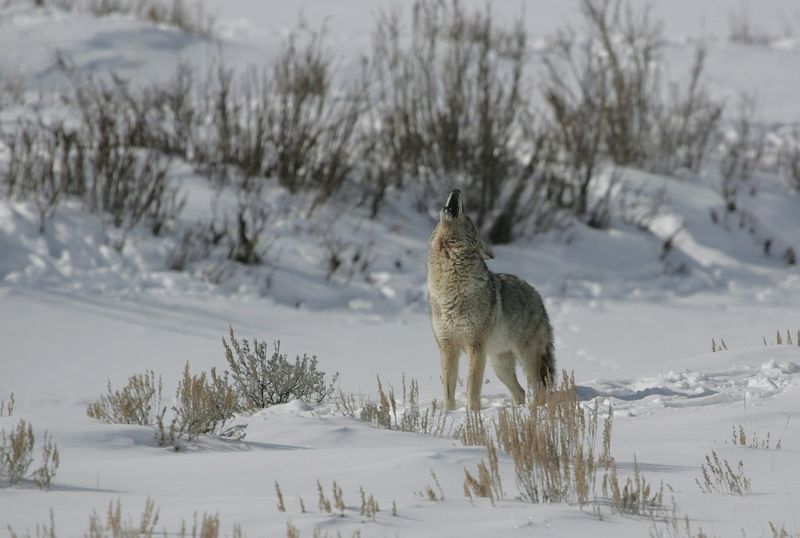
Researchers in Yellowstone looked at howling across the year. In that study, resident coyotes howled most during dispersal and breeding seasons and least during pup-rearing.

Those results describe the Yellowstone population that was studied. They are not a forecast for Texas, where climate, habitat, and neighborhoods look very different.

And nothing here says pup-rearing makes Texas coyotes howl more.

The useful takeaway is simple. Seasons can shape coyote behavior, but they will not translate a specific chorus for you.

If you hear more calls in winter, that fits the general picture of an active season, yet it is not a message with a fixed meaning.

Make your yard less inviting
Make your yard less inviting
© A-Z Animals

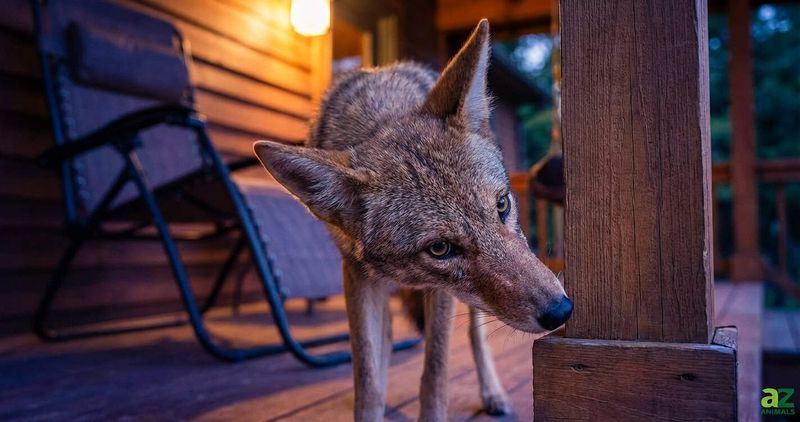
A midnight chorus alone does not show that coyotes are hunting, have made a kill, or threaten people. Most of the time it is just noise carrying across the dark.

Still, it is a good reminder to make your property boring to wildlife.

The goal is to remove easy meals. TPWD’s urban coyote guidance says not to feed coyotes, and to secure trash and pet food.

It also suggests cleaning up fallen fruit and spilled birdseed.

Here is a quick walk-around checklist:

Put trash cans in a garage or use tight lids. Bring pet bowls inside after meals.

Rake up pecans, peaches, or figs that drop from trees. Sweep up seed that scatters beneath feeders.

Pets deserve extra thought. Keep them indoors when possible, or go outside with them and keep them on a leash.

Small dogs and cats are the most at risk when they roam alone after dark.

Do these things and your yard becomes a place coyotes pass by, not a place they linger.

If a coyote comes close, keep your distance
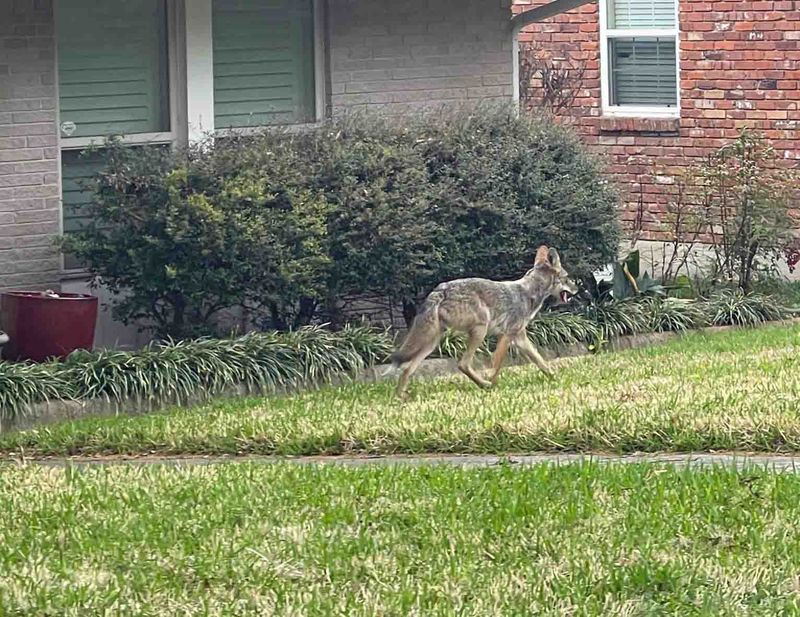
If a coyote comes close, keep your distance
© Lake Highlands Advocate – Advocate Magazine

Hearing a faraway chorus is one thing. Seeing a coyote close to you or your pets is another, and it calls for action.

Never approach, corner, feed, or try to handle one.

TPWD advises making noise or using other scaring devices if a coyote comes close. Its urban coyote page lists these steps.

Clapping, shouting, and banging pots are simple ways to start, and keep pets close while you do it.

Reporting rules differ from place to place, so treat any example as local. Dallas’s coyote plan points residents to local guidance for sightings and concerning behavior, and says to stop hazing and report it if the animal does not retreat.

Houston works differently. Houston BARC says it does not respond to ordinary wild-animal sightings outside living areas.

Neither city’s process is statewide policy. Check your own city or county website for current instructions, and save the number before you need it.

The night sounds will keep coming, and now you can listen with curiosity instead of worry.

Share this story
RC

Written by

Ruby Castillo

More from Ruby Castillo →

About Gardening Latest

Gardening Latest provides in-depth guides to maintaining and enhancing your garden and backyard. Learn how to make the most of the space you have and create a beautiful garden.

More about us →

Latest stories

  • Missouri GardeningIf Your Missouri Woodpile Sits Against the House, You’re Inviting Brown Recluses Indoors This Winter

    If Your Missouri Woodpile Sits Against the House, You’re Inviting Brown Recluses Indoors This Winter

    4 min ago
  • Tennessee GardeningBefore You Dig In, Here’s How To Recognize Every Venomous Creature Sharing Your Tennessee Yard

    Before You Dig In, Here’s How To Recognize Every Venomous Creature Sharing Your Tennessee Yard

    10 min ago
  • Alabama GardeningThat Burning Saddleback Caterpillar Sting in Your Alabama Garden Calls for These Steps Right Away

    That Burning Saddleback Caterpillar Sting in Your Alabama Garden Calls for These Steps Right Away

    16 min ago
  • Minnesota GardeningBefore You Pick Up That Big Black Caterpillar With White Spots In Minnesota, Read This

    Before You Pick Up That Big Black Caterpillar With White Spots In Minnesota, Read This

    22 min ago
  • Illinois GardeningDeer Are Rubbing Their Antlers on Your Illinois Saplings Right Now, and Here’s How to Save Them

    Deer Are Rubbing Their Antlers on Your Illinois Saplings Right Now, and Here’s How to Save Them

    28 min ago

Gardening by state

Stories for your state, and the hardiness zone most of it gardens in.

Keep exploring

Read next

All Texas Gardening →
Texas GardeningYes, Texas Really Has a Venomous Mammal, and This Sub-Ounce Shrew Hunts in Garden Beds
Texas Gardening

Yes, Texas Really Has a Venomous Mammal, and This Sub-Ounce Shrew Hunts in Garden Beds

2 hr ago
Texas GardeningHere’s How To Recognize The Scorpions, Snakes, And Spiders That Carry Venom In Texas Yards
Texas Gardening

Here’s How To Recognize The Scorpions, Snakes, And Spiders That Carry Venom In Texas Yards

5 hr ago
Texas GardeningTexans, Here’s What A Daily Serving Of Celery Is Really Doing For Your Body
Texas Gardening

Texans, Here’s What A Daily Serving Of Celery Is Really Doing For Your Body

23 hr ago

More from Texas Gardening

  • Before You Cut That Tall Flower Stalk Off Your Texas Cilantro, Here’s What It Actually Means

    Nov 27
  • No Permission Needed: Texas Homeowners Trim a Neighbor’s Overhanging Branches Right Up to the Property Line

    Nov 26
Back to top

Leave a response Cancel

Your email address stays private. Required fields are marked with an asterisk.

Gardening Latest

In-depth guides to maintaining and enhancing your garden and backyard: how to make the most of the space you have, and how to make it beautiful.

  • Facebook
  • X
  • Pinterest
  • YouTube

We may earn a portion of sales from products or services that are purchased through our site as part of our affiliate partnerships with retailers.

Explore

  • About GardeningLatest.com
  • Contact Us
  • Terms and Conditions
  • Privacy
  • Editorial Note:
  • FTC Disclosure

Newsletter

New garden guides and seasonal tips, straight to your inbox.

We’ll email you a link to confirm. Unsubscribe any time.

Almost there! Check your inbox and tap the link to confirm.

© 2026 Gardening Latest. All rights reserved.

Back to top