Coyotes howl and yip to talk to each other, and in Texas those calls often help them keep their space and stay in touch. The wild chorus outside your window can sound spooky, but it is mostly neighbors of the four-legged kind making their presence known.
Knowing what the sounds can and cannot tell you makes those late nights a lot less mysterious. Here is what the calls mean, what they do not mean, and what to do around your home.
Coyote calls carry information, not a sentence
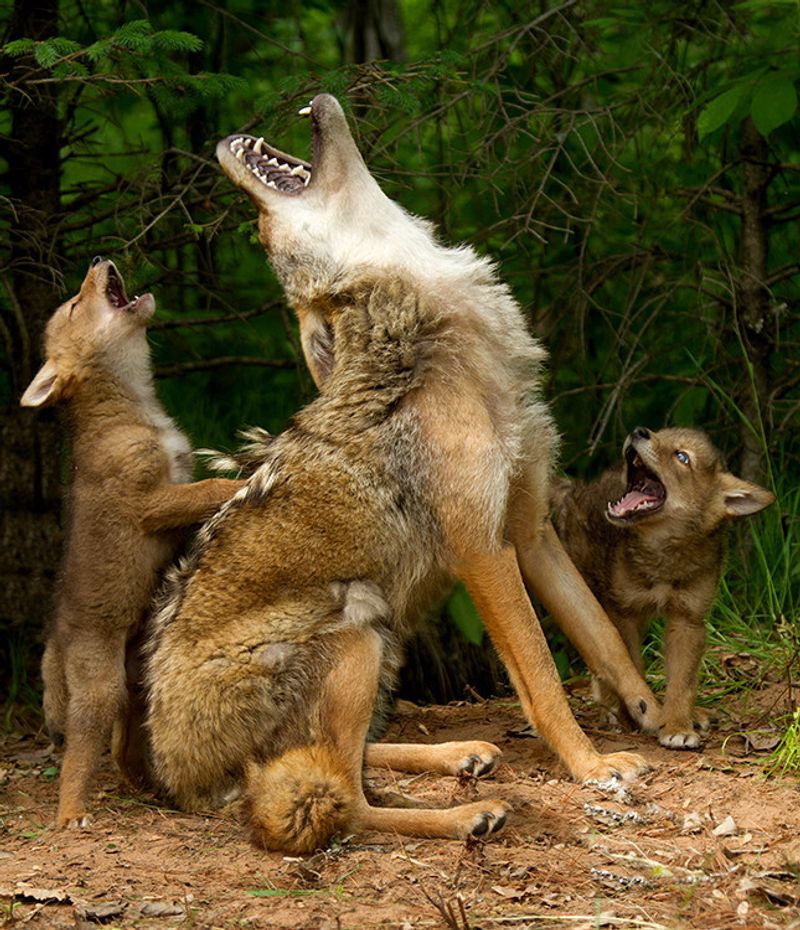
Coyotes howl and yip to communicate. Those calls can help maintain territory and spacing between groups, and Texas Parks and Wildlife Department also describes howls as a way coyotes keep in touch with each other.
So when a chorus rises near your fence line, you are hearing animals share information about where they are.
“Contact call” is a handy shorthand for that. It captures the idea that howls help coyotes locate one another across open ground, whether that is a pasture, a creek bottom, or the edge of a subdivision.
You may also hear the phrase “family check-in.” That is a simplified gloss, a friendly way to picture the behavior, and not a proven reading of any specific chorus you happen to hear. Nobody listening from a back porch can tell for sure whether a given set of calls is a greeting, a reply, or something else.
Researchers have tied howling mostly to territorial spacing. In a Yellowstone study of howling, the authors linked the behavior chiefly to how coyotes space themselves out.
That gives us a solid general idea of what calls do.
What the sound alone cannot reveal is which animals are calling, how old they are, or exactly why they started. Think of a howl as a signal with a purpose, not a sentence you can translate word for word.
A chorus can sound bigger than it is
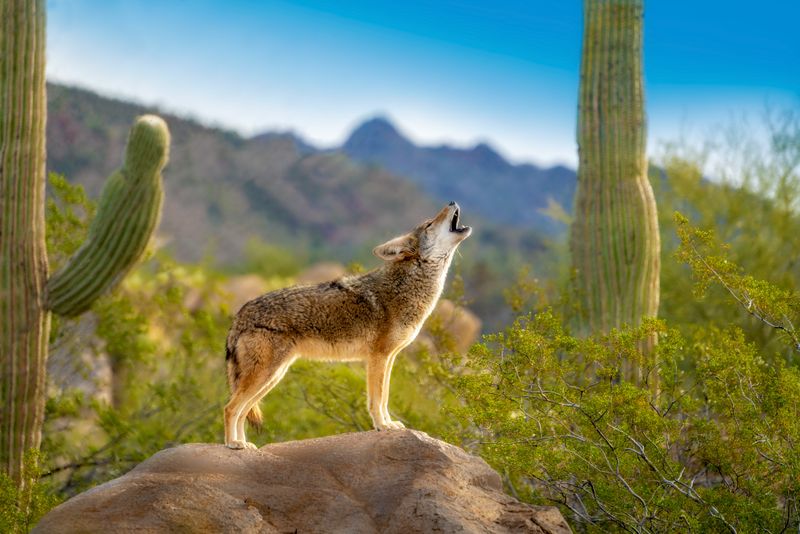
Ever heard a burst of yips and been sure a whole pack was circling the house? Your ears may be fooling you.
In a southern Texas study, 427 listeners generally overestimated how many coyotes they heard in recordings, by nearly twofold on average.
The recordings featured one to four coyotes, and the listeners came from southern Texas. Even so, many people guessed far too high.
Coyote voices are quick, high, and layered, and they bounce off buildings, trees, and hills, so a few animals can sound like a crowd.
What does that mean for you? It is a reason to be cautious about assuming a chorus means many coyotes are close by.
A small group, or even a pair, can make a surprising amount of noise.
The study does not hand you a formula for counting coyotes in your own neighborhood. Nobody can divide what they hear by two and get a trustworthy number.
Treat any headcount made by ear as a rough impression, not a fact.
If you really want to know what is around, a trail camera aimed at your yard edge will tell you more than your ears can.
Nighttime activity is common across Texas
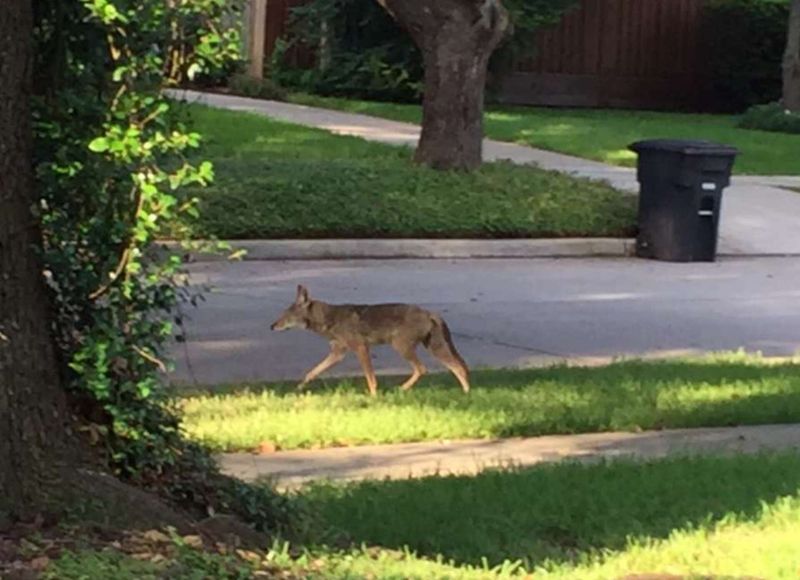
Coyotes live throughout Texas, from brush country and Hill Country ranches to the edges of Dallas, Houston, and San Antonio. According to Texas Parks and Wildlife, they can also live in urban and suburban neighborhoods.
That means a coyote might be closer to your cul-de-sac than you ever guessed.
They may be active at any hour of the day. Nighttime activity is common, though, which is why most people hear them once the sun is down and the neighborhood has gone quiet.
Quiet is a big part of it. Traffic, lawn mowers, and barking dogs drown out calls during the day, while a still night carries sound a long way.
A howl at midnight may simply be easier to hear than one at noon.
So an after-dark chorus is a normal part of sharing Texas with wildlife. The hour on the clock does not tell you the coyotes are up to something, and it does not reveal what set off that particular round of calls.
If you want a practical clue, notice patterns over several nights. Calls that come and go from the same direction suggest animals using a regular route, and that is ordinary coyote life.
Seasons add context, not a translation
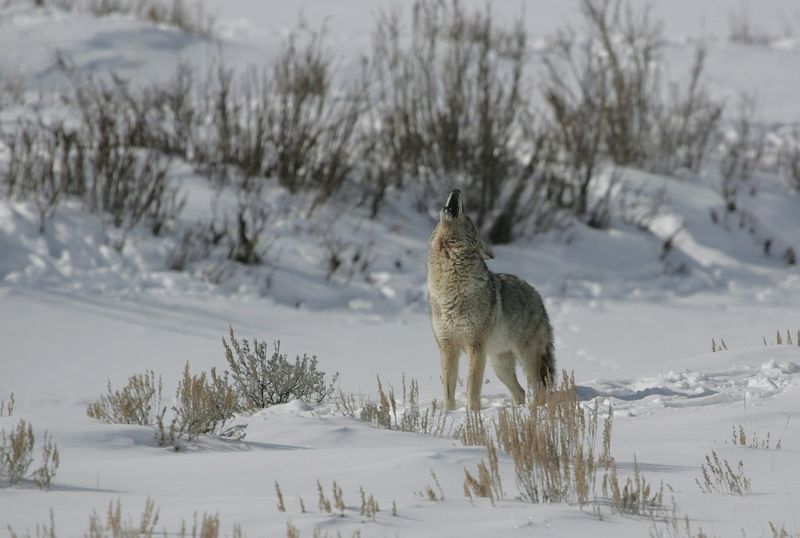
Texas has a usual breeding window for coyotes. TPWD says they generally breed from mid-January to early March, with pups born after a gestation of about 63 to 65 days.
Late November is not Texas mating season, so a howl you hear then has some other cause.
In fact, the calendar alone cannot explain why coyotes called on any one night. Breeding, territory, and simple contact between animals could all play a part, and you cannot tell which from your porch.
Researchers in Yellowstone looked at howling across the year. In that study, resident coyotes howled most during dispersal and breeding seasons and least during pup-rearing.
Those results describe the Yellowstone population that was studied. They are not a forecast for Texas, where climate, habitat, and neighborhoods look very different.
And nothing here says pup-rearing makes Texas coyotes howl more.
The useful takeaway is simple. Seasons can shape coyote behavior, but they will not translate a specific chorus for you.
If you hear more calls in winter, that fits the general picture of an active season, yet it is not a message with a fixed meaning.
Make your yard less inviting
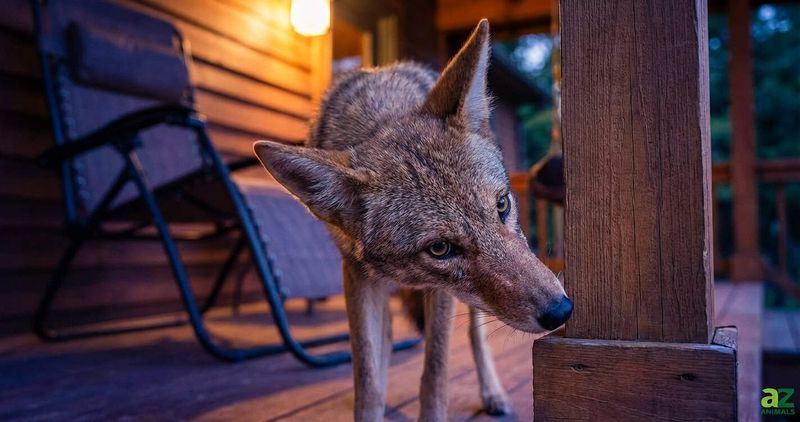
A midnight chorus alone does not show that coyotes are hunting, have made a kill, or threaten people. Most of the time it is just noise carrying across the dark.
Still, it is a good reminder to make your property boring to wildlife.
The goal is to remove easy meals. TPWD’s urban coyote guidance says not to feed coyotes, and to secure trash and pet food.
It also suggests cleaning up fallen fruit and spilled birdseed.
Here is a quick walk-around checklist:
Put trash cans in a garage or use tight lids. Bring pet bowls inside after meals.
Rake up pecans, peaches, or figs that drop from trees. Sweep up seed that scatters beneath feeders.
Pets deserve extra thought. Keep them indoors when possible, or go outside with them and keep them on a leash.
Small dogs and cats are the most at risk when they roam alone after dark.
Do these things and your yard becomes a place coyotes pass by, not a place they linger.
If a coyote comes close, keep your distance
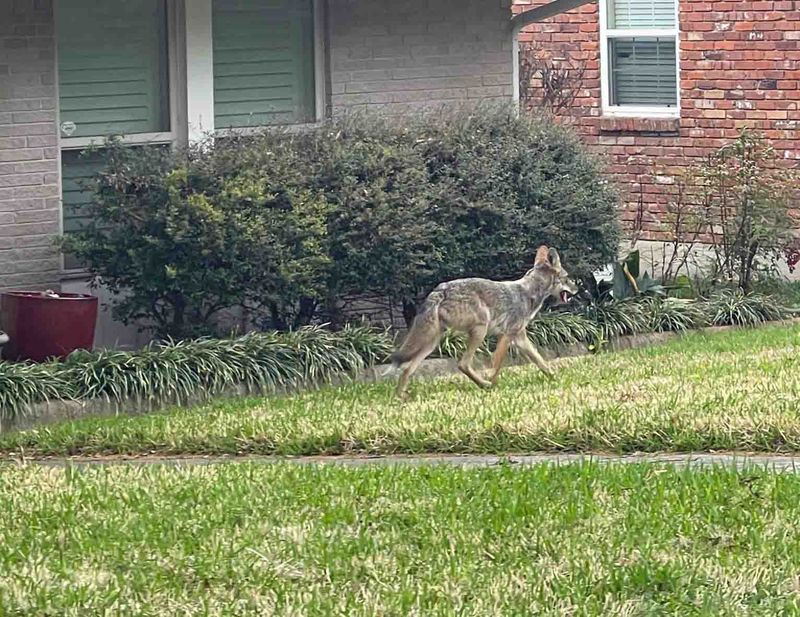
Hearing a faraway chorus is one thing. Seeing a coyote close to you or your pets is another, and it calls for action.
Never approach, corner, feed, or try to handle one.
TPWD advises making noise or using other scaring devices if a coyote comes close. Its urban coyote page lists these steps.
Clapping, shouting, and banging pots are simple ways to start, and keep pets close while you do it.
Reporting rules differ from place to place, so treat any example as local. Dallas’s coyote plan points residents to local guidance for sightings and concerning behavior, and says to stop hazing and report it if the animal does not retreat.
Houston works differently. Houston BARC says it does not respond to ordinary wild-animal sightings outside living areas.
Neither city’s process is statewide policy. Check your own city or county website for current instructions, and save the number before you need it.
The night sounds will keep coming, and now you can listen with curiosity instead of worry.
Share this story