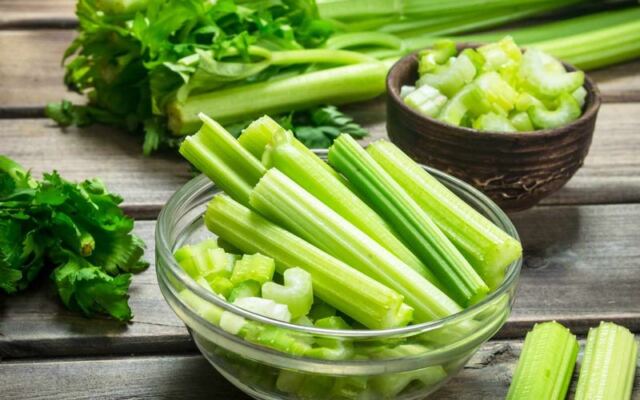
A daily stalk of celery does something useful: it gives you a crunchy, low-calorie vegetable with plenty of water and a little fiber. That may sound modest, but easy habits are the ones people actually keep.
Celery gets big claims online, so it helps to know what it really offers and what it does not. Here is a plain look at what daily celery can do for you.
Celery’s everyday contribution is small but concrete
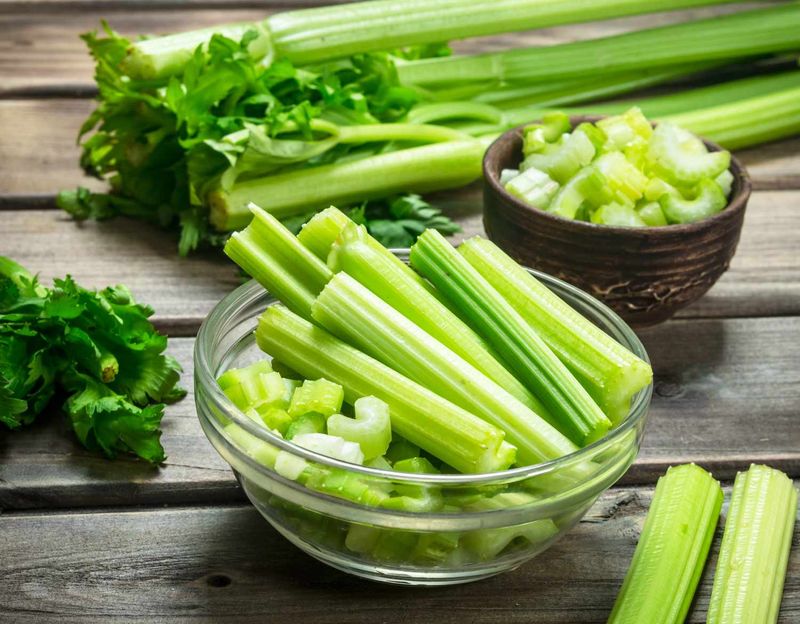
Start with the numbers. According to USDA’s nutrient database entry for raw celery, 100 grams (a bit less than one large stalk and a half) has about 16 calories.
It also holds roughly 95 grams of water, 1.6 grams of dietary fiber, 260 mg of potassium, and 80 mg of sodium.
Put plainly, celery is mostly water with a light sprinkle of other nutrients. You get a lot of crunch and volume for very few calories.
That makes it an easy snack when you want something to chew on between meals.
Keep in mind that these are approximate food-composition values. They describe what is in the vegetable.
They are not proof that eating it will lead to any particular health outcome, and the exact amounts shift a bit from stalk to stalk.
The fiber is modest, not huge. The potassium is a small contribution, and the sodium is naturally present, so celery is not a salty food on its own.
Whatever you spread or dip it in will change that picture quickly.
So what does a daily habit give you? A convenient, cheap, low-calorie vegetable that takes almost no prep.
That is a real, concrete contribution, even if it is a quiet one.
How celery can count toward your vegetables
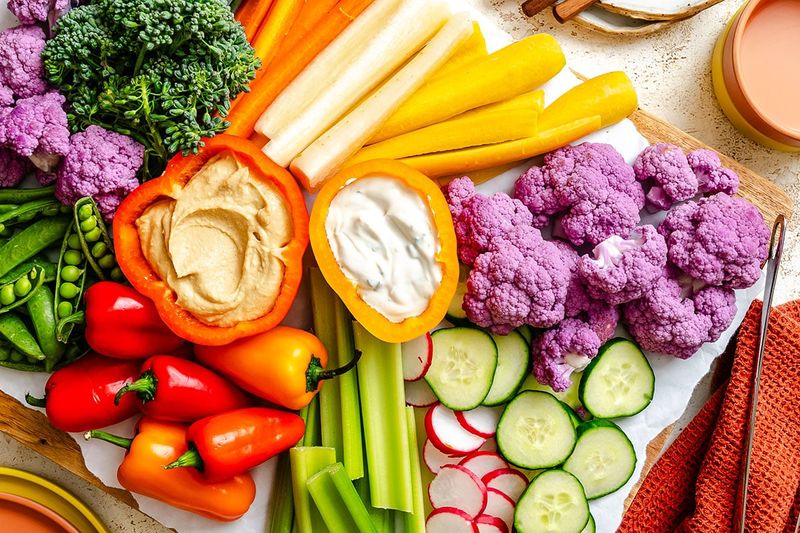
Vegetable advice comes down to cups. The federal serving-size chart counts a vegetable serving as 1 cup raw or cooked.
Its 2,000-calorie pattern calls for 3 vegetable servings a day, and your own needs may be higher or lower.
Celery can chip in toward that total. A cup of chopped celery in a salad, a soup, or a stir-fry is a cup of vegetable on your plate.
Sliced sticks with lunch work too.
Still, celery is one player on a big team. The Dietary Guidelines for Americans for 2025 to 2030 call for a variety of vegetables and fruits, and they do not single out celery.
Different vegetables bring different nutrients, colors, and textures.
Picture a week of dinners. Celery might show up in a chicken soup on Monday, with peanut butter on Wednesday, and in a tuna salad on Friday.
Around it, you add leafy greens, beans, carrots, tomatoes, and whatever is in season.
That is the sensible way to use it. Let celery fill part of your daily vegetable amount, and let other vegetables fill the rest.
Relying on celery alone would leave gaps that variety easily covers.
Whole celery and celery juice differ
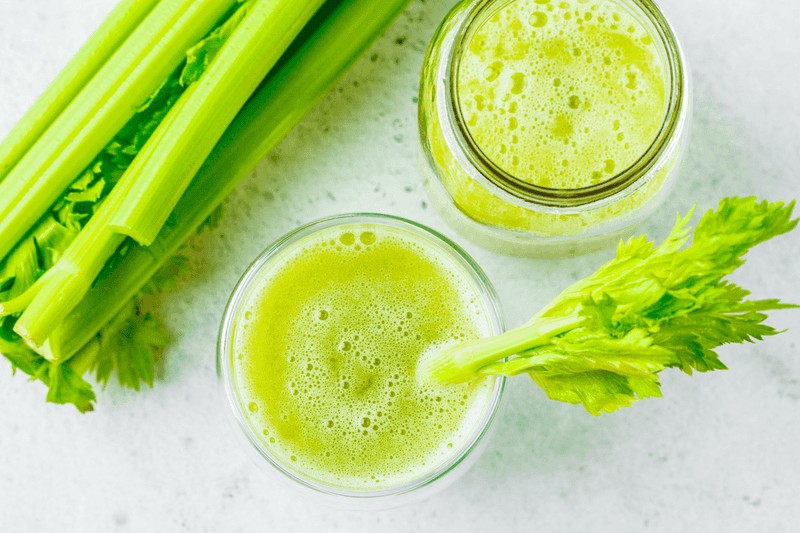
Chewing a stalk and drinking a glass of juice are not the same thing. When celery is juiced and strained, much of the fiber is removed, according to Oregon State University Extension.
What is left is mostly the liquid.
That matters because fiber is one of the few things celery offers in a meaningful amount. Juice cannot be called equivalent to whole celery on that count.
A glass of strained juice simply does not deliver what the stalk does.
Federal guidance leans the same direction. The current Dietary Guidelines favor whole vegetables in their original form.
They advise keeping 100% vegetable juice to limited portions or diluting it with water.
In practice, that makes whole celery the easier everyday choice. You can eat it raw, toss it into soup, or cook it with onions and carrots.
It also takes longer to eat, which many people find more filling than a drink.
None of this makes juice harmful or magical. If you enjoy a small glass now and then, that is fine.
Just do not expect it to stand in for the whole vegetable, and do not assign it health powers that nobody has shown.
What celery trials can—and cannot—show
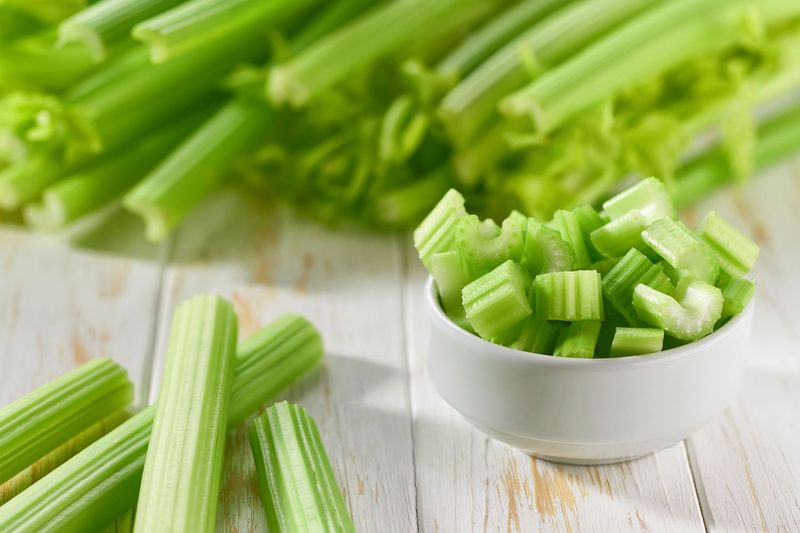
A 2025 systematic review gathered what clinical trials exist on celery. The review in PMC covered nine randomized trials with 511 people.
It found possible improvements in blood pressure and some metabolic measures.
Now the fine print, which matters a lot. The trials did not test whether eating an ordinary stalk every day lowers blood pressure.
They used different celery preparations, including capsules and decoctions (a kind of boiled-down extract), and the participants had specific health conditions.
The evidence base is also small and short. The trials were generally small and brief, and their results varied a great deal from one to the next.
The authors themselves called for better, longer trials.
That means the findings are a hint, not a proof. They do not show that celery prevents or treats any disease.
They also do not suggest that celery should replace prescribed care, so keep taking any medicine your clinician has given you.
One more detail keeps hopes in check. The review found no overall effect on total, LDL, or HDL cholesterol.
So celery is not a cholesterol fix either.
If you see a headline saying celery lowers blood pressure, picture the capsules and the small trials behind it. A daily stalk may still be a fine vegetable choice, but it has not been shown to do that job.
Detox and digestion claims go beyond the evidence
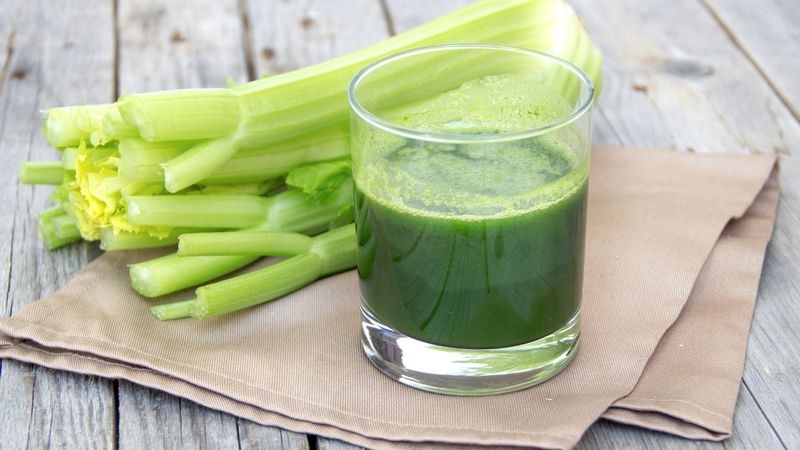
Celery juice has picked up a long list of promises online. Drink it first thing on an empty stomach, the story goes, and bloating fades, digestion improves, and acne clears.
Oregon State University Extension looked at these claims and said they have not been demonstrated.
The same goes for the idea that you must drink it on an empty stomach. No studies back that rule.
Drinking it at lunch works just as well, which is to say, no one has shown that timing matters.
It is easy to see why the claims spread. Celery really is watery and has some fiber, and those facts sound health-related.
But being watery and fibrous is a nutritional property, not evidence of a cleanse.
Your liver and kidneys already handle the body’s cleanup work, and no study shows celery speeds that up. The water in celery also counts toward your fluids, but it gives no special edge over drinking regular water and eating a balanced diet.
If bloating, digestive trouble, or skin problems bother you, a clinician can look for real causes. A celery habit can sit alongside that care.
It just should not replace it.
Wash celery and take allergies seriously
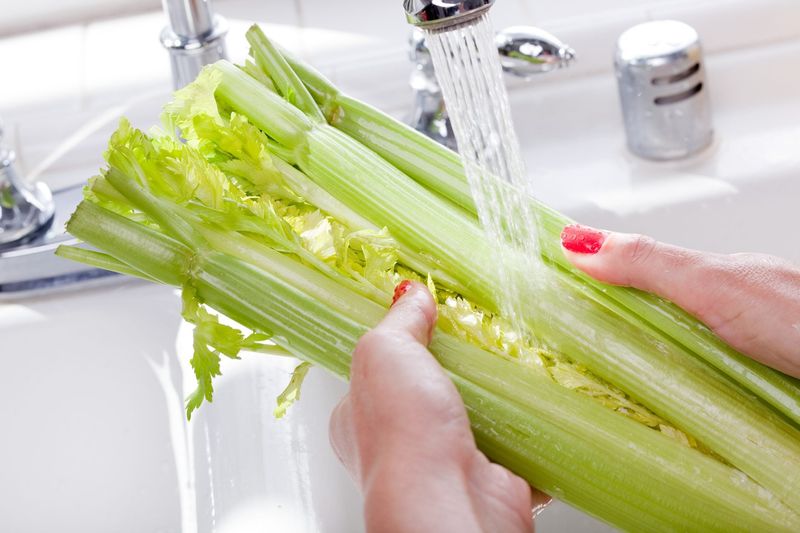
Prep is simple. The FDA advises washing produce under running water before you prepare or eat it.
Skip the soap, detergent, and commercial produce wash.
For celery, separate the stalks and rub them under the tap, paying attention to the base where dirt hides. Dry them with a clean towel or paper towel.
Then trim and slice as you like.
There is one real caution. Celery allergy is documented, and reactions can be serious.
A clinical food-challenge study confirmed celery allergy in some participants who had a history of reactions.
That does not make celery risky for most people. It simply means anyone who knows they react to celery should avoid it, and daily celery is not a good idea for them.
If you have had itching, swelling, hives, or trouble breathing after eating it, talk with an allergist.
For everyone else, a quick rinse and a sharp knife are about all you need.
Make celery one part of a varied diet
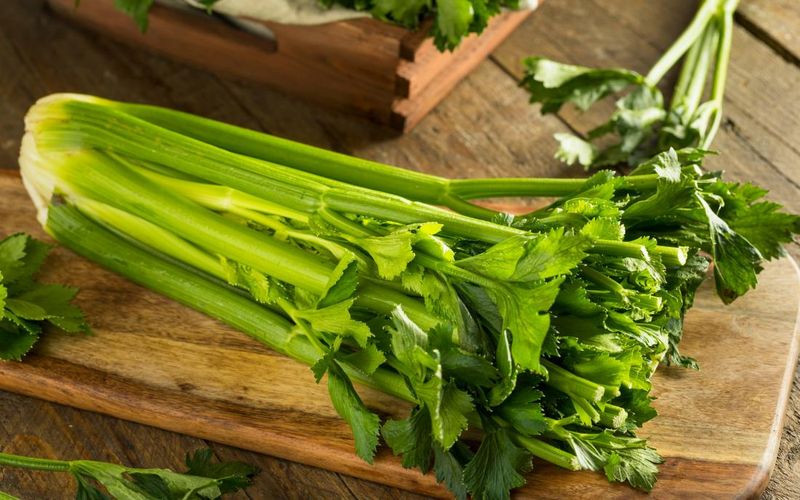
Think of celery as a handy helper. It makes eating a vegetable easy, and it adds water and a little fiber for few calories, as USDA food data shows.
It is food, not a treatment.
Pair it with beans, greens, and colorful produce, in line with federal guidance on variety. A crunchy stalk is a fine daily habit, just one among many.
Share this story