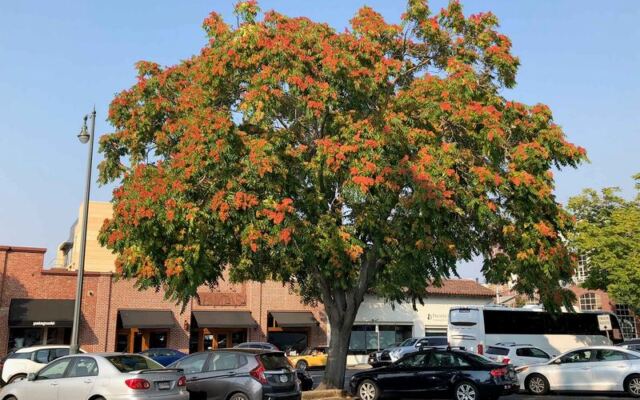
Tree-of-heaven can keep sending up new shoots in New York sidewalk cracks and yards, even after you pull them out. The reason is often hidden underground, where established roots can feed shoots that seem to appear out of nowhere.
Not every sprout is a stubborn one, though, and the difference matters for what you do next. Knowing what you are looking at can save you a lot of pulling.
What might be growing through the crack?
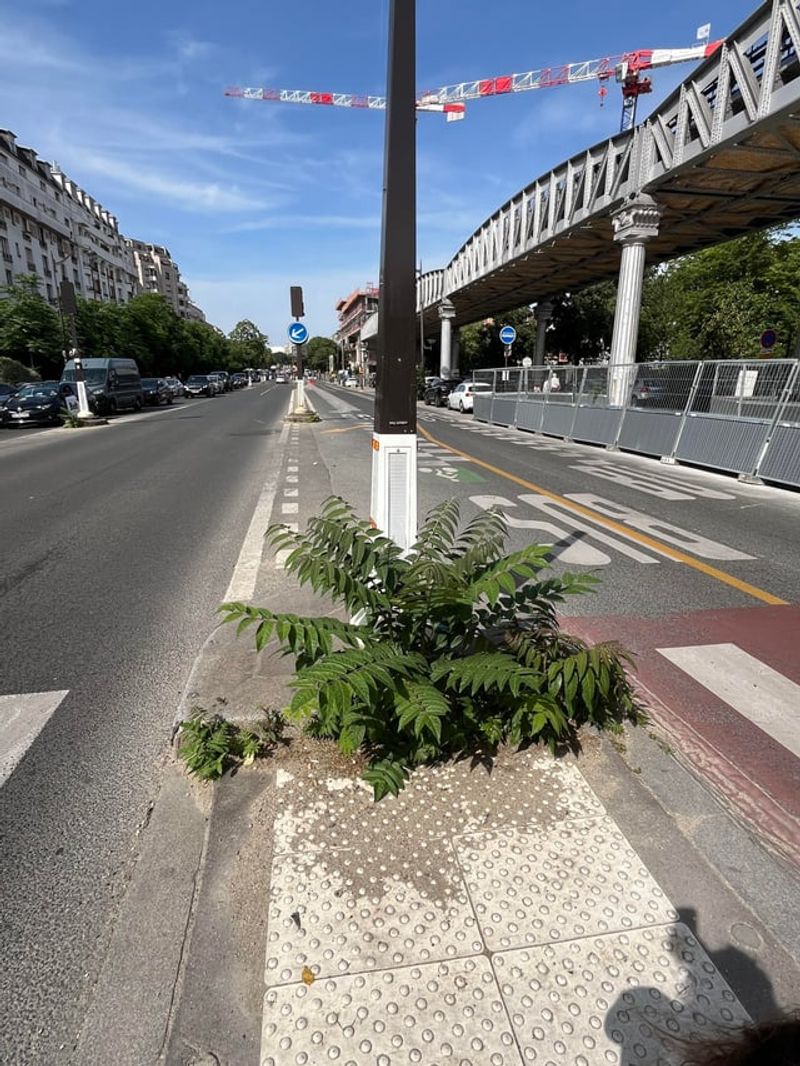
A green shoot in a sidewalk crack could be tree-of-heaven (Ailanthus altissima), but the location alone does not prove it. Many plants can take hold in pavement gaps, so it pays to look closely before you decide what to do.
Start with the leaves. Tree-of-heaven has large compound leaves, meaning each leaf is made of many smaller leaflets arranged along a central stalk.
Near the base of each leaflet you may see a few small glandular teeth, a clue described in a USDA Natural Resources Conservation Service factsheet. Crushed leaves also give off an unpleasant odor, which can help you tell it apart from some other plants.
Lookalikes are common in New York. Native sumacs and walnuts also have long compound leaves, and the Adirondack Park Invasive Plant Program lists them as plants that can be confused with tree-of-heaven.
Because of that, confirm the identification before you remove or treat anything. A photo sent to your local Cooperative Extension office is a good way to check.
Once you are fairly sure of the plant, a second question matters just as much. Is this a small seedling that sprouted on its own, or a shoot connected to an established root system?
The answer shapes everything that follows, from how hard it will be to pull to how likely it is to come back.
Roots can send shoots beyond the trunk
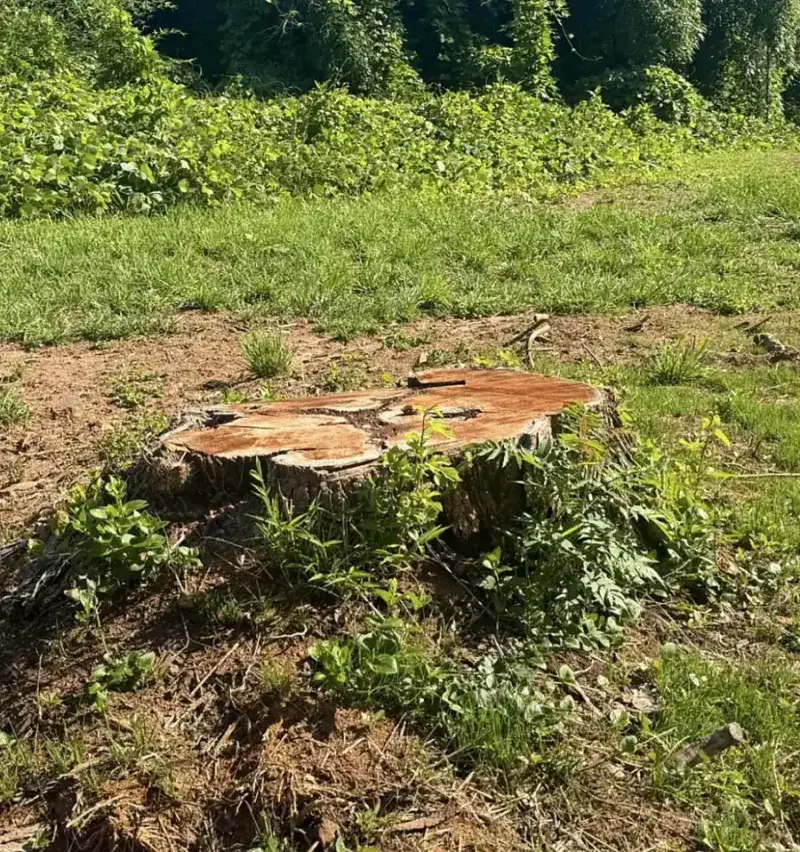
Tree-of-heaven does not only grow from seed. Its roots can send up new shoots, called root suckers, some distance from an established tree.
That is how a shoot can show up in a sidewalk crack or the middle of a lawn where no trunk is standing.
Reports say root suckers may emerge up to 50 feet from a parent tree, as noted in the USDA factsheet. Think of that number as the possible reach, not what every tree does.
Many trees send shoots far shorter distances, and some may send very few.
Where a shoot sits also does not prove which tree it belongs to. A sprout near your fence may connect to a tree next door, to a tree across the street, to an old stump, or to nothing at all if it grew from a seed.
From the surface, there is often no obvious parent.
That uncertainty is why growth form matters. Penn State Extension and Cornell Cooperative Extension guidance separates seedlings from root suckers when it discusses control.
A gentle tug and a quick look at what comes out of the soil can tell you a lot about what you are dealing with.
A seedling is different from a root sucker
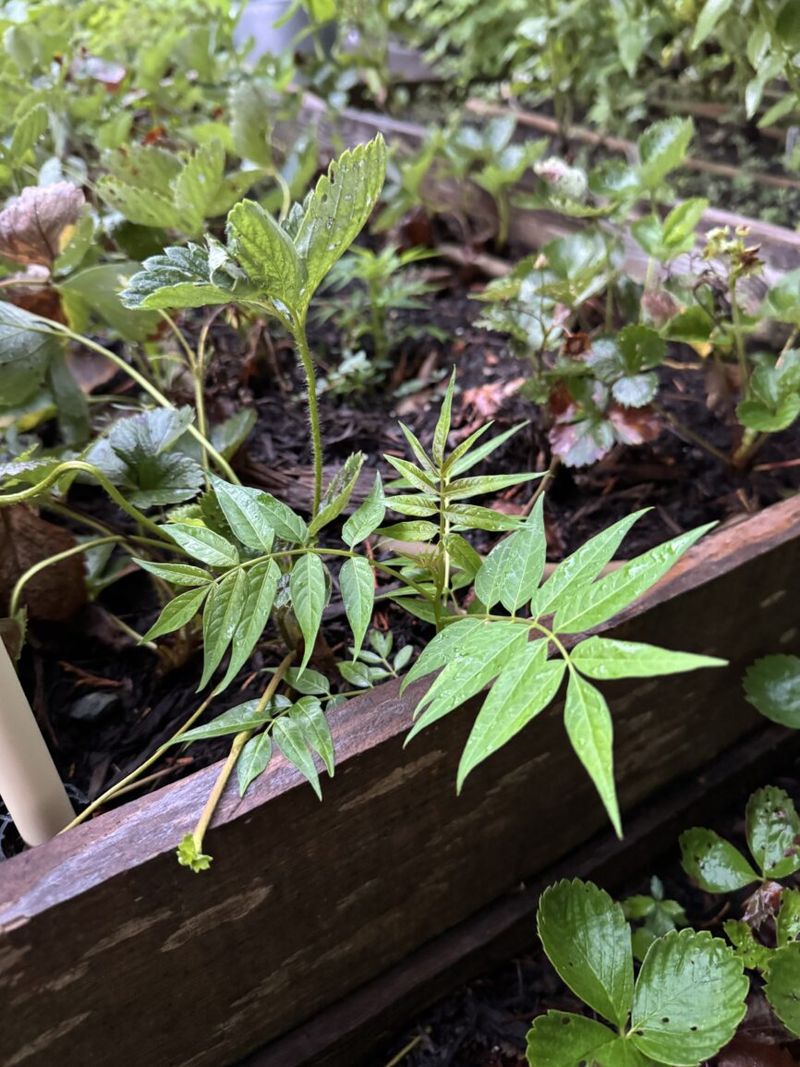
Two sprouts can look nearly identical above ground and still be very different below it. A seedling grew from a seed and has its own small root.
A root sucker is a shoot attached to the root of an established plant.
For a small, independent seedling, hand removal can work. The Adirondack Park Invasive Plant Program advises pulling or digging small seedlings when the soil is moist, taking care to get the whole root.
Moist soil lets the root slide out more intact, so a day after rain is a good time.
A shoot connected to an established root system is another matter. It may resist your pull because it is anchored to a larger root running through the soil.
If it snaps off or only a piece comes up, the rest of that root system stays in the ground.
Leftover root fragments can also resprout, even on a seedling. So after pulling, check the root you removed.
A clean, thin root that came out whole is a good sign, while a broken root or a long root running sideways suggests you may be dealing with something bigger.
The concern with established plants, described in the Cornell and Penn State guidance, is that injuring them can provoke new growth. Careful seedling removal is a different situation.
Why cutting alone often fails
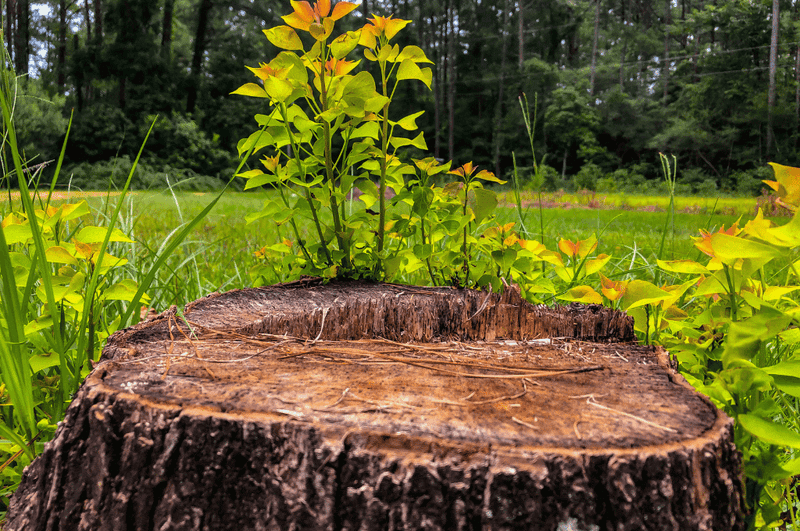
Cutting feels decisive, but with an established tree-of-heaven the plant can regrow from the stump and from its roots. Mowing works the same way, since it removes the top growth and leaves the roots alone.
Sprouts often follow.
Cutting or injuring an established plant can also provoke more shoots, as Adirondack invasive plant guidance explains. The plant still has energy stored below ground, and it uses that to push up new growth.
That is quite different from yanking a small seedling that has no large root system behind it.
Picture a homeowner who keeps trimming shoots along a fence each month. The yard looks tidy for a few weeks, then green stems return.
The visible part got removed repeatedly, but the established roots underneath were never addressed.
This does not mean every cut leads to a flood of new growth, and one attempt does not decide the outcome. Results vary with the plant, its size, and the site.
Still, Cornell and Penn State guidance treats cutting or mowing alone as unreliable for established plants. If shoots keep returning, take that as a signal to change your approach rather than to cut harder.
Match control to the plant and the site
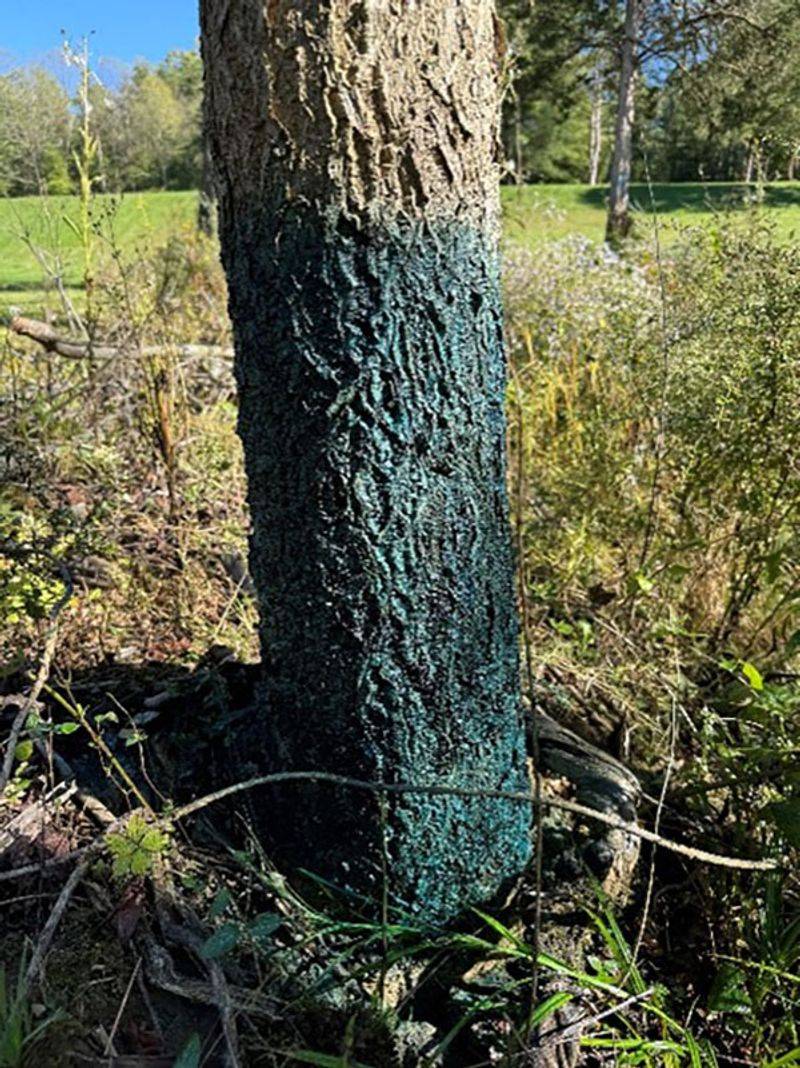
There is no single fix for every tree-of-heaven. Established infestations generally call for targeted, repeated control and follow-up monitoring, according to the Cornell and Penn State guidance.
Plan on checking the area over more than one season.
Timing matters when systemic treatment is used. Systemic treatment is meant to move through the plant, and the guidance identifies mid- to late summer as most effective, when the plant is moving carbohydrates toward its roots.
The best method still depends on plant size and the site, including what grows nearby.
Cut-stump treatment is one approach people hear about. By itself, it may suppress stump sprouts but does not reliably prevent root suckering.
That is one more reason a stump that looks finished can still send up shoots elsewhere.
Small seedlings are a simpler case, since careful removal of the whole root is an accepted method, as Adirondack guidance notes. Larger trees and spreading groves are harder.
For those, get help from your local Cooperative Extension office or a qualified professional. They can confirm the plant, look at your site, and suggest a plan that fits.
This article does not give product recipes, because the right choice depends on details a general article cannot see.
Check New York guidance before treating
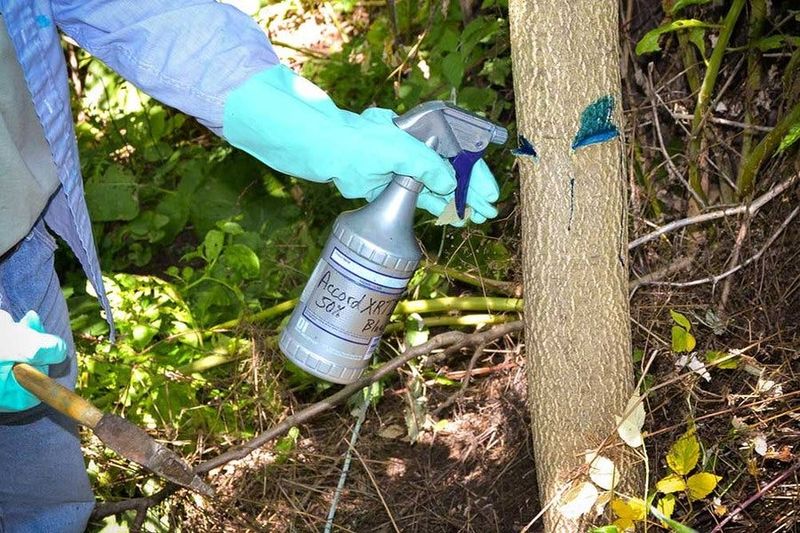
Advice written for another state may not fit New York. Product names, rates, and directions copied from an out-of-state guide can be wrong for your location.
Labels and allowed uses can differ, and Cornell’s New York-specific tree-of-heaven page includes a reminder to check them.
The state’s pesticide administration database is where you can look up what is registered in New York. Read the current label for permitted uses and site limits.
For larger trees or tricky locations, ask local Cooperative Extension or a qualified professional.
Protect yourself while you work. Cornell and Penn State guidance advises gloves and protective clothing, and avoiding sap contact, especially through cuts or broken skin.
Serious reactions are rare, so this is sensible caution, not cause for alarm.
Here is a practical path. Confirm the plant first, since sumacs and walnuts can look similar.
Then decide whether you have a seedling or a possible root sucker, and choose a response that fits your site. No approach promises complete eradication, and removing the tree should not be expected to bring other benefits, such as making spotted lanternflies stay away.
A shoot in the sidewalk is a clue, not a verdict, so look underground before you act.
Share this story