Get the latest garden guides in your inbox →
Gardening Latest
  • General Gardening
  • Lawn Care
  • Plant Care
  • Composting
  • Soil Health
  • Backyard
  • Garden Muse Magazine
  • General Gardening
  • Lawn Care
  • Plant Care
  • Composting
  • Soil Health
  • Backyard
  • Garden Muse Magazine
  • News
  • Gardening Calendar
  • Garden Structures
  • Vegetable Garden
  • Vertical Garden
  • Raised Beds
  • Hydroponics
  • General Equipment
  • Community Gardens
Garden Themes
  • Spiritual Garden
  • Hydroseeding
  • Seeding and Laying Sod
  • Artificial Grass
  • Lawn Care Equipment
  • Plants
  • Trees
  • Planting Tools
  • Composting Basics
  • Fertilizer
  • Alternative Growing Mediums
  • Front Yard
  • Backyard Activities
  • Landscaping
Gardening Latest

Explore by state

Which state is your garden in?

Currently viewing Illinois

All states

Northeast

  • Connecticut —
  • Delaware 45
  • Maine —
  • Maryland 31
  • Massachusetts 47
  • New Hampshire —
  • New Jersey 31
  • New York 40
  • Pennsylvania 40
  • Rhode Island —
  • Vermont —

Southeast

  • Alabama 31
  • Arkansas —
  • Florida 31
  • Georgia 31
  • Kentucky 45
  • Louisiana 30
  • Mississippi —
  • North Carolina 29
  • South Carolina 44
  • Tennessee 28
  • Virginia 30
  • West Virginia —

Midwest

  • Illinois 30
  • Indiana 32
  • Iowa 44
  • Kansas —
  • Michigan 31
  • Minnesota 30
  • Missouri 30
  • Nebraska —
  • North Dakota —
  • Ohio 31
  • South Dakota —
  • Wisconsin 45

Southwest

  • Arizona 30
  • Colorado —
  • Nevada —
  • New Mexico —
  • Oklahoma —
  • Texas 29
  • Utah —

West

  • Alaska —
  • California 30
  • Hawaii —
  • Idaho —
  • Montana —
  • Oregon —
  • Washington —
  • Wyoming —

No state matches that search.

Site menu

Gardening Latest
  • General Gardening
    • News
    • Gardening Calendar
    • Garden Structures
    • Vegetable Garden
    • Vertical Garden
    • Raised Beds
    • Hydroponics
    • General Equipment
    • Community Gardens
    Garden Themes
    • Spiritual Garden
  • Lawn Care
    • Hydroseeding
    • Seeding and Laying Sod
    • Artificial Grass
    • Lawn Care Equipment
  • Plant Care
    • Plants
    • Trees
    • Planting Tools
  • Composting
    • Composting Basics
  • Soil Health
    • Fertilizer
    • Alternative Growing Mediums
  • Backyard
    • Front Yard
    • Backyard Activities
    • Landscaping
  • Garden Muse Magazine

Explore

  • About GardeningLatest.com
  • Contact Us

Get the latest from the garden

New guides on lawn care, plants and backyard projects, sent when they go up.

Subscribe →

Follow

  • Facebook
  • X
  • Pinterest
  • YouTube
Illinois Gardening

Deer Are Rubbing Their Antlers on Your Illinois Saplings Right Now, and Here’s How to Save Them

Deer rubbing their antlers on young Illinois trees is a real fall problem, and a sturdy barrier around the trunk…

WN

By Walter Novak

November 29, 2026 · 6 min read

Deer Are Rubbing Their Antlers on Your Illinois Saplings Right Now, and Here’s How to Save Them
Deer Are Rubbing Their Antlers on Your Illinois Saplings Right Now, and Here's How to Save Them

Deer rubbing their antlers on young Illinois trees is a real fall problem, and a sturdy barrier around the trunk is the best way to keep it from happening again. Bucks scrape and shred bark on thin saplings, and that damage can be serious.

The good news is that you can check your trees, spot the signs, and protect them with simple tools. Here is how to tell what you are seeing and what to do about it.

At a glance

Where
Illinois Gardening
Hardiness zone
6 −10 to 0°F
Read
6 minutes
Published
November 29, 2026

When do Illinois bucks make rubs?

When do Illinois bucks make rubs?
© Bowhunting.com

Fall is rubbing season. Illinois Wildlife reports that bucks start rubbing in August, once their antlers harden and the velvet comes off.

Material from the Illinois Natural History Survey places rub-making between the August and September antler change and October. Breeding activity then peaks in mid-November.

That timeline tells you when trees face the most risk. It does not prove that a buck is working on your saplings today, or that rubbing is at its peak on any given week.

Some yards get hit hard, and others never see a single scrape.

Think of the season as a reminder to look. A quick walk around young trees in fall can show whether bucks have already visited, and it gives you time to add protection before the rut ramps up.

A rub is not winter browsing
A rub is not winter browsing
© Plantskydd

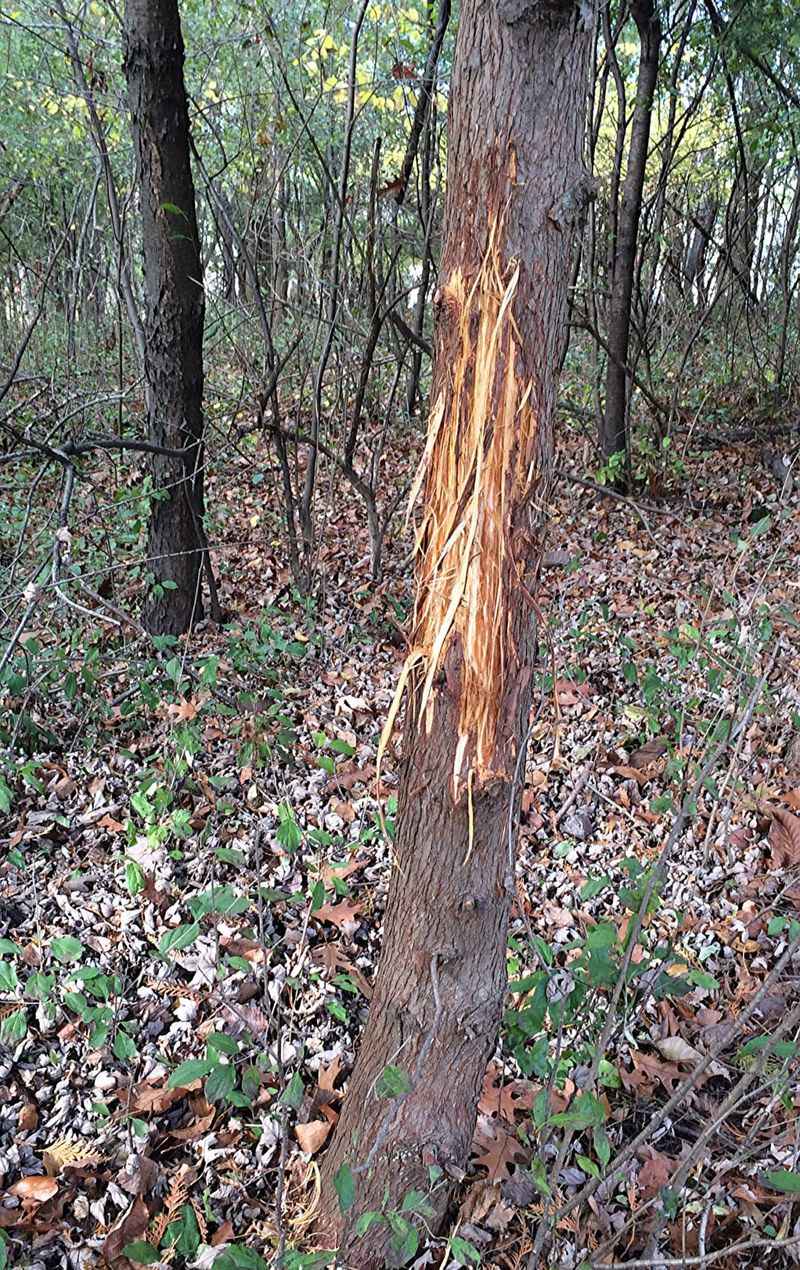
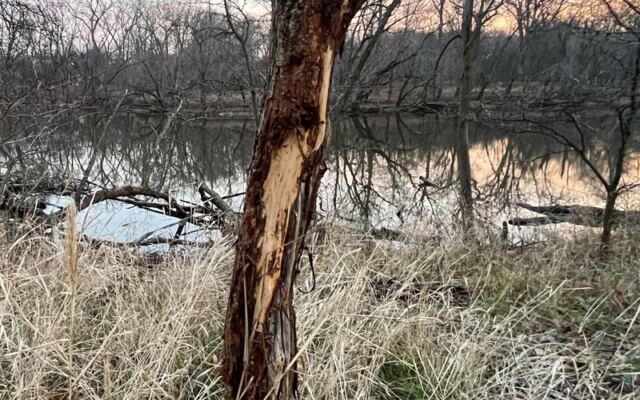
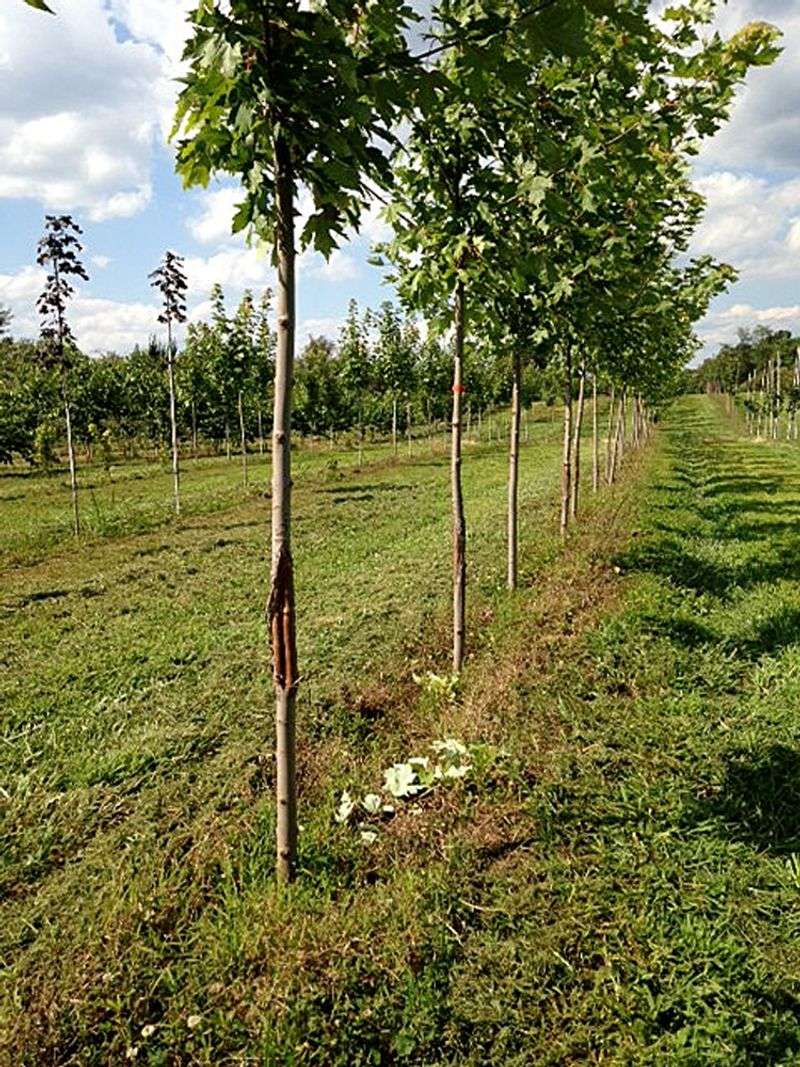
Bark that looks torn, scraped, or shredded in vertical strips is the classic sign of antler rubbing. Illinois Wildlife describes typical rubbing around 2 to 3 feet off the ground.

Iowa State gives a slightly wider range, about 1.5 to 3.5 feet. Look for fresh, pale wood and strips of bark hanging loose or lying on the ground.

Iowa State recommends sturdy individual barriers such as welded-wire cylinders, tubes, wraps, or stakes.

Winter browsing looks different. Deer feeding on shoots, stems, or foliage leave ragged, nipped tips on twigs and branches, not scraped trunks.

The difference matters for the fix. The Morton Arboretum covers both kinds of animal damage, and a trunk guard is aimed at rubbing.

It may not keep deer from eating branches above or beside it.

If you see both kinds of damage, you may need to think about protecting the whole plant, not only the trunk, as Iowa State Extension explains in its deer guidance.

Why young trunks are vulnerable
Why young trunks are vulnerable
© The Everyday Bow Hunter

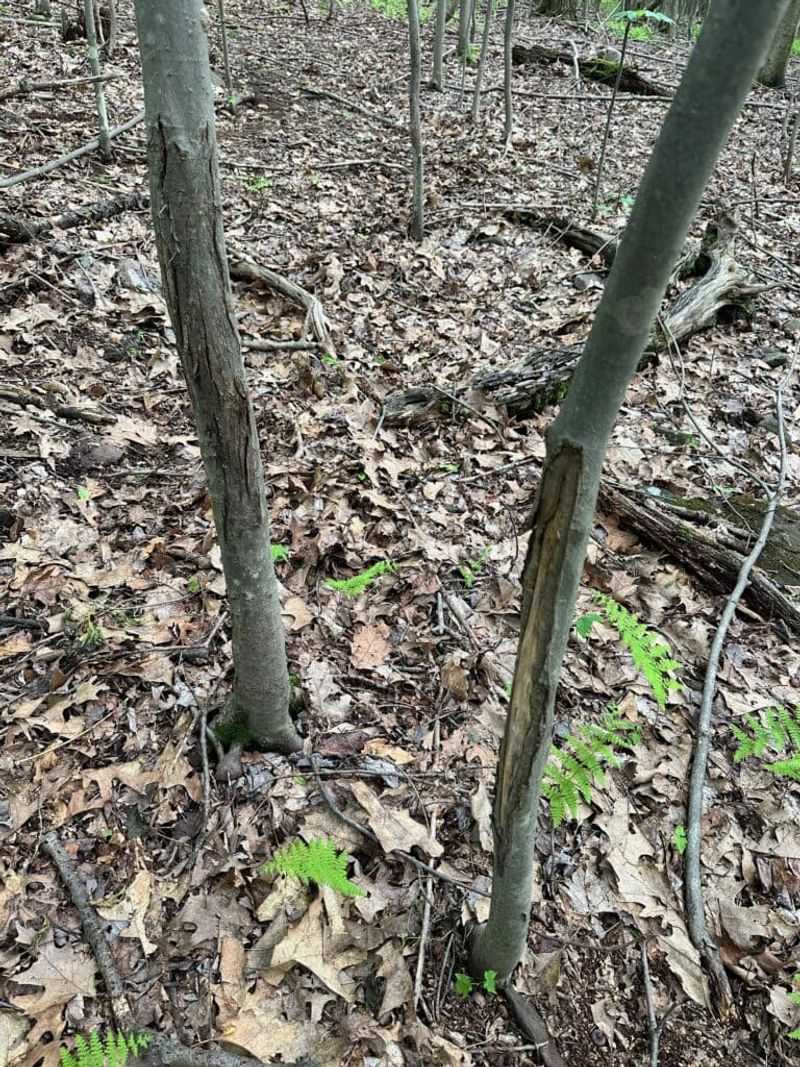
Young trees make easy targets. Their trunks are slim and flexible, and their bark is thin and smooth, so a buck can scrape it away with little effort.

Size changes the picture over time. Iowa State says the risk drops significantly once trunks reach about 3 to 4 inches across, because they become thicker and less bendy.

That number is a general guide, not a promise. A tree near that size can still get rubbed, especially if it stands alone or near a deer path.

So where should you start? Put your newest plantings and thinnest trunks at the top of your list.

Those are the trees where a few minutes of checking and protecting pay off the most.

Inspect the wound before reaching for a guard
Inspect the wound before reaching for a guard
© Yard and Garden – Iowa State University

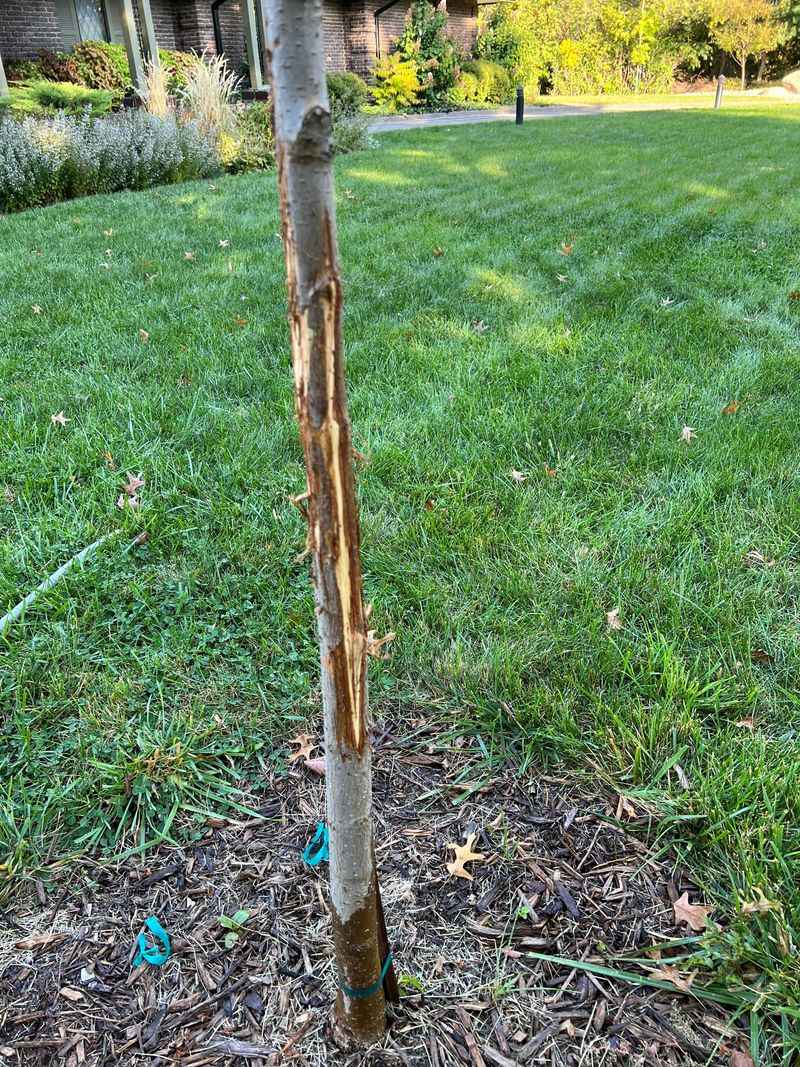
Before buying anything, look closely at the damage. Walk all the way around the trunk and note whether the missing bark is on one side only or wraps the whole circle.

One-sided injury may leave a tree a chance of survival, though the outcome depends on how severe it is. The University of Idaho Extension describes how antler rubbing injures trees and how the extent of damage shapes the result.

Bark stripped all the way around is called girdling. It cuts the tissues that move water and sugars, and growth above the injury will eventually die.

In that case, replacing the tree is often the practical option.

A guard cannot undo any of this. It can only help prevent another rub.

Iowa State also notes that wound dressings, pruning paint, latex paint, and wrapping a damaged area do not save severely damaged trees. Skip those products and put your effort into watching the tree and preventing repeat damage.

There is no single percentage of lost bark that decides a tree’s fate. Focus on whether the injury circles the trunk.

A physical barrier can protect the trunk
A physical barrier can protect the trunk
© DeerBusters

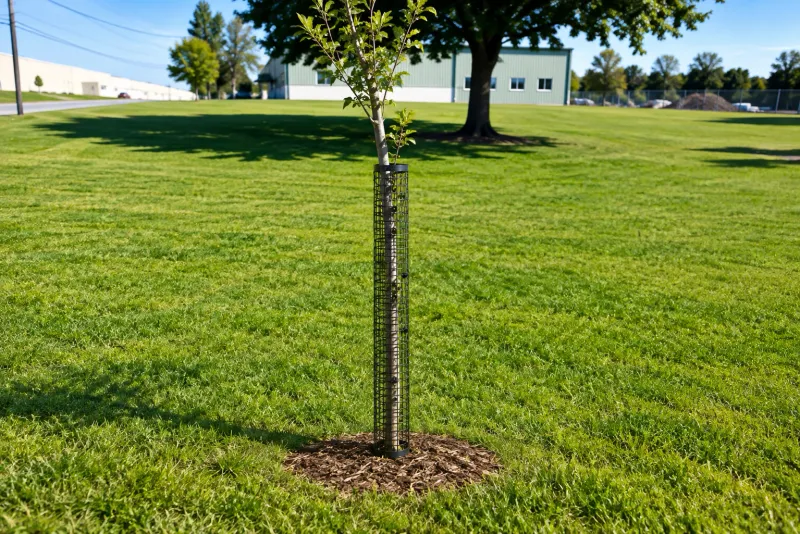
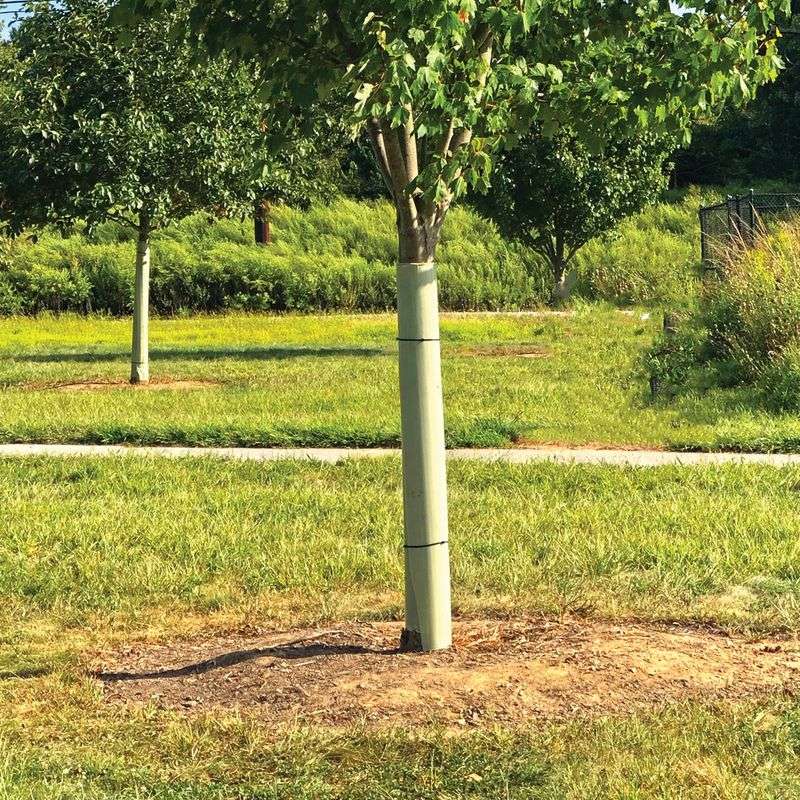
Keeping bucks away from the trunk is the most direct way to prevent rubbing. Iowa State recommends sturdy individual barriers such as welded-wire cylinders, tubes, wraps, or stakes.

Three things decide whether a barrier works: coverage, stability, and room to grow. It has to reach the zone where deer rub, roughly from low on the trunk to about 3.5 feet up.

A short guard can leave exposed bark above it.

It also has to stay put. A cage that a buck can push over or flatten will not do much, so anchor it with stakes where needed.

Finally, leave space between the guard and the trunk so the tree can thicken. The Morton Arboretum advises removing trunk guards or collars in spring so they do not cause harm.

Timing helps too. Ideally, protection goes up by mid-August.

If you missed that window, a suitable barrier installed now may still reduce further damage, even though it cannot repair what is already done.

A barrier that fits well is not a guarantee, but it greatly improves the odds for a young tree.

Check the guard as the tree grows
Check the guard as the tree grows
© newccgreenhouse

A guard that fit well last fall can become a problem as the trunk widens. Make a habit of checking it and adjusting or removing it if it squeezes the trunk or gets in the way of growth.

Advice on timing varies. Iowa State and the Morton Arboretum both recommend taking guards off in spring.

Utah State Extension says some protectors may stay on year-round if they allow normal development.

Because the sources differ, the safest approach is regular inspection. Slide a hand under the guard, look for tight spots, and make sure nothing is cutting into the bark.

Spraying a repellent is tempting, but it is not a dependable stand-in for a barrier. University of Maryland Extension says repellents are ineffective against this type of damage.

Treat the guard as equipment to maintain, not something to install once and forget.

Protect what can still grow

Protect what can still grow
© Paddock Fencing

Start with a walk around your young trees. Check each trunk for scrapes, note whether bark is missing on one side or all the way around, and put a well-fitted barrier on trees that are still vulnerable, as Iowa State advises.

A fully girdled trunk is a serious injury that no wrap can heal, so plan for replacement if needed.

Not every sapling can be saved, but the ones that still have living bark are worth a little cage and a little care.

Share this story
WN

Written by

Walter Novak

More from Walter Novak →

About Gardening Latest

Gardening Latest provides in-depth guides to maintaining and enhancing your garden and backyard. Learn how to make the most of the space you have and create a beautiful garden.

More about us →

Latest stories

  • Missouri GardeningIf Your Missouri Woodpile Sits Against the House, You’re Inviting Brown Recluses Indoors This Winter

    If Your Missouri Woodpile Sits Against the House, You’re Inviting Brown Recluses Indoors This Winter

    3 min ago
  • Tennessee GardeningBefore You Dig In, Here’s How To Recognize Every Venomous Creature Sharing Your Tennessee Yard

    Before You Dig In, Here’s How To Recognize Every Venomous Creature Sharing Your Tennessee Yard

    9 min ago
  • Alabama GardeningThat Burning Saddleback Caterpillar Sting in Your Alabama Garden Calls for These Steps Right Away

    That Burning Saddleback Caterpillar Sting in Your Alabama Garden Calls for These Steps Right Away

    15 min ago
  • Minnesota GardeningBefore You Pick Up That Big Black Caterpillar With White Spots In Minnesota, Read This

    Before You Pick Up That Big Black Caterpillar With White Spots In Minnesota, Read This

    21 min ago
  • Louisiana GardeningLouisiana’s Venomous Critters Are Hiding In Your Yard, And Fall Is When They Come Out

    Louisiana’s Venomous Critters Are Hiding In Your Yard, And Fall Is When They Come Out

    33 min ago

Gardening by state

Stories for your state, and the hardiness zone most of it gardens in.

Keep exploring

Read next

All Illinois Gardening →
Illinois GardeningWhere a Neighbor’s Tree Crosses Into Your Illinois Yard, You Decide What Gets Trimmed, Up to the Property Line
Illinois Gardening

Where a Neighbor’s Tree Crosses Into Your Illinois Yard, You Decide What Gets Trimmed, Up to the Property Line

2 hr ago
Illinois GardeningWhy You Shouldn’t Touch That Big Black Caterpillar With White Spots In Illinois
Illinois Gardening

Why You Shouldn’t Touch That Big Black Caterpillar With White Spots In Illinois

6 hr ago
Illinois GardeningThose Venomous Critters Living In Your Illinois Yard Are Easiest To Spot In Late Fall
Illinois Gardening

Those Venomous Critters Living In Your Illinois Yard Are Easiest To Spot In Late Fall

9 hr ago

More from Illinois Gardening

  • If You Find A Yellow Jacket Nest Near Your Illinois Home, Here’s What To Do Right Away

    Nov 27
  • Illinois Yards Are Full of Harmless Critters That Look Venomous, and These 7 Make People Panic

    Nov 26
Back to top

Leave a response Cancel

Your email address stays private. Required fields are marked with an asterisk.

Gardening Latest

In-depth guides to maintaining and enhancing your garden and backyard: how to make the most of the space you have, and how to make it beautiful.

  • Facebook
  • X
  • Pinterest
  • YouTube

We may earn a portion of sales from products or services that are purchased through our site as part of our affiliate partnerships with retailers.

Explore

  • About GardeningLatest.com
  • Contact Us
  • Terms and Conditions
  • Privacy
  • Editorial Note:
  • FTC Disclosure

Newsletter

New garden guides and seasonal tips, straight to your inbox.

We’ll email you a link to confirm. Unsubscribe any time.

Almost there! Check your inbox and tap the link to confirm.

© 2026 Gardening Latest. All rights reserved.

Back to top