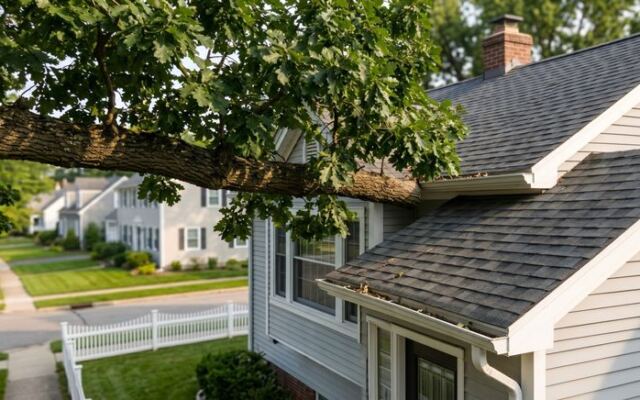
If a neighbor’s branches reach over your fence, you generally get to decide what happens to the part hanging over your yard. In Illinois, you can usually trim those branches back to the property line.
That rule has real limits, though, and knowing them can save you from a costly mistake or a feud. Here is how to handle it the smart way.
Your side of the line generally sets the trimming limit
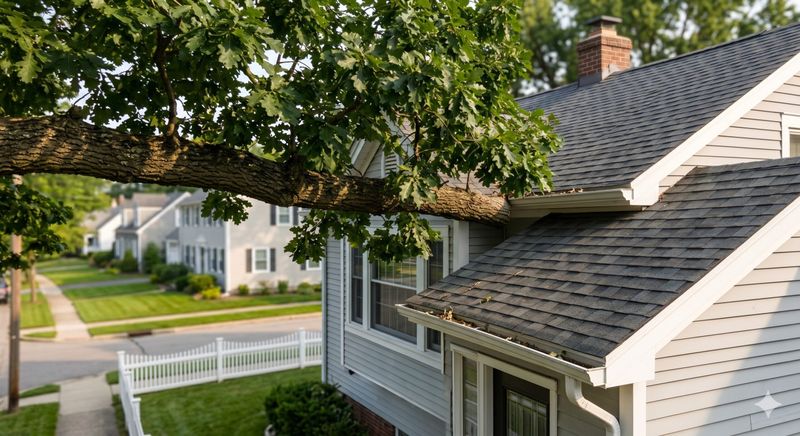
Here is the practical answer. Illinois Legal Aid guidance treats overhanging branches as an encroachment, and a property owner may generally remove the part that hangs over their own land.
The cutting stops at the boundary.
Notice what this rule covers. It deals with branches that cross into your space.
It does not make you the owner of the whole tree, and it does not give you permission to cut however you like.
It also helps to know where the rule comes from. Illinois does not have a statewide law written specifically about trimming tree branches.
The general rule rests on legal guidance and court decisions, such as Ridge v. Blaha, where an Illinois appeals court recognized that a neighbor could trim overhanging branches that caused damage.
Because the rule is general, details matter. Where exactly is your boundary?
Does the trunk sit fully on your neighbor’s land, or does it touch the line? Is the tree near a road or a utility wire?
Your first job, then, is simple. Find out where the property line runs and what kind of tree you are dealing with before you pick up a saw or call anyone.
The next sections walk through each of those checks.
Check whether the trunk crosses the boundary
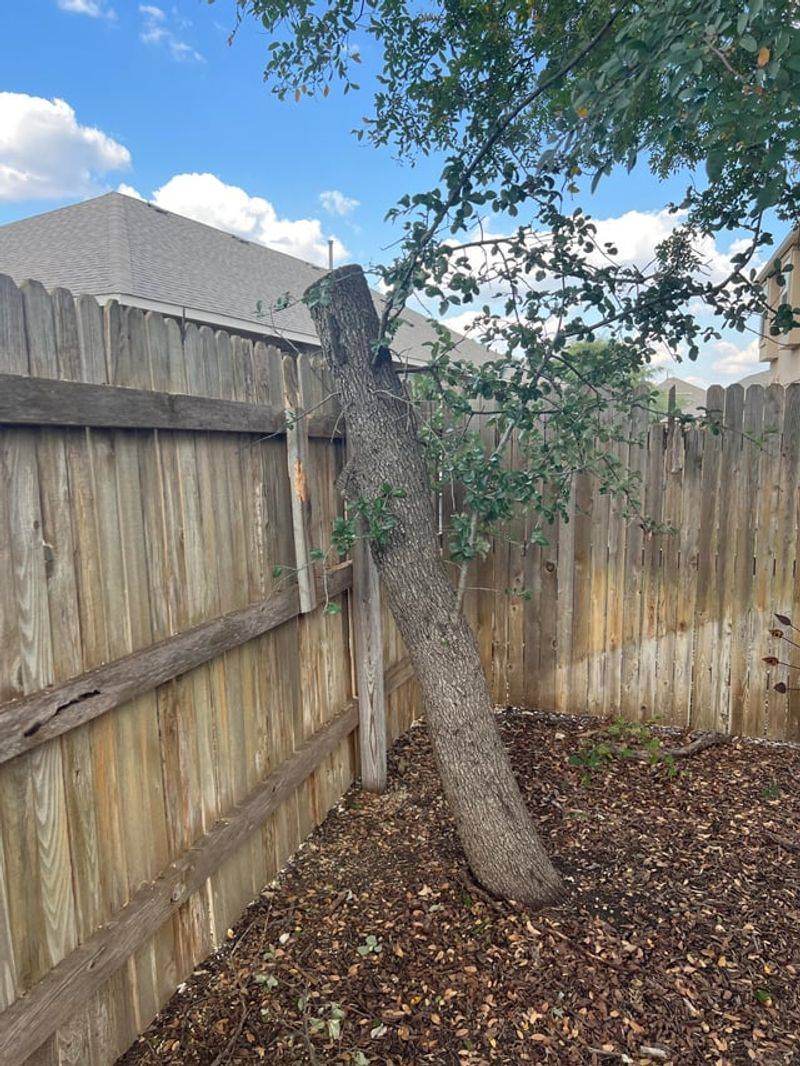
Branches and roots wander, but the trunk tells the ownership story. A tree whose trunk stands wholly on your neighbor’s land is theirs, even if half the canopy shades your patio.
In that case, your right is limited to the overhanging branches.
A trunk that crosses the line is a different situation. In Ridge v.
Blaha, the court found a protectable ownership interest where part of the trunk crossed the boundary at ground level. The court also reversed an order that would have allowed the tree to be destroyed.
The practical lesson is that a boundary-line tree may give both neighbors a stake in it. Neither neighbor can simply decide to remove it alone.
Cutting it down because you assume half of it is yours could create serious trouble.
So look low. Check where the trunk meets the soil, not where the leaves hang.
If the line is hard to spot, hire a licensed surveyor or review your plat of survey before making any substantial cuts.
A few clues can help. Survey pins or markers near the lot corners can show the line.
If the trunk seems close to that line and you cannot tell which side it is on, treat it as a question to settle first, not a guess to act on.
Trimming does not mean you can damage the tree
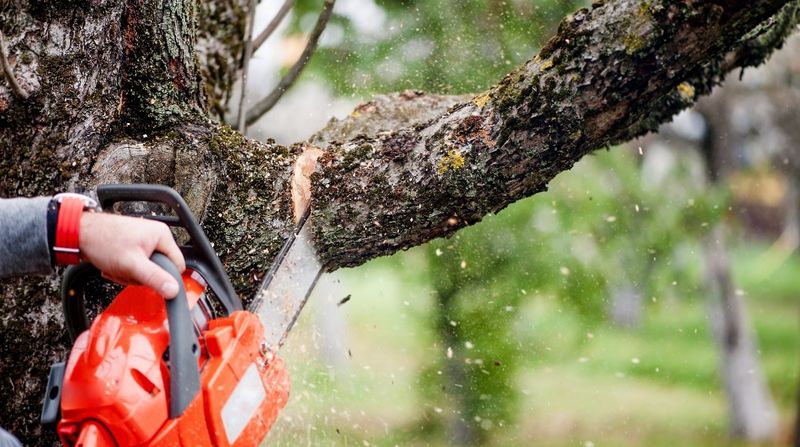
The right to trim is a right to deal with branches that cross over, not a right to harm the tree. Illinois Legal Aid and Ridge support removing encroaching branches.
Neither one says you may kill, weaken, or heavily damage a neighbor’s tree.
The Wrongful Tree Cutting Act comes into play here, but not as permission. The Act addresses cutting a tree without a legal right to do so, and its current language provides for three times the tree’s stumpage value in specified cases.
It does not create a right to cut everything up to the line.
Whether a particular cut crosses the line between trimming and damage depends on the facts, so no article can promise how a court would see it. What you can do is lower the risk.
Keep cuts modest and limited to what hangs over your land.
For bigger jobs, get advice first. University of Illinois Extension recommends consulting a professional arborist for mature trees.
An arborist can tell you how much can come off without harming the tree.
If you and your neighbor disagree about who owns the tree or what rights you each have, talk with an attorney before cutting. Once a limb is gone, it cannot be put back.
Plan for access and local rules
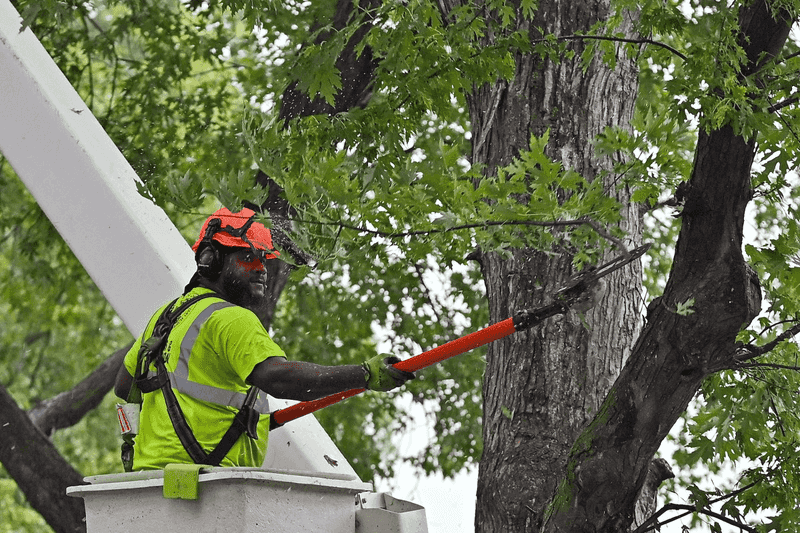
Reaching a branch can be trickier than deciding to cut it. Illinois Legal Aid cautions that entering a neighbor’s land to trim can backfire, even where a right to remove a nuisance might apply.
Stepping over the fence with a ladder can turn a small tree issue into a trespass dispute.
The safer path is to arrange access or choose a method that stays on your own property. That may mean asking permission or having a professional work from your side.
A friendly conversation is the easiest way to lower tension. It is a practical step, not a statewide legal requirement.
Explain what you plan to trim, ask about timing, and listen to any concerns.
Do not assume the neighbor must pay for routine trimming. The main sources support your right to address branches coming onto your land, not a duty for the tree owner to cover the cost.
If you hope to share expenses, ask politely and treat a yes as a favor.
Next, look up local rules. The USDA Forest Service Tree Owner’s Manual advises checking city or town laws about pruning.
It also notes that a tree in a road right-of-way may fall under municipal jurisdiction, so call your village or city hall before cutting a street-side tree.
Leaves and roots do not automatically make a tree a nuisance

Many people assume that falling leaves or wandering roots give them a legal claim. Illinois courts have not seen it that simply.
In Bandy v. Bosie, the appellate court said that trees dropping leaves or sending roots across a lot do not necessarily constitute a nuisance.
That case involved allegations of leaves, sap, and root damage to a sewer line. So the decision does not mean tree damage never matters.
It means ordinary tree behavior is not automatically a legal wrong.
Think about the difference between everyday debris and a specific harm. A yard full of autumn leaves is a chore.
A documented problem, such as roots that have damaged a pipe, is a more concrete issue.
If you are facing something specific, gather photos, repair estimates, and dates. A written record helps you explain the problem calmly to your neighbor or to a lawyer.
No source here promises a particular remedy, so treat any next step as a question for qualified advice.
Prune carefully and leave hazards to professionals
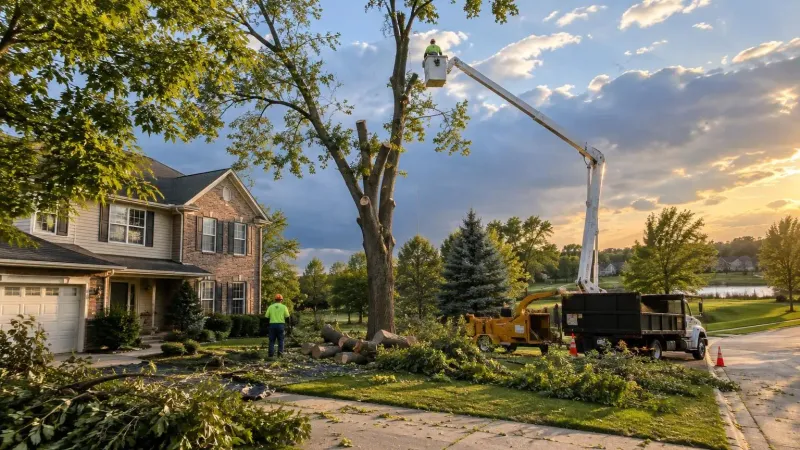
Good technique protects the tree and you. University of Illinois Extension advises making cuts just outside the branch bark collar, the slightly raised ring where a branch meets the trunk, rather than flush against the trunk.
For larger limbs, a three-point cut helps avoid torn bark. Make a shallow undercut first, then cut from the top a little farther out, and finish with the final cut near the collar.
Extension also recommends a professional arborist for mature trees and for any work needing power tools or lift equipment.
Power lines call for firm rules. Illinois emergency guidance says to assume lines are live.
Do not climb or trim trees near them, and keep people and equipment at least 10 feet away.
If a branch is near a wire, contact the utility or a qualified contractor instead of trying the job yourself. Skip the ladder too, since a fall with a saw in hand can cause serious injury.
One more point matters. Correct technique does not guarantee a cut is legally allowed or harmless to the tree.
A clean cut on a branch you had no right to remove is still a problem.
Often the wisest tool is a phone. A quick call to an arborist can save a tree, a fence, and a friendship.
Share this story