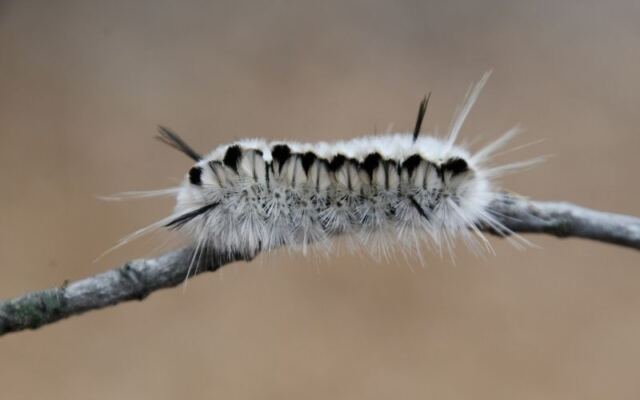
Leave that big black caterpillar with white spots alone, at least until you know what it is. In Illinois, one possibility is the hickory tussock moth larva, which has hairs that can bother bare skin.
Plenty of fuzzy caterpillars are harmless, but a quick look cannot tell you which one you have. A few simple steps can keep you comfortable and keep the caterpillar safe too.
What can its appearance tell you?
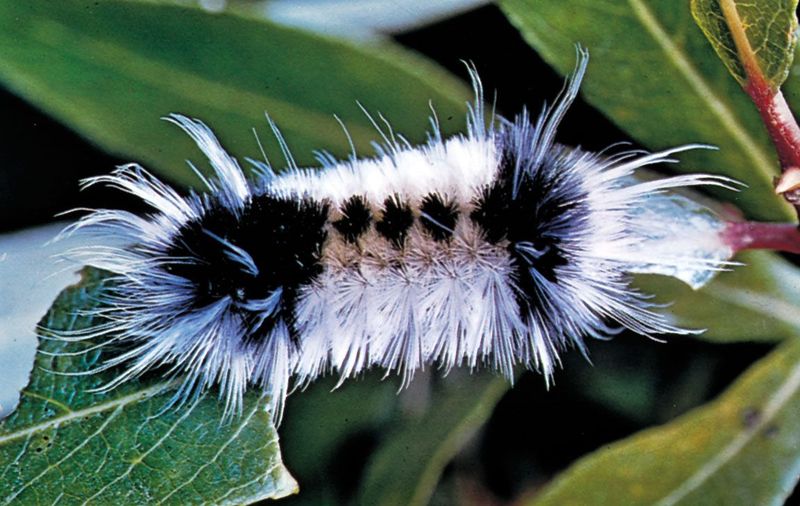
A phrase like “big black caterpillar with white spots” sounds specific, but it fits more than one kind of caterpillar. Color, size, and fuzz can look different depending on the light, the caterpillar’s age, and how it is curled up.
That is why a description alone is not a dependable way to name a species.
One Illinois possibility is the hickory tussock moth larva. Penn State Extension describes it as a fuzzy caterpillar that is mostly white and black, and it occurs in Illinois.
It is only one possibility, though, and without a clear photo or more details, nobody can say for sure.
Another lookalike is the giant leopard moth caterpillar. Illinois DNR describes it as black with black bristles and red bands between its segments.
Its look is quite different from a fuzzy black-and-white tussock caterpillar, yet a quick glance in a garden can blur the two.
So the smart move is to let color alone stop you from deciding. If you cannot tell what it is, treat it as unidentified.
Take a photo from a comfortable distance, note where you found it, and keep your hands out of the picture.
Hickory tussock hairs may irritate skin
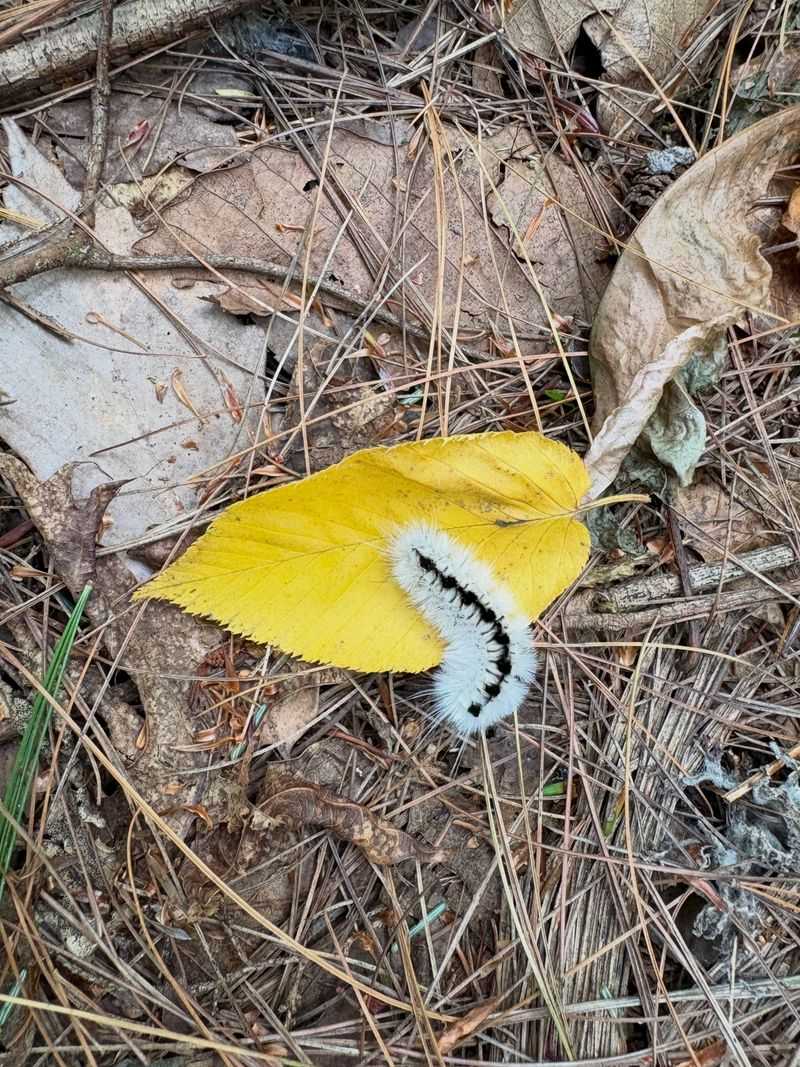
Picture a small, fuzzy tube of white hair dotted with black tufts. That is the hickory tussock moth larva, which can grow to about 1.7 inches long.
Its coat looks soft, but the hairs are the part that matters to people.
According to Penn State Extension, those hairs may detach and can cause a localized rash and itching. Localized means the trouble stays near the spot where the hairs touched your skin.
A hair that lands on a bare arm or neck is the usual way this happens.
It helps to use the right word here. Irritating hairs are not the same as poison.
The caterpillar is not described as venomous or poisonous, and it does not inject anything. The hairs simply bother some people’s skin.
Penn State reports no known systemic allergic reactions to this species’ hairs. That is reassuring, but it does not prove a serious reaction could never happen, since people differ in how sensitive they are.
Think of it as a mild, limited concern that still deserves a little respect.
Lookalikes have different markings
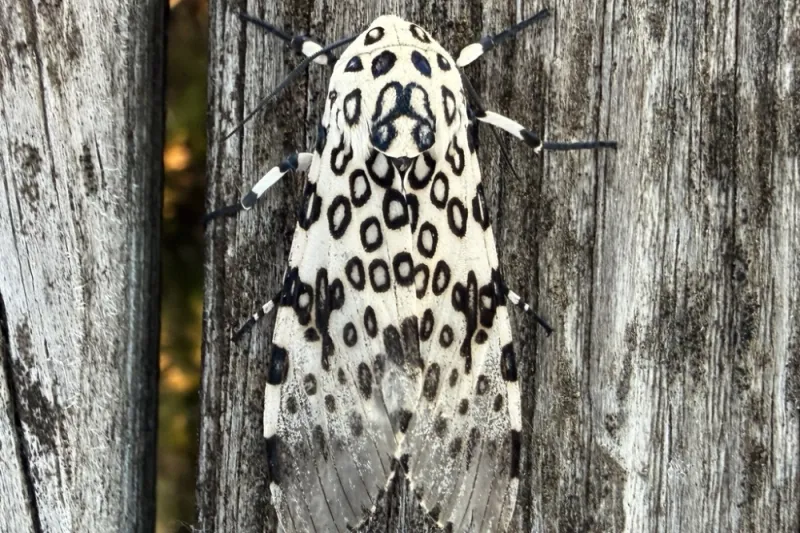
Comparing patterns can narrow things down, though it will not settle the question every time. Start with the giant leopard moth larva.
Illinois DNR describes it as black with black bristles and red bands between segments, which often show when it curls up. The white spots belong to the adult moth’s wings, not the caterpillar.
Spongy moth caterpillars look busier. University of Illinois Extension notes five pairs of blue spots followed by six pairs of red spots along the back.
Those paired colored dots are a useful clue.
Eastern tent caterpillars have their own style. University of Illinois Extension describes a white stripe down the back, with blue spots between yellow lines along the sides.
They are also often found in groups near silky tents in tree branches.
None of these patterns is interchangeable with another. A hickory tussock larva is fuzzy and black and white, while a giant leopard larva is bristly with red bands.
If what you see matches none of these clearly, call it unidentified and keep your distance.
Leave an unidentified hairy caterpillar alone
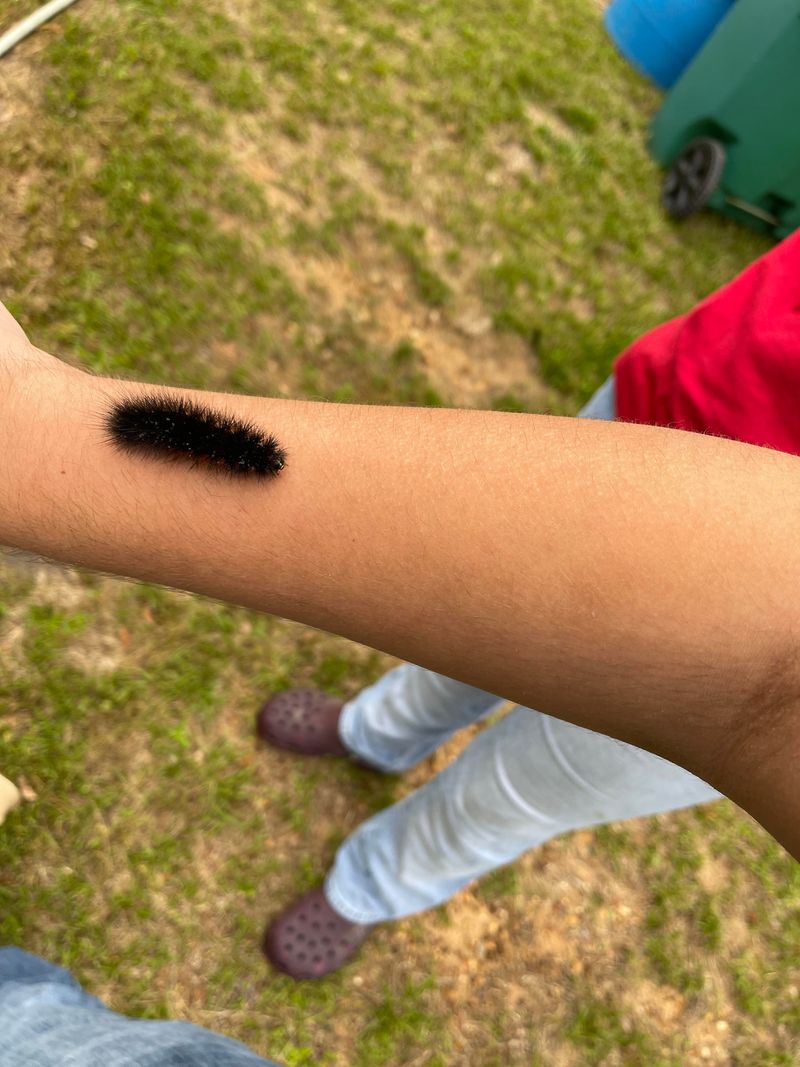
Here is a simple rule that works in any backyard: if a hairy or spiny caterpillar is a mystery to you, do not pick it up with bare hands. This is a precaution, not a claim that every fuzzy caterpillar stings or does harm.
Many are completely harmless.
The reason is practical. Species differ, and so do people’s skin.
The Missouri Department of Conservation advises against touching fuzzy caterpillars bare-handed when you are unsure of the identification or your own sensitivity. Poison Control gives similar practical advice to avoid touching unidentified fuzzy or spiny caterpillars.
Please do not test a caterpillar on yourself. Picking one up “just to see” if it causes a reaction is the one move that can turn curiosity into an itchy afternoon.
If one is in the way, there are easy options. Let it crawl along.
If it must be moved, nudge it onto a stick or into a jar with a piece of paper, and wear gloves. Kids and pets are the main reason to keep an eye out, since they tend to grab first and ask later.
If hairs get on your skin, remove them gently
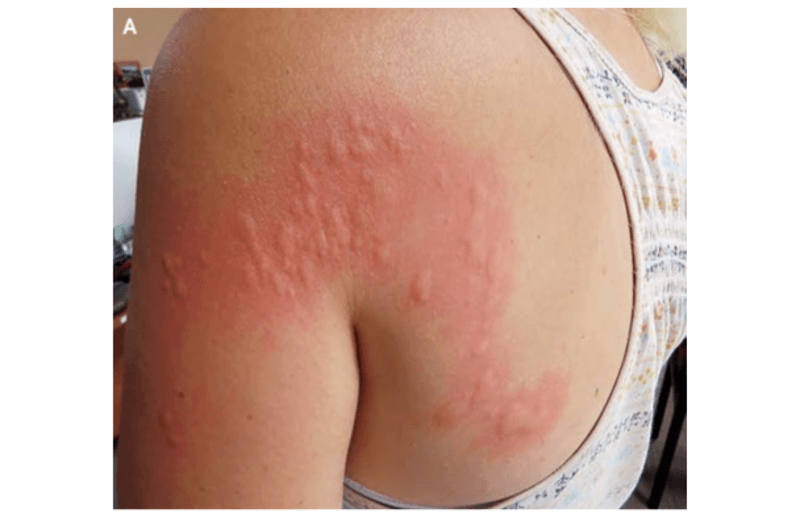
Suppose you brushed against a caterpillar and now feel a prickle. Try not to rub or scratch, because that can push tiny hairs deeper into the skin.
Keep calm, since most cases like this stay mild.
The approach recommended by Poison Control is gentle. Press a piece of tape onto the area, then lift it away to pull up hairs or spines.
Use fresh pieces of tape as needed, and avoid picking at the spot with your fingers.
Once the visible hairs are off, wash the area with soap and water. This helps clear away anything left behind.
Washing your hands afterward is smart too.
Hairs can also cling to clothing, so shake out or wash anything that touched the caterpillar. Keep the tape step away from the eyes.
Eye contact needs different care, and the next section explains when to call for help.
If a rash or itching shows up, it usually stays near the contact spot. Watching it over the next day or so is reasonable.
Know when to get medical help
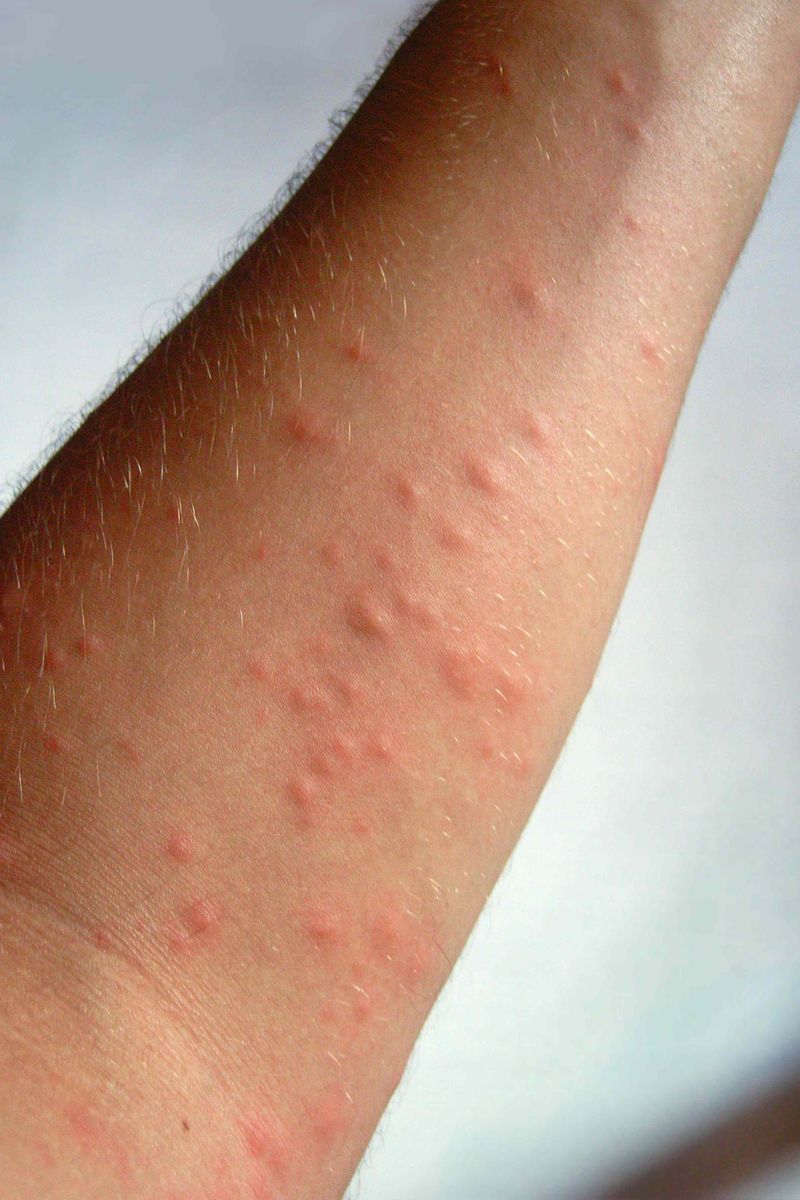
Most caterpillar encounters end with a little itching and nothing more. Still, a few signs mean it is time to reach out.
Poison Control advises contacting a health professional for blistering, a suspected localized allergic reaction, or eye irritation that does not go away.
Emergency signs are a different category. Trouble breathing, fainting, or swelling of the lips, face, or tongue calls for emergency help right away.
Do not wait to see whether these improve.
It also helps to remember the species picture. Penn State Extension reports no known systemic allergic reactions to hickory tussock hairs, but it also acknowledges that reactions remain possible.
So a mild rash is the usual story, and an unusual symptom still deserves attention.
If you can, snap a photo of the caterpillar from a safe distance. That can help a doctor or poison specialist understand what you met.
A black-and-white look does not prove which species it is, and it does not prove the caterpillar is poisonous.
Keep your hands off unidentified hairy caterpillars, and the woods stay a lot more pleasant.
Share this story