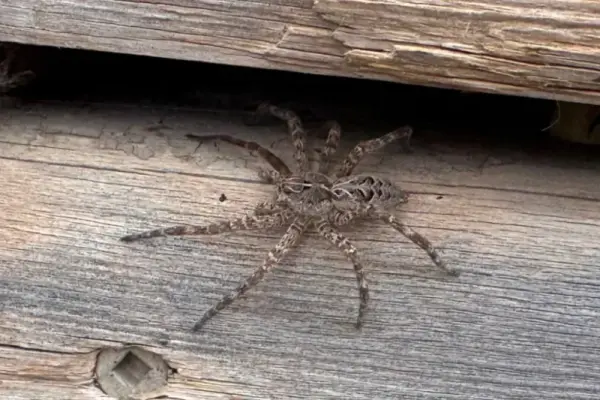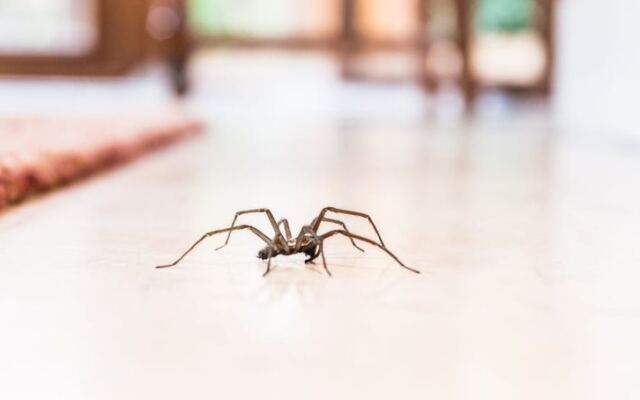
Yes, spiders turn up inside Delaware homes in the colder months, and the ones that do are often eating other bugs. The American house spider is a Delaware house spider that preys on household insects, and a few spiders in the Mid-Atlantic move indoors in early fall.
Still, a spider’s timing alone will not tell you which kind it is or how much it helps. Here is what that means for the spider you just spotted by the baseboard.
Some spiders live indoors; others come in seasonally
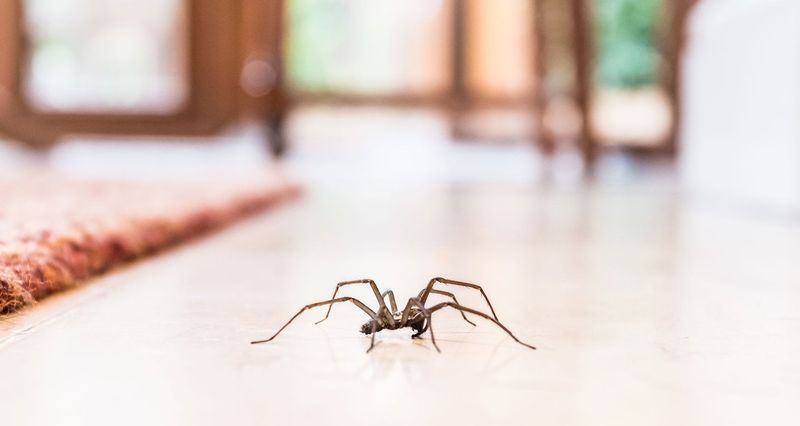
Many house spiders live indoors all year, so a spider in your home in winter may simply be one that was there all along. A University of Washington arachnologist explains in a Burke Museum myth-busting page that noticeable wandering often peaks in late summer, when mature males go searching for mates.
Spiders are not necessarily fleeing the cold.
That account is general. It is not a Delaware species calendar, and it cannot tell you which spiders are active in Wilmington, Dover, or Lewes in any given week.
Some spiders really do come in from outside, though. Maryland Extension documents in its Spiders in Maryland guide that yellow sac spiders can enter homes in early fall and spend the winter in small silk retreats.
So it would be wrong to say spiders never come indoors in the fall or winter.
As for the headline question, the reviewed sources do not establish a recurring Delaware-wide December arrival or surge. What they do show is a mix of residents and seasonal visitors.
Some spiders are already inside, and some species may move in during early fall.
The practical takeaway is that a winter sighting is ordinary and does not point to one particular spider. Look at where it is, what it is doing, and what it looks like before drawing conclusions.
Indoor sightings can involve different spiders
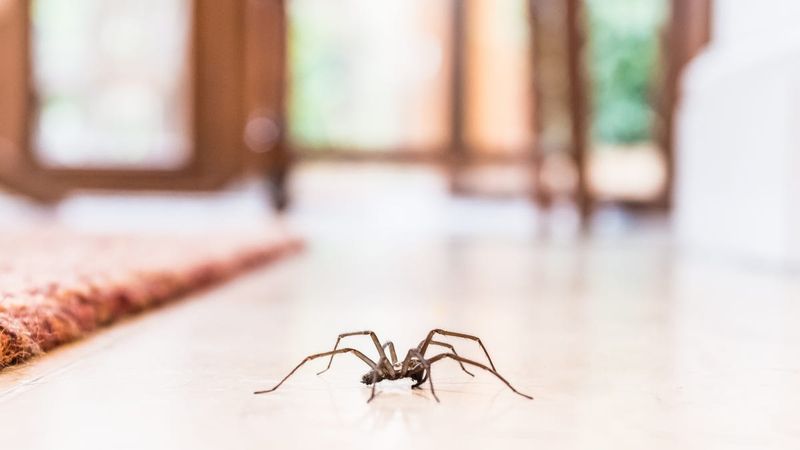
Start with the American house spider, Parasteatoda tepidariorum. University of Delaware Cooperative Extension names it in its spider fact sheet as a house spider found in Delaware.
It builds tangled webs in quiet corners, closets, and basements.
Next door in Maryland, the story includes a different spider. Maryland Extension reports that the yellow sac spider, Cheiracanthium inclusum, can enter homes in early fall and overwinter in small silk retreats.
Instead of a classic web, it tucks itself into a little silken pouch, often on a wall or ceiling.
These two are regional examples, not a checklist. The Maryland account does not prove a Delaware-wide pattern or a December one, and it cannot confirm what is in your own home.
That is the reason timing alone cannot identify a spider. A spider seen in December could be a long-term resident, a seasonal visitor, or something else entirely.
If you want a real answer, a clear photo or a collected specimen is far more useful than a date on the calendar. Your local Extension office can help with identification.
House spiders eat insects, but one will not solve an infestation
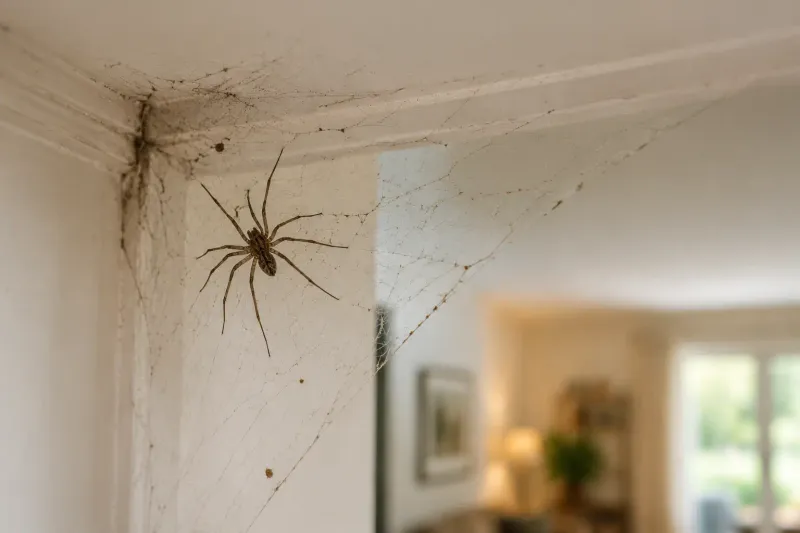
A spider that eats bugs sounds like free pest control, and there is some truth to it. University of Delaware Extension lists mosquitoes, flies, termites, other spiders, and other arthropods among the prey of the American house spider in its spider fact sheet.
So spiders do eat household insects.
Eating a few insects is not the same as controlling a pest problem, though. The sources do not show that one spider can clear out an infestation of ants, roaches, or flies.
Think of a spider as a small bonus. If you see a web with a few gnats in it, that is a modest benefit, not a plan.
It also is not a promise that a spider hunting in your home is an American house spider. Many kinds of spiders can turn up indoors, and some do not build webs at all.
If insects keep showing up, look for the cause: crumbs, moisture, open gaps, or pet food left out. Fix those first, and treat any spiders as a side note.
Which spiders deserve extra caution?
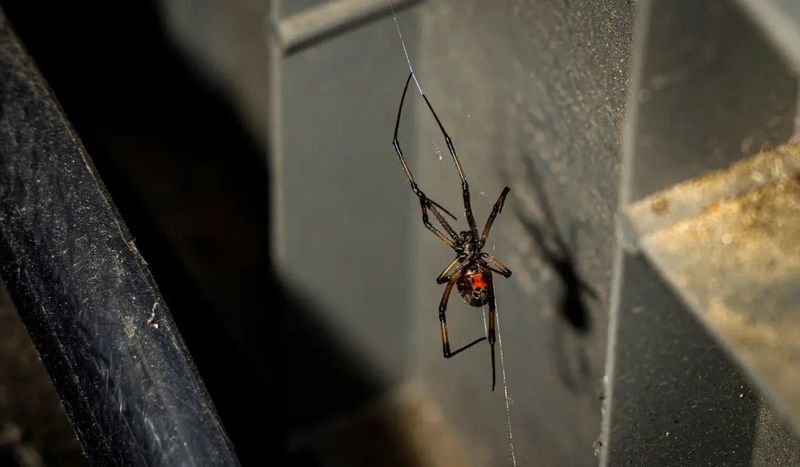
Most spiders are not a concern, but a couple deserve respect. A Delaware response on Ask Extension says spiders rarely bite people and names black widows as the local concern.
It also says Extension has not documented breeding brown recluse populations in Delaware, though a recluse may occasionally arrive in a shipped or moving box.
For widows, neighboring Maryland offers context. Maryland Department of Natural Resources documents northern and southern black widows, usually in dark, undisturbed spots.
Maryland Extension adds that they are not often found indoors.
Those are regional descriptions. They cannot tell you that a spider in your woodpile or garage is a widow, or that it is not.
Brown recluses are where people often jump to conclusions. Penn State Extension lists established populations in states outside Delaware and only rare isolated finds elsewhere.
Brown color does not make a spider a recluse. A skin sore also does not prove a spider bite, let alone a recluse bite.
If you are unsure, take a photo and ask your Extension office.
You can leave an ordinary spider alone or remove it
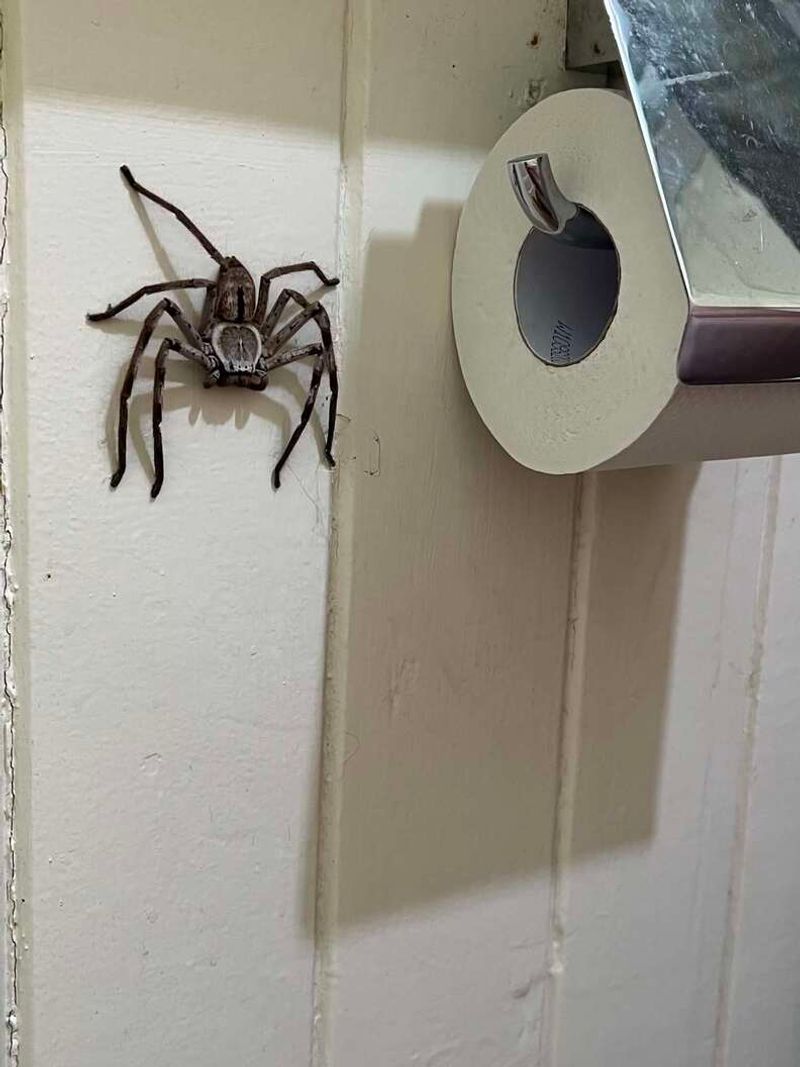
If a spider is tucked in a high corner and not bothering anyone, leaving it alone is a reasonable choice. Removing it is also fine.
Either way, you do not need to treat it as an emergency.
Several simple methods work. The National Pesticide Information Center describes nonchemical ways to deal with spiders, and UC Statewide IPM guidance backs up the basics.
Place a jar over the spider, slide a stiff piece of paper under the rim, and carry it outside. A vacuum with a hose attachment also works well, especially for webs.
A broom can sweep away a spider and its web in one pass.
Do not handle a spider you suspect may be a widow. Keep your hands away and use a tool with some reach, or call for help if you are unsure.
Since most spiders cannot be identified at a glance, a little distance is a good habit. Gloves and a jar make it easy to stay careful.
Reduce hiding places, entry points, and insect prey
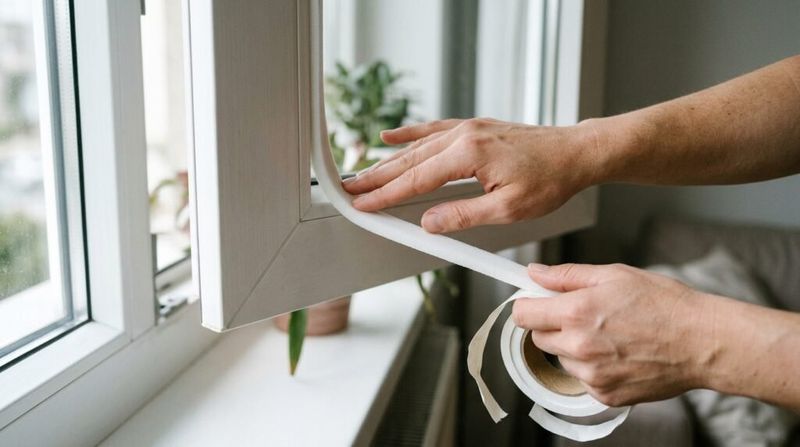
Fewer hiding places mean fewer spiders staying put. Clear out clutter in basements, closets, and garages, and vacuum up spiders, webs, and egg sacs when you see them.
Both NPIC and UC IPM recommend these steps.
Next, close the doors. Seal gaps around doors, windows, and foundations, and check screens and door sweeps.
Spiders enter through the same small openings that insects use.
Spiders follow food, so cut down on the insects they hunt. Fix leaks, keep crumbs and pet food tidy, and cut back on outdoor lights near entrances that draw bugs.
Spraying is usually not the best first move. NPIC says indoor residual pesticides may not give long-term spider control.
If you still consider a pesticide, identify the pest first and follow the label exactly. The EPA says using a pesticide in a way that conflicts with its label is illegal.
Know when a bite needs medical attention
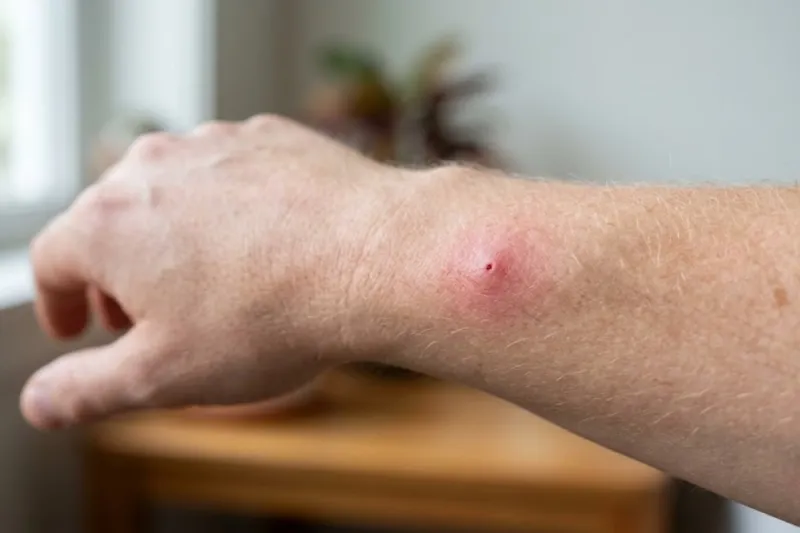
Spider bites are uncommon, and a mark on your skin is not proof of one. Do not try to name the spider or the cause from how the spot looks.
Many skin problems resemble bites.
The American Heart Association and American Red Cross first aid guidelines say to seek medical care if pain spreads beyond the bite, becomes severe or cannot be controlled, an open wound develops, or symptoms affect the whole body.
Call emergency services for difficulty breathing, muscle rigidity, dizziness, or confusion. Those are different from a sore, itchy spot, which usually does not need an emergency visit.
If you can do so safely, keep the spider or take a clear photo. That may help a clinician, but it is not required before you get care.
Whatever the date on the calendar, decide based on the situation in front of you. A calm response and a clear plan matter more than the season.
Share this story