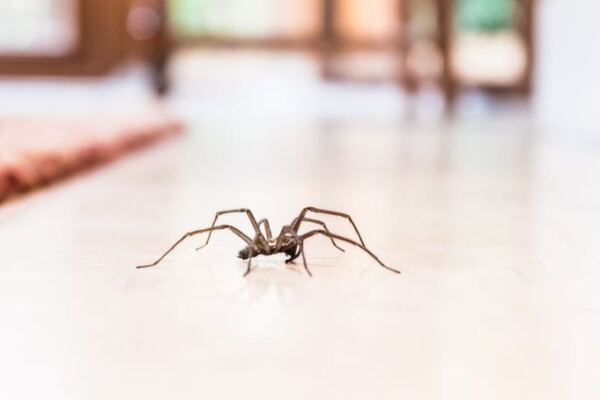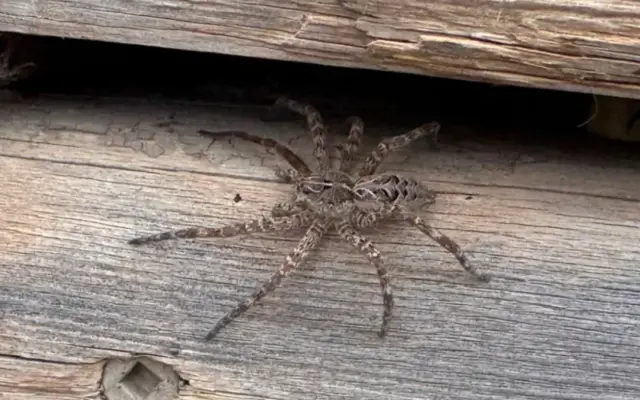
That big, hairy spider in your tub is most likely a wolf spider or a dark fishing spider, two large and harmless-looking wanderers that sometimes end up in Delaware homes. Seeing one can be a real jolt, especially when you are barefoot and half awake.
Knowing who the likely suspects are, why a tub is such a common place to meet one, and how to move it safely can turn panic into a quick, calm cleanup. Here is what to know, and what to do next.
Which spiders fit the description?
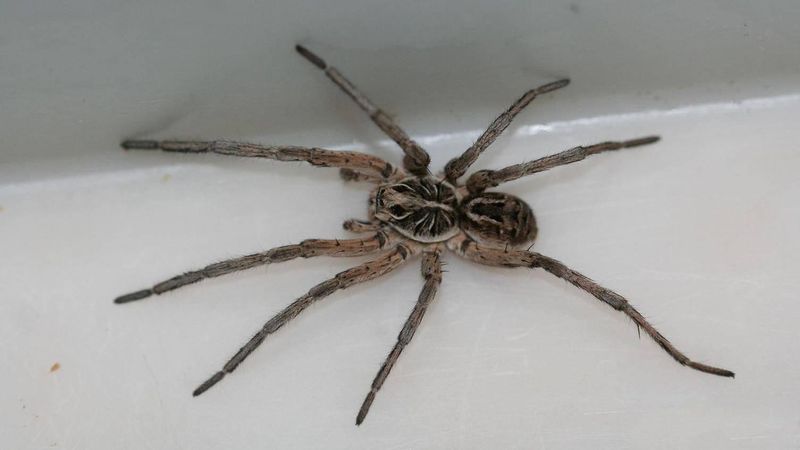
Wolf spiders and dark fishing spiders are the two most plausible candidates for a large, hairy spider found indoors in Delaware. Delaware Cooperative Extension describes wolf spiders as solitary hunters that do not build webs to catch prey.
They roam, chase, and pounce, which is one reason people run into them on floors and in odd corners.
Dark fishing spiders look a lot like wolf spiders. Penn State Extension notes that they are similar in size, shape, and coloring, and that the dark fishing spider, Dolomedes tenebrosus, sometimes enters homes, especially in wooded areas.
Despite the name, it is not always found near water.
So which one is in your tub? Honestly, a broad description like big, brown, and hairy cannot settle that question.
Other spiders can also look large and fuzzy to a startled person, and the spot where you found it does not tell you the species.
A clear photo can help a lot. Take one from a safe distance, ideally with something small like a coin nearby for scale, and show the top of the body and the eye arrangement if you can.
A local extension office or an expert who examines the spider itself can give a much more confident answer than any guess made from the bathroom doorway.
Winter timing does not explain why it is indoors
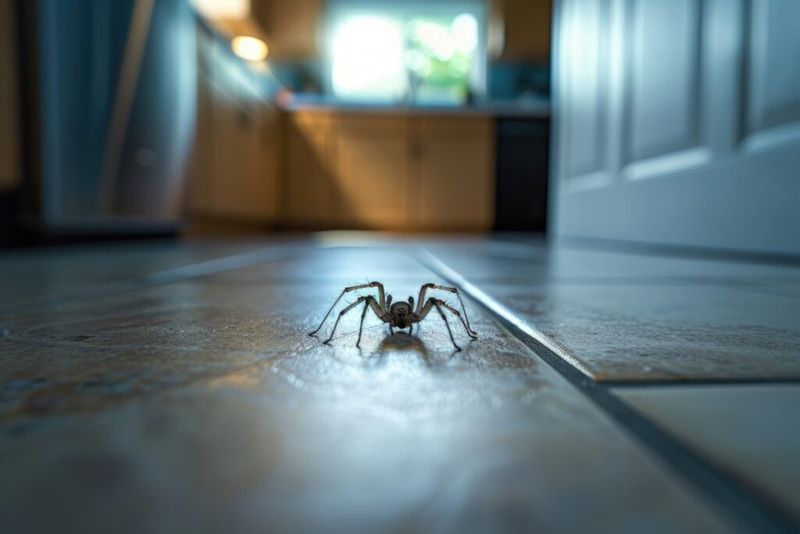
Finding a spider in winter makes it tempting to say it came inside to get warm. That story sounds neat, but the season of the sighting does not tell you why the spider is in your house.
Available sources do not show that Delaware wolf or fishing spiders follow a winter pattern of moving indoors.
The Burke Museum’s arachnology resource, which takes on the idea that spiders come indoors in the fall, offers a few broader points. Many spiders seen inside are house-adapted species that already live in buildings.
Outdoor spiders are not generally drawn indoors by warmth. And males may wander in search of mates, which can bring them across floors and into unexpected rooms.
Keep in mind that these are general facts about spider behavior. They are not a local winter survey of Delaware wolf or fishing spiders, so they cannot explain one particular spider in one particular home.
A practical takeaway: instead of trying to solve the mystery of why it came in, look at how it could have gotten in. Gaps around doors, loose window screens, and cluttered basements or garages are common routes for all sorts of small visitors.
A spider that is already inside may also simply have been there for a while before you noticed it.
Why a tub can trap a wandering spider
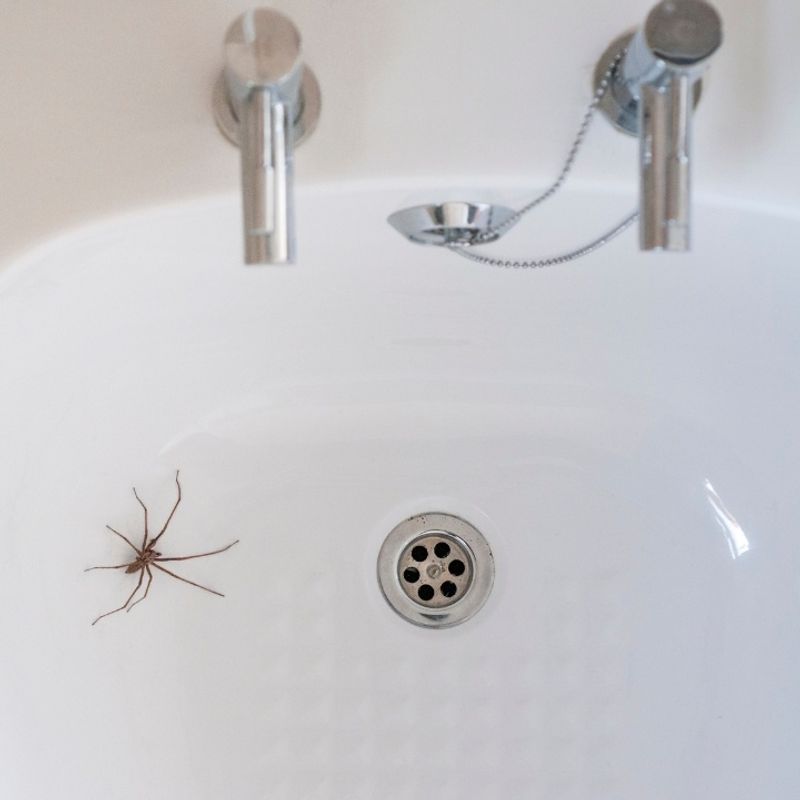
Bathtubs and sinks are slick, steep-sided basins, and that is a tough place for a spider to climb out of. A Cooperative Extension expert response describes this as a reason people meet spiders in tubs more often than in other parts of the house.
A wandering spider simply tumbles in and cannot get back up the smooth walls.
That response talks about spiders in general, not Delaware wolf or fishing spiders in particular. It also admits some uncertainty about whether spiders sense water.
So it is fair to say a tub can act like a trap, but not fair to claim that water drew your particular spider there.
What about the drain? Many people picture a spider crawling up the pipe.
A Burke Museum arachnologist explains that modern plumbing traps block spiders from migrating up through drains. The water held in the curved pipe acts as a barrier.
The more likely path is boring: the spider walked across the bathroom floor, climbed onto the tub edge or fell in from a nearby surface, and then got stuck. If you often find spiders in the bathroom, check for gaps around pipes, window frames, and the base of the door.
A large spider is not automatically a medical emergency
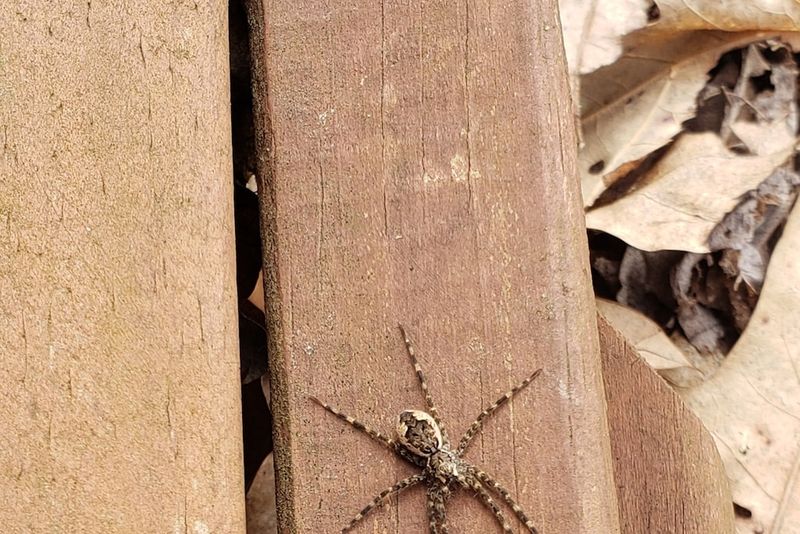
A big spider can look menacing, but size and hair are not signs of danger. Spiders are venomous in the sense that they use venom to subdue prey, yet that is not the same as being medically dangerous to people.
The CDC says most spider encounters are harmless, though a few species can cause medically important bites.
For wolf spiders, Penn State Extension says they may bite if mishandled or trapped against skin, but reports no serious medical consequences from those bites. Fishing spiders are described by Penn State as harmless and as rarely biting, even when grabbed, according to its fishing spider page.
Rarely is not never, so the safest plan is to avoid handling either kind.
You may wonder about the spiders people worry about most. In a 2021 response, a University of Delaware expert said there were no documented breeding populations of brown recluse spiders in Delaware at that time, and described black widows as the more common of the two spiders of concern in the mid-Atlantic.
That answer is a snapshot from one year. It is not a current statewide survey, it does not guarantee that an unusual spider could never arrive in a shipped box or during a move, and it says nothing about the spider in your tub.
It simply helps put the usual worry in context.
Use a cup and cardboard to avoid handling it

The simplest way to remove a spider is to never touch it. Grab a clear jar or cup and a sheet of stiff paper or cardboard, and stay calm.
Spiders can dart quickly, so move steadily rather than fast.
Here is a plain step-by-step approach, based on advice from UC San Diego Environment, Health & Safety:
First, place the jar or cup gently over the spider. In a tub, a wide cup works well, and you can tilt the tub edge toward you if the spider is on a wall.
Second, slide the stiff paper or cardboard slowly underneath the container, so the spider ends up trapped between the two. Try not to pinch a leg, since a spider that feels trapped against something is more likely to react.
Third, hold the paper tightly against the rim and carry the container away from your body. Take it outside, away from the door, set it down, and let the spider walk off.
A vacuum is another option if you would rather not get close. Follow the vacuum’s instructions for emptying it safely, such as taking the contents outdoors right away.
No method is completely risk-free, so wear shoes, keep your hands clear of the opening, and skip the whole plan if the spider is somewhere awkward, like a crack or behind a fixture.
Let symptoms guide what to do after a suspected bite
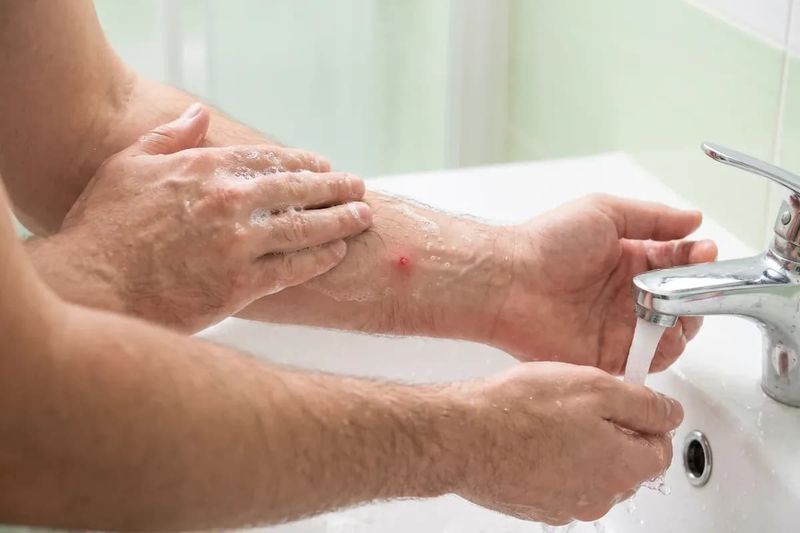
If you think a spider may have bitten you, start with simple first aid. Following Poison Control guidance, wash the area with soap and water and apply a cold pack.
Then watch how things develop over the next hours and days.
Get medical help if local symptoms are getting worse, if you notice symptoms elsewhere in the body, if you suspect a bite from a medically significant spider, or if you have signs of an allergic reaction. Poison Control can be reached at 1-800-222-1222, and emergency services are the right call for trouble breathing or swelling of the face or throat.
Be careful about naming the cause too quickly. A spider in the room does not prove a spider caused a red bump, sore, or rash.
The CDC notes that alleged spider bites are often misidentified, including cases where no spider was seen biting anyone.
That works in both directions. Do not label a skin problem as a spider bite just because you saw a spider nearby, and do not wave off a wound that keeps getting worse as a routine bite.
Other conditions, including skin infections, can look similar and need proper care.
If you can safely catch the spider, keeping it in a sealed container can help a clinician, though treatment should never wait on that. A large spider in the tub is far more often a startling visitor than a threat.
Share this story