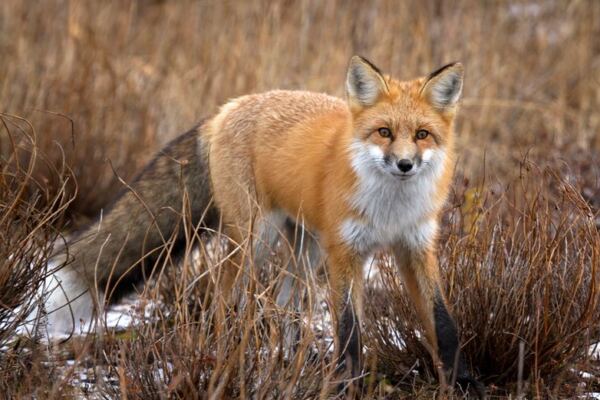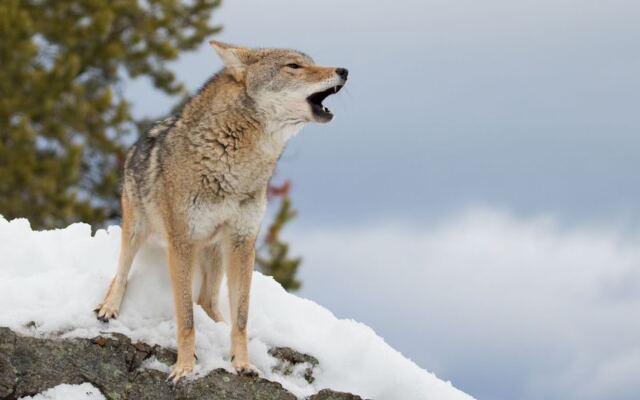
Those late-night howls and yips are coyotes talking to each other, sharing where they are and staying in touch with their family group. They may also be telling other coyotes whose territory they are in.
You cannot translate a single howl word for word, but knowing the basics makes the sounds far less spooky. Here is what the calls can tell you, what they cannot, and what to do around your home.
Coyotes live across Virginia

Hearing a coyote near your house is not strange at all. They live in cities, suburbs, and country areas all over Virginia, from Northern Virginia cul-de-sacs to Shenandoah Valley pastures and the edges of Tidewater towns.
Their story here goes back further than many people think. According to Virginia Tech Extension, coyotes began spreading into the state in the 1950s, and they have now colonized every county.
So they are not brand-new neighbors. They have been settling in for decades, and many people simply never noticed them.
That wide range explains why so many residents hear howls after dark. Coyotes are often most active around evening and early morning, which lines up with the hours when yards are quiet and sound carries well.
Knowing they are widespread helps you keep things in perspective. A howl in the distance is a sign that a wild canine lives nearby, much like hearing an owl or a fox.
The next question is what those sounds are actually doing, and just as important, what a listener cannot work out from them.
A howl communicates, but it is not a precise message
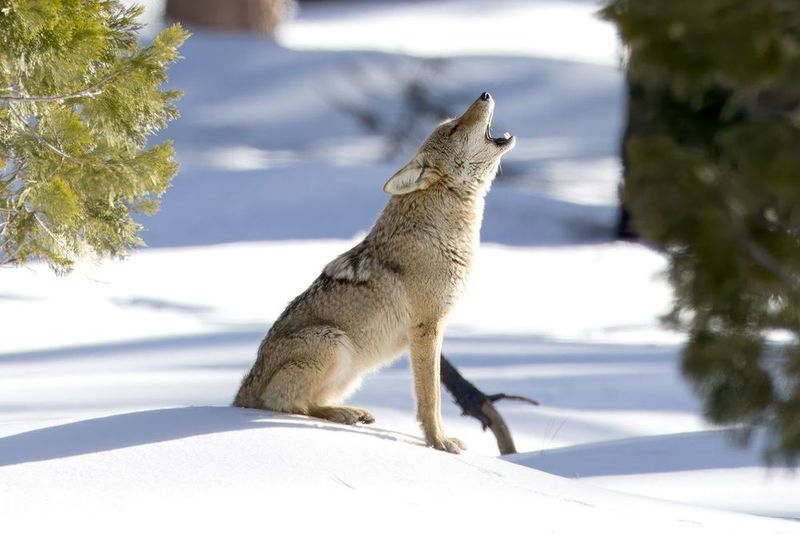
Coyotes use howls, yips, and barks to communicate. These sounds may help them signal where they are, keep a family group together, and let other coyotes know a territory is occupied.
Researchers who studied howls across several canid species, in a peer-reviewed study indexed by PubMed, found that howls carry information, though not in a code that a human can simply read.
You may hear people say coyotes are checking in with each other. That works as a friendly picture, like family members calling out across a big house.
It is only a metaphor, not a translation.
Here is the catch. A howl by itself cannot tell you whether the coyotes are touching base, answering another group, or reacting to something nearby.
It also cannot tell you that a hunt is starting or that anyone is being warned. Those stories are fun to imagine, but the sound does not back them up.
Describing the broad jobs of calling is about as far as the science goes. Virginia Tech Extension also treats howling as general communication rather than a set of specific messages.
When you hear one, the honest takeaway is simply that coyotes are talking, and they are not talking about you.
Winter breeding and spring pups shape the seasonal backdrop
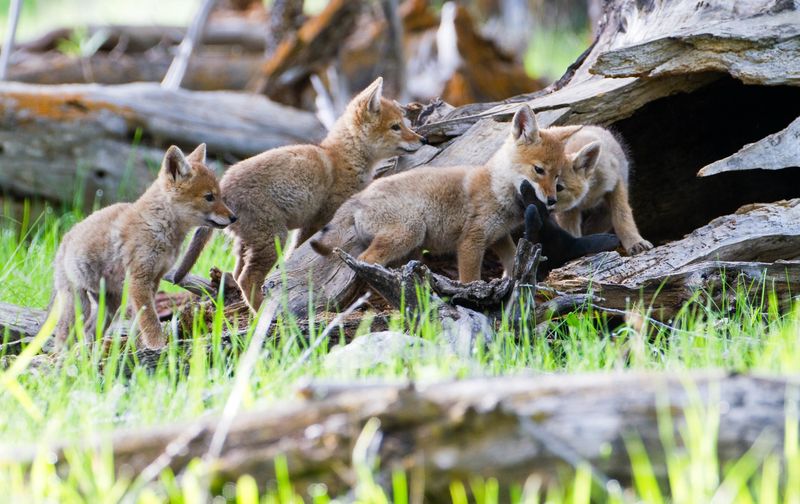
Calendar dates help explain why coyotes seem chattier at certain times of year. Virginia Tech Extension places the mating period from late January through early March, with pups born about 60 to 64 days later.
The state’s wildlife agency adds more context. Virginia DWR identifies March through July as pup-rearing season, when adults are busy feeding and protecting young.
Think of these dates as a backdrop, not a decoder ring. They tell you what is going on in coyote life across the state, but they cannot tell you why one particular group is calling outside your window on one particular night.
A howl in February is not proof of courtship, and a yip in June is not proof of pups.
Timing matters here too. If you are hearing howls in late November, that comes before the reported mating period, so the calls are not evidence that mating is underway.
Coyotes call year-round for several reasons, and the season only gives you a general sense of what is happening in their world.
Why can a small group sound like a crowd?
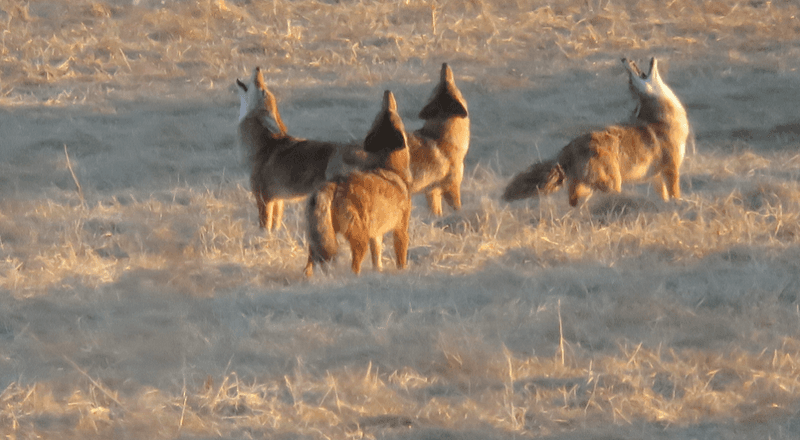
Close your eyes and a coyote chorus can sound like a dozen animals. Their voices rise and fall, mixing howls, yips, and barks, and the sounds bounce around hills and buildings.
USDA APHIS says two coyotes can sound like six.
That means a loud chorus does not prove a big group is close by. Guessing group size from sound alone usually leads you astray.
It also helps to drop the wolf-pack image. Virginia Tech Extension describes the usual social unit as a territorial family group, commonly a mated pair with pups and sometimes older offspring.
Coyotes can also live alone, so a single animal can be the source of a surprising amount of noise.
Another twist: coyotes may howl in response to sirens. If an ambulance goes by and the yips start up right after, another coyote did not necessarily set it off.
Sometimes the trigger is simply a loud, long, wailing sound that happens to suit a coyote’s voice.
Howling alone does not mean danger
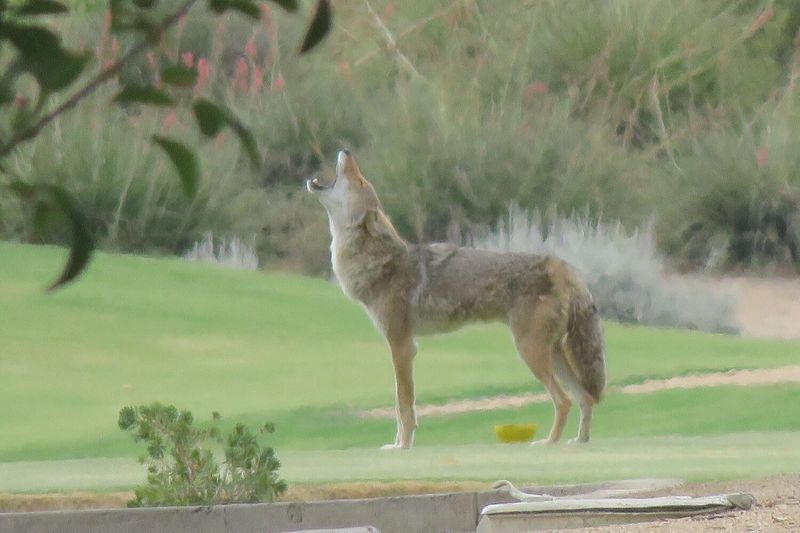
A howl in the dark can feel creepy, yet it does not signal trouble on its own. Ordinary howling, a coyote passing near a home, or even a daytime sighting does not by itself prove aggression, rabies, or immediate danger.
Virginia DWR notes that seeing a coyote in daylight alone is not a sign of rabies.
Fairfax County takes a similar view. Its coyote guidance says simply seeing a coyote should not cause alarm, and that unprovoked attacks on people are very rare.
Pets are a different story, and it is fair to take that seriously. Small dogs and cats can be at risk, especially when left outside unattended.
The county also notes that conflicts may become more likely during mating and pup-rearing periods.
So keep two ideas side by side. People are very unlikely to be harmed by a coyote that is just living its life nearby, while pets need a little planning and supervision.
Staying calm and staying careful fit together just fine.
Small yard habits help protect pets
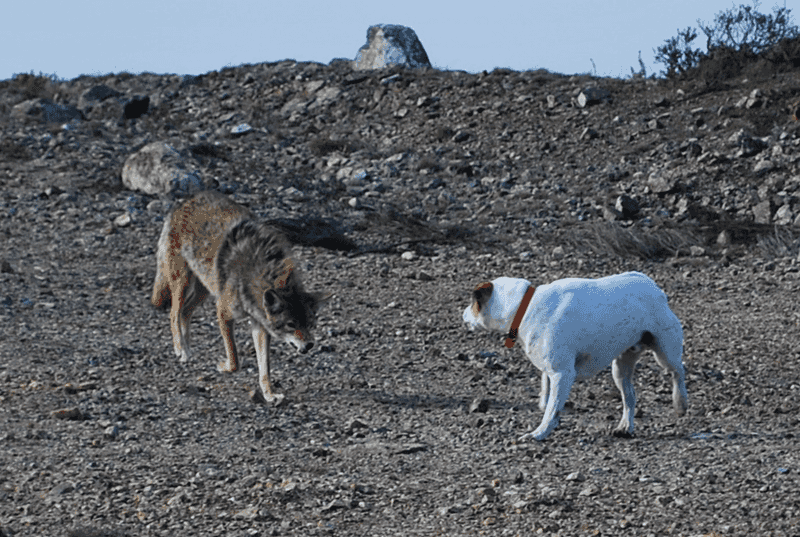
A few easy habits make your yard less interesting to wildlife. Start with food.
Secure trash cans, bring pet food indoors, and clear fallen fruit from the ground. Never feed coyotes, on purpose or by accident, since food teaches them to linger around people.
Next, think about your animals. Virginia DWR and Fairfax County both recommend keeping cats indoors and supervising pets when they are outside.
Walk dogs on a short leash, especially around dawn, dusk, and after dark.
Picture a quick evening routine: lid on the bin, bowl inside, windfall apples raked up, then a leashed dog walk. It takes minutes and covers most of the advice.
These steps are about lowering temptations and keeping pets safe. They do not mean a coyote has picked out your house.
Wildlife passes through yards all the time, and good habits simply give it fewer reasons to stick around.
Respond to an approaching coyote—not to a howl
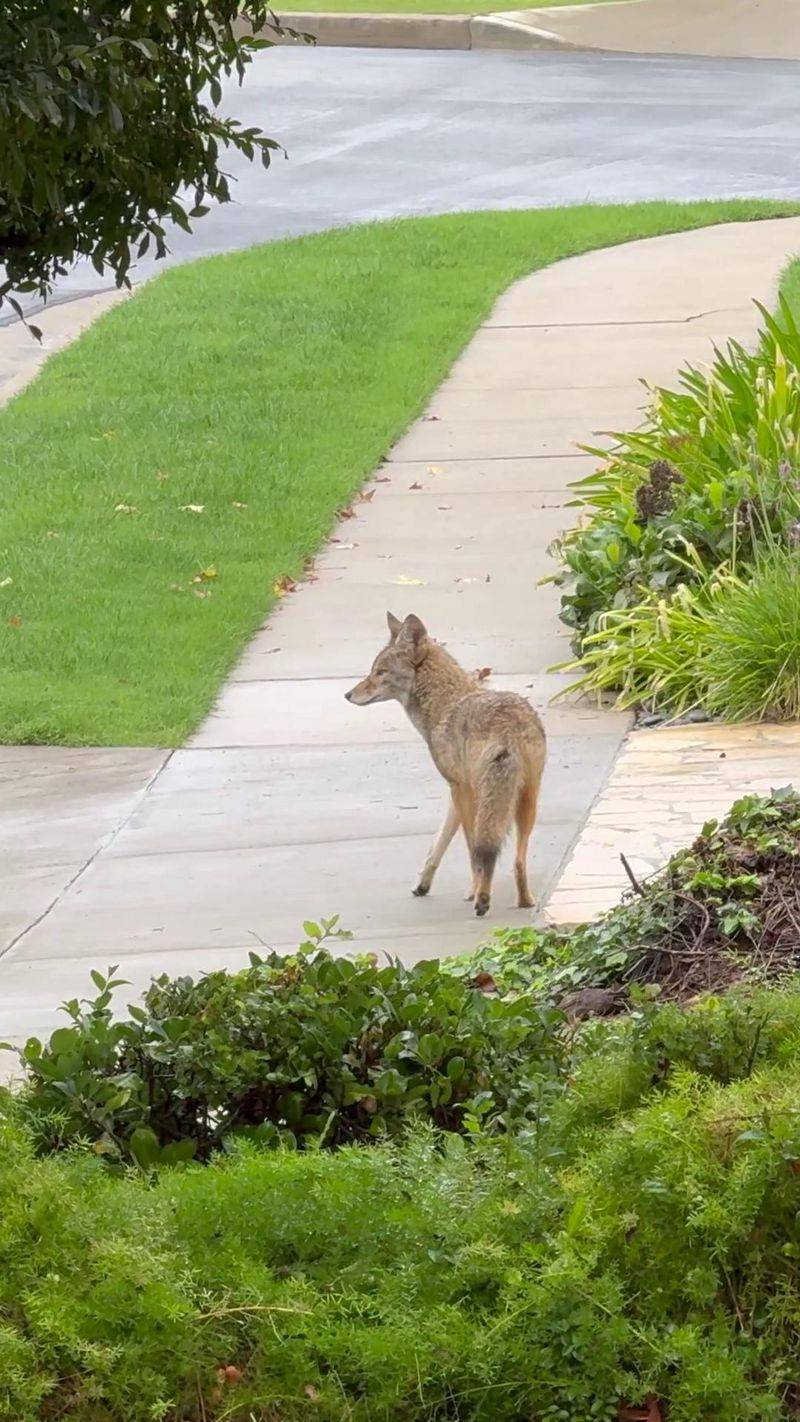
Here is a simple rule: act on what a coyote does, not on what you hear. A chorus in the distance is not a reason to go looking for the animals, so stay put and enjoy the show from indoors.
If a coyote walks toward people or seems unusually comfortable around them, Fairfax County guidance suggests hazing it from a safe position. Stand firm, yell, and wave your arms.
Do not approach or haze an animal if pups may be nearby or if it looks sick or injured. Back away and give it room instead.
For coyote problems, call the Virginia Wildlife Conflict Helpline at 1-855-571-9003. Virginia DWR lists that number, and it also advises contacting your local health department if an animal shows possible signs of rabies.
The howl is just a voice in the dark. What matters is the behavior you can actually see.
Share this story