Get the latest garden guides in your inbox →
Gardening Latest
  • General Gardening
  • Lawn Care
  • Plant Care
  • Composting
  • Soil Health
  • Backyard
  • Garden Muse Magazine
  • General Gardening
  • Lawn Care
  • Plant Care
  • Composting
  • Soil Health
  • Backyard
  • Garden Muse Magazine
  • News
  • Gardening Calendar
  • Garden Structures
  • Vegetable Garden
  • Vertical Garden
  • Raised Beds
  • Hydroponics
  • General Equipment
  • Community Gardens
Garden Themes
  • Spiritual Garden
  • Hydroseeding
  • Seeding and Laying Sod
  • Artificial Grass
  • Lawn Care Equipment
  • Plants
  • Trees
  • Planting Tools
  • Composting Basics
  • Fertilizer
  • Alternative Growing Mediums
  • Front Yard
  • Backyard Activities
  • Landscaping
Gardening Latest

Explore by state

Which state is your garden in?

Currently viewing Maryland

All states

Northeast

  • Connecticut —
  • Delaware 44
  • Maine —
  • Maryland 31
  • Massachusetts 47
  • New Hampshire —
  • New Jersey 31
  • New York 40
  • Pennsylvania 40
  • Rhode Island —
  • Vermont —

Southeast

  • Alabama 30
  • Arkansas —
  • Florida 31
  • Georgia 31
  • Kentucky 45
  • Louisiana 29
  • Mississippi —
  • North Carolina 29
  • South Carolina 44
  • Tennessee 27
  • Virginia 30
  • West Virginia —

Midwest

  • Illinois 29
  • Indiana 32
  • Iowa 44
  • Kansas —
  • Michigan 31
  • Minnesota 29
  • Missouri 29
  • Nebraska —
  • North Dakota —
  • Ohio 31
  • South Dakota —
  • Wisconsin 45

Southwest

  • Arizona 30
  • Colorado —
  • Nevada —
  • New Mexico —
  • Oklahoma —
  • Texas 29
  • Utah —

West

  • Alaska —
  • California 30
  • Hawaii —
  • Idaho —
  • Montana —
  • Oregon —
  • Washington —
  • Wyoming —

No state matches that search.

Site menu

Gardening Latest
  • General Gardening
    • News
    • Gardening Calendar
    • Garden Structures
    • Vegetable Garden
    • Vertical Garden
    • Raised Beds
    • Hydroponics
    • General Equipment
    • Community Gardens
    Garden Themes
    • Spiritual Garden
  • Lawn Care
    • Hydroseeding
    • Seeding and Laying Sod
    • Artificial Grass
    • Lawn Care Equipment
  • Plant Care
    • Plants
    • Trees
    • Planting Tools
  • Composting
    • Composting Basics
  • Soil Health
    • Fertilizer
    • Alternative Growing Mediums
  • Backyard
    • Front Yard
    • Backyard Activities
    • Landscaping
  • Garden Muse Magazine

Explore

  • About GardeningLatest.com
  • Contact Us

Get the latest from the garden

New guides on lawn care, plants and backyard projects, sent when they go up.

Subscribe →

Follow

  • Facebook
  • X
  • Pinterest
  • YouTube
Maryland Gardening

Some Of The Venomous Creatures In Maryland Yards Look Alike, So Here’s How To Spot The Difference

That brown snake by your woodpile might be totally harmless, or it might be a copperhead.

GC

By Grace Calvert

November 28, 2026 · 5 min read

Some Of The Venomous Creatures In Maryland Yards Look Alike, So Here’s How To Spot The Difference
Some Of The Venomous Creatures In Maryland Yards Look Alike, So Here's How To Spot The Difference

That brown snake by your woodpile might be totally harmless, or it might be a copperhead. Maryland backyards are home to a handful of venomous creatures, and several of them have twins that are perfectly safe.

Knowing which is which can keep you, your kids, and your pets out of trouble without hurting helpful wildlife. Here are ten creatures worth learning to tell apart.

At a glance

Where
Maryland Gardening
Hardiness zone
7 0 to 10°F
Read
5 minutes
Published
November 28, 2026

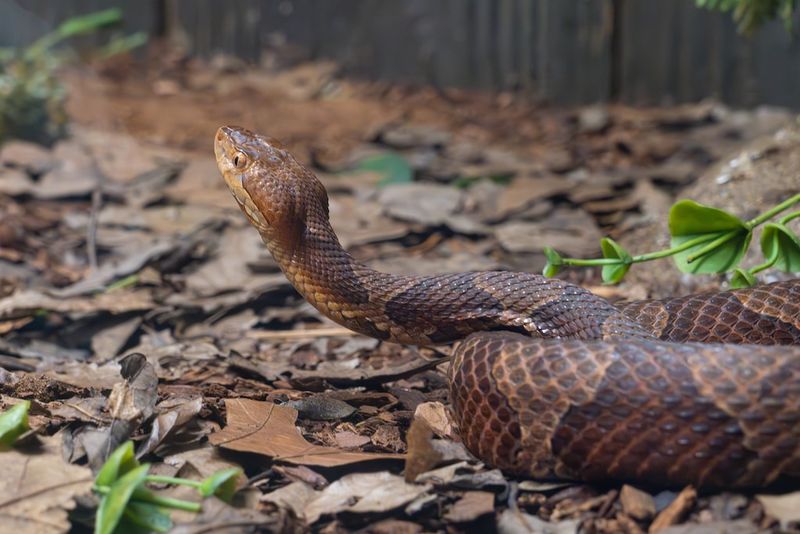
1. Eastern Copperhead

Eastern Copperhead
© The Baltimore Banner

Picture a pile of fallen leaves in October, and you have pictured a copperhead’s favorite hiding spot. It is the venomous snake Marylanders meet most often, largely because its camouflage is so good.

The key mark is the hourglass pattern. The dark bands are wide on the sides and pinch narrow along the spine, like a row of Hershey’s Kisses seen from the side.

Other clues include a thick body, a broad triangular head, and cat-like vertical pupils. Young copperheads also have a bright yellow tail tip they wiggle to lure frogs.

2. Eastern Milksnake
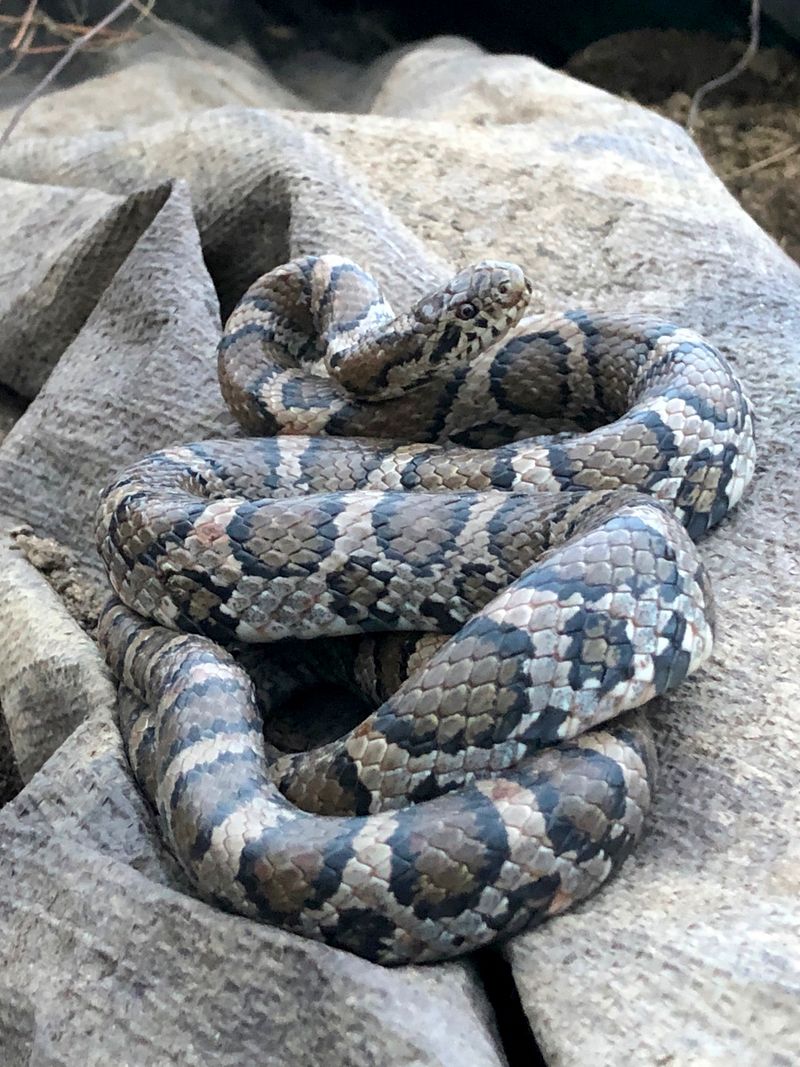
Eastern Milksnake
© Natural Lands

Plenty of milksnakes have lost their lives to a shovel because someone shouted copperhead. That is a shame, since these snakes happily eat mice around barns and sheds.

Look at the shape of the markings. Milksnakes have blotches, roughly saddle or circle shaped, and each one is crisply outlined in black.

The head is narrow and barely wider than the neck. Many milksnakes also show a light Y or V shape on the back of the head, a detail a copperhead never has.

3. Northern Watersnake
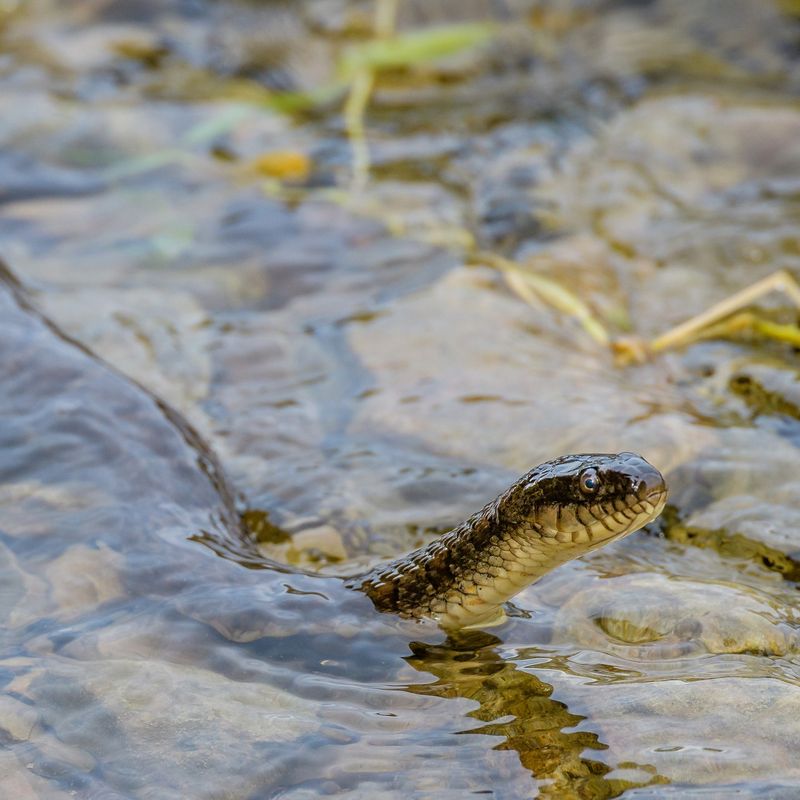
Northern Watersnake
© nationalaquarium

Splash, ripple, and a dark snake glides across your pond. Odds are high it is a northern watersnake, not the cottonmouth people often fear.

Good news first: cottonmouths do not live in Maryland at all. Watersnakes, however, can look grumpy, flatten their heads, and bite if grabbed.

False widows share the round, shiny body shape but come in brown or purplish tones.

Their bands run the opposite way from a copperhead’s, wide across the back and narrower on the sides. Round pupils and a slimmer head finish the story.

4. Timber Rattlesnake
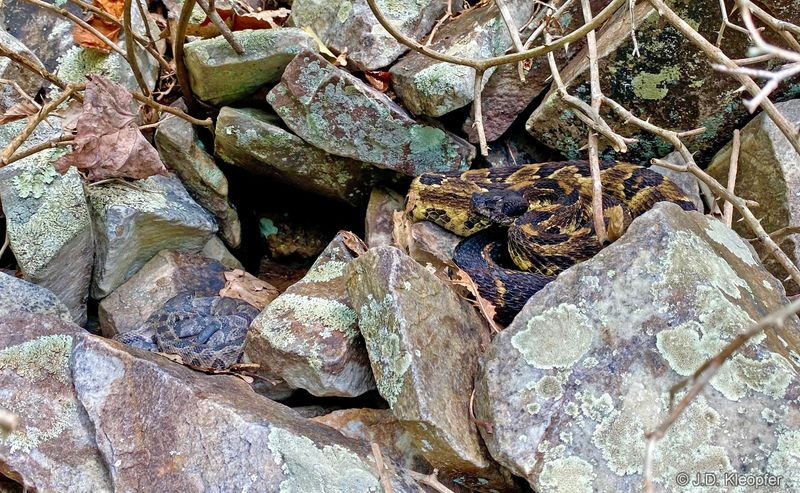
Timber Rattlesnake
© Virginia Herpetological Society

Timber rattlers are rare guests, mostly found in the rocky mountains of western Maryland. If your home backs onto wooded ridges out there, though, they are worth knowing.

Watch for dark zigzag chevrons across a yellow, tan, or nearly black body. The tail ends in solid black velvet plus a rattle.

Fun fact: these snakes are famously calm and often lie still rather than strike. Give one plenty of room and it will usually just wait for you to leave.

5. Eastern Rat Snake
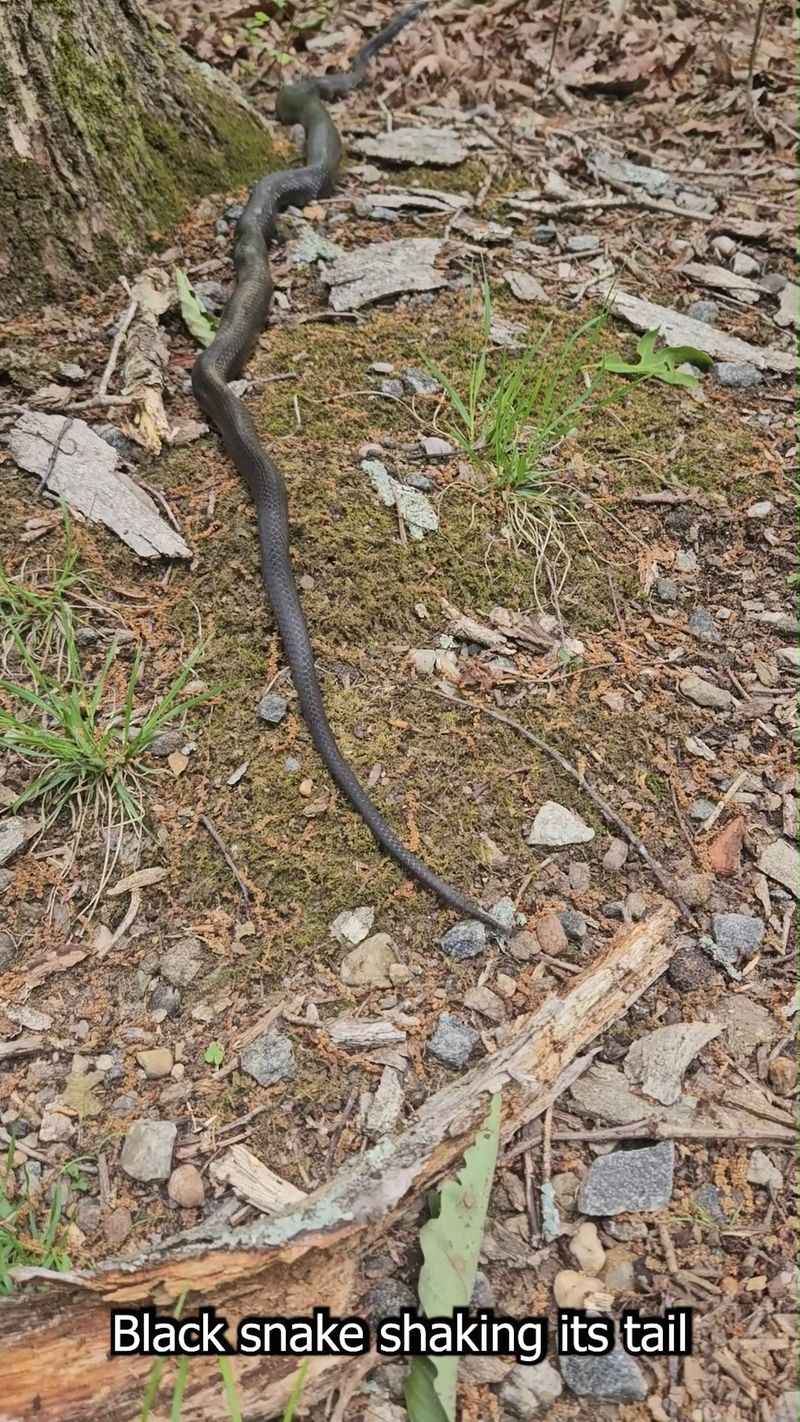
Eastern Rat Snake
© princewilliamforestpark

Shiny, black, and sometimes six feet long, the eastern rat snake makes people jump. It sometimes even shakes its tail in dry leaves, which sounds a lot like a rattle.

Do not be fooled. There is no actual rattle, and the body is smooth, slender, and glossy rather than banded.

Rat snakes climb trees, raid bird boxes, and keep rodents in check. Young ones are blotchy gray, which causes confusion, but their narrow heads and round pupils give them away.

6. Black Widow Spider
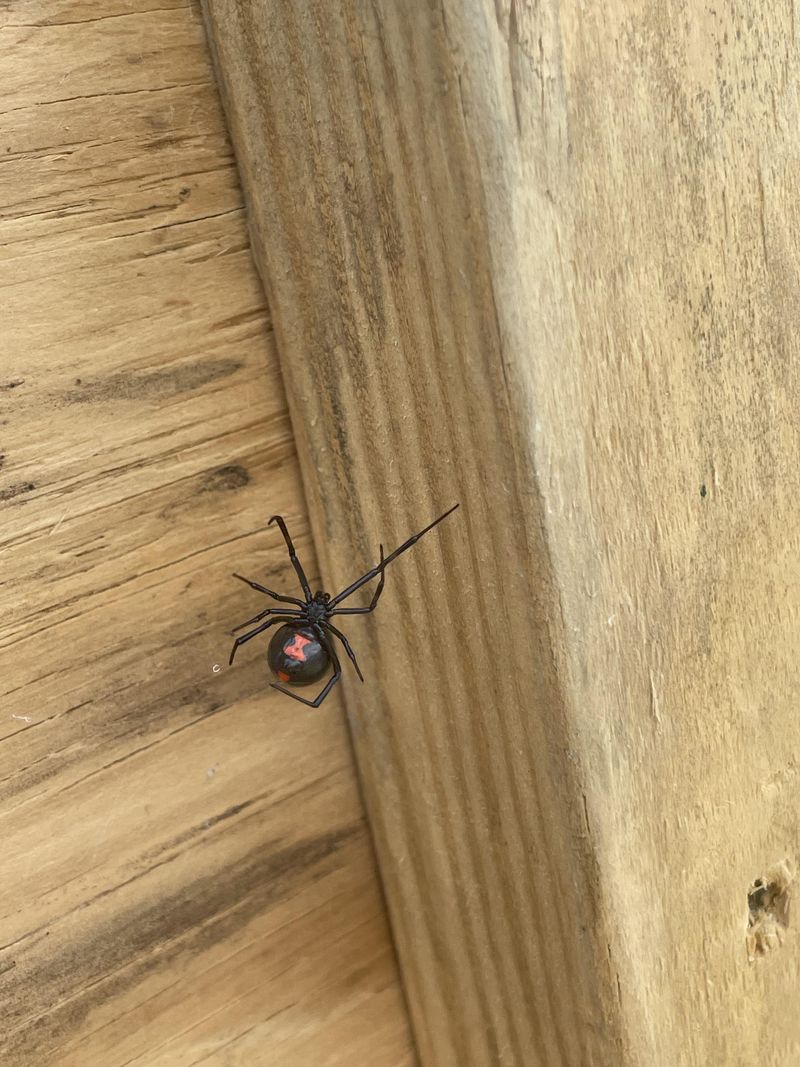
Black Widow Spider
© Reddit

Flip over an old flowerpot and you might find a glossy black spider with a round belly. Peek underneath, and a red hourglass tells you it is a black widow.

Its venom can cause painful muscle cramps, so gloves matter when cleaning sheds and woodpiles. Their webs are messy and tangled, usually low to the ground.

Bites are uncommon because widows are shy. They would much rather hide than fight a gardener.

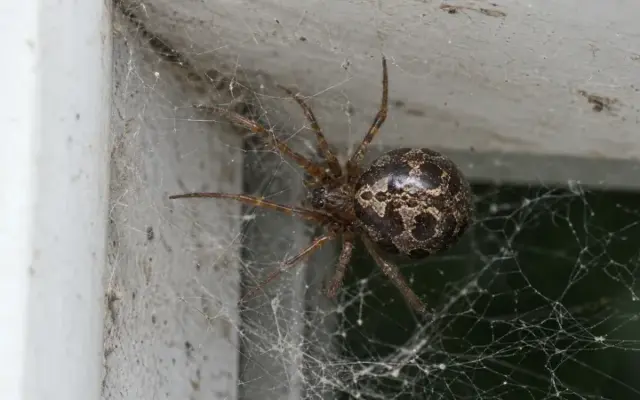
7. False Widow Spider
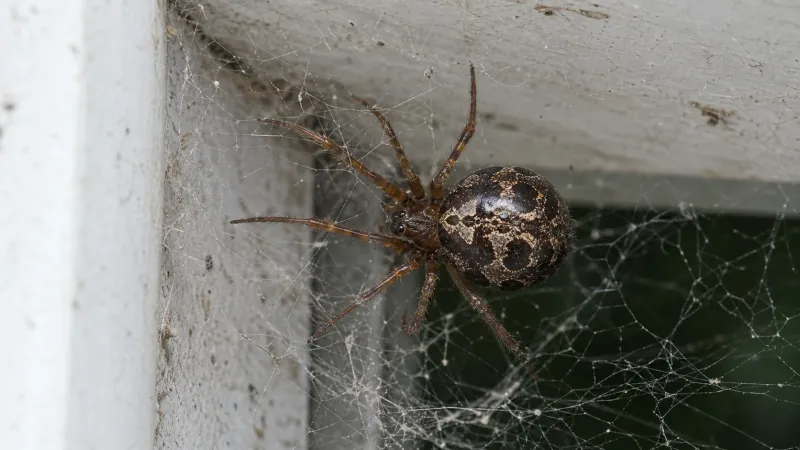
False Widow Spider
© JG Pest Control

Here is the black widow’s harmless cousin, and it fools folks all the time. False widows share the round, shiny body shape but come in brown or purplish tones.

Flip test: no red hourglass. Some have pale markings on top instead.

A bite might feel like a bee sting at worst. You can safely relocate one with a cup and a piece of paper.

8. Brown Recluse Spider
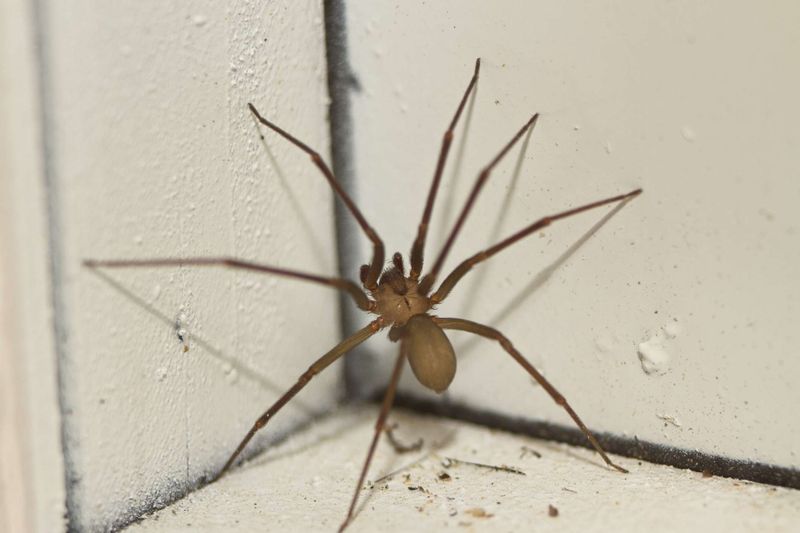
Brown Recluse Spider
© HEALTH

Ask around Maryland and someone will swear they were bitten by a brown recluse. Truthfully, these spiders are very rare here and not native to the state.

A real recluse has a violin-shaped mark pointing toward its rear, plain legs with no stripes or bands, and six eyes in pairs.

Most brown spiders in local basements are cellar or wolf spiders. Unexplained skin sores are far more often infections than spider bites, so see a doctor.

9. Wolf Spider
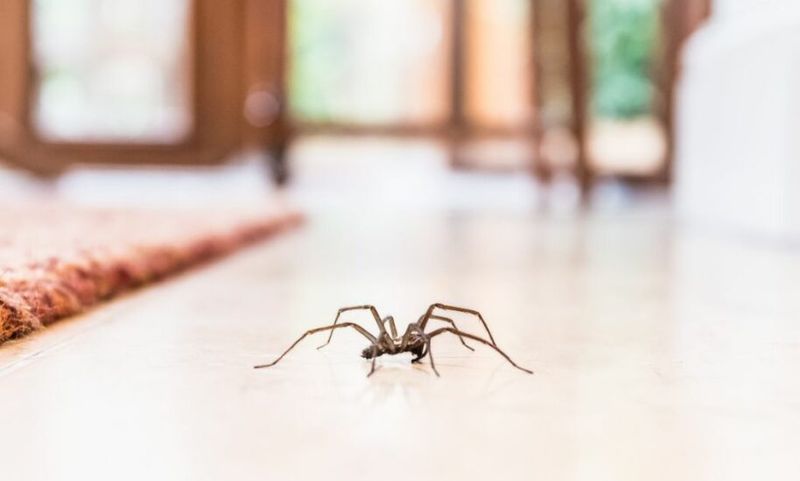
Wolf Spider
© Hoffman’s Exterminating

Shine a flashlight across your lawn at night and you may spot tiny green sparkles. Those are wolf spider eyes reflecting light back at you.

Wolf spiders are big, hairy, and fast, with stripes on their bodies and banded legs. People often mistake them for brown recluses.

They do have mild venom, but a bite is rare and usually no worse than a bee sting. Mothers even carry their babies on their backs, which is equal parts creepy and sweet.

10. Saddleback Caterpillar
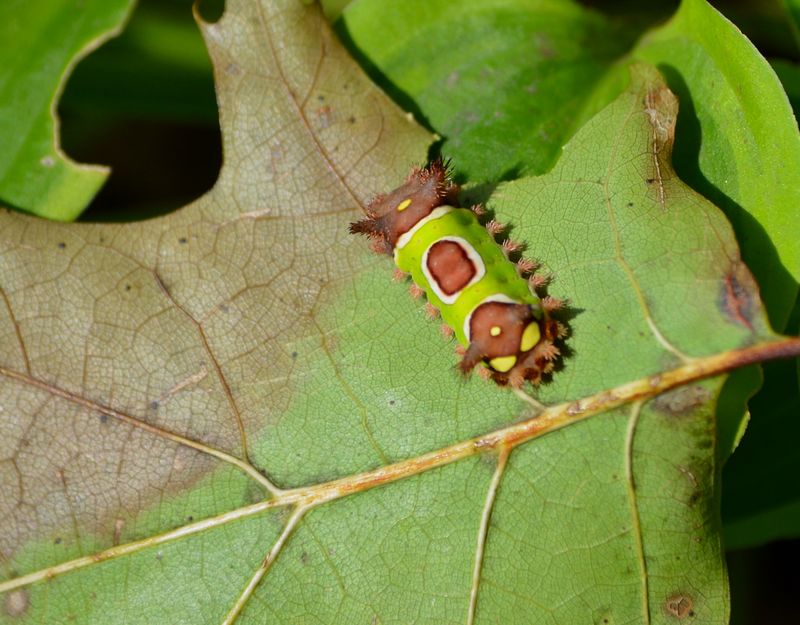
Saddleback Caterpillar
© Before You Garden…

Not every venomous yard creature is a snake or spider. The saddleback caterpillar looks like it wears a tiny green blanket with a brown spot, and touching it really hurts.

Its spines inject a stinging venom that causes burning pain and rash. Puss caterpillars, fuzzy and flat like a hairpiece, are another stinger in Maryland.

Harmless caterpillars are usually smooth or softly hairy without stiff spine clusters. Simple rule for kids: admire with eyes, not fingers.

Share this story
GC

Written by

Grace Calvert

More from Grace Calvert →

About Gardening Latest

Gardening Latest provides in-depth guides to maintaining and enhancing your garden and backyard. Learn how to make the most of the space you have and create a beautiful garden.

More about us →

Latest stories

  • South Carolina GardeningSpotted a Big Black Snake Sunning on Your South Carolina Porch Steps This Winter? Here’s Which One It Is

    Spotted a Big Black Snake Sunning on Your South Carolina Porch Steps This Winter? Here’s Which One It Is

    1 min ago
  • Kentucky GardeningThat Loud Drumming on Your Kentucky Gutters at Dawn Is a Woodpecker Claiming Its Territory

    That Loud Drumming on Your Kentucky Gutters at Dawn Is a Woodpecker Claiming Its Territory

    7 min ago
  • Florida GardeningA Florida Mammal Weighing About Two Quarters Is Venomous, and It Hunts in Your Mulch

    A Florida Mammal Weighing About Two Quarters Is Venomous, and It Hunts in Your Mulch

    13 min ago
  • Maryland GardeningMeet the Tiny Mammal With a Venomous Bite That Hunts Under Maryland Lawns All Winter Long

    Meet the Tiny Mammal With a Venomous Bite That Hunts Under Maryland Lawns All Winter Long

    20 min ago
  • Iowa GardeningFound Bright Orange Jelly Blobs on Your Iowa Cedar Tree? Here’s What’s Growing There

    Found Bright Orange Jelly Blobs on Your Iowa Cedar Tree? Here’s What’s Growing There

    26 min ago

Gardening by state

Stories for your state, and the hardiness zone most of it gardens in.

Keep exploring

Read next

All Maryland Gardening →
Maryland GardeningMeet the Tiny Mammal With a Venomous Bite That Hunts Under Maryland Lawns All Winter Long
Maryland Gardening

Meet the Tiny Mammal With a Venomous Bite That Hunts Under Maryland Lawns All Winter Long

20 min ago
Maryland GardeningSalt Is Wrecking the Shrubs Along Your Maryland Driveway, and This Winter Swap Keeps Them Alive
Maryland Gardening

Salt Is Wrecking the Shrubs Along Your Maryland Driveway, and This Winter Swap Keeps Them Alive

6 hr ago
Maryland GardeningThose Coyote Howls You Hear Near Your Maryland Home at Night Aren’t Random, and Here’s What They Mean
Maryland Gardening

Those Coyote Howls You Hear Near Your Maryland Home at Night Aren’t Random, and Here’s What They Mean

9 hr ago

More from Maryland Gardening

  • Your Maryland Lawn Sprouts Fresh Ant Hills After Every Rain, and Here’s What They’re Really Telling You

    Nov 27
  • Your Maryland Rhubarb Is Sending Up a Giant Flower Stalk, and Here’s Why You Should Cut It Off

    Nov 26
Back to top

Leave a response Cancel

Your email address stays private. Required fields are marked with an asterisk.

Gardening Latest

In-depth guides to maintaining and enhancing your garden and backyard: how to make the most of the space you have, and how to make it beautiful.

  • Facebook
  • X
  • Pinterest
  • YouTube

We may earn a portion of sales from products or services that are purchased through our site as part of our affiliate partnerships with retailers.

Explore

  • About GardeningLatest.com
  • Contact Us
  • Terms and Conditions
  • Privacy
  • Editorial Note:
  • FTC Disclosure

Newsletter

New garden guides and seasonal tips, straight to your inbox.

We’ll email you a link to confirm. Unsubscribe any time.

Almost there! Check your inbox and tap the link to confirm.

© 2026 Gardening Latest. All rights reserved.

Back to top