
What to Sell at Christmas Markets for Food Lovers and Gift Shoppers
A good Christmas market stall makes someone stop with a shopping bag in one hand and a warm drink in the other. Perhaps it’s a row of plum jam jars catching the afternoon light. Perhaps it’s a rosemary wreath they can already picture on their front door. The products feel useful, giftable or too tempting to walk past. You don’t need a stall bursting with everything you’ve ever made.
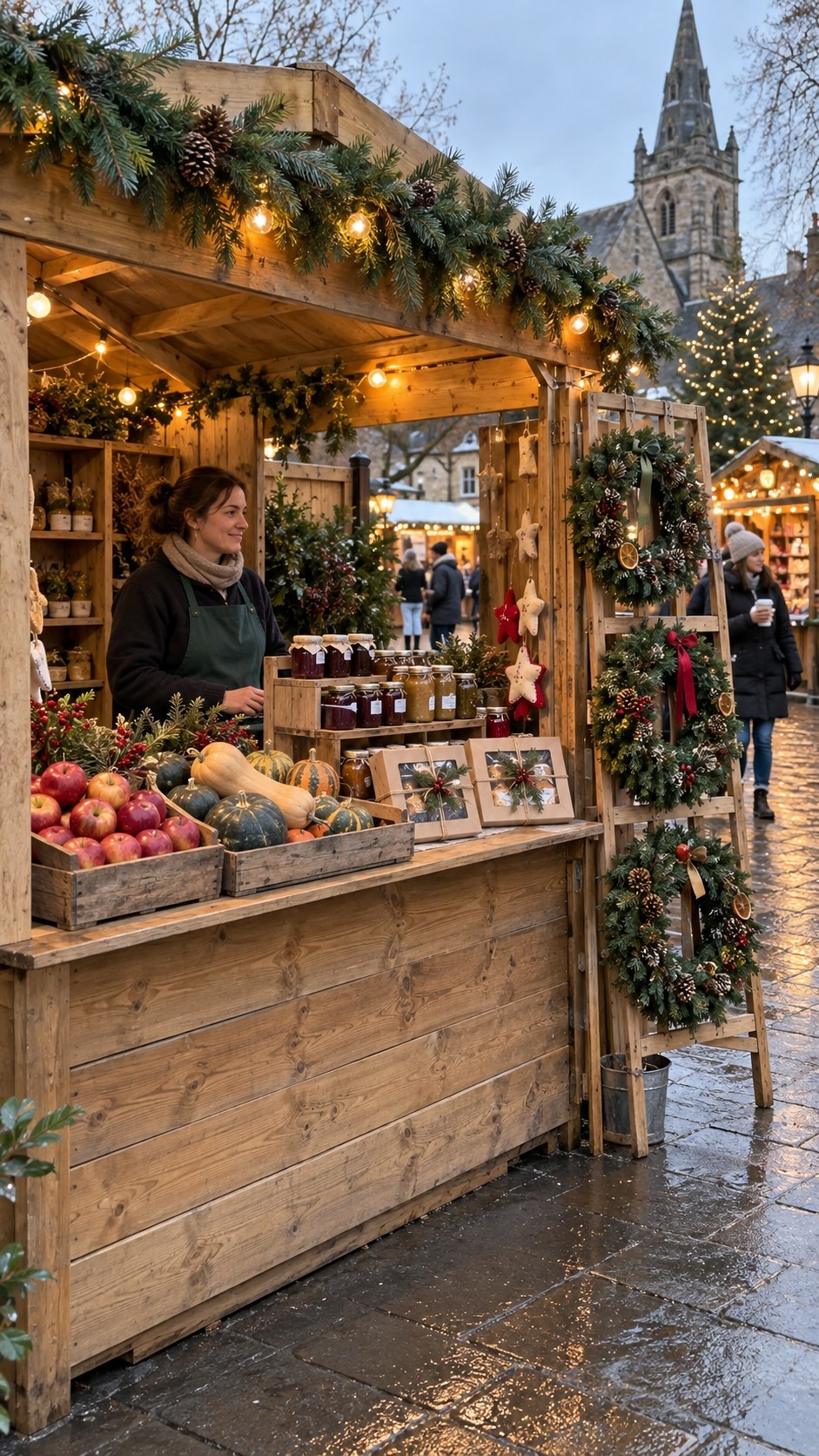
Choosing what to sell at Christmas markets starts with what you can grow, make or prepare well. Then comes the less romantic business of packing it, transporting it and earning enough from each sale. There’s room for winter vegetables alongside festive treats, and for handmade decorations beside practical gifts. Pick a small range with a clear purpose, then give shoppers an easy way to buy it.
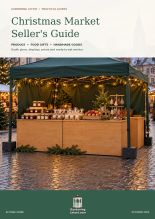
Download FREE Guide for Selling at Christmas Markets
This FREE, comprehensive 42-page guide provides you the information needed to set up and run a Christmas Market stall. It includes booth plans, technical drawings, photo illustrations, product ideas, pricing examples, US and UK rules checklists and printable worksheets.
Choosing What to Sell at Christmas Markets
Think about the person approaching your table. Someone buying a present needs something easy to carry and ready to give. A shopper planning Christmas dinner wants useful ingredients and a collection date. Hungry visitors need food they can eat without wrestling with a knife and fork. Start with one main product group and a few related extras. A preserves stall could offer single jars and a small gift set. A wreath maker might add matching hanging decorations. Ask the organiser about permitted products, competing stalls and rules on bought-in goods before booking. Also check insurance requirements, stall dimensions, power, weather cancellation terms and cooking restrictions. A popular event can still be the wrong place for your products, so get those answers before paying for the pitch.
Fresh Produce to Sell at Christmas Markets
Christmas dinner gives ordinary vegetables a useful sales story. Where your growing season allows, consider carrots, parsnips, leeks and Brussels sprouts. Stored winter squash, sound apples and garlic can also suit the stall. Offer manageable quantities rather than expecting shoppers to carry a week’s groceries around the market. A paper bag of roasting vegetables feels more achievable than a sack, especially when someone has arrived by bus with two children.
Put together a small soup bundle or roasting vegetable bag, with its contents and price shown. Culinary herb bunches make a sensible extra, provided you can identify them and keep them fresh. Take Christmas collection orders if you have a reliable supply. Specify the collection place and time, record the customer’s details with their permission and avoid promising a harvest that cold weather could wipe out. Produce still needs care during transport and display.
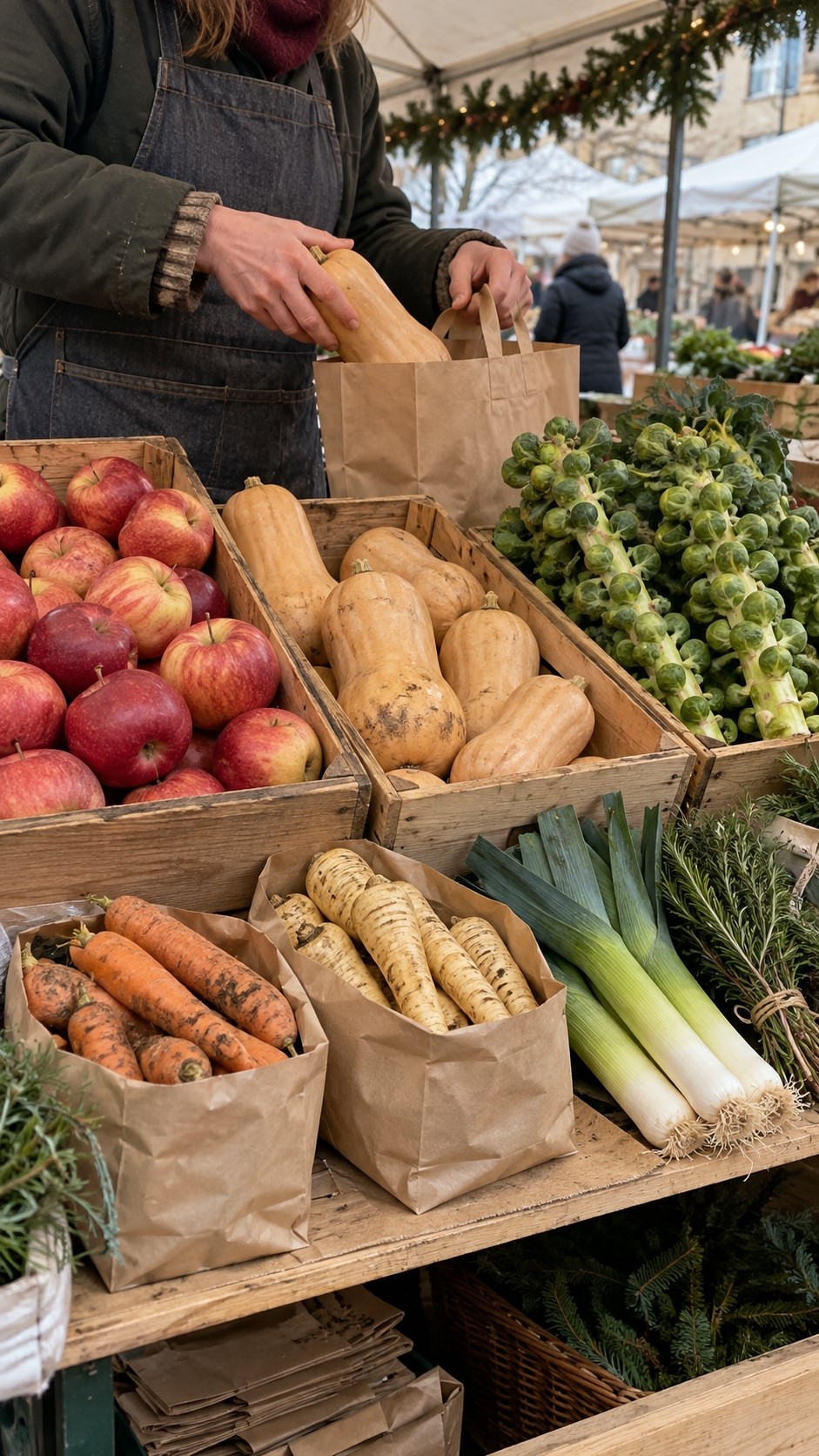
Pack produce in quantities shoppers can carry around the market.
Jarred Food to Sell at Christmas Markets
Jam, jelly and chutney fit neatly into Christmas shopping because people can imagine using them. Plum jam belongs on holiday breakfast toast. Apple chutney belongs beside a cheeseboard. Fruit mincemeat offers a shortcut to a tray of mince pies. Choose a few flavours with distinct uses and offer small gift sets, perhaps a breakfast pair or a selection for someone who loves cheese. Keep the jars visible through the packaging.
Safe processing comes before seasonal flavour experiments. Use a tested recipe suited to the product and confirm what your local authority allows for sale. Changing sugar, acidity or ingredients can change preservation requirements. A sealed lid alone doesn’t prove shelf stability, and a home-preserving recipe doesn’t automatically meet commercial rules. Virginia Cooperative Extension notes that some preserves need testing or a process authority’s guidance. Establish suitable storage instructions and shelf life before printing labels. [1]
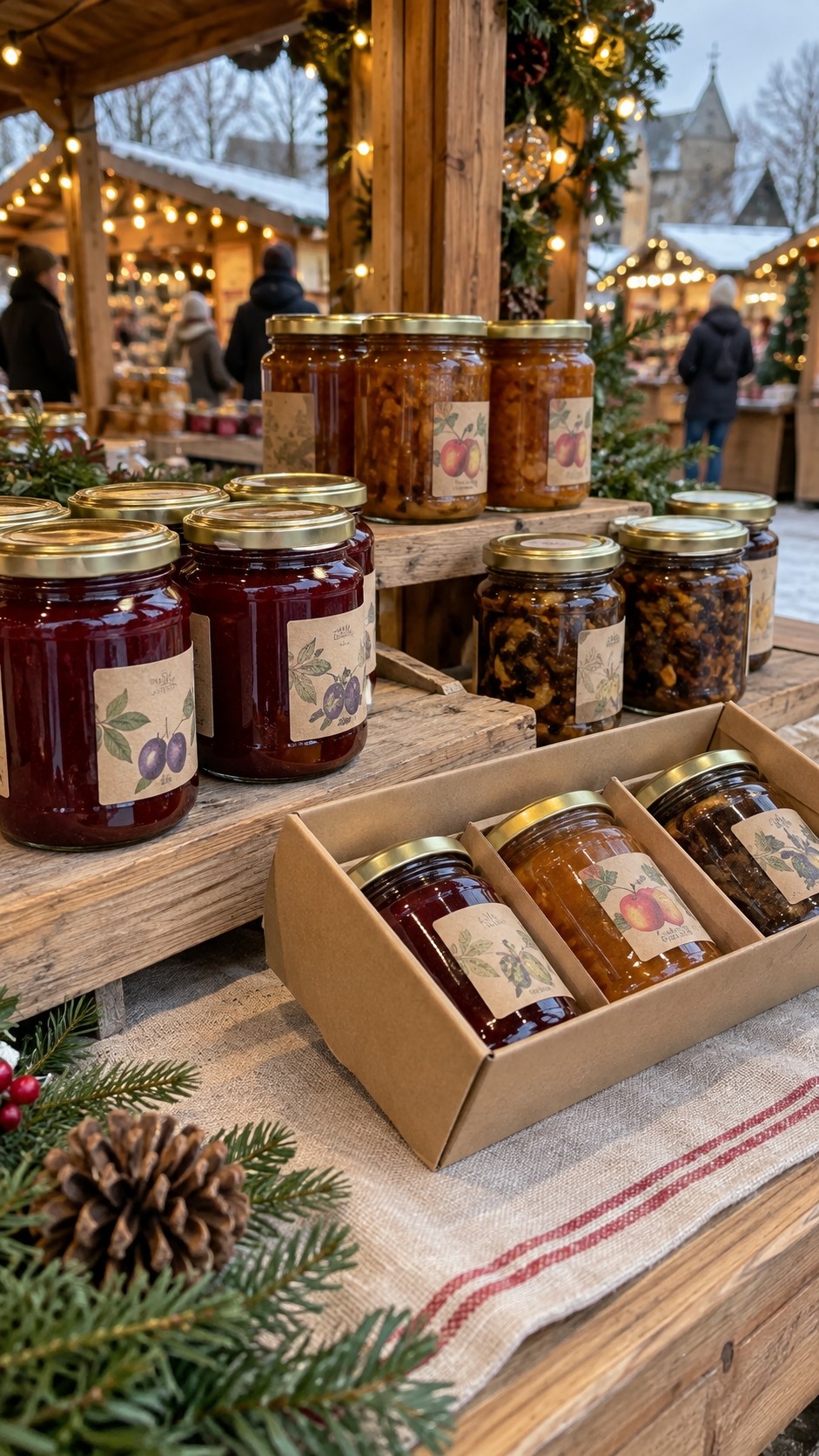
Related flavours make a useful gift set without adding more recipes.
Bottled Drinks to Sell at Christmas Markets
Spiced apple cordial, fruit syrups and other nonalcoholic drink concentrates can make attractive take-home gifts. Choose recipes and processes suitable for sale, then explain how much to dilute and whether refrigeration is needed before or after opening. Small bottles keep the purchase easier to carry. A sealed packet of mulling spices can sit beside the drinks, with instructions for adding it to apple juice at home. Use food-grade ingredients and packaging throughout.
Bottling brings its own costs. Count the cap, label, protective packing and breakages alongside the ingredients. You’ll also need a supported shelf life for the exact product and process. Alcoholic drinks bring extra licensing questions, so speak to the organiser and relevant licensing authority before offering mulled wine or liqueurs. For a first stall, a short nonalcoholic range can keep the plan more manageable, although food rules still apply.
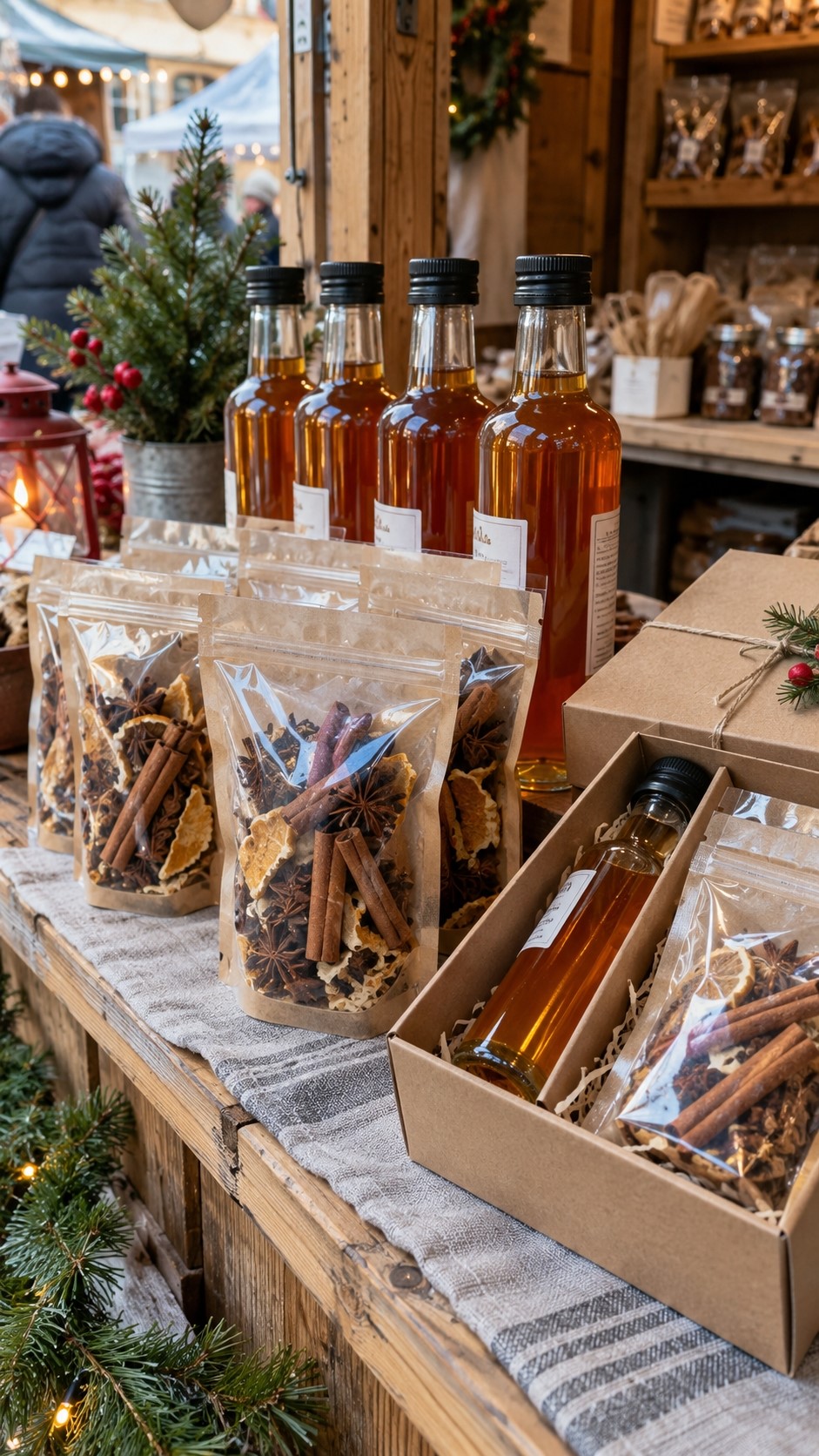
Protect glass bottles and include clear preparation and storage instructions.
Selling Cheese and Eggnog at Christmas Markets
Cheese and bottled eggnog deserve a separate plan. They can suit festive shoppers, but you need any required approvals, appropriate production facilities and controlled storage during transport and trading. Check each product’s refrigeration requirements and monitor temperatures. Cold outdoor air is unreliable. For eggnog, agree a safe process and suitable ingredients with the relevant authority. FDA advice calls for pasteurised eggs or egg products in recipes served with raw or undercooked eggs. Alcohol doesn’t replace safe processing. [2]
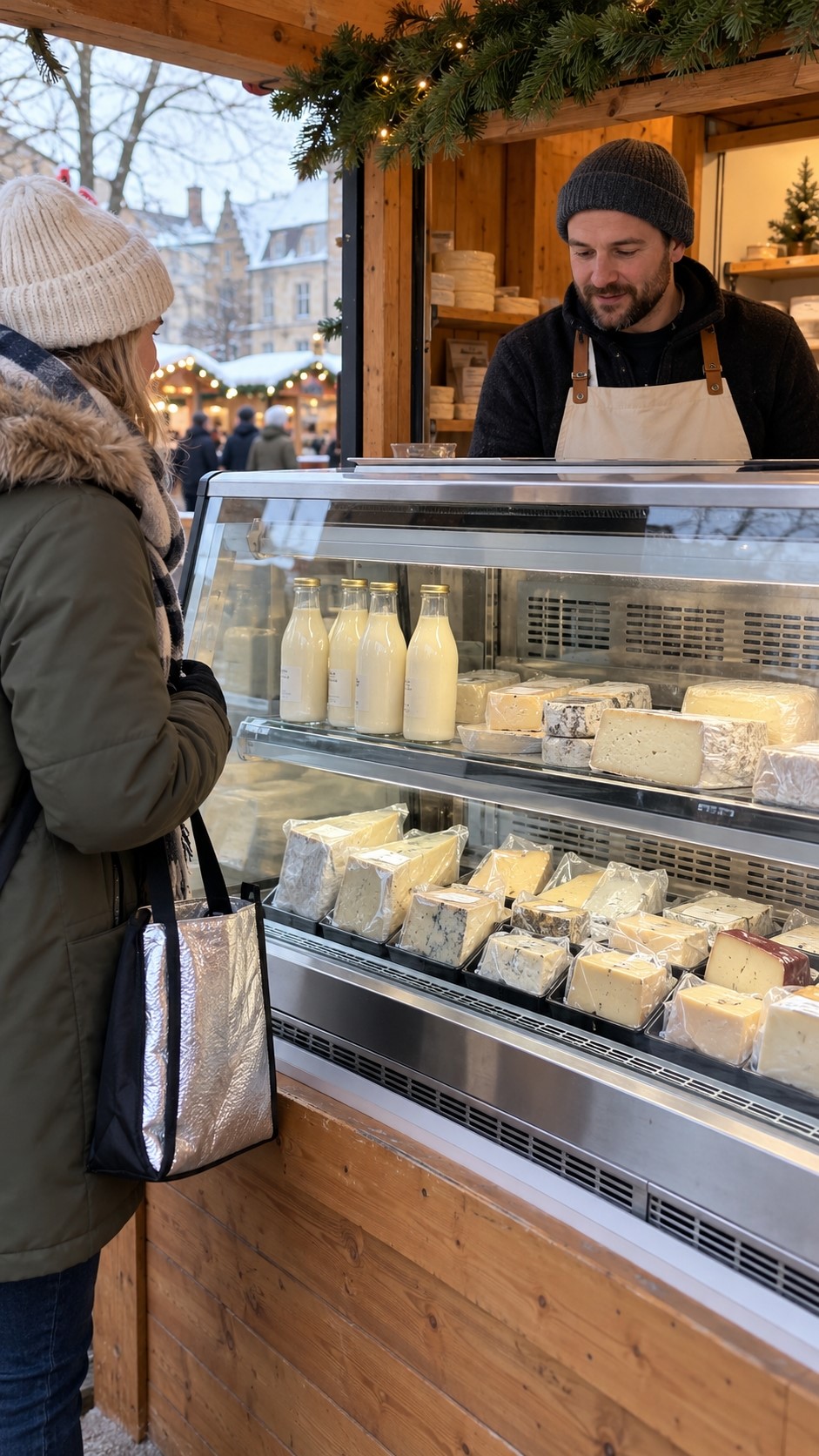
Chilled products need suitable storage throughout transport and trading.
Homemade Food to Sell at Christmas Markets
Shortbread, gingerbread biscuits, biscotti and small fruitcakes offer plenty of scope for a focused baking stall. Fudge, brittle and chocolate bark add other textures, although the recipe determines storage needs. Choose products that survive the trip and look appealing after several hours on display. Test your packaging before ordering hundreds of boxes. Biscuits sliding into a heap at one end of a carrier lose some of their appeal, however good they taste.
A modest gift box can be easier to buy than a large hamper. Offer a clear quantity and protect the contents with food-safe wrapping or inserts. Keep ingredient and allergen information readable, even after adding a ribbon. Don’t assume every bake qualifies for home-kitchen sale or room-temperature storage. Cream fillings and other perishable additions change the plan. Start with recipes you can reproduce consistently and establish their shelf life rather than borrowing a date from someone else’s product.
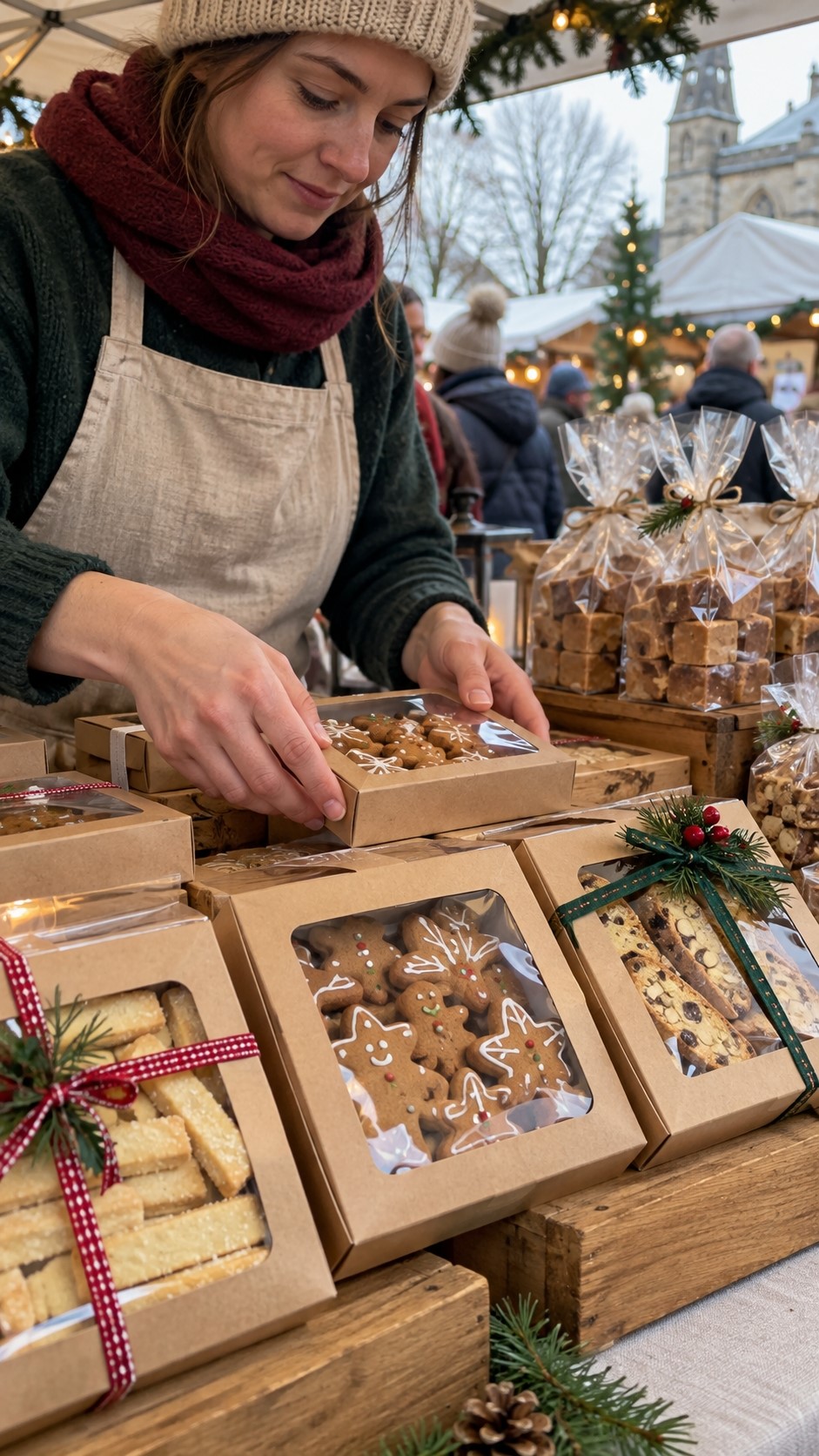
Window boxes let shoppers see the food while keeping it protected.
Ready to Eat Food to Sell at Christmas Markets
Food for immediate eating needs a different setup from a table of wrapped gifts. Squash soup with a bread roll, baked potatoes, savoury pastries and grilled cheese sandwiches are possible starting points. Sweet options include warm waffles or doughnuts, where equipment and permissions allow. Pick food that you can serve safely at a steady pace. A long menu creates more ingredients to store and more chances for a queue to stop moving.
Practise a full order before the event, including payment and handing over napkins. Count cups, lids, utensils and waste in the price. Check the required handwashing facilities, cooking and holding controls, water supply and wastewater arrangements with the local food authority. Confirm power capacity with the organiser. Keep preparation separate from payment and customer collection as far as the stall allows. Nobody should have to reach over a hot pan to collect lunch.
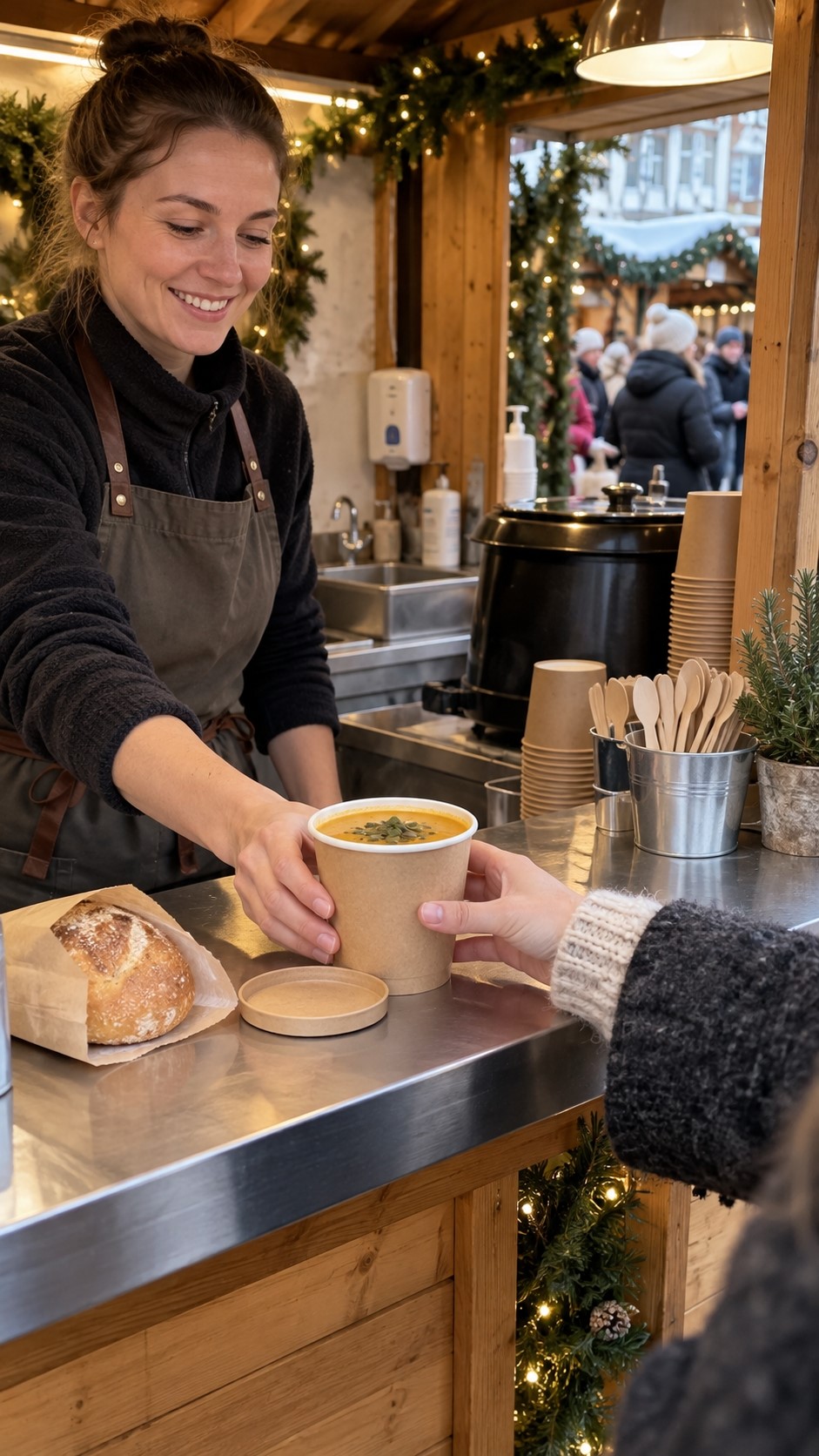
A short menu makes food service easier to organise.
Hot Drinks to Sell at Christmas Markets
Hot chocolate and spiced apple drinks are worth considering if the market permits another drinks seller. Start with one cup size and a small number of choices. Milk needs suitable storage, and toppings add both handling and allergen questions. Use cups and lids made for hot drinks, keep the serving counter steady and check where customers will collect their order. A modest menu that you can serve well beats a chalkboard full of drinks you can’t keep up with.
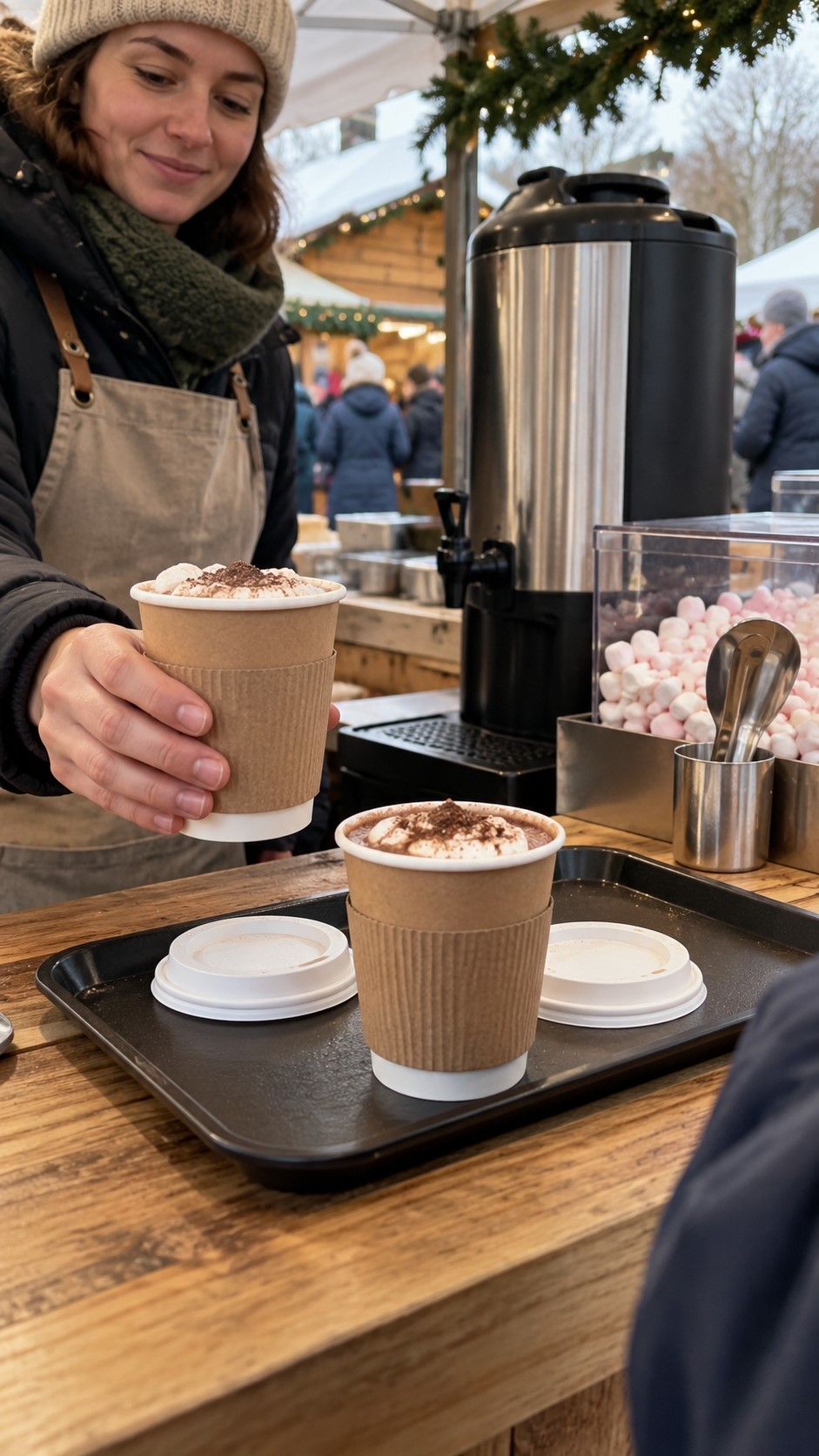
Allow counter space for preparing drinks and handing over orders.
Handmade Crafts to Sell at Christmas Markets
Small handmade gifts suit a limited table. Consider sewn felt stars, wooden tree decorations, reusable fabric gift bags or knitted accessories. Keep a recognisable look across the range. Several colour choices are useful, but dozens of unrelated designs make preparation harder. Time yourself making an item, including finishing and packing. That little hanging loop still takes time to attach. Personalised ornaments can encourage orders, provided you set a limit you can meet. Record spelling in writing and agree a collection time before taking payment. Candles, cosmetics, electrical items and children’s toys have their own safety requirements. For a first market, choose items you can make well and sell in line with the applicable rules. Finish enough stock before the event to spend your time talking to customers.
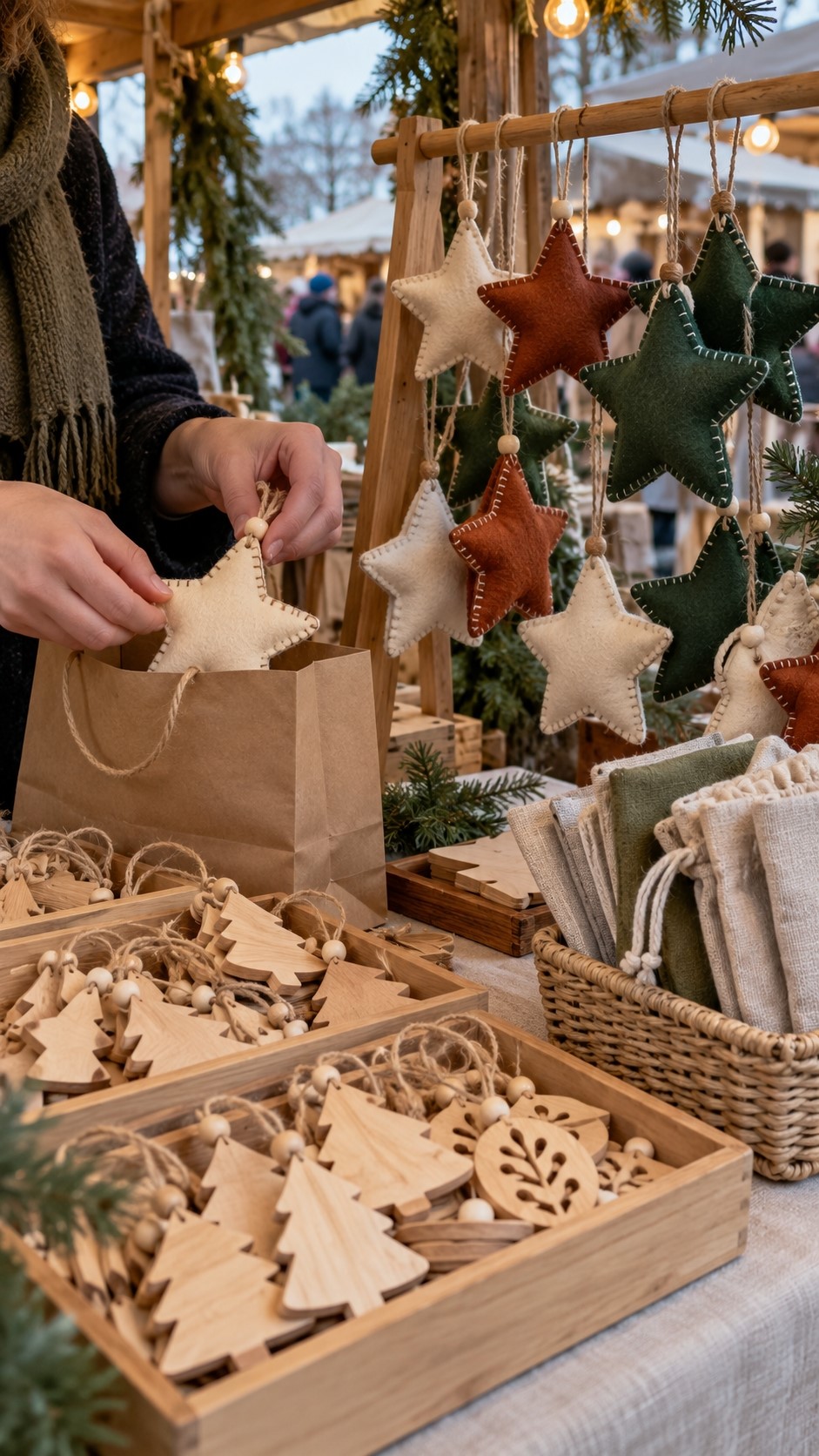
Time the finishing and packing as well as making the product.
Garden Gifts to Sell at Christmas Markets
Evergreen wreaths, small table arrangements and potted culinary herbs give a garden-based stall a clear seasonal purpose. Make a sample wreath first and time the whole job, including gathering permitted materials and clearing up. Use healthy cuttings you own or have permission to take. A few wreath designs in different sizes are easier to explain than a rail of unrelated styles. Show one hanging at eye level so shoppers can judge its shape.
Include care advice and suitable display conditions with fresh greenery. Keep decorative foliage away from edible products, and identify plants correctly. Drying needles and loose decorations should never end up in a food box. For herb pots, cover the container without blocking drainage and include the plant’s name and care needs. Check any local plant-selling requirements. Offer advance wreath orders if you have limited transport space, with a collection system you can manage without losing track.
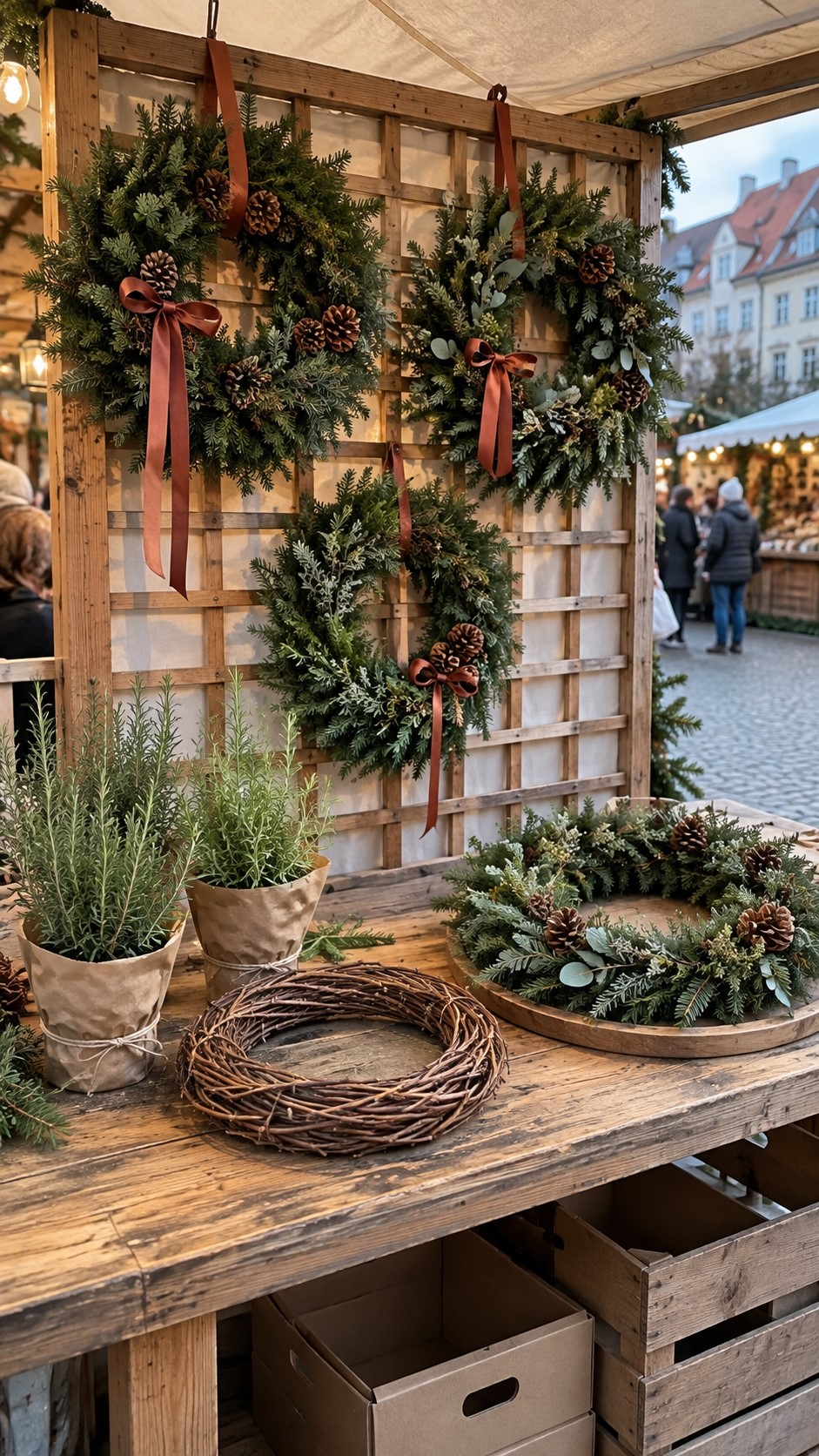
Display a finished wreath at eye level and include care advice.
Christmas Market Stall Displays and Pricing
A good display helps someone understand the range in a few seconds. Put your main products where they can be seen, use stable risers and keep heavier stock low. Group related items together, with a clear price beside each group. Leave room to pick things up. A little greenery on the stall frame is enough. If customers have to move decorations to reach a jar, the decorations have taken over the business.
Keep signs short and specific. “Apple chutney” tells shoppers more than “Christmas magic in a jar”. Show the pack size, price and any collection details where relevant. Keep required product information available and leave a clear payment area. Charge your card reader, test the connection and pack spare bags. For chilled goods, use an appropriate refrigerated display or another approved arrangement. Keep backup stock protected from rain, contamination and damage.
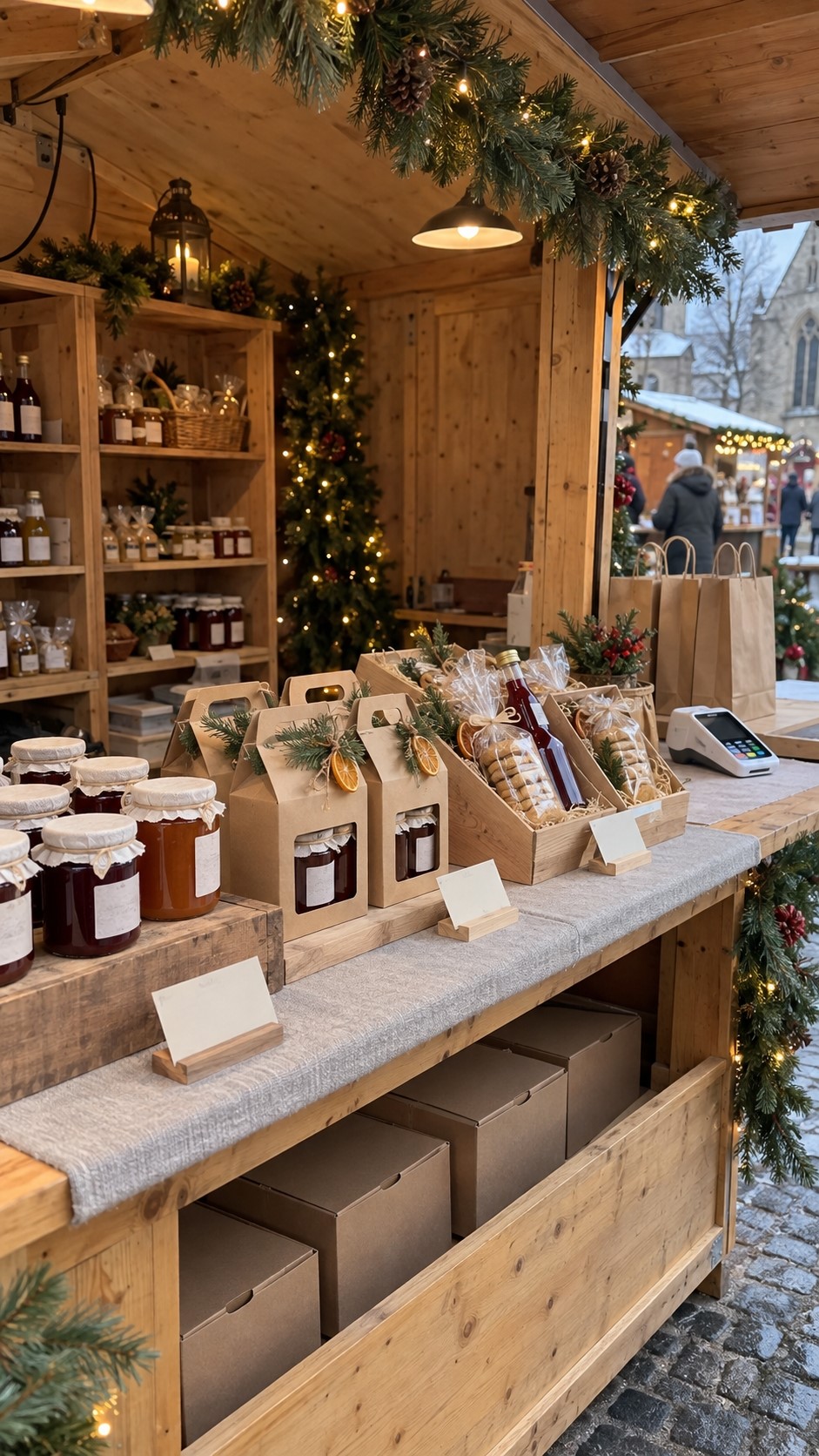
Group single products and gift bundles with space to handle each pack.
Pricing Christmas Market Products and Gift Bundles
Add ingredients or materials, packaging and your labour before choosing a price. Then allow for stall fees, travel, payment charges and stock you may not sell. As a simple illustration, a product priced at $8 with $4 in variable costs leaves $4 towards fixed event costs and profit. If those fixed costs are $120, you need 30 sales to cover them. This assumes the $4 includes all variable costs and any tax collected for the authorities is excluded.
Offer bundles only after doing the same calculation for the complete pack. The box and the time spent filling it belong in the cost. A single jar, a two-jar carrier and a larger gift set give shoppers different spending options without requiring new recipes. Avoid assuming that a busy stall has made a profit. Record what sold, what came home and how much preparation time the event consumed. Those notes will improve the next booking.
Before Selling Food at Christmas Markets
Contact the organiser and your local food authority before committing to a menu. Ask about home production, temporary food permits, food-handler training, sampling and label requirements for your exact products. In the US, the FDA directs home-based sellers to state and local health departments as well as applicable federal rules. In England, Wales and Northern Ireland, food businesses must register with their local authority at least 28 days before trading. Other locations have their own requirements.
Prepare accurate ingredient and allergen information for each recipe, including bought-in ingredients and toppings. Check the rules for packaged goods and food served loose, as the information required can differ. Keep supplier and batch records, and update your information whenever a recipe changes. Samples need permission and safe handling too. The Food Standards Agency provides guidance on allergen information and cross-contact controls. A handwritten sign can’t compensate for an uncertain answer about what’s in the food.
A Manageable First Christmas Market Stall
Choose a range you can prepare without turning December into a sleepless production line. Make a trial batch, photograph the finished products and practise setting up the table. Check that everything fits in the vehicle before market morning. After the event, use your sales notes to decide what deserves more space next time. The most useful Christmas market ideas are the ones that suit your skills and leave you with enough enthusiasm to make them again.
