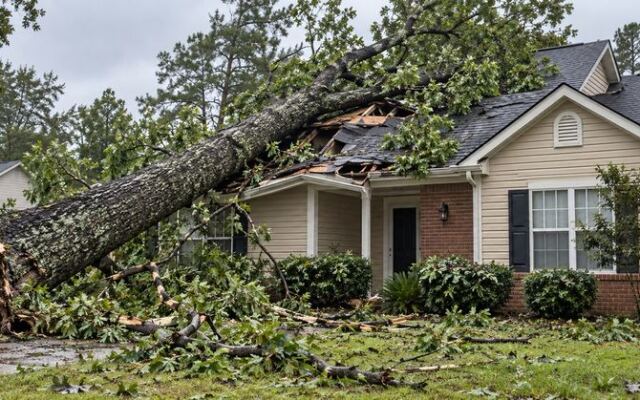
When a neighbor’s tree limb crashes onto your roof in Texas, the first bill usually lands on your own homeowners insurance, not your neighbor’s. A neighbor pays only if a claim shows the tree was dangerous and the owner knew, or should have known, about the problem.
That difference can mean thousands of dollars in repairs. Here is how the rules work and what to do next.
Start with your own homeowners insurer
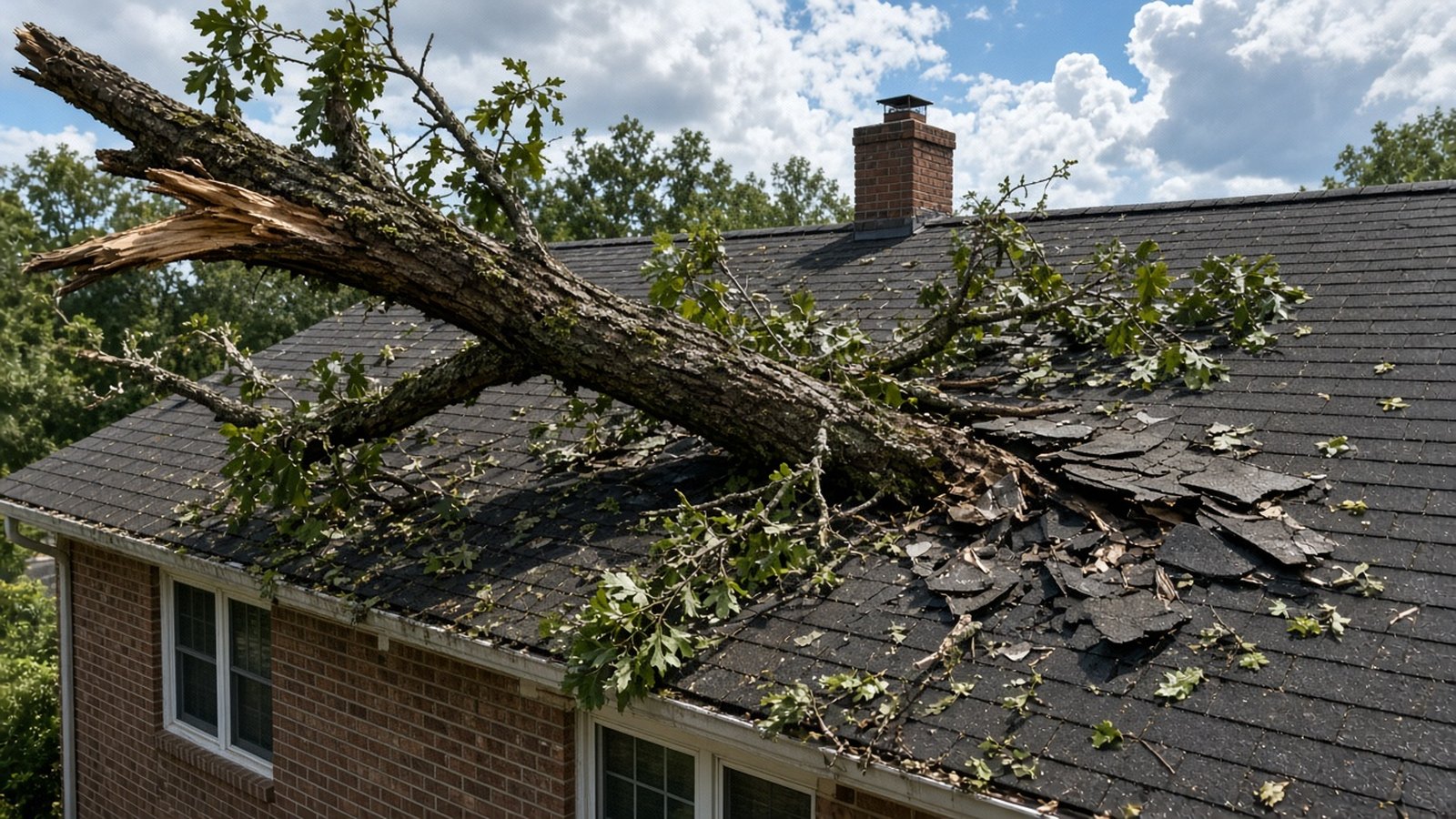
Most people assume the neighbor pays because the limb came from their tree. In practice, the quicker path is usually a call to your own insurance company.
Texas Department of Insurance guidance says many homeowners policies cover damage from falling trees, while a neighbor’s policy will probably pay only if the neighbor was at fault.
Coverage depends on your specific policy, so read yours or ask your agent. Some policies also pay to remove a tree when it damages the house or blocks a driveway.
Trees or limbs that fall somewhere else in the yard, without hitting a structure, usually are not covered. Deductibles and limits can also change what you end up receiving.
Do not wait for the neighbor to decide what to do. Notify your insurer soon after the damage happens, and ask what the policy expects from you.
Many policies require you to protect the home from more harm, so a tarp over the hole is a reasonable step.
Keep every receipt for tarps, plywood, labor, and similar costs. TDI’s claim tips recommend making temporary repairs to prevent further damage and holding on to those records.
Your insurer may later seek money from a neighbor who was at fault, but that is a separate matter you do not have to settle first.
Tree ownership and legal fault are different questions
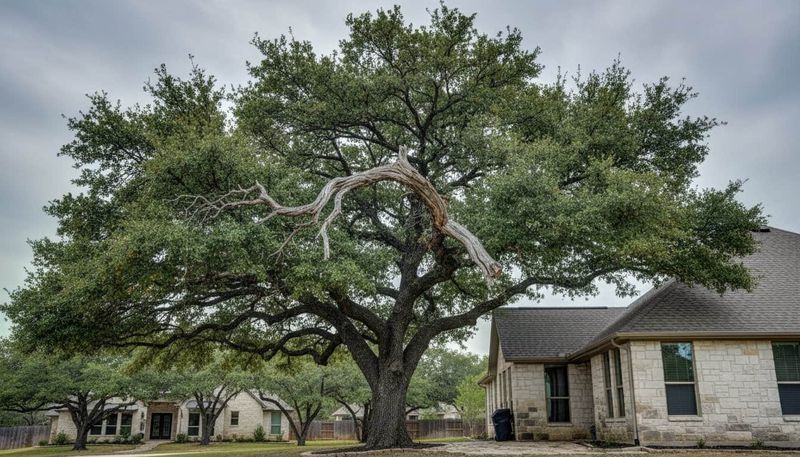
Picture a pecan tree whose trunk stands in your neighbor’s yard while its branches stretch over your roof. Who owns it seems simple, and it mostly is.
Texas A&M’s real estate research center explains that the tree generally belongs to the landowner where the trunk stands.
Ownership, though, does not settle who must pay for a damaged roof. Fault is a separate question, and it asks what the owner did or failed to do.
A tree can belong to your neighbor and still fall without anyone being legally to blame.
Think of it this way. Owning a tree is like owning a car: you are not automatically responsible for every accident, but you can be if you ignored a known problem like failing brakes.
The same logic applies to a rotting trunk or a cracked limb.
Setting this expectation early helps you avoid a common mistake, which is demanding payment from a neighbor based only on where the tree grew. A stronger approach is to look at the tree’s condition and history.
The next section covers what kind of evidence tends to matter.
When can a storm-felled limb create neighbor liability?
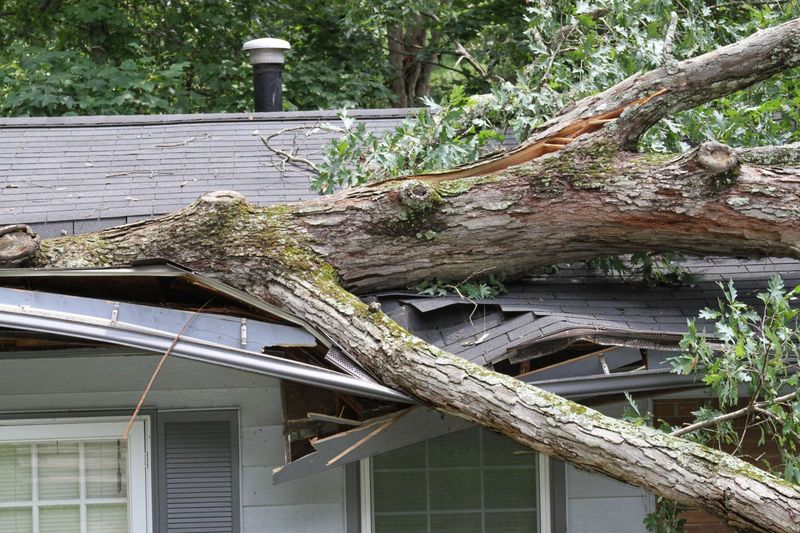
Storms complicate these cases, but they do not end the conversation. The State Bar’s Disaster Manual explains that a healthy tree brought down by high winds is generally treated as an act of God, so the owner is usually not to blame.
A tree with a pre-existing dangerous condition is different, such as one that was dead, decayed, or diseased.
For a negligence claim, the damaged homeowner generally needs evidence that the tree was dangerously unstable and that the owner knew or reasonably should have known about it. A storm that triggers the fall does not automatically excuse the owner if that hazard was already there.
Avery v. Alexander shows how this can play out.
During Hurricane Rita, a tree fell onto a neighboring business’s roof. According to the appeals court opinion, limbs had fallen on that roof before, the neighbor had repeatedly raised concerns, and the owner had said he would have the tree inspected.
The court reversed summary judgment for the tree owners and sent the case back so the claim could proceed. That was not a final finding that the owners were liable.
It simply meant the evidence was enough to continue.
Be careful with other cases. Bell v.
Cain involved a rural roadside accident, where the court declined to impose a general duty to inspect land for trees that might fall onto a road. It is not a universal rule for neighborhood tree disputes.
Document damage before cleanup
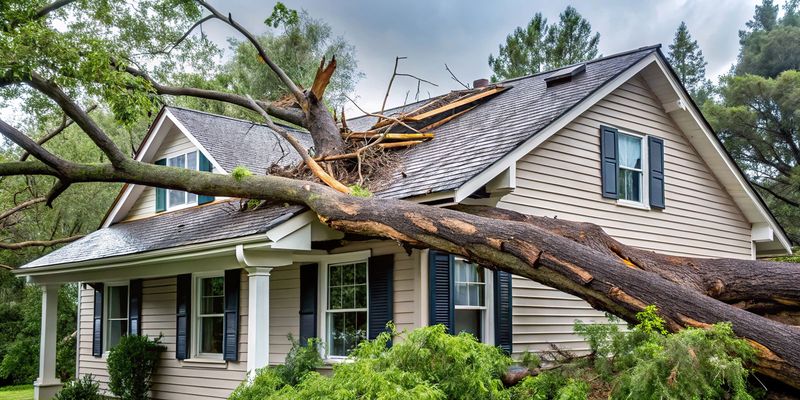
Once everyone is safe, the evidence you gather in the first day or two can matter for weeks. If it is safe to do so, take photos and video of the roof and the tree before anyone hauls anything away.
Show the break point on the limb, the trunk, and the surrounding yard.
Look for details that tell a story: rot, hollow spots, dead leaves out of season, or old wounds on the tree. Note the date, the weather, and what happened leading up to the fall.
Earlier photos of the tree, or earlier limbs that dropped, can also help.
Next, tell your insurer. TDI’s FAQ points homeowners to their own policy first, and the claim process starts with a report.
Then protect the house. Cover openings with a tarp or boards so rain does not cause more harm, and keep every receipt.
TDI’s claim tips recommend temporary repairs and good records.
Records of the tree’s condition may matter if you later pursue a neighbor. Still, photos do not prove fault or guarantee payment.
They simply give you, your insurer, and anyone reviewing the claim a clearer picture of what happened.
Written notice can establish a record, not automatic liability
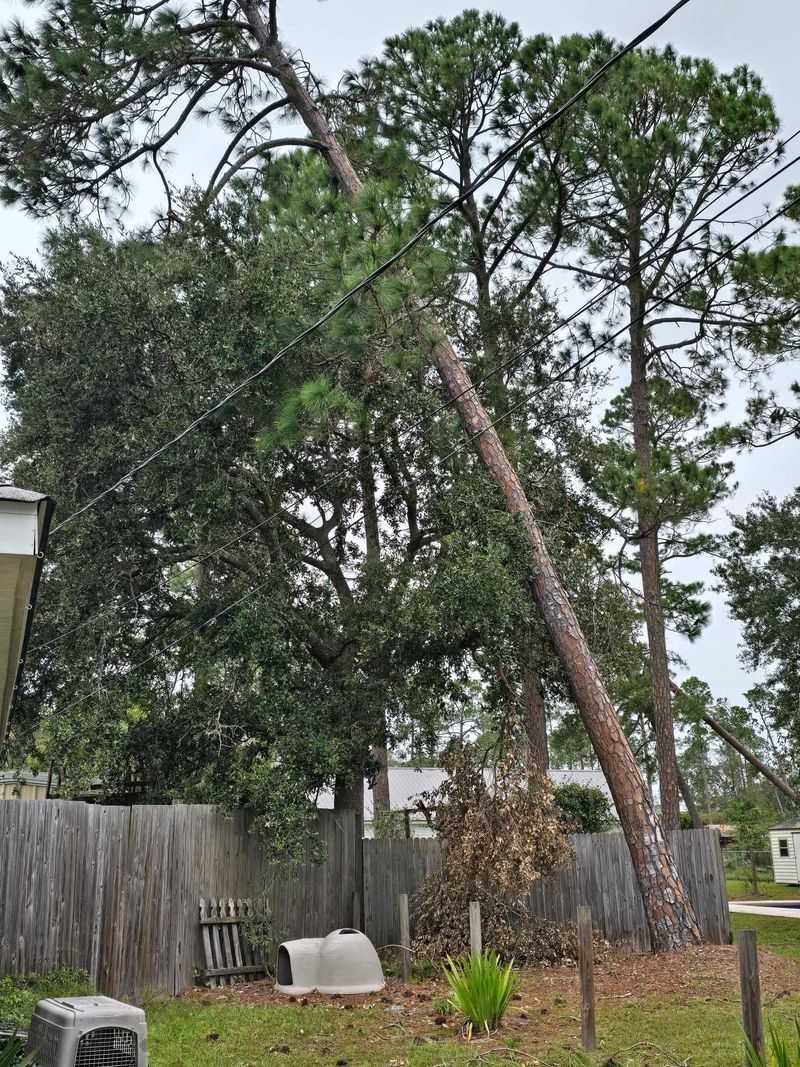
If a dead or leaning tree worries you but nothing has fallen yet, you have time to act. The Disaster Manual recommends notifying your neighbor in writing about the hazard and keeping a copy.
A friendly conversation is fine too, but a letter leaves a record.
Describe what you see in plain terms: a cracked limb over your roof, mushrooms at the base, or dead branches. Include the date and attach photos if you have them.
Consider sending it in a way that shows when it was delivered.
A letter documents your concern and may help show what the owner knew. That matters because liability often turns on whether the owner knew or should have known about the danger.
But a letter is not magic. It does not by itself prove negligence, and it does not automatically move responsibility for later damage onto your neighbor.
Courts and insurers still look at the tree’s actual condition and what caused it to fail.
Treat written notice as one useful piece of a larger file, and keep a polite tone. Neighbors often respond better to a calm note than to a threat.
Trim only within legal and safety limits
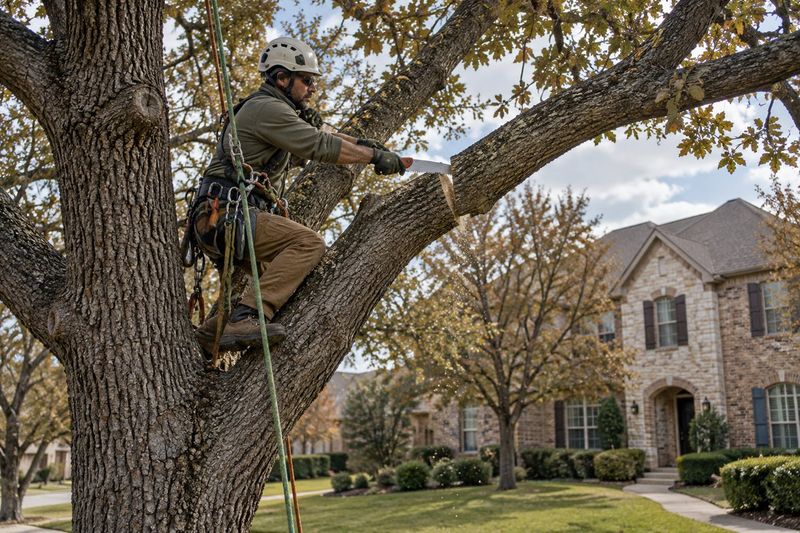
Cutting back a threatening branch can feel like the obvious fix, but there are limits. The State Law Library of Texas says there is no state statute directly addressing overhanging branches.
Under common law, you can generally trim branches back to the property line.
That right has boundaries. Do not cross onto your neighbor’s land to do the work, and do not cut in a way that damages or kills the tree.
Local rules or permit requirements may also apply, so check with your city before pruning.
Say a large limb leans over your roof. Cutting only what hangs past the line may be allowed, but a drastic cut that leaves the tree unstable could create a new dispute.
Talking with your neighbor first often avoids that.
Safety matters as much as the law. TDI’s tree service safety guidance advises using a qualified arborist for complex or storm-damaged trees.
It also says to keep people and equipment at least 10 feet from overhead power lines. Cracked limbs can snap or swing unpredictably, and ladders and saws near wires can be deadly.
If the job feels risky, hire a professional rather than doing it yourself.
Take the next step based on the evidence
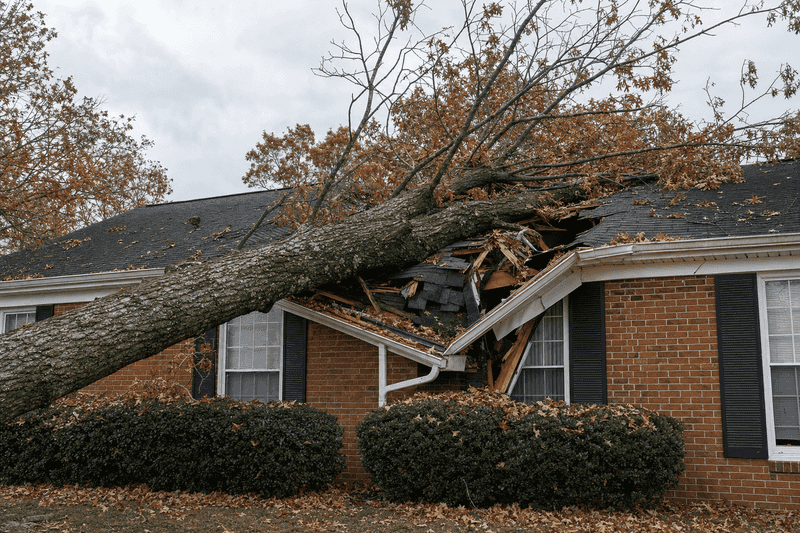
Start with the steps within your control. Call your own insurer, as TDI’s guidance suggests, and preserve photos and receipts when it is safe.
Then look at the tree itself. Was it already decayed or leaning, and what did the owner know?
Those questions, outlined in the Disaster Manual, shape any claim against a neighbor, and no insurer or court is guaranteed to decide a certain way.
A tree falls in a moment, but the paper trail behind it gets built over days.
Share this story