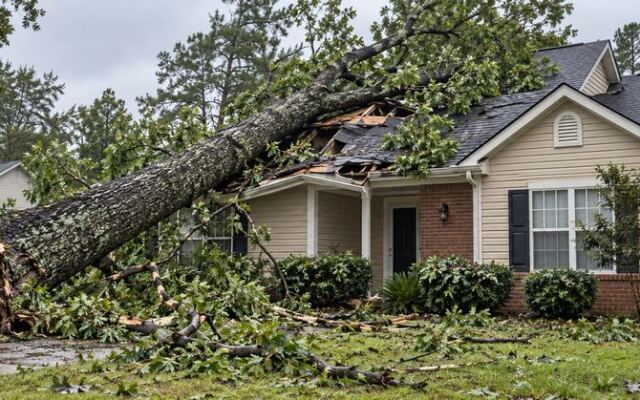
In Kentucky, a neighbor may have to pay when a dead tree crashes onto your house, but only if the facts show they failed to use reasonable care. Ice storms bring down weak trees, and the law looks closely at what the owner knew or should have known.
Your own insurance policy is a separate question that often comes first. Here is how the rules work and what to do before and after a tree falls.
When a tree owner may be responsible
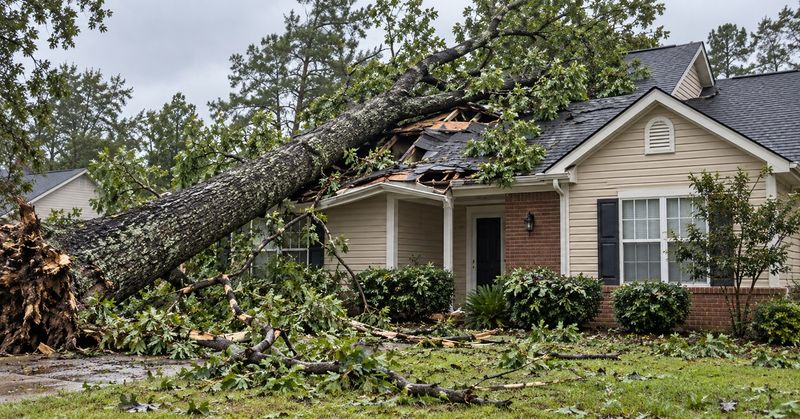
Kentucky’s baseline rule is about reasonable care. In a published 2006 Court of Appeals decision called Sexton, the court said a landowner in an urban or heavily populated area must use reasonable care to protect people outside the property from unreasonable risks posed by defective or unsound trees.
That is a duty to act reasonably, not a promise that the owner pays every time. A tree coming down does not prove anyone was careless.
A claim still turns on the setting, what the owner did or failed to do, and whether that failure actually caused the damage.
Courts break this into familiar pieces: duty, breach, and causation. Duty asks whether the owner had to use care in that setting.
Breach asks whether the owner fell short. Causation asks whether that shortfall led to the harm.
Location matters too. Sexton drew a line between city settings and rural, sparsely populated land, pointing to an older case about wooded rural property beside a little-used road.
The court did not find a comparable inspection duty there.
That should not be read as a neat rule for every property outside a city. A subdivision at the edge of town and a remote hillside farm are very different places, and a court would look at the actual surroundings.
If you are unsure which category your situation fits, a Kentucky attorney can review the facts.
Warning signs matter, but they do not decide a claim
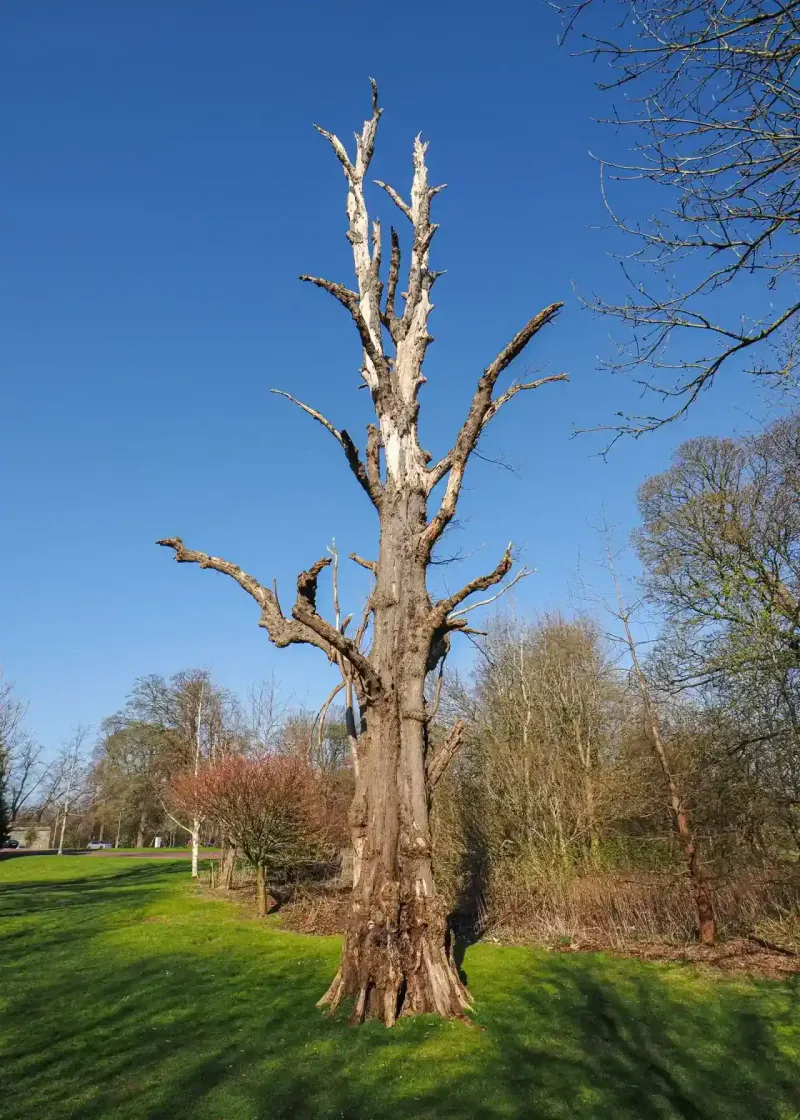
Legal fights over trees often come down to notice. Notice can be actual, meaning the owner really knew about the problem, or constructive, meaning a reasonably careful owner would have known.
Sexton looked at whether even a cursory inspection should have shown that trees were dead.
Certain signs are reasons to take a tree seriously: rotten or crumbling wood, major cracks in the trunk, dead branches, and a significant lean. Spotting one does not prove the tree is dangerous, and it does not prove the owner is liable.
University of Kentucky forestry guidance cautions that a small amount of decay does not necessarily make a tree hazardous. What counts is whether the tree could harm people or property if it failed.
So a dead limb high in a tree far from any house is a different matter than a leaning trunk above your roof. Courts weigh what was apparent, who could see it, and what a reasonable owner would have done about it.
A later decision, DeRossett, shows how repeated warnings can bear on what an owner knew. Whether someone knew or should have known is a question answered by the facts of each case.
Two Kentucky cases show how the facts can matter
Two appeals court decisions give a feel for how judges apply the rule. Neither is a formula, and each rests on its own facts.
Sexton is a published decision. It involved a dead tree on a vacant lot in Louisville that fell onto a neighbor’s property.
The court used the case to state the reasonable-care duty for urban and heavily populated areas and to ask what a basic inspection would have revealed.
DeRossett is different. It is labeled “not to be published,” so it is not equal in weight to Sexton.
That case involved a dead tree and repeated warnings to its owner, and the court concluded the evidence showed the owner knew of the danger. It reversed the judgment for the defense on liability.
Think of DeRossett as an example, not a blanket rule. Warnings can matter a great deal when they show what an owner knew, but a warning alone does not guarantee a win.
The same goes for a visible defect or a falling tree. Each can be part of the story, yet a claimant still has to connect the owner’s lack of reasonable care to the damage.
Start with your insurer after property damage
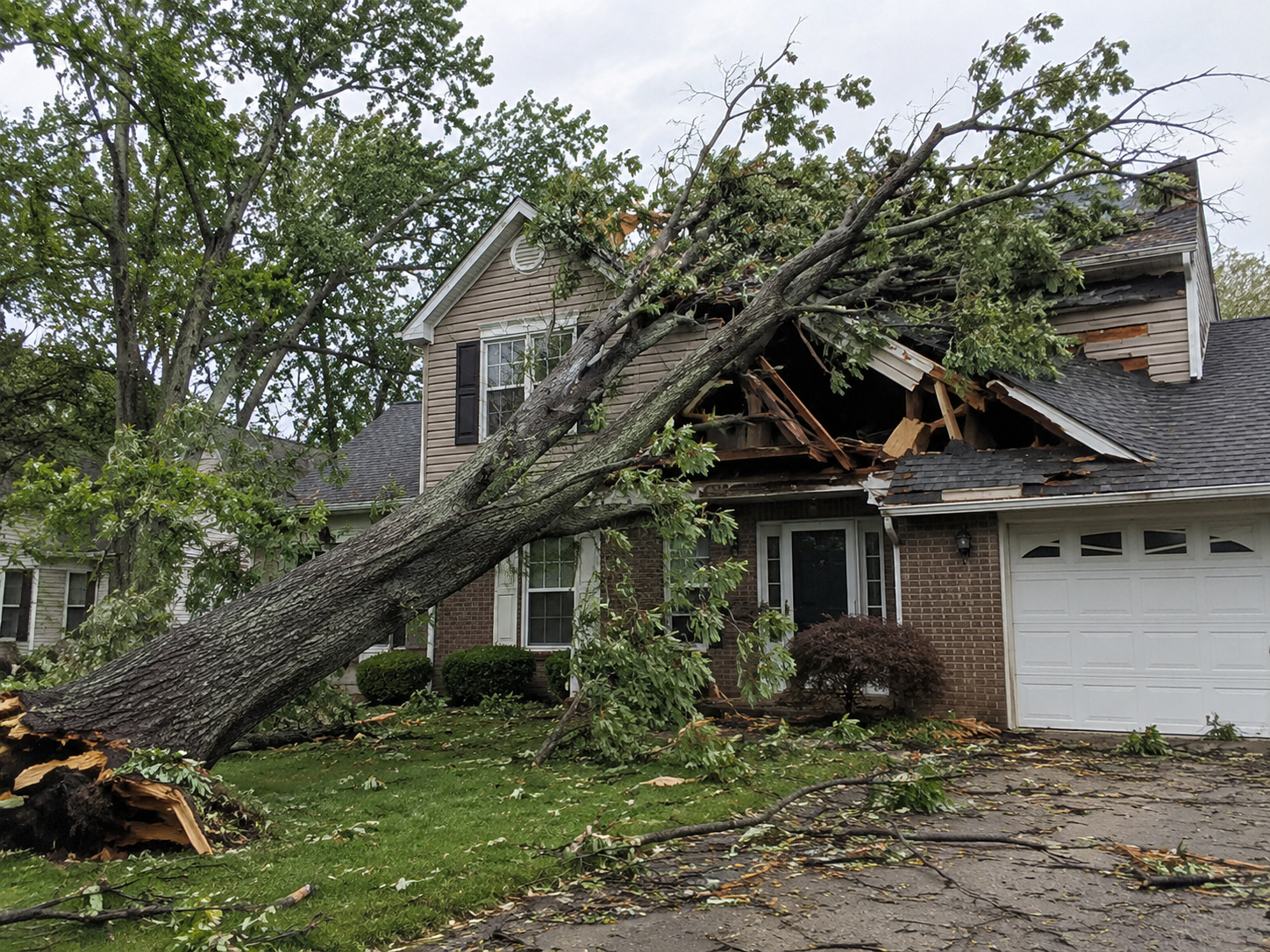
After a tree hits your home, call your own homeowners insurer first. Kentucky Farm Bureau says the owner of the damaged property generally files with their own carrier, while a tree owner or that owner’s insurer could be responsible if poor maintenance or disease contributed to the fall.
Then read the actual policy. Look at what damage is covered, whether removal costs are included, and what the limits, deductibles, and exclusions say.
Not every cleanup cost is guaranteed to be covered.
Where the tree lands can change the answer. The Kentucky Department of Insurance says most policies cover tree removal if the tree falls on insured property, but not necessarily if it falls in an open field.
Coverage and fault are two separate questions. Your policy may pay for a loss even when your neighbor did nothing wrong.
Separately, a neighbor or their insurer could be responsible if negligence helped cause the damage.
Ask your insurer how your claim interacts with any claim against a neighbor, and keep notes of every call. Take photos of the damage before cleanup, and save receipts for emergency repairs such as tarps.
Storm damage does not settle the negligence question
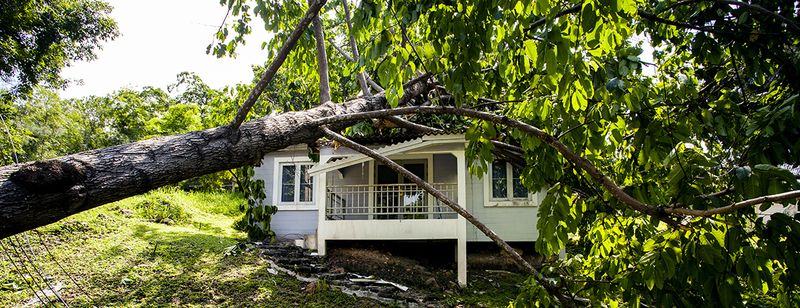
Ice and wind make good headlines, but weather alone does not answer who is at fault. A storm does not automatically excuse a tree owner, and it does not automatically make the owner liable either.
The Kentucky Department of Insurance gives one example in its 2021 home insurance guide: a healthy tree uprooted by a tornado. That is the kind of situation that may involve no neighbor negligence.
It is general consumer guidance, though, not a promise about any particular claim.
Compare that with a tree that was already dead or unsound. Courts in Sexton and DeRossett recognized that liability can be possible when trees are defective or dangerous and notice is shown.
The real questions stay the same in every storm. Was the tree sound or defective?
Did the owner know or have reason to know? Did the owner’s failure to act reasonably actually cause the harm?
A heavy ice load can break a healthy limb, and it can also finish off a tree that was already failing. Sorting out which happened takes facts, not assumptions.
Document concerns and leave dangerous work to professionals
If a neighbor’s tree worries you, write it down. Take dated photos, save emails or letters, and note any conversations about the tree.
Keep any assessment from a professional arborist as well.
These records are prudent, not required. The decisions in Sexton and DeRossett do not set certified mail or an arborist report as a legal prerequisite.
Records can simply help show what was known and when.
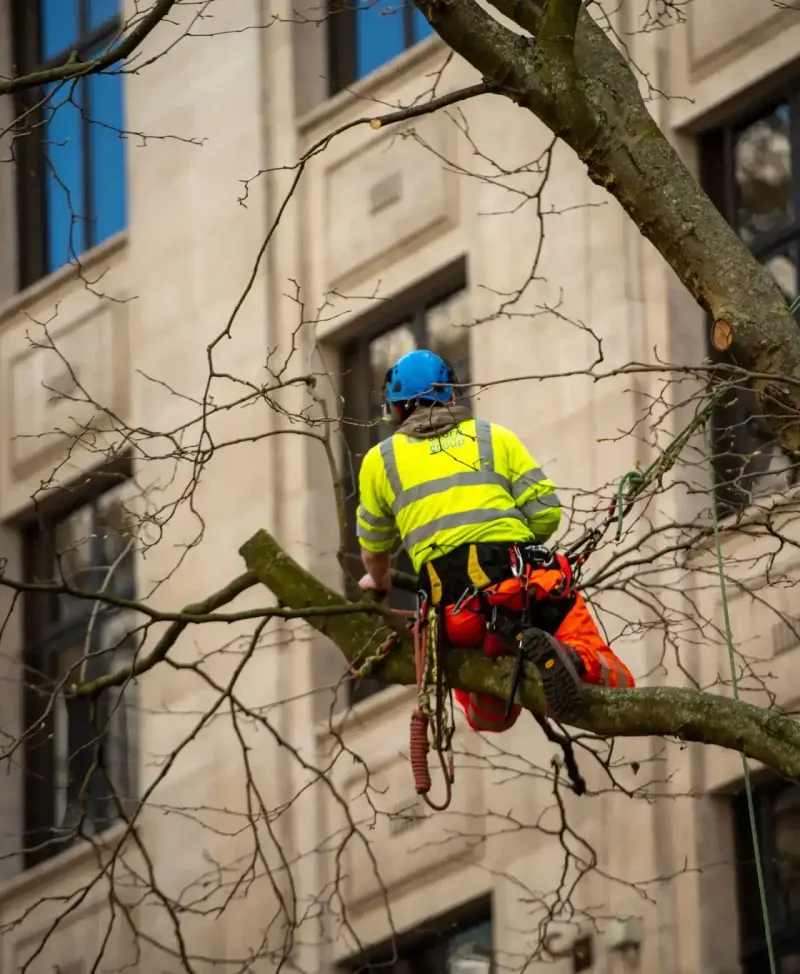
For a suspected hazard, call a professional arborist rather than trying a fix yourself. Safety comes before any legal point.
Kentucky Division of Forestry guidance warns against working on ice-coated trees and against climbing a ladder with a chainsaw. Both are easy ways to get badly hurt.
Stay away from any tree touching or near electric wires. The Kentucky Tree Owner’s Manual says to call the utility company about trees on utility lines.
A good photo costs nothing, and a good arborist is cheaper than an emergency room visit.
Share this story