Get the latest garden guides in your inbox →
Gardening Latest
  • General Gardening
  • Lawn Care
  • Plant Care
  • Composting
  • Soil Health
  • Backyard
  • Garden Muse Magazine
  • General Gardening
  • Lawn Care
  • Plant Care
  • Composting
  • Soil Health
  • Backyard
  • Garden Muse Magazine
  • News
  • Gardening Calendar
  • Garden Structures
  • Vegetable Garden
  • Vertical Garden
  • Raised Beds
  • Hydroponics
  • General Equipment
  • Community Gardens
Garden Themes
  • Spiritual Garden
  • Hydroseeding
  • Seeding and Laying Sod
  • Artificial Grass
  • Lawn Care Equipment
  • Plants
  • Trees
  • Planting Tools
  • Composting Basics
  • Fertilizer
  • Alternative Growing Mediums
  • Front Yard
  • Backyard Activities
  • Landscaping
Gardening Latest

Explore by state

Which state is your garden in?

Currently viewing New Jersey

All states

Northeast

  • Connecticut —
  • Delaware 45
  • Maine —
  • Maryland 31
  • Massachusetts 47
  • New Hampshire —
  • New Jersey 31
  • New York 40
  • Pennsylvania 40
  • Rhode Island —
  • Vermont —

Southeast

  • Alabama 31
  • Arkansas —
  • Florida 31
  • Georgia 31
  • Kentucky 45
  • Louisiana 30
  • Mississippi —
  • North Carolina 29
  • South Carolina 44
  • Tennessee 28
  • Virginia 30
  • West Virginia —

Midwest

  • Illinois 30
  • Indiana 32
  • Iowa 44
  • Kansas —
  • Michigan 31
  • Minnesota 30
  • Missouri 30
  • Nebraska —
  • North Dakota —
  • Ohio 31
  • South Dakota —
  • Wisconsin 45

Southwest

  • Arizona 30
  • Colorado —
  • Nevada —
  • New Mexico —
  • Oklahoma —
  • Texas 29
  • Utah —

West

  • Alaska —
  • California 30
  • Hawaii —
  • Idaho —
  • Montana —
  • Oregon —
  • Washington —
  • Wyoming —

No state matches that search.

Site menu

Gardening Latest
  • General Gardening
    • News
    • Gardening Calendar
    • Garden Structures
    • Vegetable Garden
    • Vertical Garden
    • Raised Beds
    • Hydroponics
    • General Equipment
    • Community Gardens
    Garden Themes
    • Spiritual Garden
  • Lawn Care
    • Hydroseeding
    • Seeding and Laying Sod
    • Artificial Grass
    • Lawn Care Equipment
  • Plant Care
    • Plants
    • Trees
    • Planting Tools
  • Composting
    • Composting Basics
  • Soil Health
    • Fertilizer
    • Alternative Growing Mediums
  • Backyard
    • Front Yard
    • Backyard Activities
    • Landscaping
  • Garden Muse Magazine

Explore

  • About GardeningLatest.com
  • Contact Us

Get the latest from the garden

New guides on lawn care, plants and backyard projects, sent when they go up.

Subscribe →

Follow

  • Facebook
  • X
  • Pinterest
  • YouTube
New Jersey Gardening

New Jersey Gardeners Mistake These 7 Harmless Critters for Something Venomous All the Time

You reach for a weed, and something shiny and scaly slides out from under the leaves.

AR

By Angela Russo

November 28, 2026 · 5 min read

New Jersey Gardeners Mistake These 7 Harmless Critters for Something Venomous All the Time

You reach for a weed, and something shiny and scaly slides out from under the leaves. Your heart jumps, and your first thought is that it must be dangerous.

In New Jersey gardens, most of the creatures that give people a scare are completely harmless, and many of them are actually helping your plants. Learning who is who can save you a lot of panic and save these helpful critters from a shovel.

At a glance

Where
New Jersey Gardening
Hardiness zone
7 0 to 10°F
Read
5 minutes
Published
November 28, 2026

1. Eastern Milk Snake

Eastern Milk Snake
© New Jersey 101.5

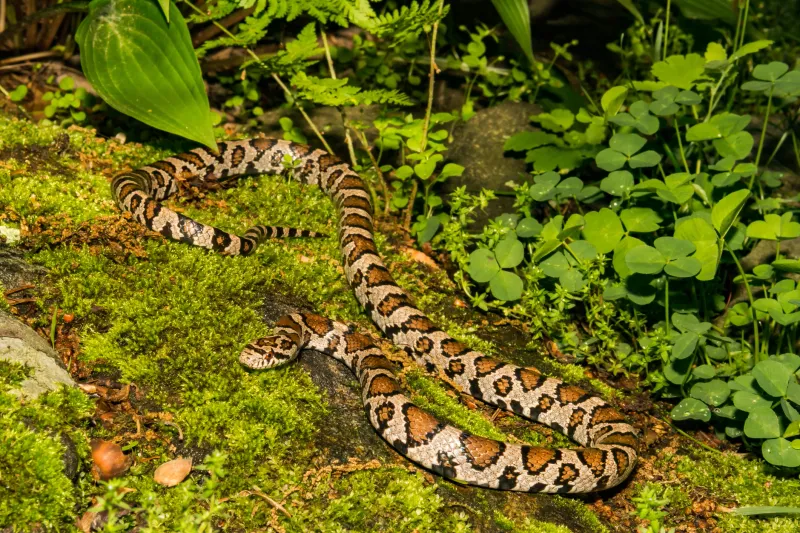
Plenty of panicked phone calls to New Jersey wildlife offices start with the words, I found a copperhead in my garden. More often than not, the snake in question is an eastern milk snake.

Its reddish-brown saddles on a gray or tan body really do look a lot like a copperhead at first glance.

Here is the easy tell. Copperheads have hourglass bands that are narrow on top and wide on the sides, while milk snakes have rounded blotches that look more like puzzle pieces with dark borders.

Milk snakes also have a slim head that blends into the neck, not the chunky triangle shape people expect from a pit viper.

Fun fact: the name comes from an old farm myth that these snakes sneaked into barns to drink milk from cows. They were really there for the mice.

That same appetite makes them a quiet ally around sheds and compost piles, so give one a little space and let it do its rodent patrol.

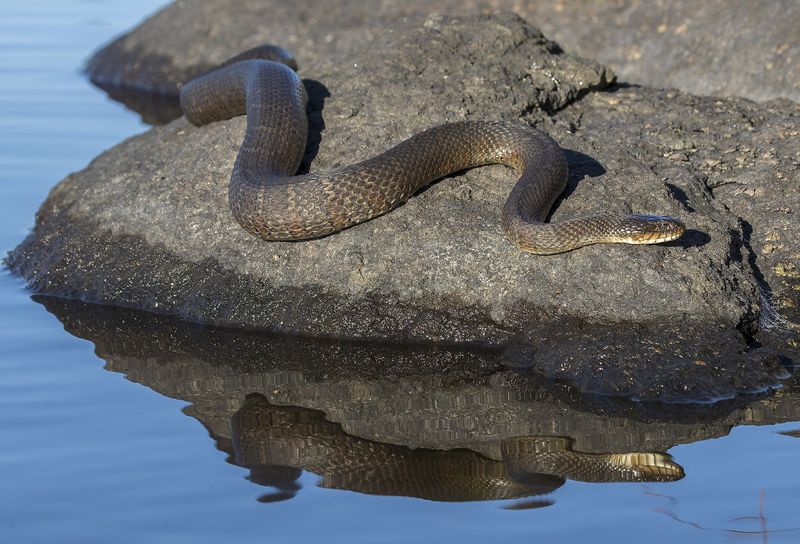
2. Northern Water Snake
Northern Water Snake
© World Atlas

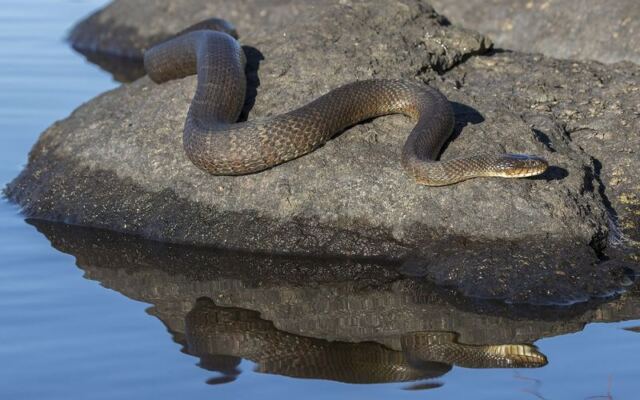
Own a backyard pond? Then you have probably met this thick, dark snake sunning itself on the edge.

Folks who grew up hearing stories about cottonmouths often assume the worst right away.

Every July, Garden State lawns turn into landing strips for something that looks like a wasp on steroids.

Good news: cottonmouths do not live in New Jersey at all. Their range stops far to the south, in Virginia.

The northern water snake is simply a fish-eating local with a grumpy attitude.

Honestly, that attitude is what causes the confusion. If you grab one, it may bite and release a smelly musk, which feels personal but is not dangerous.

Just leave it alone near the water, and it will go back to hunting minnows and frogs without bothering your tomatoes.

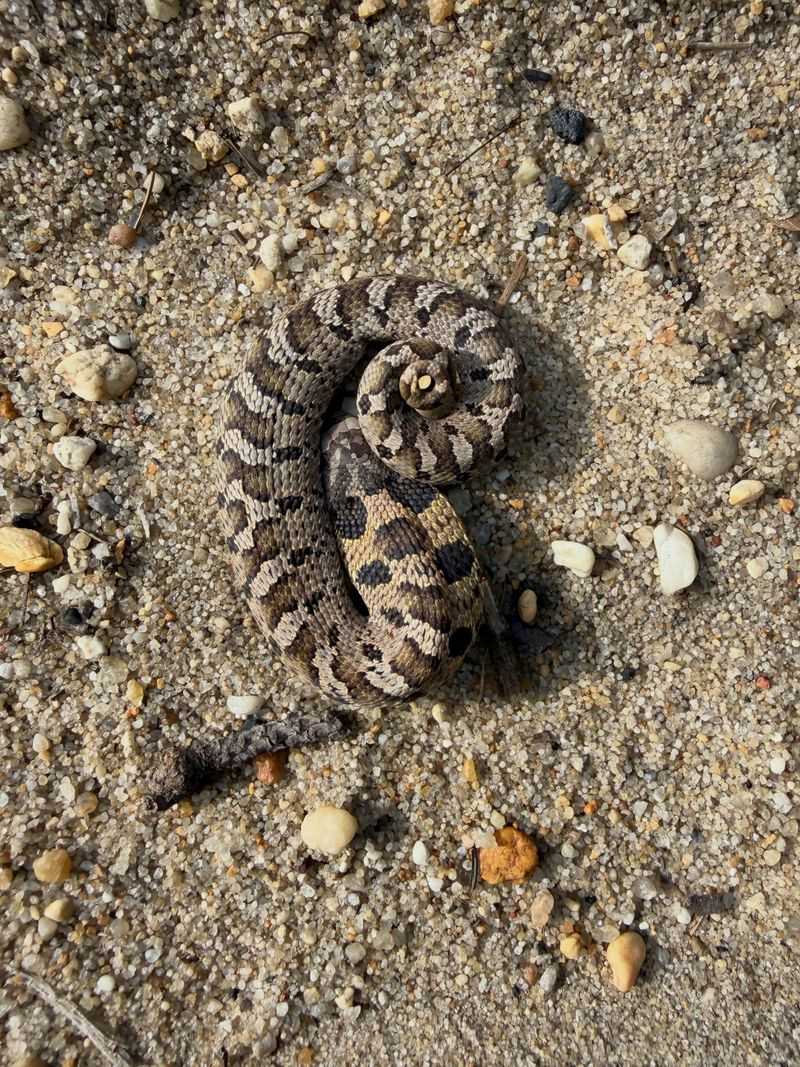
3. Eastern Hognose Snake
Eastern Hognose Snake
© gaugesadventures

Picture this: you are raking leaves in Ocean County when a snake suddenly flattens its neck like a cobra, hisses loudly, and lunges. Then, if you keep watching, it flips over, opens its mouth, and plays dead with its tongue hanging out.

Hollywood could not write a better performance.

The eastern hognose is a total drama queen, and that act earns it nicknames like puff adder and spreading adder. In reality, it almost never bites people.

Its lunges are bluffs, usually done with its mouth closed.

Look for the upturned, shovel-like snout, which it uses to dig up toads, its favorite meal. Hognose snakes love the sandy soils of the Pine Barrens.

If one fakes its own death in your flower bed, the kindest thing you can do is walk away and let it finish the show in private.

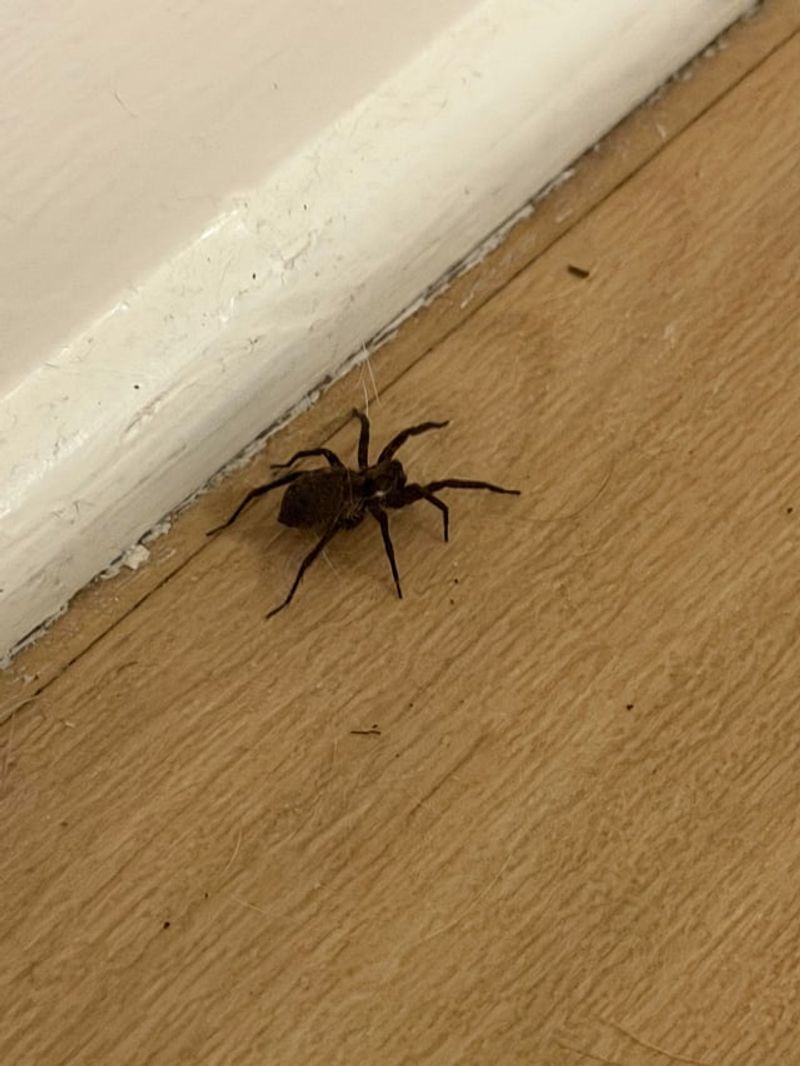
4. Wolf Spider
Wolf Spider
© Reddit

Big, hairy, and fast enough to make you yelp. That is the usual first impression of a wolf spider darting across a garden path.

Many people instantly decide it must be a brown recluse.

Brown recluses are extremely rare in New Jersey, and most reported sightings turn out to be something else entirely. Wolf spiders are chunkier, with striped patterns on their backs instead of the violin shape a recluse carries.

Shine a flashlight across your lawn at night, and their eyes will sparkle back at you like tiny gems.

Mother wolf spiders are oddly sweet. They carry their egg sacs attached to their bodies, then haul dozens of babies around on their backs once they hatch.

Between parenting duties, they hunt crickets, beetles, and other bugs that chew on your plants. They can bite if pinned, but it is about as bad as a bee sting for most people.

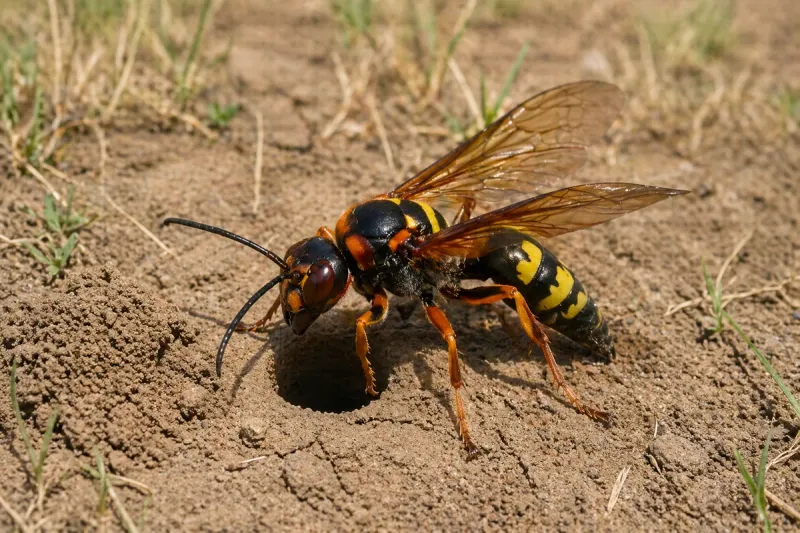
5. Eastern Cicada Killer Wasp
Eastern Cicada Killer Wasp
© Pest Me Off

Every July, Garden State lawns turn into landing strips for something that looks like a wasp on steroids. Cicada killers can reach two inches long, and their buzzing flights over the grass have people convinced murder hornets have arrived.

Relax. Males, the ones doing all the dive-bombing, cannot sting at all.

Females can, but they save their venom for cicadas, which they paralyze and drag into underground burrows to feed their young.

You will notice small mounds of dirt in sunny, sandy spots where they dig. Kids can play nearby without trouble, since these wasps are loners and do not defend nests the way yellow jackets do.

Their season is short, and by late August they are mostly gone.

6. Five-Lined Skink
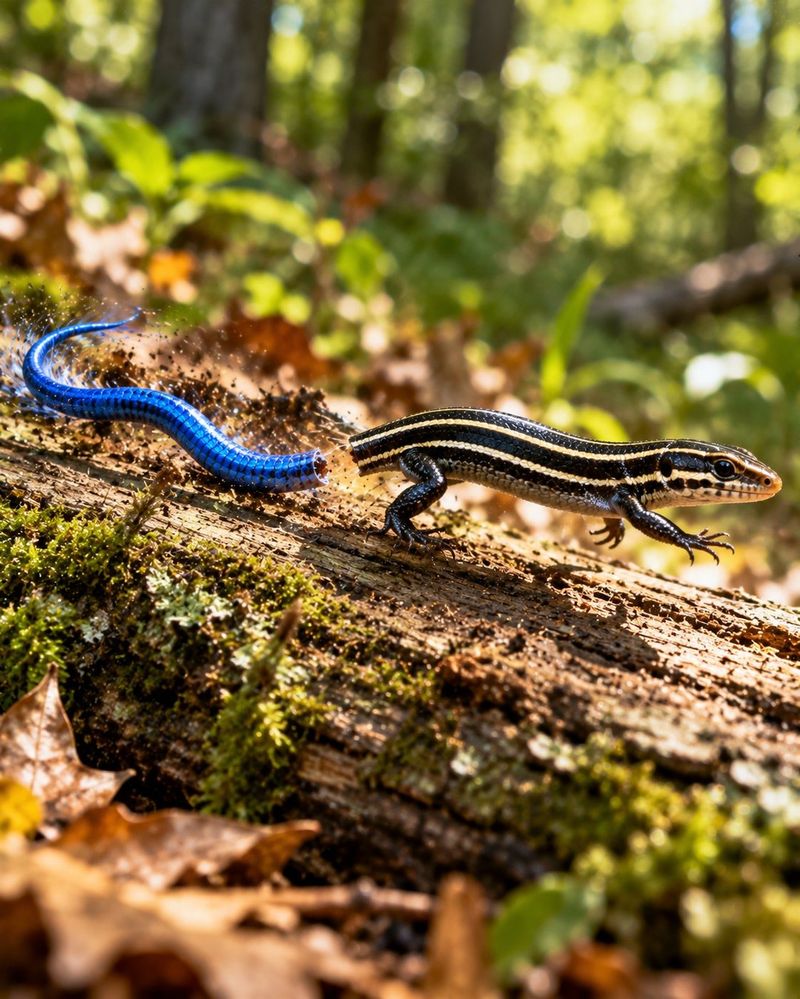
Five-Lined Skink
© naturewatchdaily

Grandparents in parts of New Jersey still warn kids that blue-tailed lizards are poisonous. It is a stubborn old tale, and it is completely untrue.

Young five-lined skinks wear electric blue tails and bold stripes. That bright tail is a decoy.

When a bird or cat grabs it, the tail snaps off and wiggles on its own, giving the skink time to escape and grow a new one later.

As they age, skinks fade to a bronze color, and adult males develop orange-red heads during spring. You will spot them on rock walls, woodpiles, and sunny porches.

They eat spiders, beetles, and grubs, so a few skinks around your raised beds is actually a sign of a healthy yard.

7. Eastern Dobsonfly
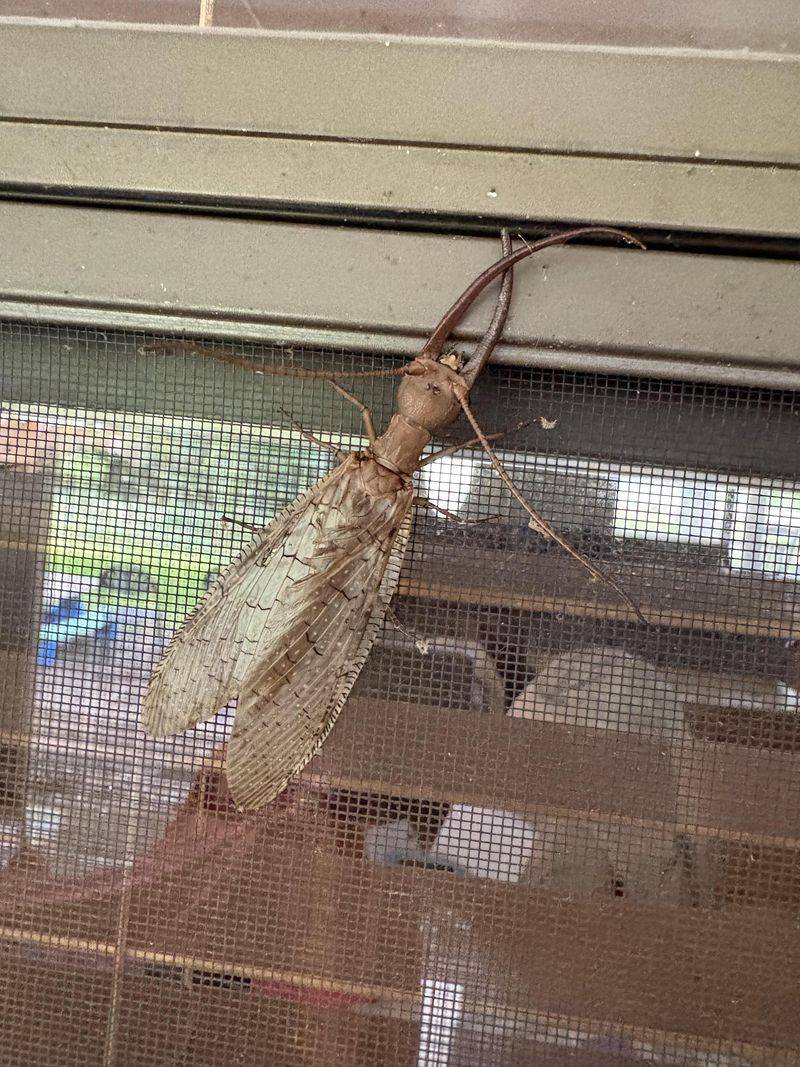
Eastern Dobsonfly
© Reddit

Few insects cause more double takes than a male dobsonfly clinging to a porch light. With huge curved jaws and wings up to five inches across, it looks like something from a monster movie.

Those scary mandibles are mostly for show. Males use them to impress females and wrestle rivals, and they are too long to pinch you with any real force.

Females have shorter jaws that can nip, but it is a defensive pinch with no venom behind it.

Here is a cool bonus. Dobsonfly larvae, called hellgrammites, live only in clean streams, so seeing adults near your garden means local waterways are in good shape.

Anglers in New Jersey even prize hellgrammites as bait. Admire the beast, snap a photo, and turn the porch light off so it can head home.

Share this story
AR

Written by

Angela Russo

More from Angela Russo →

About Gardening Latest

Gardening Latest provides in-depth guides to maintaining and enhancing your garden and backyard. Learn how to make the most of the space you have and create a beautiful garden.

More about us →

Latest stories

  • Missouri GardeningIf Your Missouri Woodpile Sits Against the House, You’re Inviting Brown Recluses Indoors This Winter

    If Your Missouri Woodpile Sits Against the House, You’re Inviting Brown Recluses Indoors This Winter

    4 min ago
  • Tennessee GardeningBefore You Dig In, Here’s How To Recognize Every Venomous Creature Sharing Your Tennessee Yard

    Before You Dig In, Here’s How To Recognize Every Venomous Creature Sharing Your Tennessee Yard

    10 min ago
  • Alabama GardeningThat Burning Saddleback Caterpillar Sting in Your Alabama Garden Calls for These Steps Right Away

    That Burning Saddleback Caterpillar Sting in Your Alabama Garden Calls for These Steps Right Away

    16 min ago
  • Minnesota GardeningBefore You Pick Up That Big Black Caterpillar With White Spots In Minnesota, Read This

    Before You Pick Up That Big Black Caterpillar With White Spots In Minnesota, Read This

    22 min ago
  • Illinois GardeningDeer Are Rubbing Their Antlers on Your Illinois Saplings Right Now, and Here’s How to Save Them

    Deer Are Rubbing Their Antlers on Your Illinois Saplings Right Now, and Here’s How to Save Them

    28 min ago

Gardening by state

Stories for your state, and the hardiness zone most of it gardens in.

Keep exploring

Read next

All New Jersey Gardening →
New Jersey GardeningThe Real Reason Coyotes Start Howling Near New Jersey Homes After Dark
New Jersey Gardening

The Real Reason Coyotes Start Howling Near New Jersey Homes After Dark

1 hr ago
New Jersey GardeningNot Every Snake Or Spider In A New Jersey Yard Is Harmless, So Here’s How To Spot The Ones That Bite Back
New Jersey Gardening

Not Every Snake Or Spider In A New Jersey Yard Is Harmless, So Here’s How To Spot The Ones That Bite Back

7 hr ago
New Jersey GardeningOpossums Head for New Jersey Porches and Sheds When Winter Hits, and Here’s What to Do
New Jersey Gardening

Opossums Head for New Jersey Porches and Sheds When Winter Hits, and Here’s What to Do

10 hr ago

More from New Jersey Gardening

  • Under New Jersey Law, a Neighbor’s Branches Over Your Yard Are Fair Game to Trim Until You Reach the Property Line

    Nov 27
  • New Jersey Fence Lines Are Filling With an Invasive Tree You Can’t Pull Fast Enough

    Nov 26
Back to top

Leave a response Cancel

Your email address stays private. Required fields are marked with an asterisk.

Gardening Latest

In-depth guides to maintaining and enhancing your garden and backyard: how to make the most of the space you have, and how to make it beautiful.

  • Facebook
  • X
  • Pinterest
  • YouTube

We may earn a portion of sales from products or services that are purchased through our site as part of our affiliate partnerships with retailers.

Explore

  • About GardeningLatest.com
  • Contact Us
  • Terms and Conditions
  • Privacy
  • Editorial Note:
  • FTC Disclosure

Newsletter

New garden guides and seasonal tips, straight to your inbox.

We’ll email you a link to confirm. Unsubscribe any time.

Almost there! Check your inbox and tap the link to confirm.

© 2026 Gardening Latest. All rights reserved.

Back to top