You flip over a garden stone in your New Jersey backyard, and something wiggles or scurries away. Most of the time, that critter is totally harmless and even helpful.
A few local snakes and spiders, though, carry venom that can send you to the doctor. Knowing which ones to leave alone can keep your family and pets safe while letting the good guys do their pest-control job.
1. Northern Copperhead
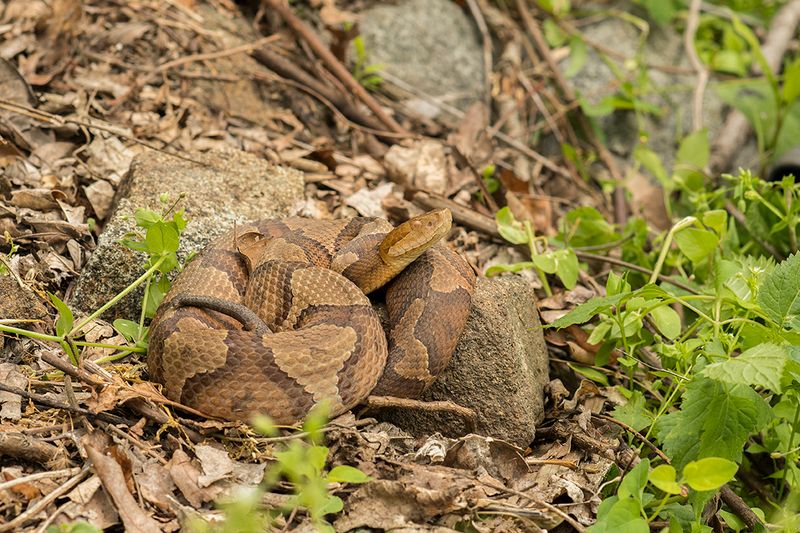
Hikers in the Watchung Mountains and the Highlands sometimes step right past a copperhead without ever noticing it. That is exactly what the snake wants.
Its coppery head and chestnut bands blend almost perfectly into dead leaves.
The giveaway is the pattern. Look for dark bands that are wide on the sides and skinny across the back, like an hourglass or a stack of Hershey’s Kisses seen from above.
The head is wide and triangular, and the pupils are narrow slits like a cat’s eye.
Copperheads live mostly in the northern half of the state, especially near rocky slopes, woodpiles, and stone walls. Bites are painful but rarely deadly.
Still, any bite needs a trip to the emergency room, so wear gloves when moving firewood and watch where you put your hands.
2. Timber Rattlesnake
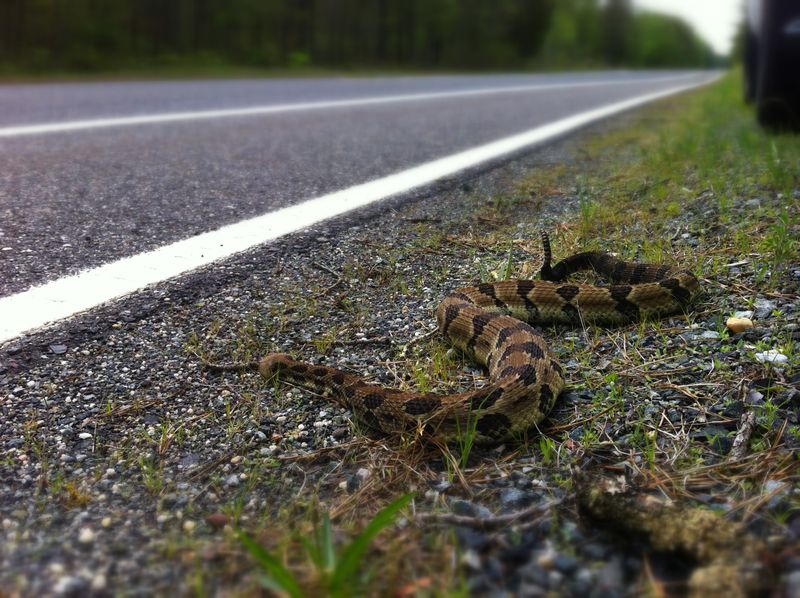
Here is a surprise for plenty of Garden State residents: New Jersey has rattlesnakes. The timber rattlesnake lives in two very different places, the Pine Barrens in the south and the rocky ridges of the north.
You can usually hear one before you see it. That dry, buzzing rattle is a polite warning that says back off.
The body is often yellow, tan, or nearly black, with dark zigzag bands called chevrons and a solid black tail ending in the rattle.
Timber rattlers are endangered in the state and protected by law, so harming one can lead to big fines. They also prefer to avoid people.
If you spot one near your property, keep kids and dogs back and call the New Jersey Division of Fish and Wildlife rather than trying to move it yourself.
3. Northern Black Widow
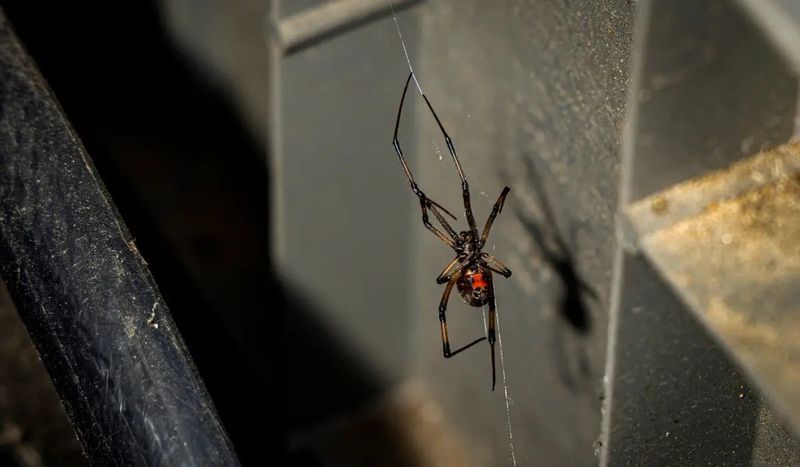
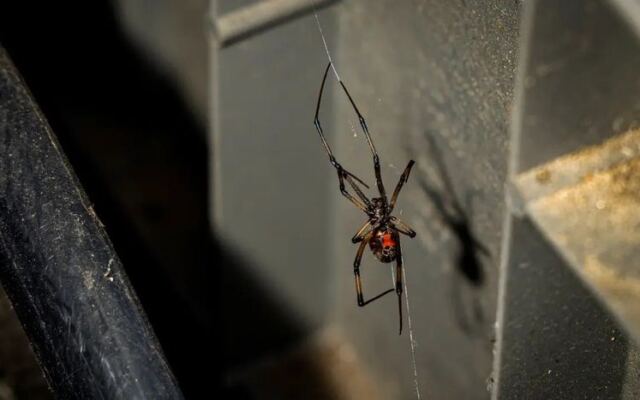
Glossy, round, and dressed like a villain in a cartoon, the northern black widow is the spider most people already fear. It deserves some respect, but it is also pretty shy.
Females are the ones to watch. They are shiny black with a bulb-shaped belly and a red mark underneath.
In the northern species, that hourglass is often broken into two separate pieces, and there may be red spots along the back too.
Black widows build tangled, messy webs in dark, quiet spots like under decks, inside meter boxes, behind stacked flowerpots, and in sheds. Bites can cause muscle cramps, sweating, and stomach pain.
Shake out gardening gloves and boots that have been sitting outside before slipping them on.
4. Brown Recluse (Rare Visitor)
Ask around online and you will find people swearing they were bitten by a brown recluse in Toms River or Trenton. The truth?
These spiders are not native to New Jersey at all.
Every so often, one hitches a ride in moving boxes or furniture from the South or Midwest. A true recluse is tan to brown with a dark violin shape on its back, the neck of the violin pointing toward the rear.
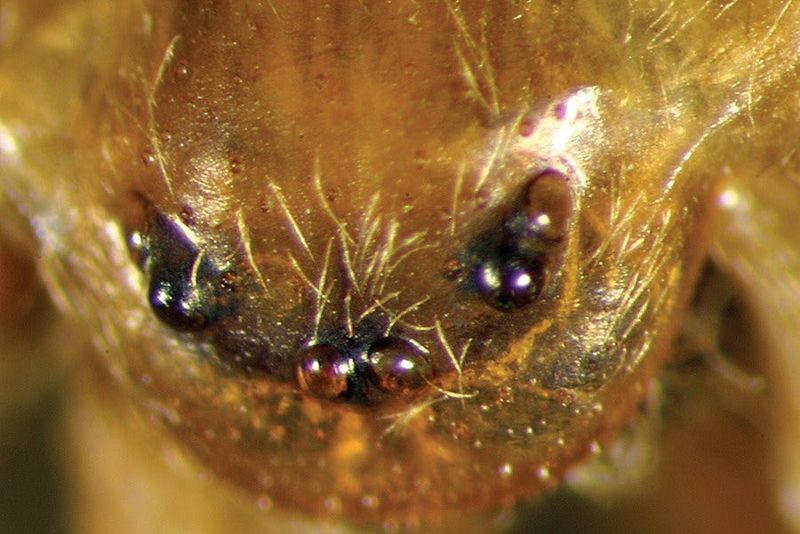
It also has six eyes arranged in pairs instead of the usual eight.
Most so-called recluse bites turn out to be skin infections or bites from other bugs. If you just moved items from a recluse state, unpack in a well-lit area and check boxes carefully.
Otherwise, there is no need to lose sleep over this one.
5. Yellow Sac Spider
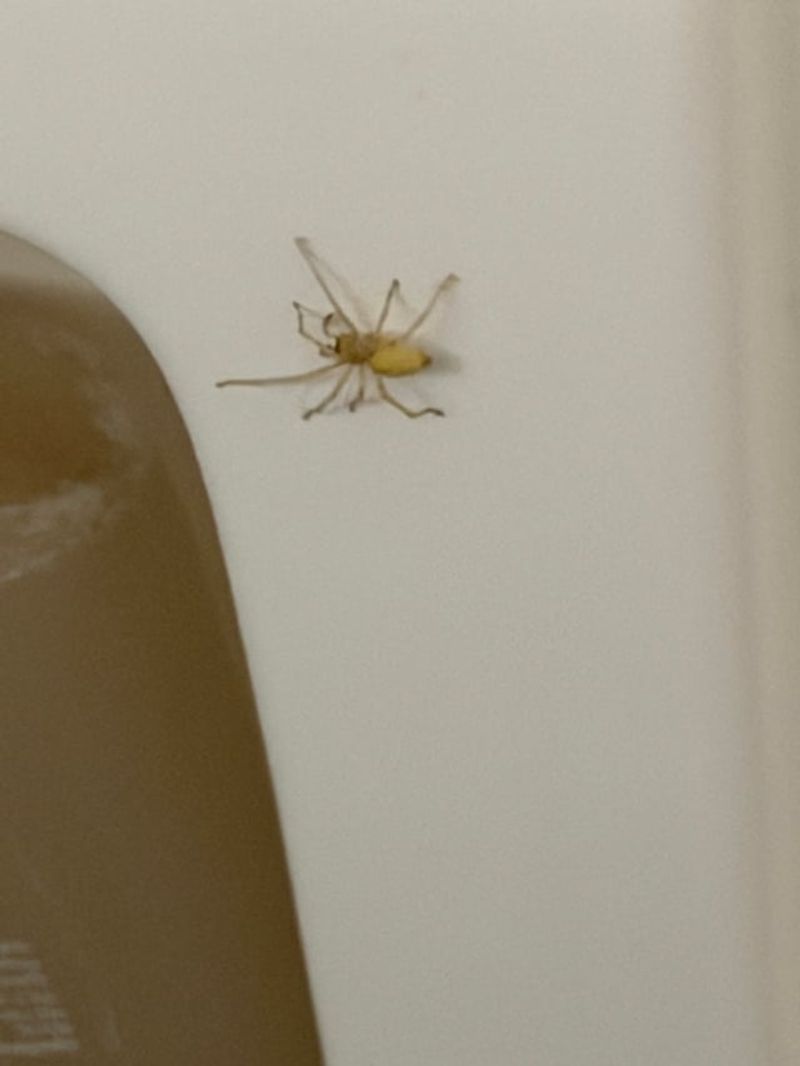
Late at night, a small pale spider creeps across your ceiling. No web, no fuss, just wandering.
Meet the yellow sac spider, one of the most common biters in New Jersey homes.
It is pale yellow or beige, about the size of a fingernail, with darker brown fangs and feet. During the day it hides inside a little silk pouch tucked into corners, curtains, or leaf folds in the garden.
Sac spiders hunt at night and sometimes bite when trapped against skin in bedding or clothes. The bite stings and may get red and itchy for a few days.
Keep beds pulled away from walls, and clean outdoor furniture cushions now and then.
6. Northern Water Snake
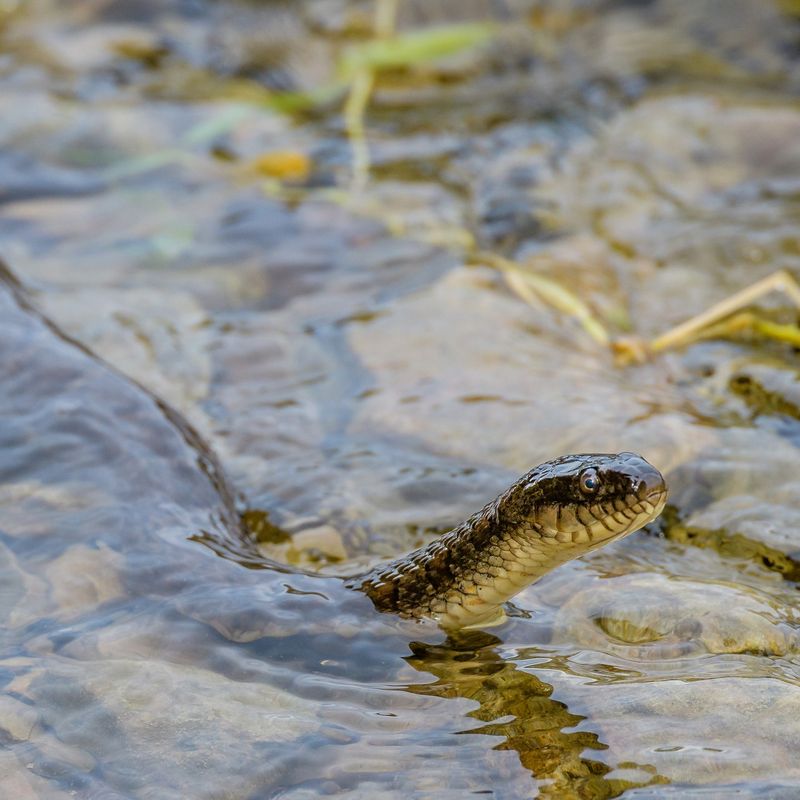
Plenty of folks have run from a pond screaming water moccasin, but that snake does not live in New Jersey. What they almost always saw was a northern water snake.
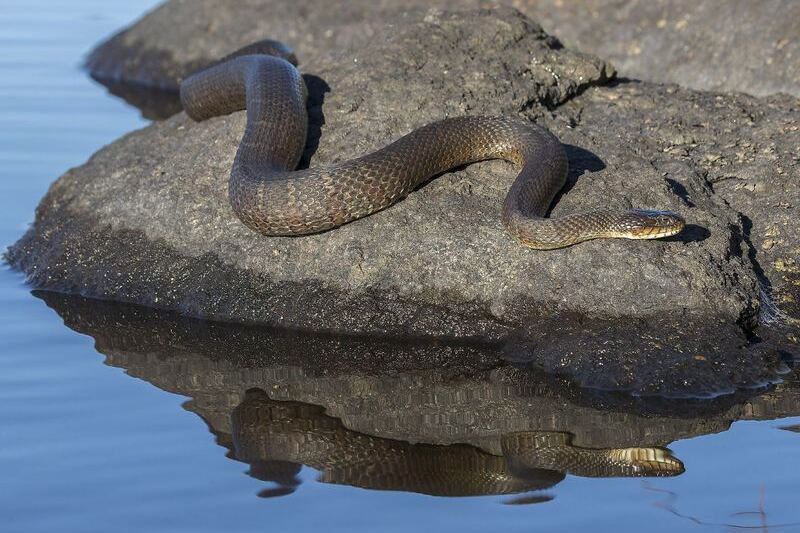
It has a thick body with brown or reddish crossbands that fade as it ages, and it often basks on logs or rocks near lakes and streams. Because the pattern looks a bit like a copperhead’s, people panic.
Here is the catch: water snakes are not venomous, but they are grumpy. Grab one and it will bite repeatedly and release a stinky musk.
The bites can bleed thanks to an anticoagulant in their saliva, so clean them well. Admire from the dock and let it fish in peace.
7. Harmless Lookalikes Worth Protecting
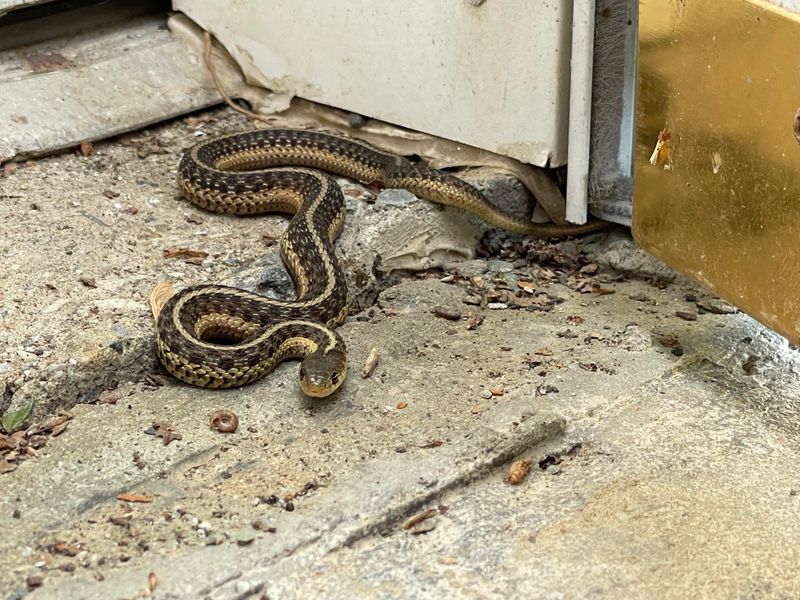
Picture your garden as a busy little city. The garter snakes, black rat snakes, and milk snakes are the pest police, gobbling slugs, mice, and voles.
Milk snakes get mistaken for copperheads because of their red-brown blotches. Look closer, though, and you will see smooth, rounded heads and bold blotches edged in black rather than hourglass bands.
Garter snakes have easy-to-spot stripes running down the length of the body.
On the spider side, the big black and yellow garden spider and the fuzzy wolf spider look scary but pose little risk to people. Wolf spiders can nip if squeezed, but it feels like a bee sting at worst.
Fun fact: a mother wolf spider carries her babies on her back.
8. What To Do After A Bite
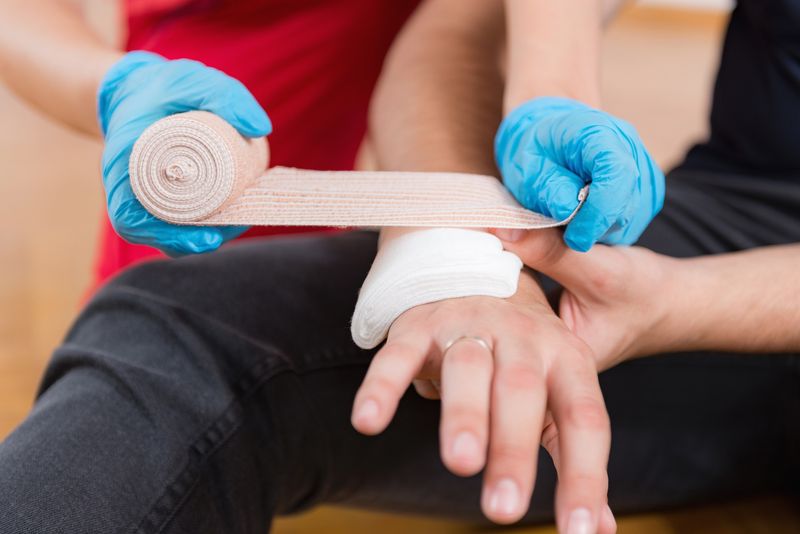
Stay calm. Seriously, that is step one, because panic speeds up your heart and does nothing to help.
For a suspected venomous snake bite, call 911 or head to the nearest ER right away. Keep the bitten arm or leg still and around heart level, and take off rings or tight clothes before swelling starts.
Skip the old movie tricks like cutting the wound, sucking out venom, or using ice.
For spider bites, wash the spot with soap and water and use a cool cloth to ease swelling. Watch for cramps, trouble breathing, spreading redness, or fever, and see a doctor if any show up.
Snapping a quick photo of the critter from a safe distance can help doctors figure out what bit you. You can also call the New Jersey Poison Control Center at 1-800-222-1222 any time for advice.
Share this story