You reach for a weed, and something shiny and scaly slides out from under the leaves. Your heart jumps, and your first thought is that it must be dangerous.
In New Jersey gardens, most of the creatures that give people a scare are completely harmless, and many of them are actually helping your plants. Learning who is who can save you a lot of panic and save these helpful critters from a shovel.
1. Eastern Milk Snake
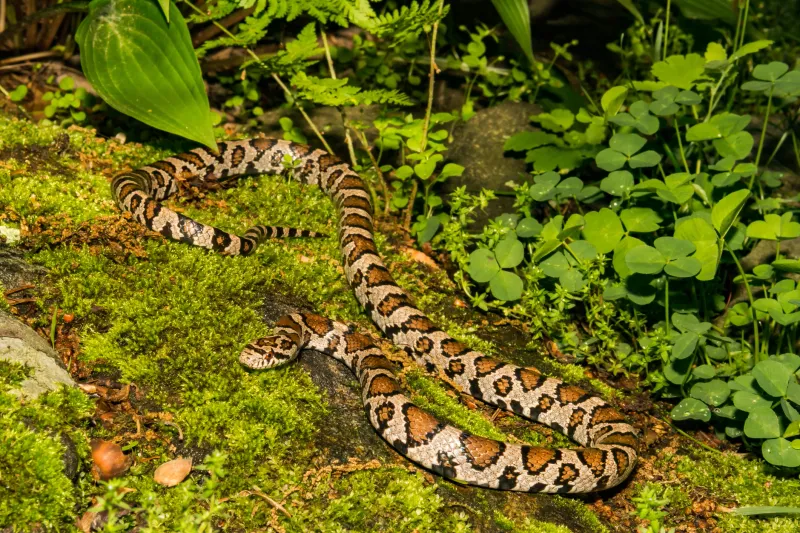
Plenty of panicked phone calls to New Jersey wildlife offices start with the words, I found a copperhead in my garden. More often than not, the snake in question is an eastern milk snake.
Its reddish-brown saddles on a gray or tan body really do look a lot like a copperhead at first glance.
Here is the easy tell. Copperheads have hourglass bands that are narrow on top and wide on the sides, while milk snakes have rounded blotches that look more like puzzle pieces with dark borders.
Milk snakes also have a slim head that blends into the neck, not the chunky triangle shape people expect from a pit viper.
Fun fact: the name comes from an old farm myth that these snakes sneaked into barns to drink milk from cows. They were really there for the mice.
That same appetite makes them a quiet ally around sheds and compost piles, so give one a little space and let it do its rodent patrol.
2. Northern Water Snake
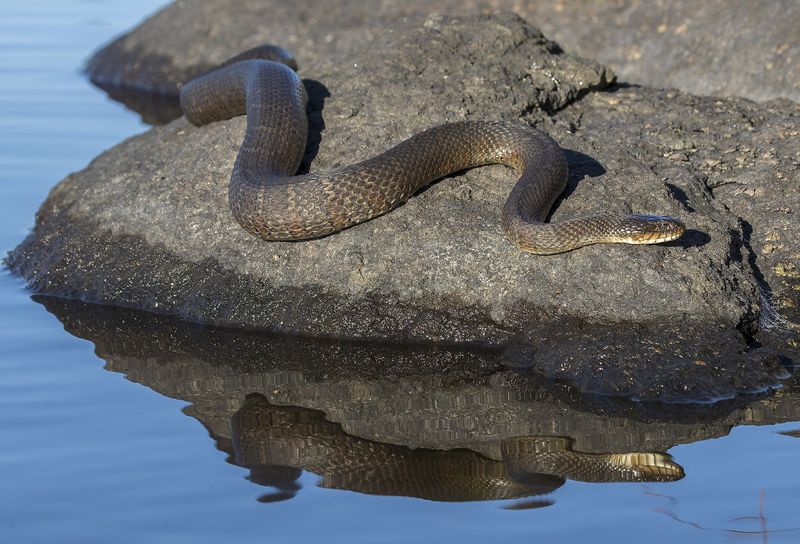
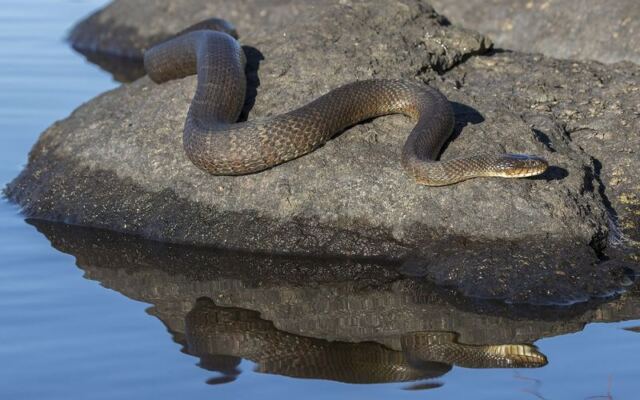
Own a backyard pond? Then you have probably met this thick, dark snake sunning itself on the edge.
Folks who grew up hearing stories about cottonmouths often assume the worst right away.
Good news: cottonmouths do not live in New Jersey at all. Their range stops far to the south, in Virginia.
The northern water snake is simply a fish-eating local with a grumpy attitude.
Honestly, that attitude is what causes the confusion. If you grab one, it may bite and release a smelly musk, which feels personal but is not dangerous.
Just leave it alone near the water, and it will go back to hunting minnows and frogs without bothering your tomatoes.
3. Eastern Hognose Snake
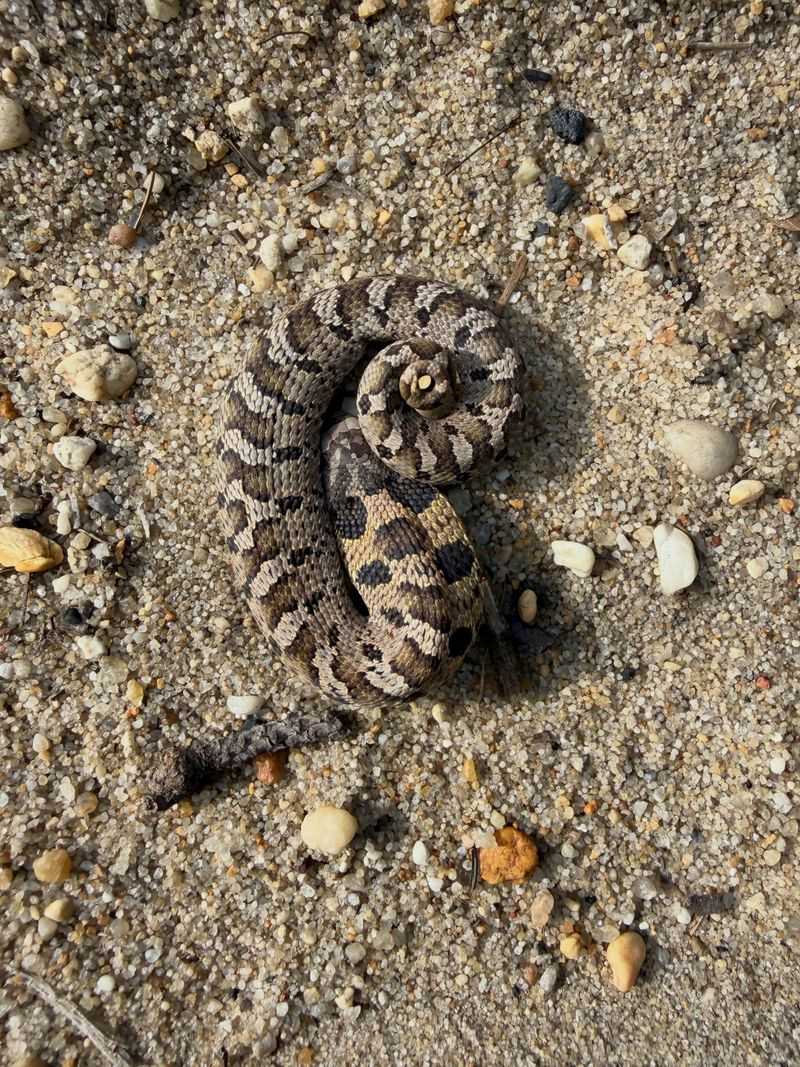
Picture this: you are raking leaves in Ocean County when a snake suddenly flattens its neck like a cobra, hisses loudly, and lunges. Then, if you keep watching, it flips over, opens its mouth, and plays dead with its tongue hanging out.
Hollywood could not write a better performance.
The eastern hognose is a total drama queen, and that act earns it nicknames like puff adder and spreading adder. In reality, it almost never bites people.
Its lunges are bluffs, usually done with its mouth closed.
Look for the upturned, shovel-like snout, which it uses to dig up toads, its favorite meal. Hognose snakes love the sandy soils of the Pine Barrens.
If one fakes its own death in your flower bed, the kindest thing you can do is walk away and let it finish the show in private.
4. Wolf Spider
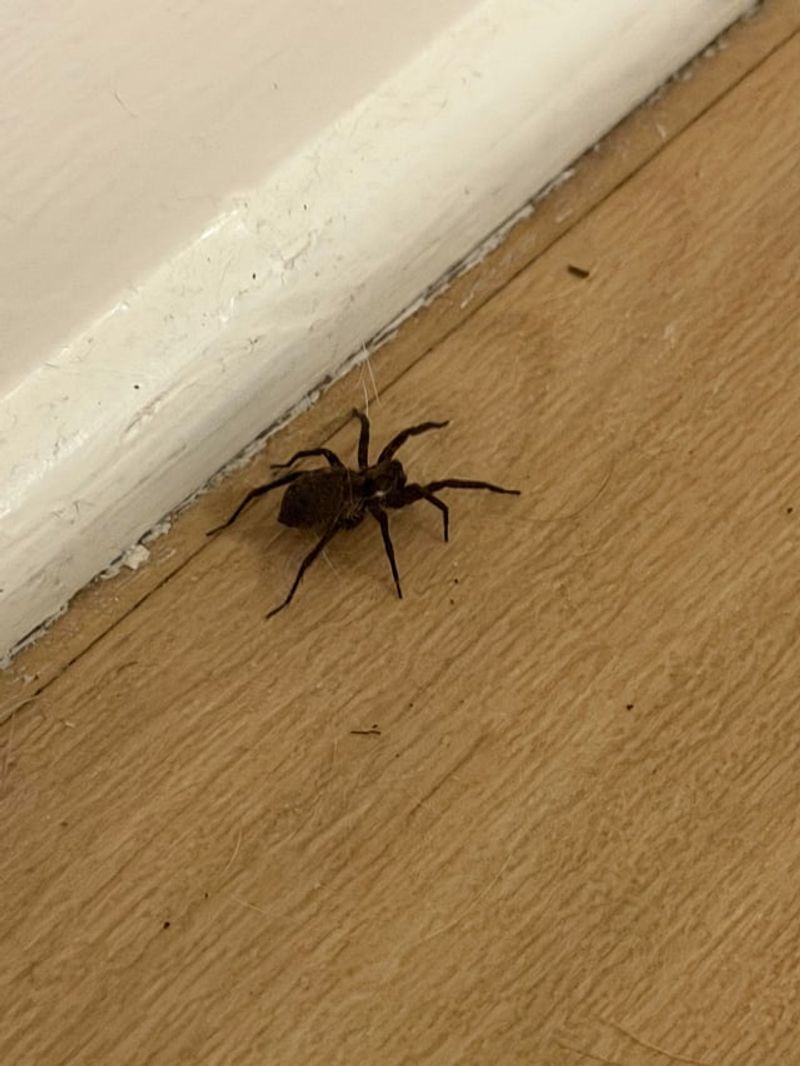
Big, hairy, and fast enough to make you yelp. That is the usual first impression of a wolf spider darting across a garden path.
Many people instantly decide it must be a brown recluse.
Brown recluses are extremely rare in New Jersey, and most reported sightings turn out to be something else entirely. Wolf spiders are chunkier, with striped patterns on their backs instead of the violin shape a recluse carries.
Shine a flashlight across your lawn at night, and their eyes will sparkle back at you like tiny gems.
Mother wolf spiders are oddly sweet. They carry their egg sacs attached to their bodies, then haul dozens of babies around on their backs once they hatch.
Between parenting duties, they hunt crickets, beetles, and other bugs that chew on your plants. They can bite if pinned, but it is about as bad as a bee sting for most people.
5. Eastern Cicada Killer Wasp
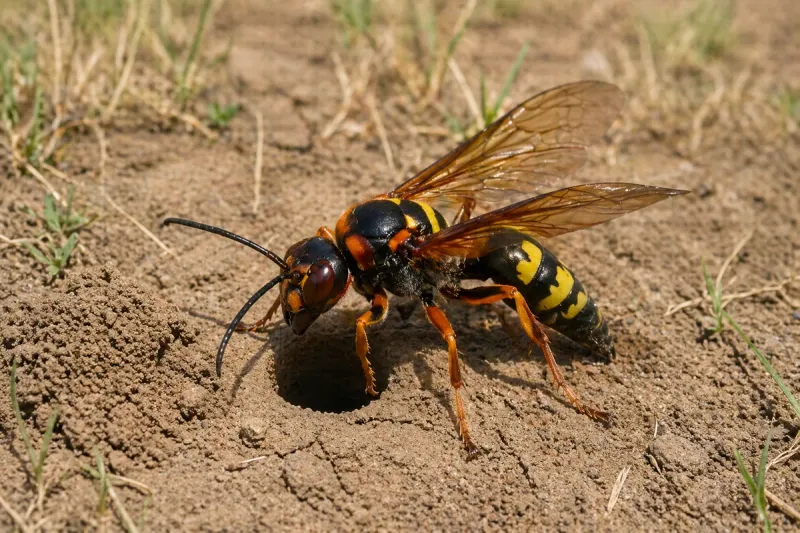
Every July, Garden State lawns turn into landing strips for something that looks like a wasp on steroids. Cicada killers can reach two inches long, and their buzzing flights over the grass have people convinced murder hornets have arrived.
Relax. Males, the ones doing all the dive-bombing, cannot sting at all.
Females can, but they save their venom for cicadas, which they paralyze and drag into underground burrows to feed their young.
You will notice small mounds of dirt in sunny, sandy spots where they dig. Kids can play nearby without trouble, since these wasps are loners and do not defend nests the way yellow jackets do.
Their season is short, and by late August they are mostly gone.
6. Five-Lined Skink
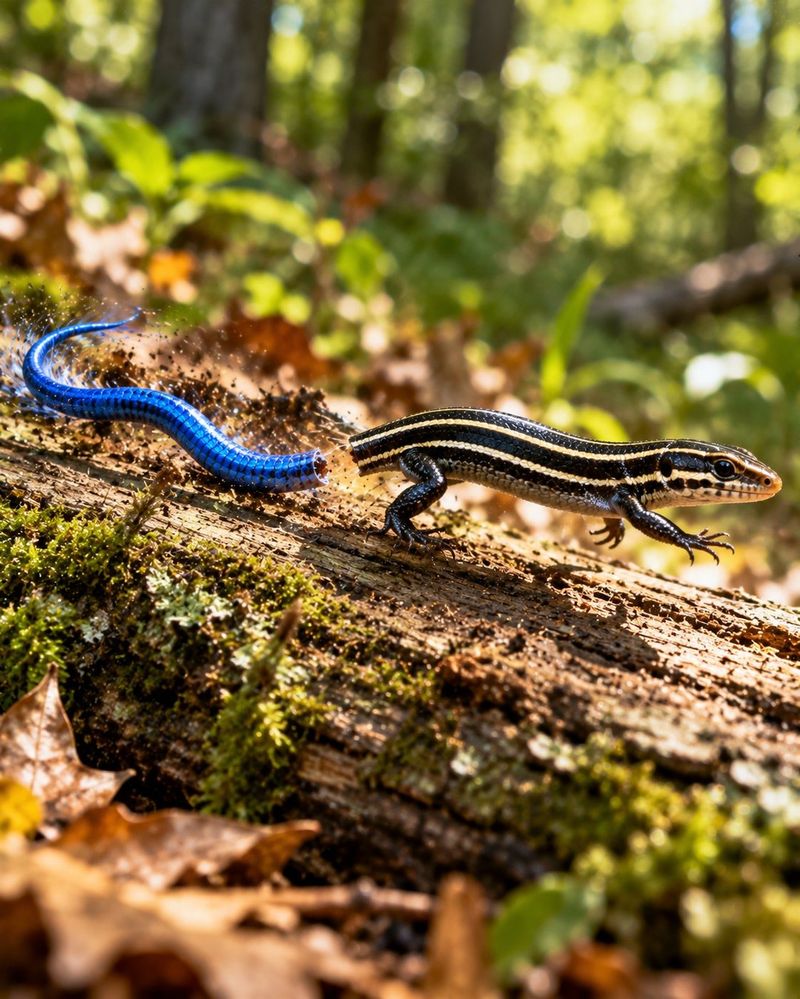
Grandparents in parts of New Jersey still warn kids that blue-tailed lizards are poisonous. It is a stubborn old tale, and it is completely untrue.
Young five-lined skinks wear electric blue tails and bold stripes. That bright tail is a decoy.
When a bird or cat grabs it, the tail snaps off and wiggles on its own, giving the skink time to escape and grow a new one later.
As they age, skinks fade to a bronze color, and adult males develop orange-red heads during spring. You will spot them on rock walls, woodpiles, and sunny porches.
They eat spiders, beetles, and grubs, so a few skinks around your raised beds is actually a sign of a healthy yard.
7. Eastern Dobsonfly
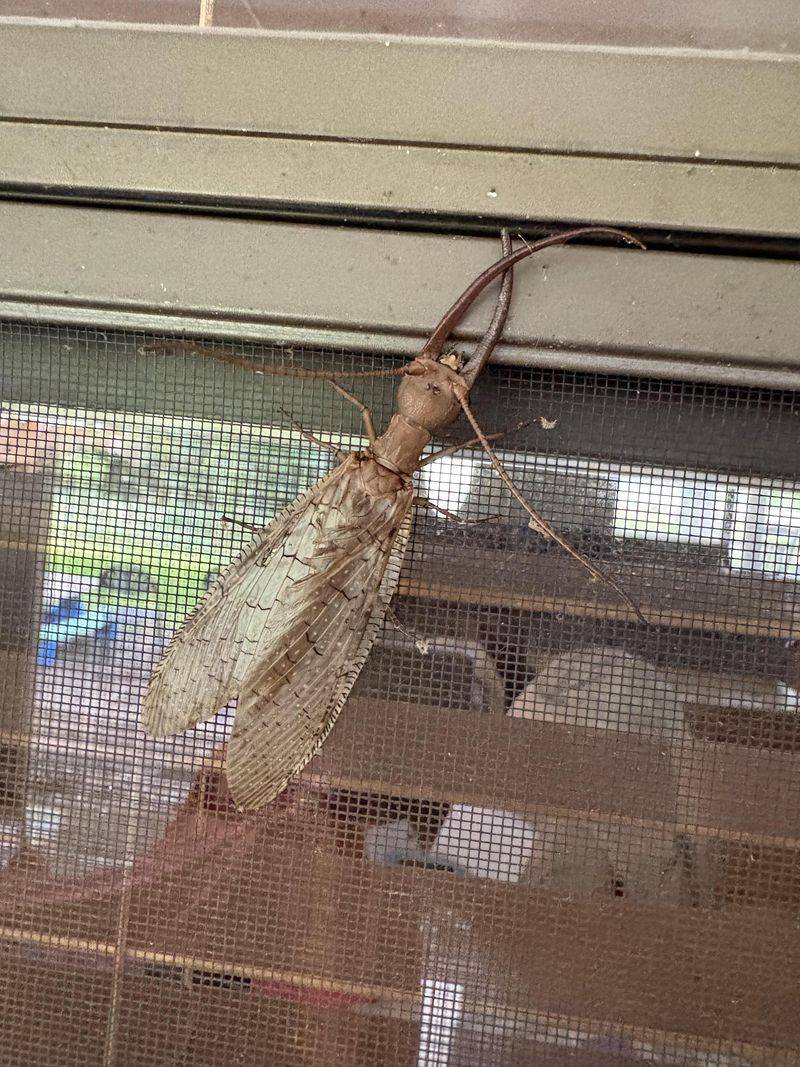
Few insects cause more double takes than a male dobsonfly clinging to a porch light. With huge curved jaws and wings up to five inches across, it looks like something from a monster movie.
Those scary mandibles are mostly for show. Males use them to impress females and wrestle rivals, and they are too long to pinch you with any real force.
Females have shorter jaws that can nip, but it is a defensive pinch with no venom behind it.
Here is a cool bonus. Dobsonfly larvae, called hellgrammites, live only in clean streams, so seeing adults near your garden means local waterways are in good shape.
Anglers in New Jersey even prize hellgrammites as bait. Admire the beast, snap a photo, and turn the porch light off so it can head home.
Share this story