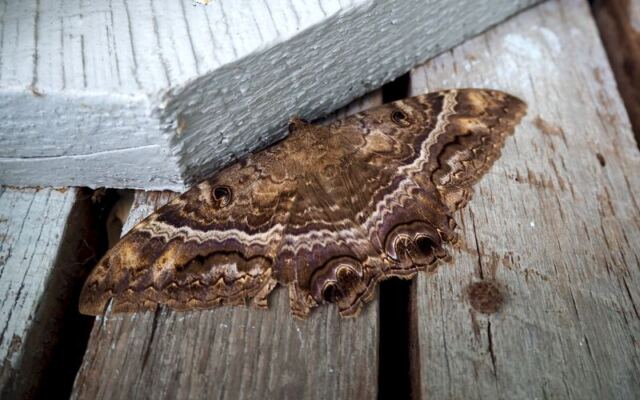
That giant dark moth by your front door is very likely a black witch moth, one of the biggest moths you can meet in Florida. It shows up near porches because these moths visit lights and rest in sheltered spots during the day.
Some people see it as a spooky sign, but it is a harmless visitor. Here is how to recognize it, what the stories say, and what to do next.
A large dark moth may be a black witch
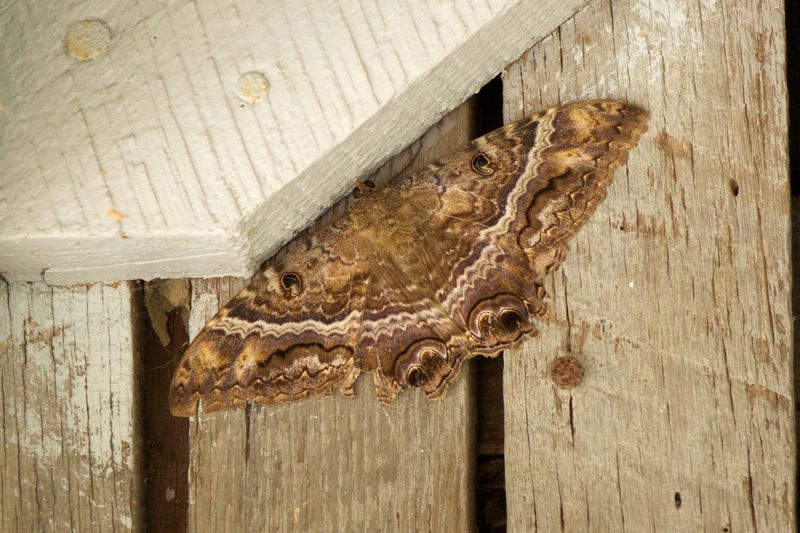
Picture a moth so big you first mistake it for a bat. A large dark moth by your door may be a black witch moth, Ascalapha odorata, a tropical species that Florida residents do see now and then.
Several clues point toward it. The moth is large, with pointed wings and a dark brown to nearly black body marked with a mottled pattern.
When the wings are open and in view, look for a comma-shaped mark on each forewing, which is a handy detail to check.
Those clues can help you judge a sighting, but they do not settle it alone. Many moths are dark, and a worn or poorly lit moth can be tricky.
The North Carolina state moth database notes that confirming this species requires a good-quality photo of an unworn specimen.
So it is fair to say your visitor may be a black witch moth, but not every big dark moth is one. A clear photo makes all the difference.
Try to capture the whole moth from a few feet away, with the wings in view and good light, and ideally a shot of the forewing mark. Add a coin or a hand nearby for scale if you can do it without disturbing the moth.
With a sharp image in hand, you or a local naturalist can compare the shape, color pattern, and markings and feel much more confident about the name.
Where black witch moths occur in Florida
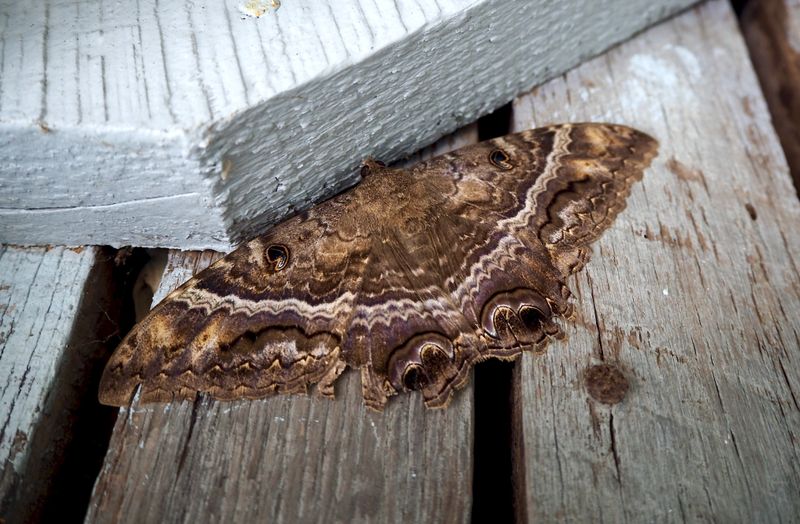
Black witch moths belong to the American tropics. According to Georgia DNR, Florida sits at the southern edge of the moth’s breeding range, which means the far southern part of the state is where the species can settle and raise caterpillars.
Farther north, the picture changes. Texas Parks and Wildlife and other state agencies describe individuals that wander or migrate beyond the core range, turning up in places where they do not normally live.
That difference matters for your porch. If you live in the Panhandle, central Florida, or anywhere outside the far south, a black witch moth by your door does not prove that one bred nearby.
It may simply be a traveler passing through.
Size gets a lot of attention, so here are the numbers, with a warning. The North Carolina database lists a typical wingspan of 110 to 150 millimeters, while Georgia DNR reports roughly 6.6 to 7 inches.
Treat those figures as approximate, because sources differ and individual moths vary.
Size alone cannot name the species. The North Carolina entry points back to photo-based identification, so use wingspan as one clue alongside shape, color, and markings.
Folklore varies across communities
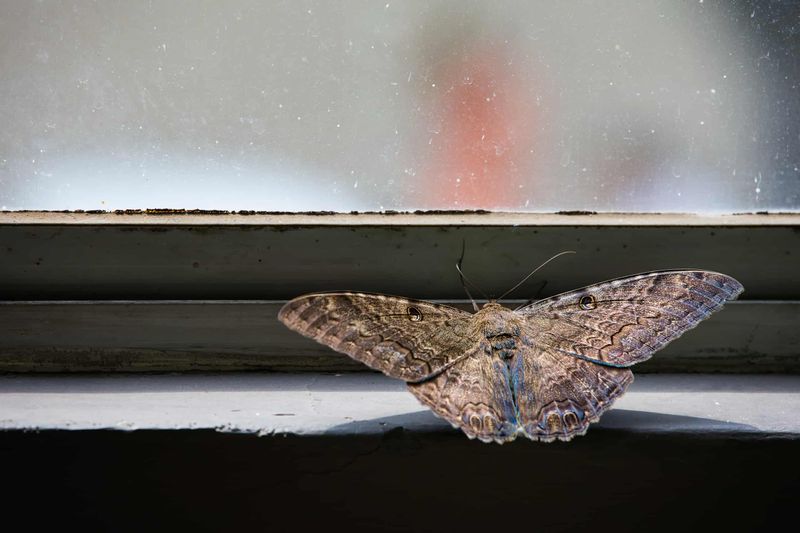
Few insects have collected as many stories as this one. The beliefs are not uniform, and they change from place to place.
Georgia DNR describes a range of traditions. In some places the moth has been seen as an omen of death, in others as a returning spirit, and in others as a bringer of luck, including the idea that it can point to lottery winnings.
A different and richer picture comes from Mexico. A report from the National Autonomous University of Mexico describes a Zapotec association between the moth and metamorphosis, death, and spiritual transformation, a way of thinking about change and the souls of the departed.
These are cultural traditions with deep roots, and they deserve respect. They are also meaning that people give the moth, not facts about the moth.
Biology offers its own, quieter explanation. A moth is an insect with habits, such as flying at night and resting in shelter by day.
Nothing in those habits shows that it predicts a death, brings money, or announces any other event.
You can enjoy a family story or a local belief and still treat the moth as what it is: a remarkable, large insect that happened to land near you.
Black witch moths are harmless to people
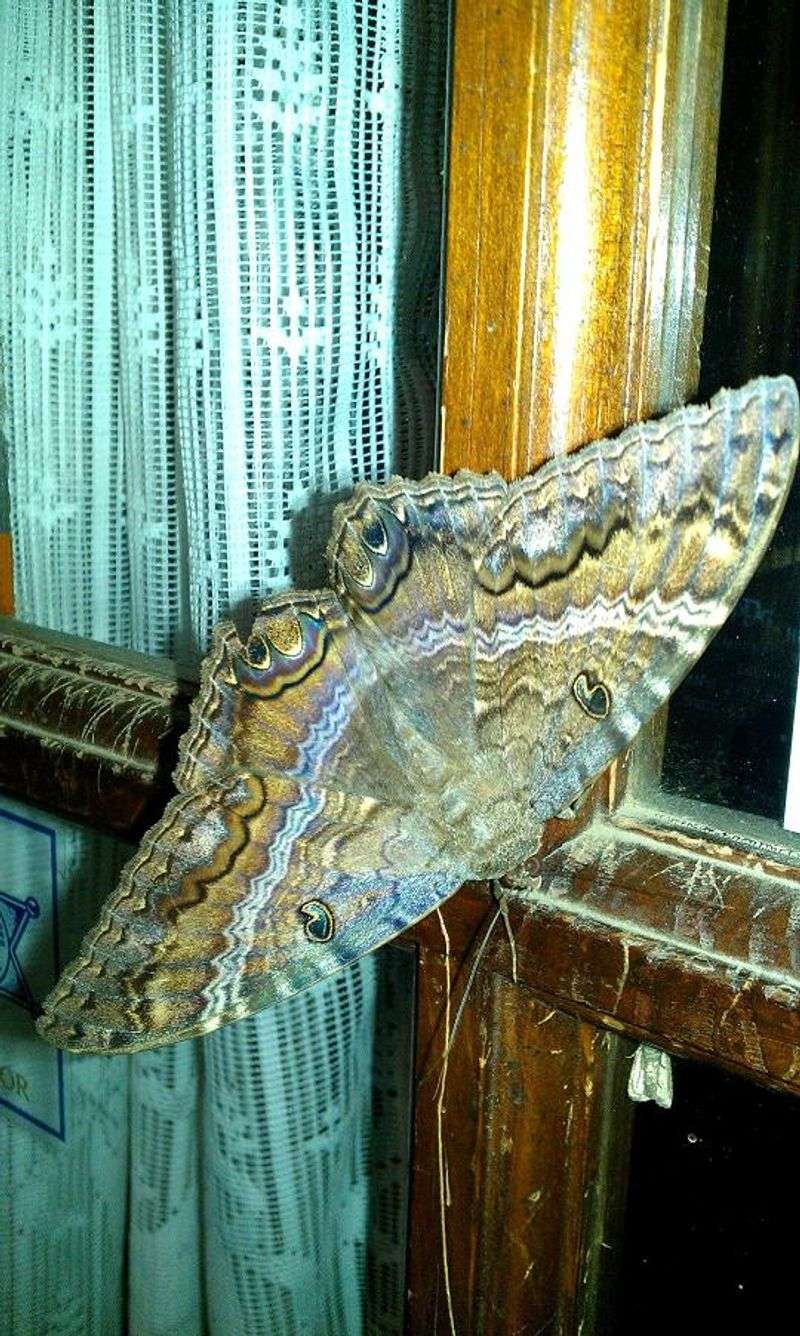
If the size gave you a jolt, here is the good news. Texas Parks and Wildlife describes black witch moths as harmless to people, and they are not considered pests.
That means the moth is not a danger to you, your family, or your pets in the way people often fear. It is simply a big visitor taking a rest.
This reassurance is about one species. It does not stretch to every dark moth you might see, and it does not cover caterpillars of other kinds, some of which can irritate skin.
If you are unsure what you are looking at, admire it from a distance rather than assuming.
Looks can be misleading here. Dark wings, a startling size, and spooky stories make the moth seem ominous, but none of that points to danger.
Appearance and folklore are not signs that the moth needs to be removed.
An adult moth resting outdoors needs nothing from you. It has no reason to be sprayed, swatted, or chased away, and the sources give no reason to do any of those things.
Most likely it will fly off on its own once evening arrives, and the porch will be yours again.
A doorway can offer light and shelter
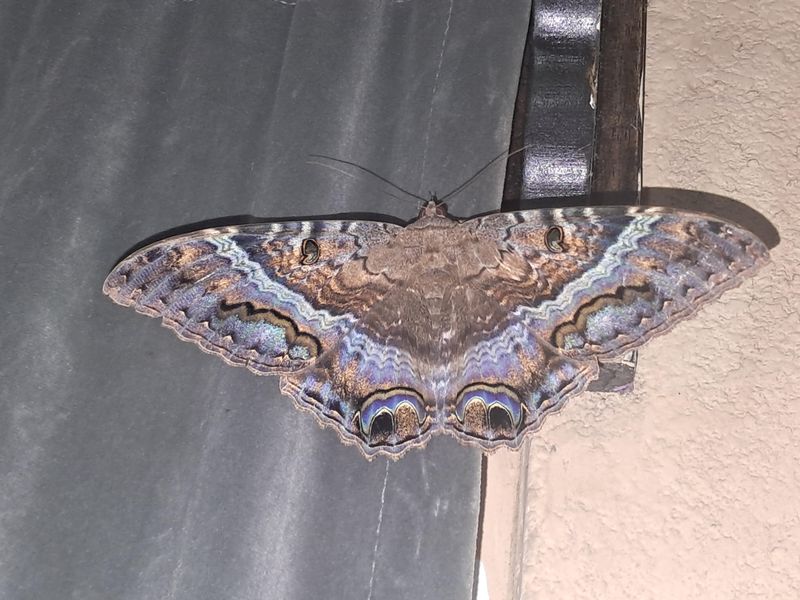
A front door often provides two things a moth might want: light at night and shade by day. Both match what is known about this species.
Georgia DNR reports that adults are active at night, visit bright lights, and rest in shaded daytime spots such as carports, garages, and under eaves. Texas Parks and Wildlife likewise notes perching under eaves and attraction to house and street lights.
Put those habits together and a lit, sheltered doorway is a believable place to find one. A porch with a bright bulb and a roof overhang checks both boxes.
Still, that is a pattern, not an answer. Nobody has tracked the moth at your particular porch, so no source can say why this individual picked this spot.
It could have been drawn by the light, the shade, or something else entirely.
Researchers are also studying why insects gather around lamps in general. A 2024 study in Nature Communications found that flying insects tend to turn their backs toward artificial light, which can send them into circling flight.
That work looked at insects broadly. It did not test black witch moths, so it offers a general idea rather than an explanation for your visitor.
What you can say with confidence is that lights and shelter fit the species’ known habits, which makes your doorway encounter perfectly plausible.
What to do when one rests by the door
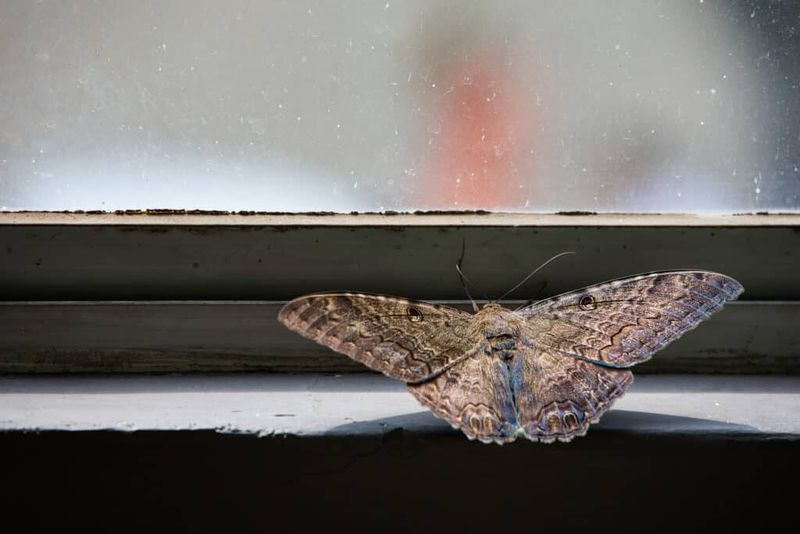
The best plan is a simple one: watch, photograph, and leave it be. Texas Parks and Wildlife calls the species harmless to people, so no action is needed.
If you want to confirm the identification, take a clear, well-lit photo of the whole moth, including the wings. Good-quality images are what make identification possible.
Keep in mind that a doorstep visit does not show local breeding, and it is not an omen. Moths wander, and your guest is simply passing through.
A porch moth is a short, free glimpse of the tropics.
Share this story