Get the latest garden guides in your inbox →
Gardening Latest
  • General Gardening
  • Lawn Care
  • Plant Care
  • Composting
  • Soil Health
  • Backyard
  • Garden Muse Magazine
  • General Gardening
  • Lawn Care
  • Plant Care
  • Composting
  • Soil Health
  • Backyard
  • Garden Muse Magazine
  • News
  • Gardening Calendar
  • Garden Structures
  • Vegetable Garden
  • Vertical Garden
  • Raised Beds
  • Hydroponics
  • General Equipment
  • Community Gardens
Garden Themes
  • Spiritual Garden
  • Hydroseeding
  • Seeding and Laying Sod
  • Artificial Grass
  • Lawn Care Equipment
  • Plants
  • Trees
  • Planting Tools
  • Composting Basics
  • Fertilizer
  • Alternative Growing Mediums
  • Front Yard
  • Backyard Activities
  • Landscaping
Gardening Latest

Explore by state

Which state is your garden in?

Currently viewing Louisiana

All states

Northeast

  • Connecticut —
  • Delaware 35
  • Maine —
  • Maryland 21
  • Massachusetts 37
  • New Hampshire —
  • New Jersey 21
  • New York 30
  • Pennsylvania 30
  • Rhode Island —
  • Vermont —

Southeast

  • Alabama 20
  • Arkansas —
  • Florida 21
  • Georgia 21
  • Kentucky 35
  • Louisiana 20
  • Mississippi —
  • North Carolina 19
  • South Carolina 34
  • Tennessee 17
  • Virginia 20
  • West Virginia —

Midwest

  • Illinois 20
  • Indiana 22
  • Iowa 34
  • Kansas —
  • Michigan 21
  • Minnesota 20
  • Missouri 19
  • Nebraska —
  • North Dakota —
  • Ohio 21
  • South Dakota —
  • Wisconsin 35

Southwest

  • Arizona 20
  • Colorado —
  • Nevada —
  • New Mexico —
  • Oklahoma —
  • Texas 19
  • Utah —

West

  • Alaska —
  • California 20
  • Hawaii —
  • Idaho —
  • Montana —
  • Oregon —
  • Washington —
  • Wyoming —

No state matches that search.

Site menu

Gardening Latest
  • General Gardening
    • News
    • Gardening Calendar
    • Garden Structures
    • Vegetable Garden
    • Vertical Garden
    • Raised Beds
    • Hydroponics
    • General Equipment
    • Community Gardens
    Garden Themes
    • Spiritual Garden
  • Lawn Care
    • Hydroseeding
    • Seeding and Laying Sod
    • Artificial Grass
    • Lawn Care Equipment
  • Plant Care
    • Plants
    • Trees
    • Planting Tools
  • Composting
    • Composting Basics
  • Soil Health
    • Fertilizer
    • Alternative Growing Mediums
  • Backyard
    • Front Yard
    • Backyard Activities
    • Landscaping
  • Garden Muse Magazine

Explore

  • About GardeningLatest.com
  • Contact Us

Get the latest from the garden

New guides on lawn care, plants and backyard projects, sent when they go up.

Subscribe →

Follow

  • Facebook
  • X
  • Pinterest
  • YouTube
Louisiana Gardening

That Giant Flower Stalk on Your Louisiana Onions Is Telling You Something, and Here’s Whether to Cut It Off

Cutting that tall flower stalk will not save your onion, because the plant has already bolted and begun flowering…

CB

By Celeste Boudreaux

November 26, 2026 · 6 min read

That Giant Flower Stalk on Your Louisiana Onions Is Telling You Something, and Here’s Whether to Cut It Off
That Giant Flower Stalk on Your Louisiana Onions Is Telling You Something, and Here's Whether to Cut It Off

Cutting that tall flower stalk will not save your onion, because the plant has already bolted and begun flowering. The better move is to pull the onion and use it soon.

A bolted bulb can still go in your skillet, but it will not wait around in storage like its neighbors. Here is how to read the signal and what to do next.

At a glance

Where
Louisiana Gardening
Hardiness zone
9 20 to 30°F
Read
6 minutes
Published
November 26, 2026

What a flower stalk means

What a flower stalk means
© Homestead and Chill

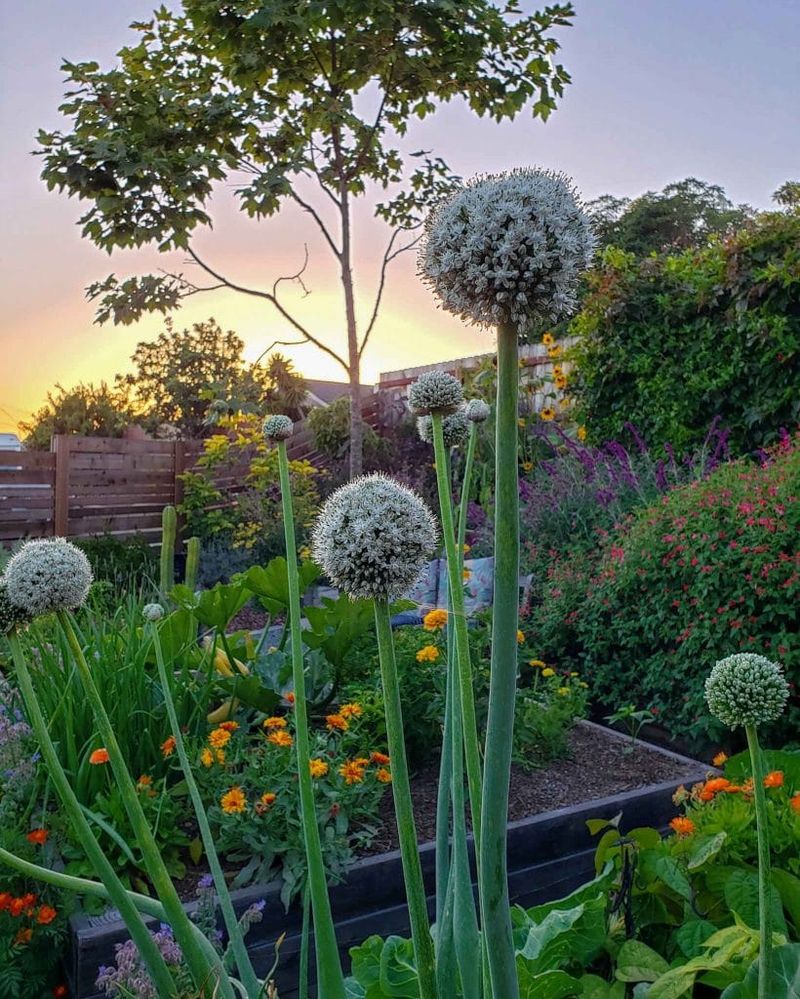
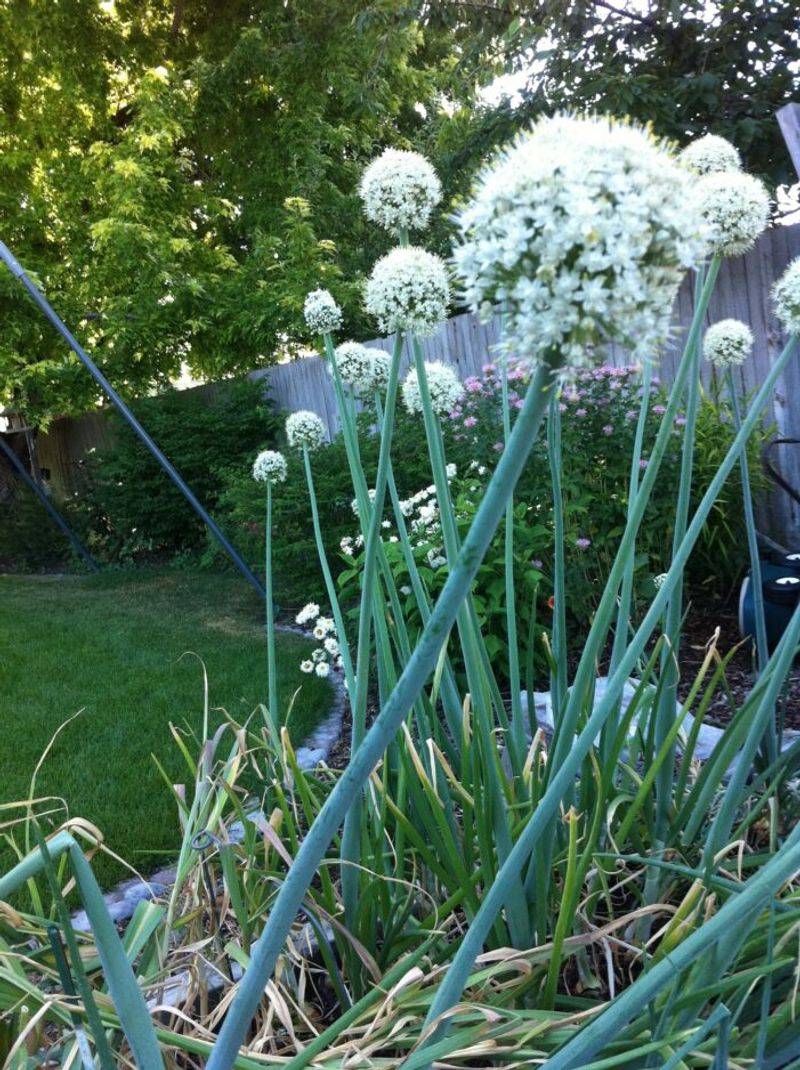
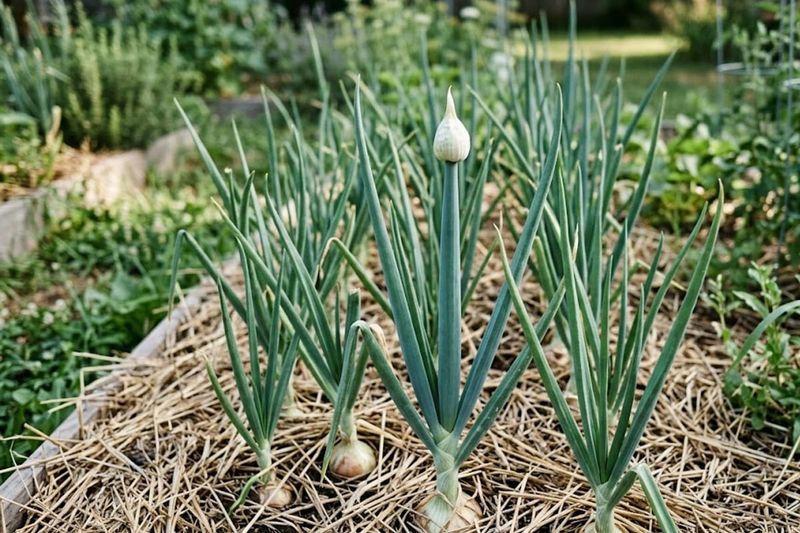
A tall, firm stalk shooting up from the center of a bulb onion means the plant has bolted. Bolting is the start of flowering, and the plant is shifting energy toward making seed.

You will usually see a thick, round bud on top that later opens into a ball of small flowers.

That is a different job from bulbing. LSU AgCenter explains in its Allium Crops guide that bulb formation responds to day length and temperature, and that the lengthening days and warming weather of spring start the bulbs swelling.

Bulbing is the normal, healthy process. A flower stalk is something else entirely.

Industry paperwork draws the same line. USDA onion loss standards define bolting and bulbing as separate things, which is a handy reminder that a swelling bulb and a rising stalk are not the same signal.

Once the stalk appears, the bulb often stops growing well. Iowa State Extension notes that bolting onions tend to produce a poorer bulb and that quality can decline.

Think of the stalk as an early warning, not a disaster.

Everything here applies to onions you are growing for bulbs. If you grow onions for their green tops, the picture is different, and we will get to that.

Should you cut the stalk?
Should you cut the stalk?
© Daily Herald

Snipping the stalk off does not stop bolting and does not reverse it. It is also not a proven way to rescue the bulb.

Once the plant has decided to flower, the change has already started.

Two different signals show up in an onion bed in late spring, and they call for different timing.

UC ANR guidance says cutting the stalk will not halt bolting and recommends harvesting right away. That is a clear, simple rule you can follow.

Extension sources do not fully agree on the small stuff. South Dakota State Extension says removing the stalk may reduce how much stored energy the plant keeps spending.

Even so, it tells gardeners to harvest bolted bulbs first because they store poorly.

So if you want to snip the stalk, go ahead, but do not expect a bigger bulb or a longer shelf life. Texas A&M AgriLife Extension points the same direction, noting that bolted bulbs are best used soon.

The shared message across these sources is simple. Pull the onion and put it to use rather than betting on a cut to fix it.

Harvest the bolting onion and use it soon
Harvest the bolting onion and use it soon
© Planting Season

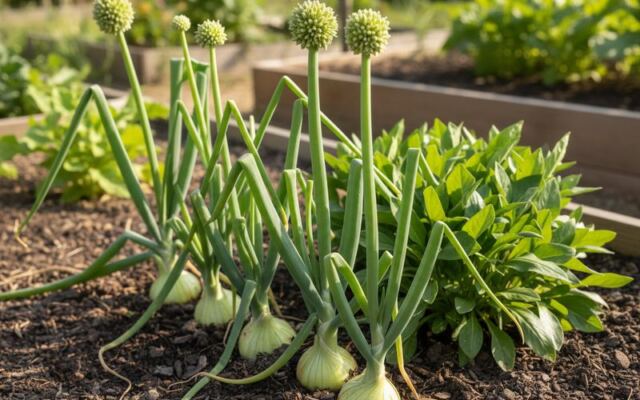
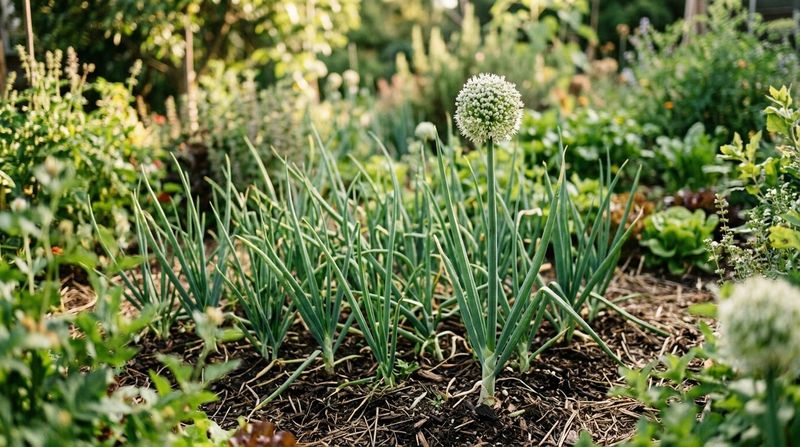
Dig the bolting onion now, even if the rest of your row is still growing. Do not leave it for the regular storage harvest.

Iowa State Extension advises harvesting at the first sign of bolting and using the bulb promptly, since bolted onions do not store well.

A bolted onion can remain edible. It may just be smaller, with a tough, woody core running up the middle where the stalk grew.

Texas A&M says these bulbs can still be eaten but should be used soon.

In the kitchen, slice around the tough center and cook the rest. Chopped onion freezes well, and a bolted bulb is a good candidate for tonight’s soup or sauté.

Timing matters because the stalk can grow into the bulb. A New Hampshire trial found that early-harvest bolted onions could still be marketable while stalks were small, while larger stalks showed up in the bulb later.

That trial used particular overwintered cultivars under its own growing conditions, so treat it as context, not a rule for every garden.

Do not borrow garlic advice here. Michigan State Extension contrasts onion stalks, which can compromise storage, with garlic scapes.

A garlic scape is a treat you cut on purpose, while an onion stalk is a sign to harvest.

Keep bolting separate from normal harvest timing
Keep bolting separate from normal harvest timing
© Hickery Holler Farm

Two different signals show up in an onion bed in late spring, and they call for different timing. One is a flower stalk, which means harvest that onion now.

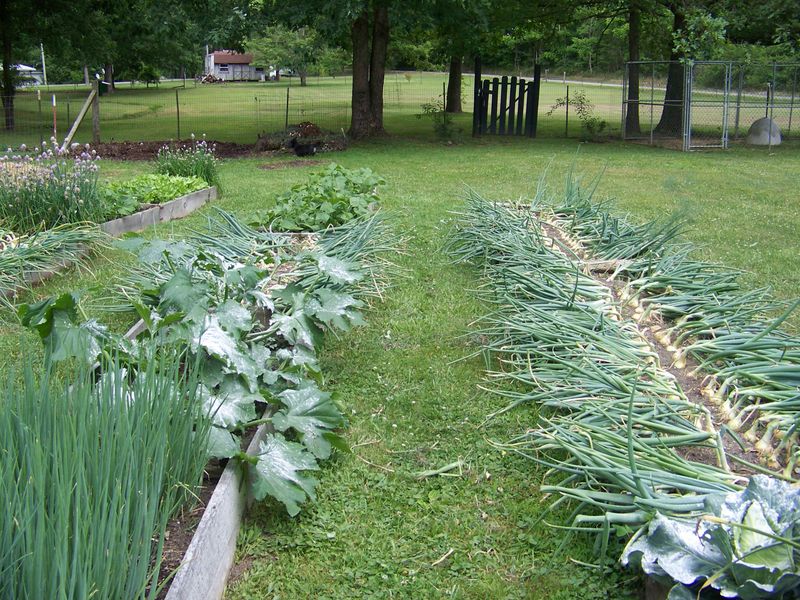
The other is falling tops, which tells you the whole crop is nearing readiness.

LSU AgCenter’s local planting guidance says the usual cue for harvest is when 50 to 60 percent of the tops have fallen over. That marks routine maturity for the crop as a whole.

It is not a reason to leave a bolting bulb in the ground until the rest catch up.

Picture a row where most plants still stand tall and green, and one has a thick stalk. Pull that one today, and leave the others to finish.

When the tops do flop, dig, cure, and store the healthy bulbs.

Bolting and bulbing are also not the same thing, as Iowa State Extension describes when it discusses bolting as a flowering response. A swelling bulb with healthy tops is simply growing.

Scallions and bunching onions are a separate crop. LSU AgCenter treats them as grown for green tops and harvested at usable size, so storage-bulb advice does not carry over to them.

Several factors can raise bolting risk
Several factors can raise bolting risk
© VeggieFix

No single cause explains every bolted onion. Plant size, cold exposure, variety, and timing all play a part, and they can stack up.

Blaming Louisiana heat or day length alone misses most of the story.

Size is one you can control. LSU AgCenter warns that oversized transplants are more likely to bolt.

Its guideline is a transplant smaller than a pencil in diameter, with at least three true leaves.

Cold matters too. Clemson Extension says larger plants exposed to prolonged cold are more prone to bolt.

A big transplant that sits through a long chilly stretch is a likely candidate.

Variety and planting date round out the list. A variety that is not suited to your area, or a planting that runs too early or too late, can shift the odds.

Even a well-managed bed may have a few bolters.

If you spot a pattern, such as stalks showing up mostly on the biggest plants, that is a clue worth writing down. It points you to a fix for next season.

Set up the next Louisiana crop
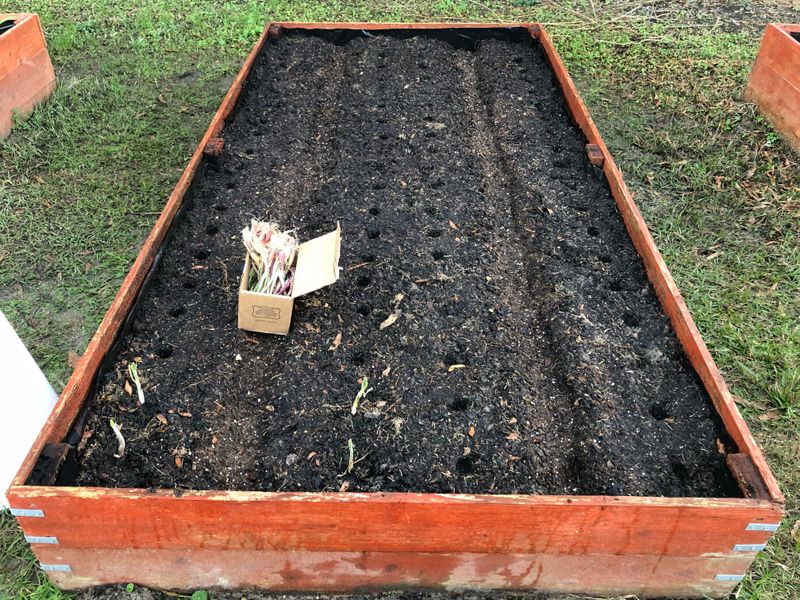
Set up the next Louisiana crop
© Reddit

Next season, start by choosing the right type. LSU AgCenter says Louisiana bulb onions should be short-day varieties, which suit our spring day length and temperature pattern for bulbing.

Then watch the calendar. LSU’s local advice is to set transplants out from mid-December through January, with harvest around May.

Pick small ones, under pencil thickness with at least three true leaves, and skip the jumbo bundles.

Go easy on fertilizer, too. LSU cautions that overfertilizing can encourage bolting, so follow recommended rates instead of adding extra for good measure.

These steps follow local guidance and lower your risk. They do not guarantee that every onion stays vegetative, so a stray stalk is no reason to feel you did something wrong.

When one does appear, you now know the move. Pull it, use it, and let the rest of the row keep growing.

Share this story
CB

Written by

Celeste Boudreaux

More from Celeste Boudreaux →

About Gardening Latest

Gardening Latest provides in-depth guides to maintaining and enhancing your garden and backyard. Learn how to make the most of the space you have and create a beautiful garden.

More about us →

Latest stories

  • Minnesota GardeningMinnesota Gardeners Stung by a Fuzzy Hickory Tussock Caterpillar Should Do These Things Right Away

    Minnesota Gardeners Stung by a Fuzzy Hickory Tussock Caterpillar Should Do These Things Right Away

    3 min ago
  • Illinois GardeningIllinois Ants Rebuild Overnight After a Downpour, and Their Fresh Mounds Mark Your Lawn’s Weak Spots

    Illinois Ants Rebuild Overnight After a Downpour, and Their Fresh Mounds Mark Your Lawn’s Weak Spots

    9 min ago
  • Delaware GardeningThat Green Caterpillar With a Brown Saddle Stings Hard in Delaware Gardens, and Here’s What to Do First

    That Green Caterpillar With a Brown Saddle Stings Hard in Delaware Gardens, and Here’s What to Do First

    21 min ago
  • South Carolina GardeningBlack Vultures Roosting on Your South Carolina Roof This Winter Are Tearing Up More Than Shingles

    Black Vultures Roosting on Your South Carolina Roof This Winter Are Tearing Up More Than Shingles

    29 min ago
  • Kentucky GardeningWhy Kentucky Deer Are Rubbing the Bark Off Your Young Trees, and How to Stop the Damage Before Spring

    Why Kentucky Deer Are Rubbing the Bark Off Your Young Trees, and How to Stop the Damage Before Spring

    35 min ago

Gardening by state

Stories for your state, and the hardiness zone most of it gardens in.

Keep exploring

Read next

All Louisiana Gardening →
Louisiana GardeningNot Every Venomous Animal in a Louisiana Yard Is a Snake, and One Is a Shrew Smaller Than Your Thumb
Louisiana Gardening

Not Every Venomous Animal in a Louisiana Yard Is a Snake, and One Is a Shrew Smaller Than Your Thumb

3 hr ago
Louisiana GardeningWhy Pulling Seedlings Won’t Stop the Invasive Tree Spreading Across Louisiana Neighborhoods
Louisiana Gardening

Why Pulling Seedlings Won’t Stop the Invasive Tree Spreading Across Louisiana Neighborhoods

18 hr ago
Louisiana GardeningSpotted a Giant Flower Stalk Rising From Your Louisiana Palm? Here’s Why, and Whether to Cut It Off
Louisiana Gardening

Spotted a Giant Flower Stalk Rising From Your Louisiana Palm? Here’s Why, and Whether to Cut It Off

20 hr ago

More from Louisiana Gardening

  • As Louisiana Finally Cools Down, These Venomous Critters Start Turning Up In Your Yard

    Nov 24
  • If an Asp Caterpillar Stings You in Your Louisiana Garden, Here’s What to Do Right Away

    Nov 24
Back to top

Leave a response Cancel

Your email address stays private. Required fields are marked with an asterisk.

Gardening Latest

In-depth guides to maintaining and enhancing your garden and backyard: how to make the most of the space you have, and how to make it beautiful.

  • Facebook
  • X
  • Pinterest
  • YouTube

We may earn a portion of sales from products or services that are purchased through our site as part of our affiliate partnerships with retailers.

Explore

  • About GardeningLatest.com
  • Contact Us
  • Terms and Conditions
  • Privacy
  • Editorial Note:
  • FTC Disclosure

Newsletter

New garden guides and seasonal tips, straight to your inbox.

We’ll email you a link to confirm. Unsubscribe any time.

Almost there! Check your inbox and tap the link to confirm.

© 2026 Gardening Latest. All rights reserved.

Back to top